COUNTRY INDEX

|
AFGHANISTAN |
|
Best Bank: Afghanistan International Bank |
|
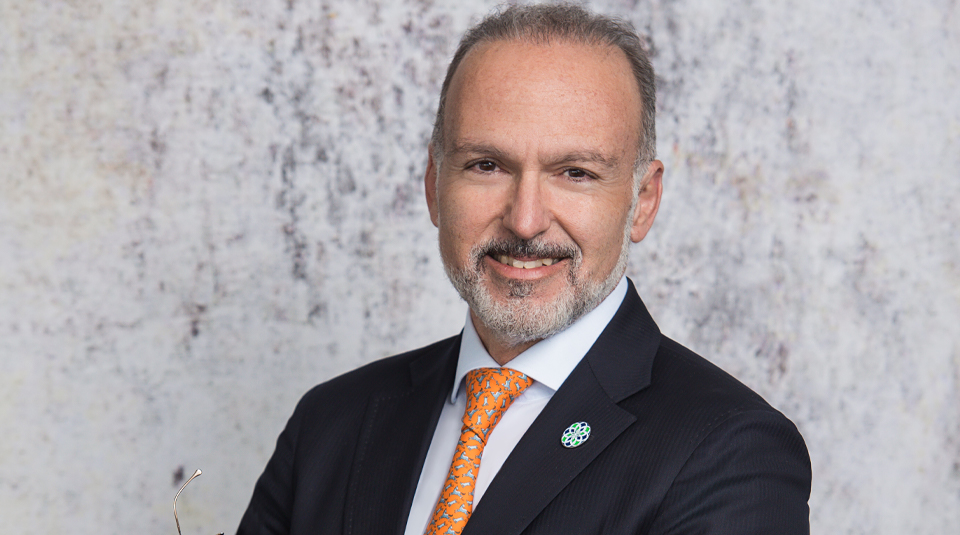
Afghanistan International Bank (AIB) remains the Afghan institution that most successfully measures itself against international standards. It is the country’s biggest bank, the most liquid and the most profitable. It also has a new chief executive, Joseph Carasso.
Perhaps more significant still is an aspiration for international best practices in corporate governance that date back to its foundation in 2004. Tellingly, it is the only bank in Afghanistan with US dollar clearing through a recognized international bank – an essential role.
Nothing is easy in Afghanistan, still less so during a pandemic, but AIB remained profitable and grew assets and deposits during our period in review. Its capital adequacy ratio of 15.43% is a standout. Non-interest income, at 64% of total revenue, is promising, as is the rollout of the bank’s Digital at the Core strategy.
A strong commitment to corporate social responsibility (CSR), underpinned by a priority to empower women, is admirable.

|
AUSTRALIA |
[index] |
|
|
Best Bank: Macquarie Bank |
|||
|
Best Investment Bank: Goldman Sachs |
|||
Few banks anywhere in the world rolled with the punches so impressively as Macquarie Bank over the last 15 months. Our period of review coincided exactly with two things: Macquarie’s financial year and the experience of the pandemic in most of the markets in which it operates. Faced with this uniquely challenging environment, the bank delivered a record full-year profit. Not just an operational profit or a profit with provisions put to one side; a genuine A$3 billion record net profit, up 10% year on year.
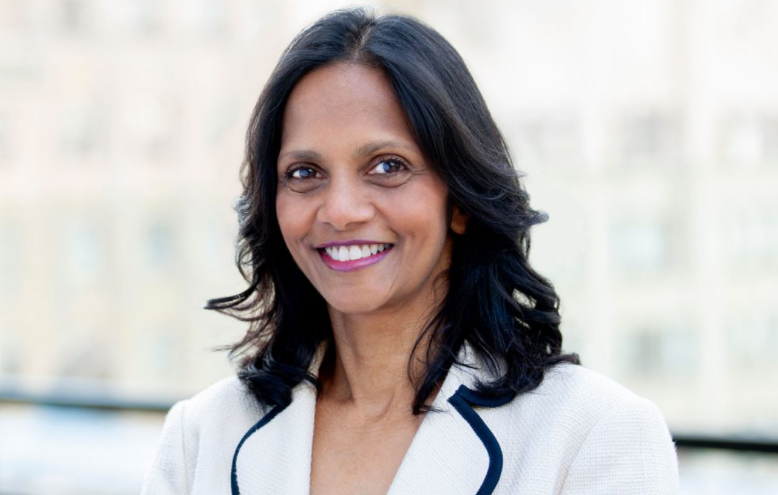
Macquarie is no longer dominated by its investment banking work, which is why we consider it in the best bank category. These days it is an institution built on worldwide asset management, particularly in infrastructure, which is where chief executive Shemara Wikramanayake made her name.
But this time it was the market-facing business that really delivered: the commodities and global markets division was up 50% year on year, exploiting esoteric niches like the US gas distribution model, which generated a $200 million windfall when Texas unexpectedly froze.
Macquarie was a strong candidate for regional or global awards on the back of this performance, perhaps impeded by its uniqueness because it does not fit neatly into particular categories. Is it a bank, an investment bank or an asset manager? It is an Asia Pacific-headquartered institution, but its biggest geographical contributor to income, at 34%, is the Americas. Whatever box you put it in, its ability to adapt and find opportunity in disruption is peerless.
The numerous incursions into UBS’s Australia investment banking personnel by Jarden and Barrenjoey gave an opportunity to the chasing pack last year and Goldman Sachs stepped up better than its rivals.
In the early months of the pandemic, when markets were falling and some companies needed to raise capital in order to survive, Goldman was quick to take advantage. Webjet, NAB, Lendlease, Challenger and IAG all involved the bank in their urgent recapitalizations. When convertibles came suddenly into vogue, Goldman led five of the six major transactions, across three currencies.
And when advisory opportunities arose, Goldman was there, assisting Bain Capital on its $2.5 billion acquisition of Virgin Australia, MIRA on its proposed purchase of Bingo Industries and Bank of Queensland on its bid for Members Equity Bank, among others. You could find Goldman on buy-side, sell-side and defence mandates all year long; and while the country’s closed-door approach to the pandemic meant most of the story was domestic, Goldman was also on $23 billion of cross-border M&A.
A strong year in debt finance – not just debt capital markets but complex and innovative financings – completed a very good performance.

|
Best Bank: Standard Chartered |
|
Best Investment Bank: City Bank Capital |
Standard Chartered is part of the fabric of banking in Bangladesh, the longest serving financial institution in the country with well over a century of operational history.
In our review period it stood out in two respects, namely its commitment to local infrastructure and community engagement. It helped structure and raise the financing for Dhaka Airport’s third terminal, the Dhaka Elevated Expressway, the Meghnaghat power project and the Bangabandhu railway bridge, worth over $6 billion between them. It also advised on Evercare Group’s acquisition of a controlling stake in a Dhaka hospitals business, the first deal of its kind in Bangladesh.
Its partnerships with a host of community groups, including Brac, Bidyanondo Foundation, Kumudini Welfare Trust and Unicef, helped with food, Covid treatment, farming and education at a time when this country was especially vulnerable.
On top of that, progress on digital helped StanChart to market-leading levels of net profit, return on equity and loan coverage. In a deeply challenging year it increased net profits while reducing its non-performing loan (NPL) ratio – no mean feat.
For the first time we recognize the investment banking subsidiary of The City Bank this year, following a year of strong growth that has taken the operation to critical mass. Although still small – pre-tax profits were $3.87 million in the 2020 financial year – its team of 33, spread across portfolio management and investment banking, are involving themselves in some interesting deals.
One, for its parent bank, was a Tk4 billion ($47 million) perpetual bond issue, which marked the first ever tier-1 instrument issued in Bangladesh. City Bank Capital was also the arranger and issue manager of a Tk700 million preference share issue for Confidence Power Bogra, a power plant operator, and was a co-arranger of a Tk5 billion subordinated bond issue for Standard Bank.
The business has a 7.7% return on equity on the back of a 24% cost-to-income ratio, both numbers that improved considerably during 2020.

|
CAMBODIA |
[index] |
|
|
Best Bank: ABA Bank |
|||
|
Best Investment Bank: Credit Suisse |
|||
ABA Bank wins our Cambodia award with striking reliability and even the briefest look at the numbers explains why. Total assets grew by 40% through 2020 to $6.13 billion, deposits were up 43% to $4.9 billion and gross loans 39% to $3.8 billion. ABA had set a target for net profit pre-Covid, it then beat that target, returning $151.4 million in fiscal 2020.
How did it do this? ABA has always been a local pioneer on the digital side and Covid universally rewarded banks with strength in this area. During our review period ABA crossed one million active users of its mobile banking app and transactions using it more than doubled from 38 million to 93 million in 2020. The app is filled with features that would not look out of place in Hong Kong or Singapore and the bank has been deft in making sure it supports the Chinese language.
ABA also got on the right side of e-commerce with its own platform, PayWay, and relaunched its Internet Banking for Business platform.
We don’t always give an investment banking award in Cambodia, but enough happened here in our review period to warrant recognition – particularly for Credit Suisse, which led a $350 million senior notes offering for NagaCorp. This was the first dollar bond issue by a non-state-owned entity from a frontier market since 2019.
NagaCorp runs the largest gaming and entertainment hotel complex in Cambodia and is a popular name. The order book for the deal was covered by lunchtime on the day marketing began and pricing was tightened.
Credit Suisse, which also led the only other international bond from a Cambodian issuer, has a coverage team covering Cambodia under Rehan Anwer and Babur Rais, the frontier specialists. It’s no surprise to also find them on NagaCorp’s latest deal, which took place after our review period concluded.

|
CHINA |
[index] |
|
|
Best Bank: China Merchants Bank |
|||
|
Best Investment Bank: Goldman Sachs |
|||
Yet again, China Merchants Bank stands head and shoulders above its domestic peers. The Shenzhen lender deserves to win courtesy of its financials alone. Net-interest income rose 6.9% year on year in 2020 to Rmb185 billion ($28.9 billion), with net profit up 4.82% year on year to Rmb97 billion.
No domestic lender comes close to competing with it on a host of key metrics, from non-performing loans to net-interest margins. It boasted the highest returns on equity (15.73%) and assets (1.23%) last year, and reliably posts better figures than its far larger state-run banking rivals. But its strength extends far further and deeper.
The bank has spent a decade investing in wealth management: its local private banking team is considered the best around. Digital is another key focus and during the pandemic it carried on investing in its financial technology offering. It reckons 255 million people used its two main mobile banking applications by the end of 2020.
China Merchants Bank is well placed to profit from the Greater Bay Area, the financial zone linking Hong Kong to Guangdong, and is seeking to be a leading voice on environmental, social and governance (ESG) issues – a key theme outlined by Beijing in its 14th five-year plan, which runs through 2025. It continues to step out onto the world stage and to hire at its six offshore branches, including those in Hong Kong, London and New York.
To be the best investment bank in China, you need to go wherever China’s complex and increasingly ambitious corporates venture. Onshore, Goldman Sachs ranked fourth in equity capital markets and M&A during the awards period, ahead of all its chief global rivals.
It ranked second in ECM in Hong Kong according to Dealogic, finalizing 54 deals worth a total of $12.6 billion. And pooling all IPOs and follow-on listings by Chinese firms on the Nasdaq and the New York Stock Exchange, it ranked number one, completing 27 deals worth $8.7 billion, easily outpacing the competition and reinforcing Goldman’s claim to this key award.
It ranked number one in cross-border M&A in the awards period; notable deals included its role as exclusive financial adviser to Changsha-based Lens Technology’s $1.4 billion buy of Catcher’s smartphone casing business. The deal was sealed in August 2020. The US bank also advised on the $57.8 billion sale of PetroChina’s pipeline business to PipeChina and on the C$23.6 billion ($19.42 billion) all-stock merger by Cenovus and Husky.
Elsewhere, Goldman was lead left bookrunner on Li Auto’s $1.09 billion Nasdaq IPO priced in July 2020 and on Xiaomi’s $4 billion dual-tranche Hong Kong offering. In December the bank kick started the process of buying 100% of Goldman Sachs Gao Hua Securities, putting it in sight of controlling its onshore financial operations.

|
HONG KONG |
[index] |
|
|
Best Bank: HSBC |
|||
|
Best Investment Bank: Morgan Stanley |
|||
That this must be one of the least surprising winners in this or any year, should take nothing away from what HSBC continues to do in China’s richest city. The UK lender posted a pre-tax profit of $8.21 billion in Hong Kong in 2020, accounting for 93% of group-wide earnings.
In the first quarter of 2021 profits jumped 154% year on year to $1.89 billion – a sure sign that, despite Hong Kong all but sealing itself off from the world since Covid began, it continues to benefit from a resurgent China and global investors’ desire to tap into Asia’s largest economy.
Hong Kong is set to get more, not less, important to HSBC, which is on track to invest an additional $6 billion in the region over the next five years. It is a capital markets powerhouse, particularly in DCM, and its private wealth team cannot hire new relationship managers fast enough. Beijing’s desire to make the Greater Bay Area work, should offer another boost to the bottom line.
To its credit, HSBC never takes the city for granted. Every year brings a host of new ideas, from insurance, with its new HSBC Life Well+ service, to wealth, where HSBC Jade Private Market Investments will let high net-worth clients access investment opportunities once the preserve of institutional clients.
Morgan Stanley dominated in equity capital markets, completing 63 deals – more than any other global bank – worth a total of $16.23 billion, according to Dealogic. It also ranked number one in all local listings by China-based corporates, including IPOs and follow-on sales.
Key ECM deals included acting as sole global coordinator and lead bookrunner on Wuxi Biologics’ $1.7 billion follow-on offering and as joint sponsor, global coordinator, bookrunner and lead manager on video-sharing Website Bilibili’s $2.5 billion Hong Kong IPO in March 2021. Two months earlier it was joint books on video-sharing app Kuaishou’s $6.2 Hong Kong initial stock sale.
In M&A, Morgan Stanley underlined its value to local and global corporates. It was sole financial adviser to Cathay Pacific on the carrier’s $5 billion recapitalization and $2.5 billion sale of preference shares in June 2020. Another key advisory deal was the €10 billion sale of CK Hutchison’s European tower assets to Spain’s Cellnex, with Morgan acting as financial adviser to the Hong Kong conglomerate.

|
INDIA |
[index] |
|
|
Best Bank: HDFC Bank |
|||
|
Best Investment Bank: Morgan Stanley |
|||
Covid brought about an environment in India in which the strong get stronger and the weak struggle. The flight to trusted quality benefited a few names like HDFC Bank, Kotak Mahindra and ICICI.
HDFC Bank has a track record going back decades of generating exceptional growth while not putting a foot wrong on the credit side. These skills were put to the test during a pandemic that has already gone through a series of waves in India, hitting its worst in May.
Despite the intense crisis, HDFC Bank lodged an 18.51% increase in profit after tax to Rs311 billion ($4.26 billion) in the year to March 31, 2021, while lifting deposits by 16.34% (that flight to quality in action) and assets by 14.14%. As of March 31 the tier-1 ratio stood at a more than healthy 17.6%, while the gross non-performing loan ratio barely nudged up to 1.32% from 1.26% in pre-pandemic times. That will almost certainly get worse in due course, but if you had to count on one bank to come through it all with resilience, it is this one.
In investment banking there was very strong competition internationally from Bank of America and locally from Kotak Mahindra and others, but in the end Morgan Stanley was on the most significant deals in India during the review period.
Top of the tree was the Jio Platforms business formed by Reliance, which raised $20.3 billion in investments from a diverse cast including Facebook, several sovereign wealth funds and some of the biggest names in global private equity. Morgan Stanley, led by India co-head Aisha de Sequeira who sadly died in December, was Reliance’s adviser throughout.
But while Jio was the year’s most visible deal, Morgan Stanley was almost everywhere else too: on the Embassy Office Parks Reit $1.3 billion acquisition of Embassy TechVillage; the purchase of a majority stake in BigBasket by Tata Group; the sale of RMZ’s commercial real estate assets to Brookfield; and the ReNew Power $4.4 billion de-Spac, one of the most significant deals of its type in Asia all year. It was on the urgent recaps for names like ICICI and HDFC that came in a flurry in August, as well as a $7 billion rights issue for Reliance.

|
INDONESIA |
[index] |
|
|
Best Bank: Bank Central Asia |
|||
|
Best Investment Bank: Credit Suisse |
|||
In many instances this year, the safe, dependable banks just got stronger in extremely difficult conditions. Indonesia’s Bank Central Asia (BCA) was a classic example.

This was a year when the following things were very helpful: a streamlined digital operation ready to scale up very quickly at a time when customers realized they had to make a swift transition; a strong current account savings account (CASA) position; low cost of funds; and a proven track record in risk assessment. Chief executive Jahja Setiaatmadja has driven BCA to either lead or be among the leaders in all four, so it is no surprise to see the bank coming through the crisis in impressive shape.
Mobile transactions rose 62% year on year during the review period. Transaction banking, the BCA mainstay, logged 11.6 billion transactions in 2020, up 34.8% year on year. CASA funds grew 21% over the year, accounting for 17% of the whole Indonesian market, while cost of funds dropped to 1.4%, much the lowest in the sector.
Drawing conclusions on NPLs will be challenging until government initiatives on debtor support and the associated credit restructuring are concluded. However, a 1.8% NPL ratio today bodes well.
Credit Suisse worked on the greatest range of transactions in our review period and so regains an award it last lifted in 2018. Rizal Gozali, president director, has been part of the team for 22 years now and nobody is better connected in Indonesia.
The pick of the transactions involved the bank’s work for Japfa: first as exclusive financial adviser on its sale of Greenfields Dairy Singapore to TPG and Northstar, for an enterprise value of $335 million, and then following up with a $350 million bond issue, the first high-yield sustainability-linked bond in Indonesia – or indeed Asia.
The bank also advised on the strategic investment in LinkAja by GoJek and Grab; a $1.11 billion senior secured green bond dual-tranche issue for Star Energy; and the usual stock of private loan capital market transactions that are Credit Suisse’s bread and butter in Indonesia. The bank says it used its own balance sheet to fund $1.43 billion of private loan transactions during the review period.

|
JAPAN |
[index] |
|
|
Best Bank: MUFG |
|||
|
Best Investment Bank: Morgan Stanley |
|||
This award returns to MUFG for the first time in three years, reflecting a bank that seems to be bouncing back better than expected and better than its peers.
MUFG logged a 47% jump in annual profit for the year to March 31, to ¥77 billion ($7.11 billion), considerably outpacing the targets it had set for itself. Like its rivals SMBC and Mizuho, it also projected a drop in credit costs this year, from ¥516 billion to ¥350 billion.
Those numbers are encouraging, but the bank stood out for more reasons than its resilience. MUFG Bank president and chief executive Kanetsugu Mike’s decision to invest $706 million in southeast Asian tech pioneer Grab is an interesting and apparently smart move that adds something new to a carefully developed Asia footprint. It’s no surprise that global corporate and investment banking, and global commercial banking, were standout performers in financial 2020 – along with, like many others, global markets.
MUFG has also made some welcome commitments to net zero emissions – in its own operations by 2030 and in its finance portfolio by 2050.
There’s much more to do however. MUFG’s target for ¥850 billion net profit next year would still be lower than anything it achieved between 2014 and 2018. But these are difficult times and any progress is welcome.
The MUFG Morgan Stanley joint venture had a terrific year, fighting off a strong challenge from a revamped Nomura that was desperately unlucky to have an excellent financial year torpedoed by Archegos right at the last.
As is often the case, Morgan Stanley was at its strongest in M&A advisory. Much of the activity involved Takeda. The bank advised on Blackstone’s $2.3 billion acquisition of Takeda Consumer Healthcare; on Takeda Pharmaceutical’s divestment of non-core diabetes medicines to Teijin Pharma for $1.3 billion; and then a ¥1.2 trillion senior debt offering for Takeda Pharmaceuticals across eight tranches and two currencies, the biggest debt offering ever from a Japanese issuer.
NTT kept the bank similarly busy: first with a tender offer to acquire a remaining 33.8% stake in NTT DoCoMo, a transaction involving 250,000 retail investors without news of the tender offer leaking; and then a €2 billion and $8 billion senior note offering for NTT Finance.
Equity highlights included a $3.6 billion follow-on for Recruit Holdings and a $1.88 billion global offering for Japan Airlines.

|
MACAU |
[index] |
|
|
Best Bank: Bank of China Macau Branch |
|||
Bank of China Macau Branch continues to dominate banking in the territory, holding a 40% market share in deposits, loans and profitability. It employs 1,800 people, 30% of all the employees in Macau’s banking industry.
With heft like that, it was vital in Macau’s response to the pandemic. BOC Macau has issued P5 billion ($625.5 million) equivalent of dual-currency social bonds to support the recovery of local small and medium-sized enterprises. It also ramped up usage of its mobile banking platform, doubling its user base during the course of 2020 and increasing transactions 175% year on year.
The bank is also well positioned for the continuing development and integration of the Greater Bay Area.

|
MALAYSIA |
[index] |
|
|
Best Bank: Public Bank |
|||
|
Best Investment Bank: Maybank Kim Eng |
|||
This was a year for the steady and reliable, and they don’t come any more solid than Public Bank. While profits fell, as they did for the whole sector, Public Bank still beat the field on pre-tax return on equity (14.1% versus an industry average of 9.2%), cost-to-income ratio (34.6% versus 42.8%), gross impaired loans (just 0.4% – a figure that actually declined in 2020 – versus 1.6%) and loan loss coverage (227.7% versus 107.5%).
Public Bank also benefited from a flight to quality, with current and savings account growth of 18.9%, greatly assisting liquidity. And in addition to being resilient, the bank made progress with digital initiatives and launched an automatic six-month loan moratorium for individuals and SMEs from April to September 2020, before moving on to more tailored customer assistance that accounted for 11.3% of outstanding domestic loans by the end of 2021. By assisting clients with patience and support, it should come out of the crisis without a significant negative impact to its credit books.
It was a competitive year in Malaysian investment banking. According to Dealogic, CIMB had the edge in debt and Maybank Kim Eng in ECM and advisory. Maybank receives the award for the variety of its deals.
On the ECM side, Maybank led the largest secondary placement ($750.4 million placements of MISC and KLCCSS for Petronas, run concurrently), IPO (Mr.DIY, raising $362.2 million) and primary placement (Sunway Reit, $171.6 million) during the review period.
In advisory, the biggest deal was the acquisition of FGV Holdings by Felda, a statutory body tasked with poverty eradication through land development, in a $2.36 billion deal. Maybank also helped IHH Healthcare, DRB-Hicom and Permodalan Nasional with acquisitions and divestments. Meanwhile, on the debt side, key deals included the Government of Malaysia’s RM666 million ($161.8 million) digital sukuk, the country’s first, and a sustainability sukuk musharakah for Sime Darby Property.

|
MALDIVES |
[index] |
|
|
Best Investment Bank: Credit Suisse |
|||
We rarely give an award in the Maldives, but activity here during the period under review warranted an exception.
The sovereign set up a $1 billion trust certificate issuance programme and subsequently launched a $200 million sukuk bond issue with a concurrent tender of existing notes. Credit Suisse was involved in both.
The sukuk, the first such structure for the government, marked a return to dollar public markets for the sovereign for the first time since 2017. The Maldives had to pay up – a 9.875% coupon on a five-year deal – but got its money while also conducting a liability management exercise on its outstanding paper.

|
MONGOLIA |
[index] |
|
|
Best Bank: Khan Bank |
|||
Nobody had a good year in Mongolian banking during the review period, with even our winner recording a 15.8% decrease in net profit. But at least Khan Bank stayed profitable, increased its business and stayed liquid and secure.
In difficult circumstances, Khan Bank reported an 18.8% increase in assets, 6.7% in total loans and 21.8% in deposits. Return on equity of 13.4% is more than healthy given the environment and a loan coverage ratio of 91.5% ought to protect the bank from any problems lurking in the credit book. Its profits, while reduced, were more than those of competitors TDB, Golomt, Xac and State Bank combined.
Much of the asset growth was thanks to new digital initiatives on both the personal and the business side. Khan Bank’s CSR work, including cancer and education initiatives, also deserves recognition.

|
NEPAL |
[index] |
|
|
Best Bank: Nepal Investment Bank |
|||
A 14% climb in net income at the same time as a 13% fall in the NPL ratio in the middle of a crippling pandemic: those are the numbers that give Nepal Investment Bank (NIB) the award this year.
Nepal has suffered badly through Covid and NIB – first established as a joint venture with Crédit Agricole Indosuez in the 1980s before becoming independent in 2002 – has benefited from its relative stability among Nepal’s 27 commercial banks.
Given Nepal’s mountainous terrain, NIB has always been a pioneer in branchless banking, which was helpful as Covid kicked in. Its digital strategy of inclusion, accessibility and automation, which ranges from individual digital wallets to a national payment network and support for Nepali merchants, has also delivered strongly through the pandemic, as indeed it did in the aftermath of the terrible 2015 earthquake.
We also admire the Deprived Sector Lending initiative, through which the bank extends microfinance programmes to retired army personnel.

|
NEW ZEALAND |
[index] |
|
|
Best Bank: ANZ |
|||
|
Best Investment Bank: Goldman Sachs |
|||
New Zealand has had a unique pandemic experience. It has been almost untouched by the virus, with domestic life more or less continuing as normal. But this has been at the cost of completely cutting the country off from the outside world.
The result was a substantial hit to certain sectors, notably tourism, but the signs are that banking business is roaring back. ANZ’s first half results for 2021 showed a net profit after tax of NZ$930 million ($667 million) for the six months to March 31, up 42% year on year, on the back of a strong home lending market and a major reduction in credit impairment charges.
Such was the improvement in the economy, particularly in construction and agriculture, that the bank released 25% of the additional credit provisions it had put in place earlier in the pandemic.
Clearly, behind the scenes efforts have been made to boost efficiency in order to protect against a weakened top line. Expenses were down 8% year on year. Customer deposits and gross lending both rose.
A boom year for Goldman Sachs across the Tasman in Australia was also reflected in New Zealand, where it was characterized by leadership in M&A advisory. It advised a2MC on its acquisition of Mataura Valley Milk; EQT on its purchase of Metlifecare; Infratil on its response to AustralianSuper’s offer and on its strategic review; and Fonterra on its divestment of China Farms.
On the equity side the headline deal was a NZ$970 million convertible for Xero, while other mandates included the IPO of Pactiv Evergreen and placements for Investore, Z Energy, Sky and Vital Healthcare. Its advisory role for the New Zealand treasury on its debt funding agreement with Air New Zealand was also important.

|
PAKISTAN |
[index] |
|
|
Best Bank: Habib Bank |
|||
|
Best Investment Bank: Credit Suisse |
|||
Habib Bank (HBL) is going from strength to strength under Muhammad Aurangzeb. Remarkably, in a year when most banks around the world were trying to stem the losses caused by Covid, HBL doubled its after-tax profits to PRs30.9 billion ($193.4 billion). Domestic deposits grew by the equivalent of $2.5 billion during the year, more than half of it in CASA funding. All told, total deposits grew 16.1% through 2020.

Consumer banking was at the heart of the growth, pushed by a digital business that saw $43.7 billion equivalent of throughput in 2020, much the highest figure in Pakistan. The consumer portfolio was up 25% year on year, driven in particular by a renewed focus on auto finance and growth in the cards business.
Commercial banking was also important, with trade business growing 19% year on year, assisted by the launch of a trade corridor through Singapore. Internationally, China remains a focus. A Beijing branch was opened in March 2021, 18 months after the Urumqi branch commenced end-to-end renminbi intermediation.
Habib also maintained its 30% share of rural banking in a difficult year that combined a pandemic with low crop yields and severe rain in Sindh. In fact, agriculture is a mainstay of HBL’s innovative efforts; the bank aims not only to fund farmers but deploys full-time agronomists to help with improving crop yields.
Credit Suisse has long been the most active foreign bank in Pakistan. The period under review included important deals across DCM, ECM, structured finance and M&A.
The bank handled two separate syndicated term loan facilities for the ministry of finance in the space of six months, for $115 million and $85 million respectively. As it often does, Credit Suisse anchored the financings, no small show of faith in a difficult macroeconomic environment.
It also led a $2.5 billion triple-tranche 144a/RegS bond offering for the Islamic Republic of Pakistan, the first such issue since 2017 and which included the first 30-year note offering from the country.
But the bank is busier still with what comes next: the privatization of two liquefied natural gas-fired power plants by the government; the pending sale of two thirds of K-Electric to Shanghai Electric Power by the Abraaj Group; a sukuk programme for a sovereign-related entity; and another structured financing, a $170 million export credit agency facility to a local utility.

|
THE PHILIPPINES |
[index] |
|
|
Best Bank: Security Bank |
|||
|
Best Investment Bank: UBS |
|||
In the competitive field of Philippine banking, the best response to Covid-19 came not from the biggest banks but at rising star, Security Bank.
From the outset Security Bank took a stance of protection: of itself, its people, its customers and its community. It is testament to the bank’s policies that it not only stayed strong but grew. The bank achieved all-time high revenues of P50.4 billion ($1.05 billion), up 48% year on year, translating into pre-provision operating profits of P30.7 billion, up 85%. It had the highest net-interest margin in the business and the lowest cost-to-income ratio. Crucially, at a time of low interest rates, the non-interest income rose 178% in 2020.
It did provision, extremely conservatively, but should not be penalized for that. Indeed, it will be no surprise to see most of that provisioning released unused in the year ahead. In the meantime, NPLs stand at 3.9%, with a coverage ratio of 115%.
Security Bank took advantage of its ties with MUFG to build a strategic partnership with Bank of Ayudhya in Thailand, another member of the MUFG extended family. The two will work together on the consumer finance division, with digital a priority. A cash management agreement was also struck with MUFG. Elsewhere in the bank, the wealth management business grew impressively.
UBS, Credit Suisse and Morgan Stanley were among several names with a strong case for the investment bank award. In the end it was Lauro Baja’s team at UBS that impressed for the range of transactions across disciplines. In ECM it was sole international bookrunner on the $270 million listing of Areit for Ayala, the first real estate investment trust (Reit) listing on the Philippine Stock Exchange. It was also joint global coordinator for the $600 million IPO of Converge ICT Solutions, the biggest IPO in the country since 2013.
DCM highlights included being joint bookrunner on a $2.75 billion dual-tranche bond offering for the Republic of Philippines, whose 10.5-year tranche was the lowest yielding dollar sovereign offer from a BBB issuer worldwide; and on the $600 million dual-tranche senior bond offering for PLDT. Other deals were brought for SMC Global Power, Metrobank, Jollibee and others.
In M&A, UBS is advising MPIC on the sale of a stake in the Don Muang Tollway.

|
SINGAPORE |
[index] |
|
|
Best Bank: DBS |
|||
|
Best Investment Bank: DBS |
|||
All of Singapore’s three banks responded exceptionally well to Covid-19; both UOB and OCBC deserve great credit for strong management. But only DBS somehow turned the whole thing into an opportunity.
It’s not just that, in the review period the bank managed to increase operating profit before allowances by 2% to a record S$8.43 billion ($6.36 billion), helped by the excellence the bank now has beyond interest-related business. Wealth management, transaction banking, SME business, institutional and consumer all contributed to a broad-based performance.
When tasked with helping the country come out of Covid stronger, DBS launched first a digital asset exchange, then (with Standard Chartered, Temasek and the SGX) a pioneering carbon exchange. Where most sought stability, DBS looked for new ideas and executed them.
Under chief executive Piyush Gupta, DBS has become a bank whose embrace of disruptive forces allows it to find momentum even when the world seems to be going backwards.
When Covid is all over, the deal that will be remembered the longest in Singapore will be the S$8.8 billion equity fund raising and rights issue for Singapore Airlines. It came early in the Covid crisis, when it was becoming clear how bad things were going to be, especially for an airline from a country so small it has no domestic routes to fall back on and that had suspended 96% of its capacity by the end of March 2020.
It’s hard for those outside the region to understand just how important the airline is to Singapore. The entire national brand rests upon it and there were fears it could become unviable. Temasek’s decision to stand behind the rights issue was of course crucial and one can argue that, with Temasek as a shareholder, DBS was the only bank that was ever going to get the sole financial adviser mandate on the deal.
But it still had to do it right, using all its tech experience to allow locked-down retail investors to apply for rights through the PayNow digital channel. And DBS did do it right, both then and in the Sembcorp Marine S$2.1 billion rights issue that followed it. After that, it felt like Singapore was going to be OK.
There were a host of other notable deals. There were benchmark fixed income deals in their usual abundance, not just cookie-cutter raisings but corporate perpetual securities deals such as Olam and STT; sustainable and ESG financings; advisory work on acquisitions, buyouts, recapitalizations, demergers and Reit mergers involving groups such as Keppel, Sembcorp, Hopu, Frasers and Blackstone. DBS might be a safe choice given the nature of its deal flow, but it still has to execute.

|
SOUTH KOREA |
[index] |
|
|
Best Bank: Shinhan Bank |
|||
|
Best Investment Bank: Credit Suisse |
|||
Shinhan Bank, Kookmin KB and Hana all had a case to make this year, but Shinhan is South Korea’s best bank for the fourth year in a row for its efficiency and digital prowess.
All South Korea’s major banks saw their net income decline in 2020, but Shinhan showed the clearest evidence of being sufficiently well run to get through a difficult time. Its cost-to-income ratio at 47.12% and its return on equity at 7.71% were among the best in the local sector and its non-performing loan ratio, at 0.36%, actually came down in 2020, with a 143% loan coverage ratio.
It is no coincidence that Shinhan is the bank that has put the most effort into a digital offering, transitioning customers from physical branches to digital at a rapid speed, which only accelerated during the pandemic. This year it formed a strategic alliance with Nexon, one of South Korea’s leading gaming companies, among a range of investments in the broader consumer tech ecosystem from video conferencing to food delivery.
Shinhan also stands out among Korean banks for its global business, which is by far the most profitable among its peers. In particular, Shinhan has done the best job of positioning itself on the vital South Korea-Vietnam trade route, with a local operation that dates back to 2009, and now runs a highly successful local operation.
Chun Kee Lee runs an impeccably well-connected business for Credit Suisse in South Korea and it was at the heart of the most interesting deals and most important trends during the review period.
Euromoney has written before about the Asiana-KAL merger, which Credit Suisse played a pivotal role in pulling together behind the scenes, helped by its earlier role helping Korean Air sell its in-flight catering business to Hahn & Company. Equally interesting is the revamp of the SK Group chaebol, in which Credit Suisse is on its fourth advisory role divesting assets and building a cross-border joint venture with KPC Group, putting the group into the electric vehicle supply chain and giving it a new lease of life.
Important transactions included mergers in the Korean cable TV sector, the restructuring of the Doosan Group, the acquisition of Intel’s NAND business by SK Hynix and a $2.5 billion bond that followed it, as well as roles on two of South Korea’s biggest ever block trades, for stock in SK Biopharmaceuticals and China Gas. All told, Credit Suisse was on 18 deals during the review period.

|
SRI LANKA |
[index] |
|
|
Best Bank: Commercial Bank of Ceylon |
|||
|
Best Investment Bank: NDB Investment Bank |
|||
Commercial Bank of Ceylon (CBC) is the biggest private-sector bank in the country, the only one of its kind to be designated as systemically important by Sri Lanka’s central bank. An institution like that needs to step up a time like this and it has done so.
Already responsible for 10% to 12% of the country’s loans, advances, deposits and assets, CBC grew by all those metrics through 2020, reaching SLRs1.7 trillion ($8.6 billion) in total assets by the end of the year. Around 42.7% of deposits are CASA, providing the bank with strength and liquidity at just the right time. A tier-1 ratio of 13.2%, against a 9% regulatory minimum, speaks of the dry powder at hand. The 2.18% NPL ratio at the end of 2020 is actually 82 basis points lower than a year earlier.
While strengthening the institution, CBC also found time to log the highest post-tax profit in the industry, up 5.25% year on year. The bank launched 18 new products in 2020, six of them the first of their kind in Sri Lanka, from adding QR codes to credit card statements to a new digital platform for SME entrepreneurs. SMEs were a particular area of focus during the review period; that loan portfolio grew 7.9% in 2020 as the sector was placed under a new centralized credit processing unit.
NDB Investment Bank lifts the investment bank award yet again, hitting its stride in equity capital markets, M&A, debt and corporate advisory.
One highlight was advising the shareholders of Daintree, a sugar confectionery company, on its divestiture to the Sunshine Group for SLRs1.7 billion, in one of the first transactions to be executed after Sri Lanka’s initial lockdown.
Another was a record equity capital raising of SLRs11.1 billion for NDB Bank, attracting the Norwegian development finance institution, Norfund, to participate. A SLRs1.5 trillion equity raise for SDB Bank marked the first ever fully digitalized capital raising on the Colombo Stock Exchange.
On the debt side, highlights included a SLRs10 billion listed unsecured senior bond issue for the LOLC Holdings conglomerate and an Islamic financing for a leading private healthcare facility in Sri Lanka.

|
TAIWAN |
[index] |
|
|
Best Bank: Cathay United Bank |
|||
|
Best Investment Bank: Credit Suisse |
|||
This year Cathay United Bank stands head and shoulders above the competition in Taiwan. Again, it demonstrated its strength and stability in a crisis. Profits fell by 2% in 2020 – although they shrank faster at each of its main rivals. But this year the bank rebounded well. Its parent Cathay Financial Holdings generated NT$71 billion ($2.56 billion) in net profit in the first four months of 2021, up 158% year on year. The comparative figures at its chief rivals were NT$63.93 billion and 127% at Fubon and NT$24.35 billion and 58.7% at CTBC.
Cathay posted a return on equity of 12.7% in 2020, against 11.8% at Fubon and E.Sun, and 11.1% at CTBC. Cathay United Bank spent the last few years investing strongly in digital and in its operations around the world and specifically in southeast Asia. It looks set to be a tough year for Taiwan, but Cathay United Bank should emerge from the pandemic in a better and stronger financial state than its main rivals.
Credit Suisse is always strong in Taiwan and this year was no exception. The Swiss financial institution topped the M&A tables during the awards period, completing two deals worth $5.31 billion. In a slow year for equity capital markets it ranked third, completing three deals worth a combined $546 million, according to Dealogic.
Standout deals included a $75 million funding round for KKday, with Credit Suisse acting as financial adviser and placement agent for the online travel startup, which secured funds from Cool Japan Fund and the National Development Fund.
In a year that saw the next step in the restructuring of east Asia’s complex supply chains, Credit Suisse was constantly at the heart of the action. It acted as sole bookrunner on AIchip Technologies’ $196 million sale of global depositary receipts and was lead bookrunner on Zhen Ding Technology’s $400 million convertible bond – the largest such sale in Taiwan since 2018. It was also there to help Evergreen Marine complete a $300 million convertible bond, acting as joint bookrunner on a deal that secured the lowest coupon achieved by a local industrial firm in eight years.

|
THAILAND |
[index] |
|
|
Best Bank: Siam Commercial Bank |
|||
|
Best Investment Bank: UBS |
|||
Siam Commercial Bank (SCB) is one of many examples of a big and trusted bank gaining strength as customers fled to quality during the pandemic. SCB was quick to reach out to affected customers, helping 1.1 million retail and 13,000 business customers, and hopes to come through the crisis with its loan book intact having given people the time to get back on track.
In the meantime, it has focused on fee income growth, been disciplined on cost control and managed its balance sheet and capital position with care. Consequently, it logged a Bt10.1 billion ($324 million) net profit, 9.7% return on equity, a cost-to-income ratio of just 40% and an NPL ratio of 3.79% rendered easily manageable by a common equity tier-1 ratio of 17.1%. Most of the leading analysts of Thai banks rank it an overweight.
Like all the best banks, SCB used the crisis to get customers engaged on digital platforms. Over the course of the year, online users of its platforms rose 33% to 13.7 million and more than 75% of the bank’s total transaction volume now takes place on the mobile banking app. Other new digital initiatives helped the bank in its insurance and wealth businesses.
When CP Group has a good year, UBS has a good year. In the review period CP acquired Tesco’s operations in Thailand and Malaysia for $10.6 billion, launched a $275 million exchangeable bond and set about a $6.3 billion investment in a swine business. UBS was on all three deals.
But UBS is not a one client shop and it was involved in several other equity and advisory roles through the year. The biggest was for another long-term client, SCG Group, in the $1.45 billion IPO of SCG Packaging. It was Thailand’s biggest IPO of the year, the second largest ever for a Thai corporate and marked the sixth time out of eight deals that UBS has led an IPO with an international tranche in Thailand since 2017. The bank was on another in 2021, this time for Ngern Tid Lor.

|
VIETNAM |
[index] |
|
|
Best Bank: Techcombank |
|||
|
Best Investment Bank: Credit Suisse |
|||
Until very recently, Vietnam was experiencing quite a benign pandemic. It was one of the few economies in the world to grow during 2020. Things have changed in recent months but in the review period, Vietnam’s banks had it about as good as any in the region.
Techcombank took the best advantage. Its first quarter 2021 results showed profit after tax up a remarkable 76.8% year on year – keep in mind that the first quarter of 2020 was itself up 19.2% year on year, so this wasn’t off an artificially low base. Credit grew 23.3% through 2020 and another 5.7% in the first quarter of 2021. NPLs are at just 0.4% of the book with a 219.4% coverage ratio. The result is a bank boasting a return on equity of 20.1% as of March 31, one of the highest figures in Asia.
Capital and liquidity metrics, such as a 44.2% CASA ratio, point to a well run bank that stands comparison to any international standards – unsurprising for a house with GIC and Warburg Pincus on the shareholder register.
Techcombank, already implementing a plan to be cloud-everything as soon as possible, upgraded its core banking system in May 2020, assisting 109% transaction volume growth in e-banking through the year. A new online FX buying and cross-border transfer service achieved 70% adoption during the review period.
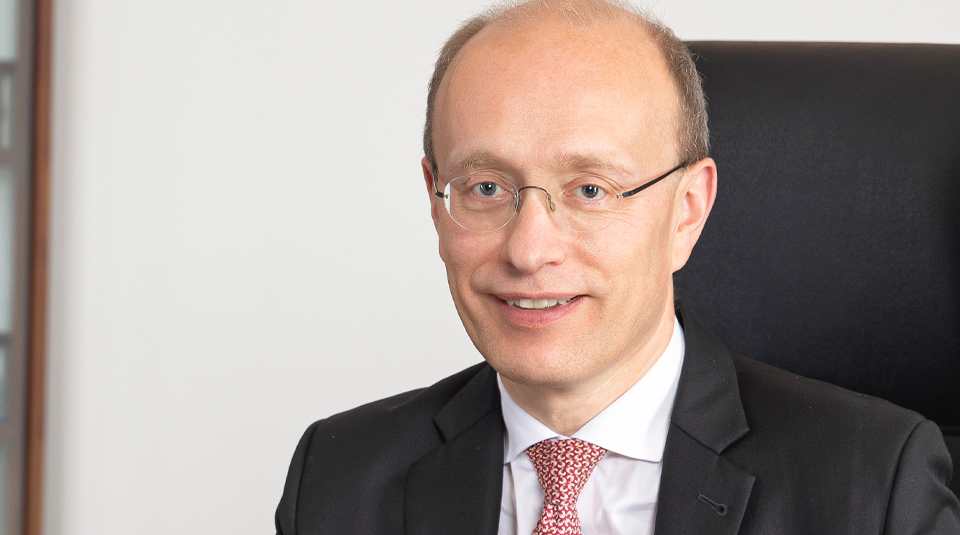
For the future, the bank plans to double down on its biggest opportunities, which include mortgages, CASA and wealth management. Departing chief executive Nguyen Le Quoc Anh leaves the bank in good shape. The current CEO is Jens Lottner.
Credit Suisse wins the investment bank award with reliable inevitability, always handling the most deals, including a dozen in the review period alone, no mean feat for a market that is still technically considered frontier.
In M&A, the Swiss bank was sole financial adviser to Vinmec for the $203 million sale of a stake in VMC Holding Business Investment to GIC and others; to Asia Commercial Bank in its setting up of a life insurance distribution partnership with Sun Life; to Masan High-Tech Materials on its $90 million sale to Mitsubishi Materials; and to Vingroup for a $650 million investment by a KKR-led consortium in Vinhomes.
Equity highlights included senior roles on a $132 million block trade of Asia Commercial Bank by Dragon Capital affiliates; a $211 million block trade of Sabeco by Heineken; and two placements of stakes in VinHomes. Credit Suisse was also mandated lead arranger on syndicated loans for Masan Group, Vingroup, Vinpearl and FE Credit for a combined total of around $1.2 billion.