 |
AustriaBest bank: UniCredit Bank Austria |
|
|

UniCredit Bank Austria wins this year’s award for Austria’s best bank by virtue of its excellent profitability and commitment to innovation. The Italian subsidiary, which boasts a market-leading position in corporate banking and private banking, saw net profit last year jump by 33.7% to €568 million, representing a return on allocated capital of 14.1%.
This was achieved despite substantial investment in digitalization, an area in which UniCredit Bank Austria has established a track record as a pioneer.
The bank was the first to introduce a digital language assistant in Austria and remains the only lender to allow credit transfers via smartphone photos, while its digital offering for corporates was recently expanded with the addition of a web-based tool for currency trading.
Last year also saw the launch of an app that allows digital execution of mortgage loans, in collaboration with German fintech Homestory.
Another fintech partnership – this time with PayKey – led to the introduction in February of a facility that links UniCredit Bank Austria’s mobile banking app with any written communication via smartphone.
 |
BelgiumBest bank: KBC
|
Already one of the highest valued banks in Europe, KBC has seen its shares outperform peers since the coronavirus outbreak. Belgium’s best bank will perhaps be the continent’s only lender to earn its cost of equity in both 2020 and 2021, according to Bank of America research.
And at the end of the first quarter, chief executive Johan Thijs could still count on a common equity tier-1 ratio of 15.3%, well above the European average. Not only strong capital but also strong enough profitability to recoup loan losses are vital attributes for bank resilience in this crisis.
|
|
|
Johan Thijs, |

High profitability and a strong capital base also give KBC the leeway to invest in technology. This has allowed advances in the awards period in open banking, paperless mortgages and insurance claims, robotic investment advice and third-party services on its mobile app.
KBC’s app now offers transport tickets from more providers, as well as bike hire and mobile phone billing in conjunction with Belgian telecom firm Proximus.
KBC’s app has further integrated PayPal and started offering access to the Belgian government’s message service. KBC also launched Fitbit Pay in Belgium.
In Belgium’s capital markets, BNP Paribas Fortis rose to take the first spot in the awards period in both debt and equity, according to Dealogic. It was behind deals ranging from the Walloon region’s €1 billion sustainable bond debut to Akka’s €175 million hybrid convertible bond offering and Argenta’s €500 million senior non-preferred issue.
Beside a string of acquisition financings, Belgium’s best investment bank was also active as an M&A adviser in the €975 million acquisition by Ardian’s Dedalus Holding of part of Agfa-Gevaert’s healthcare software business. It was also sell-side adviser in Aurubis’ €380 million acquisition of Metallo from Towerbrook.
In the equity capital markets, BNPP Fortis was joint global coordinator in the €206 million rights issue for Xior, a rapidly growing Belgium real estate investment trust active in student housing. It was also joint bookrunner in GBL’s €750 million exchangeable bond into LafargeHolcim.
The firm was also structuring adviser, deal manager and bookrunner in an inaugural €750 million restricted tier-1 note by local insurer Ageas. It showed its credentials as a sustainable finance house acting as sustainability coordinator and agent in the €2 billion revolving credit facility for chemicals group Solvay.
Finally, as the coronavirus pandemic struck, BNPP Fortis was instrumental in raising bond funding for, among others, the Belgian government and AB Inbev.
 |
CyprusBest bank: Bank of Cyprus |
Cyprus’s early reaction to the coronavirus has helped make its outbreak less severe than elsewhere in Europe.
By May, there had been hundreds of coronavirus deaths in the UK’s Cypriot community, and less than 20 in Cyprus itself. As in Greece, however, the virus is crippling the all-important tourism industry. It is also disrupting banks’ non-performing loan sales.
Cyprus’s best bank, Bank of Cyprus, was able to continue its organic and sales-based reductions of NPLs in the first quarter of 2020, reducing the NPL book by €142 million through organic workouts to €3.7 billion and increasing coverage to 56%.
For the full year 2019, it exceeded its target of reducing the NPL book by €800 million, completing the landmark Project Felix NPL sale in June.
Bank of Cyprus’ cost-to-income ratio fell below 60% in the first quarter after it completed a voluntary staff exit plan in 2019. It reduced its branch network by 18% in 2019 as part of its digitalization drive, which has also included introducing Garmin Pay for its customers.
As the coronavirus lockdowns began, Bank of Cyprus teamed up with local charity Reaction to help coordinate private-sector assistance alongside the Cypriot state, including providing essential items for people who are self-isolating at home.
 |
DenmarkBest bank: Nordea
|
Exceptional deeply negative rates, coupled with anti-money laundering problems, have made life hard for banks in Denmark. Compliance troubles and the need to spend money on rectifying them have brought down profitability at the Danish national champion, Danske Bank, which previously enjoyed one of the highest bank returns on equity anywhere in Europe.
Over the last year Danske’s team has worked hard to prevent new money-laundering failures, bolstering its financial crime team and de-risking its correspondent network. It set new environmental targets but suffered another reputational setback in relation to overcharging customers for its Flexinvest Fri investor product.
|
|
|
Frank Vang-Jensen, |

Results in the first quarter suggest Denmark’s best bank, Nordea, may fare better from a financial point of view this year, despite the coronavirus and the oil price crash. Nordea’s cost-to-income ratio in the pan-Scandinavian bank’s biggest market remains in the mid-50s compared with a level now in the mid-60s at Danske.
Nordea also made advances in the digital and sustainability areas in Denmark this year, with a new mobile banking platform and new green car loans and green mortgages. Nordea maintained a good showing across Danish M&A, equity and debt capital markets, despite new group chief executive Frank Vang-Jensen’s efficiency drive, which is largely focused on the investment bank.
Danish corporate and investment banks face particular risks in the transport and infrastructure sector following the coronavirus outbreak. Denmark’s best investment bank, Citi, nevertheless leveraged its network both in Scandinavia and globally to act on an impressive array of deals in the country during the awards period, notably in the sustainable energy and healthcare sectors.
It worked particularly closely with Orsted, advising on the sale of its Danish power distribution, residential electricity, gas and street lighting business to SEAS-NVE, as the Danish energy company switched its focus to green energy. Citi was also bookrunner on Orsted’s inaugural green hybrid issue.
Citi worked closely too with Bavarian Nordic, advising on its €803 million acquisition of the manufacturing and global rights to commercial vaccines Rabipur and Encepur from GlaxoSmithKline, underwriting the bridge financing and coordinating a €380 million rights issue in March.
Other M&A deals saw Citi advise Danfoss on its $3.3 billion acquisition of Eaton Hydraulics, and it arranged the accompanying financing. Citi advised Solix on the sale of KK Wind Solutions to AP Møller. It was also bookrunner on Maersk’s $500 million 10-year bond in June 2019.
Other debt capital markets activity by Citi in Denmark included bookrunning Danske Bank’s inaugural senior non-preferred bond.
 |
FinlandBest bank: OP Financial Group
|
As elsewhere in Europe, loan repayment holidays have been one of the main ways in which Finnish banks have helped their clients through the coronavirus lockdowns.
At Finland’s best bank, OP Financial Group, the response included opening a new phone line for people over 70 or with learning disabilities to allow them to access banking services, even if they did not previously have access to the bank’s online channels or a payment card.
OP’s use of robotics to speed up applications for loan deferrals, of which there were about 92,000, reflects the bank’s position as the biggest retail player and its wide investment in digitalization.
Over the last year OP’s digital transformation efforts have included the launch of chatbots Opotti and Viljo to answer customers’ questions about banking and insurance using artificial intelligence. Meanwhile, its mobile payment app, Pivo, further developed as a ticket provider for public transport in Finland.
It is hard to beat Finland’s best investment bank, Nordea, in its home country.
It has the largest share in corporate banking and this dominance is evident across Dealogic’s league tables. A big international deal might allow an international bank to surpass Nordea in terms of volume, but taking into account the number of deals, Nordea is the main player across Finnish M&A, equity and debt capital markets.
Nordea’s deals in Finland this year included acting as financial adviser to Outotec on its €3.3 billion merger with Metso Minerals. It provided €2 billion of financing to facilitate that deal and the acquisition of Canada’s McCloskey International.
It also acted as adviser and financier to Tieto in its €2 billion merger with Evry, including €1 billion of debt.
In addition to smaller M&A deals, the bank was financial adviser and arranger of the tender outside the US in Boels’ €1 billion public offer for shares in Cramo Oyj. It was instrumental in a €1.4 billion leveraged loan to support Mehilainen’s public-to-private acquisition of Pihlajalinna.
It was global coordinator on the €182 million IPO of Musti and acted on a string of sustainability-linked refinancings, notably for Nokia.
 |
FranceBest bank: Crédit Agricole
|
Like it or not, French banks are the most important players in the future of European finance. German lenders do not even enjoy large market shares at home.
The Italian and Dutch governments, for different reasons, constrain their national banks, while UK and Spanish banks are generally more focused on emerging markets and the Americas.
France’s best bank, Crédit Agricole, has stepped up to its role as a continental universal banking leader over the last year. This is primarily a reflection of its position as the biggest retail bank in France, something it recognizes as its core advantage; which in turn means it is less caught up in the problems its rivals face in making sure their investment banks and markets operations are right-sized.
Today, more than ever, European banks need to consolidate, but most of the barriers that have prevented them doing so across borders are still in place.
Product partnerships between lenders have therefore become more important, and Crédit Agricole has been the principal facilitator of such cooperation through the European expansion of its funds, insurance, consumer finance, payments and asset servicing businesses.
Although negative rates became deeper and the French economy slowed, Crédit Agricole’s revenues rose slightly in 2019, with net income rising by about 5% to €7.2 billion.
The central listed entity, Crédit Agricole SA (Casa), posted an underlying return on equity of almost 12%, while common equity tier-1 capital rose to 12.1% at Casa and 15.9% at group level.
Rising capital adequacy, low non-performing loans and healthy diversification earned Crédit Agricole a ratings upgrade by Moody’s in September.
The group also simplified its capital structure through the end of a complex guarantee mechanism between the group and Casa in early 2020. It also pledged to invest €6 billion in digitalization as part of its new medium-term plan.
Largely because of mishaps in equity derivatives, it has not been an easy year for French investment banks. Societe Generale, in particular, risks being trapped in permanent restructuring mode – even more so after the coronavirus crisis.
France’s best investment bank, BNP Paribas, has the scale and diversification to weather some of these challenges. This year, for example, it achieved a top-three position in each of Dealogic’s league tables for M&A, debt and equity capital markets in France, something that no other bank can boast.
In debt capital markets, BNPP rose to a clear first in France, according to Dealogic, ahead of Crédit Agricole, arranging deals such as the €2.25 billion triple-tranche M&A financing for Publicis early in the awards period.
In the first quarter of 2020 BNPP played a key role in high-yield jumbo deals for Altice and Air France.
The bank also helped Groupe ADP raise €2.5 billion in the first airport and infrastructure bond since the coronavirus crisis began, and then led Airbus’s €2.5 billion bond a few days later. It was structuring adviser and joint lead manager on Bpifrance’s €1.5 billion Covid-19 response bond.
In equity capital markets, BNPP increasingly threatens SocGen’s traditional lead. It was global coordinator this year on the €1.7 billion IPO of Française des Jeux and the €987 million IPO of Veralia. After the coronavirus crisis took hold, it helped raise €400 million in a convertible bond for Korian in the French healthcare sector.
BNPP is one of the continent’s leading banks in sustainable finance and impact banking. In France, it acted on a 50-year green bond for Societe du Grand Paris. It was also sole financial adviser on a €2.3 billion limited recourse financing for the Saint Nazaire offshore wind project.
 |
GermanyBest bank: Hypovereinsbank
|
Anyone who had even vaguely followed European banking for the last decade then taken a break for a year, would be surprised to see that the continent’s best performing bank stock over the 12 months to the end of March 2019 was Deutsche Bank.
A restructuring that is at last beginning to look sufficient to tackle the underlying issues makes Deutsche look even better, because Germany’s second-biggest private-sector bank, Commerzbank, has gone in the other direction and failed to appease its critics even more spectacularly than before.
Commerz, indeed, was one of the worst-performing bank stocks on the continent over this period.
But the restructuring of both of Germany’s biggest private banks has a long way to go and the coronavirus crisis has not helped. Deutsche still reported a €5.7 billion post-tax loss in 2019 at group level, and income before tax in its German home market dropped by about 60%.
|
|
|
Michael Diederich, |

Litigation risks, especially in the US, continued to cast a shadow on its progress in realizing intra-group synergies closer to home.
By contrast, Germany’s best bank, Hypovereinsbank, has reaped the benefits of its previous actions to tackle its problems, including a three-year plan that ended late last year.
As it is now in the midst of a new medium-term plan, its transformation is by no means over. Nevertheless, parent group UniCredit reported a 17% rise in profit before tax in its German commercial banking division in 2019, reaching €849 million.
This improved result in Germany reflects a decline in operating costs in the division in 2019. Its customer deposits and loans increased steadily, and it added 73,000 new clients.
This was also the year when the group brought to Germany its western European mobile app, first launched in Italy, among other digital advances.
Hypovereinsbank, led by chief executive Michael Diederich, launched a new social impact banking programme in 2019. During the coronavirus crisis – in a much-needed symbol of European solidarity – it led Bavarian corporate donations to Italy, supporting hospitals in Milan and Rome, in addition to medical and educational support in Germany.
Even while it is cutting back in other areas, serving domestic corporate clients remains core to Germany’s biggest bank. Its group restructuring has gained credibility largely due to more decisive cuts in its international capital markets business, but Germany’s best investment bank, Deutsche Bank, has again proven its importance to the country’s corporate sector.
|
|
|
Christian Sewing, |
The firm’s importance to its home market was evident, even before the coronavirus pandemic. It advised Innogy on the takeover of E.On, BASF on the merger of Wintershall and DEA, and Aroundtown on its takeover of TLG Immobilien.
It was also global coordinator on the €1.5 billion listing of Traton.
But Deutsche wins this award thanks to an unrivalled number of key deals done since the coronavirus outbreak, including KfW’s €4 billion bond market reopener in late March, and subsequent syndicated loans for firms such as Adidas, Bosch and Daimler.
In its first-quarter results Deutsche noted that its investment bank had helped businesses, states and agencies raise more than €150 billion in debt by the middle of March. Much of that has happened in its home market.
“We’re back to number one in corporate finance in Germany,” group chief executive Christian Sewing told analysts.
“Year-to-date and for the first time since 2017, we have regained our position as the market leader in German corporate finance,” he said, signalling that Deutsche has reclaimed the top position from JPMorgan, last year’s winner of this award.
 |
GreeceBest bank: Alpha Bank
|
Before the coronavirus crisis, a new government and ultra-low eurozone interest rates infused Greek banks with an optimism not seen since 2008.
Low rates spurred interest in Greek government debt and non-performing loans, and the state launched a new asset protection scheme for NPL sales late last year.
Though Greece acted rapidly to tackle the spread of Covid-19, its reliance on foreign tourism and small businesses mean the economy and banks are especially exposed to lockdowns, travel bans and fear of travel. This has brought new questions about the ability of the banks to find buyers for their NPL books.
In this context, Greece’s best bank, Alpha Bank, has been better able to prepare for the challenges ahead, not just in terms of bringing down NPLs but also adapting to a digital future.
That is largely thanks to a relatively robust financial situation going into the coronavirus crisis, with a common equity tier-1 ratio of 18% at the end of 2019.
In addition to ambitious and detailed plans to tackle NPLs, Alpha’s new three-year strategy saw it set up a transformation office late last year headed by Anastasia Sakellariou, former head of Greek online lender Praxia Bank. It also launched new open-banking functionality and Garmin Pay.
Chief executive Vassilios Psaltis can also be proud of Alpha Bank’s corporate social responsibility programme. This has included bolstering medical facilities on the Greek islands and, since the coronavirus crisis, supplying medical equipment to hospitals in Athens, Thessaloniki and Larissa.
With the Greek sovereign issuing negative yielding debt, this was a year when the capital markets opened for more Greek issuers, including bank subordinated debt.
|
|
|
Antonios Achilleoudis, |
A €650 million share capital increase at Lamda Development was the country’s largest non-bank equity offering in 10 years. The rights issue gave the real estate company funds to kick start the Hellinikon Project, one of the largest urban development projects in Europe and a symbol of Athens’s recovery. Greece’s best investment bank, Axia Ventures Group, was global coordinator.
In another pivotal investment banking deal for the country, Axia advised Grivalia Properties, Greece’s largest real estate investment company, on a merger with Eurobank, allowing the latter to accelerate its reduction of non-performing loans.
Axia, whose founding partner and managing director is Antonios Achilleoudis, is also advising Alpha Bank on its NPL securitization programme.
Axia’s other work for the banks included assisting Alpha Bank and Piraeus Bank, the country’s largest lender, in reopening the tier-2 bond market. It also advised on numerous corporate restructurings including Folli Follie, Intralot and Alumil. Axia also worked on the ground-breaking green bond by Ellaktor Group.
 |
IcelandBest bank: Landsbankinn |
Iceland’s post-financial crisis recovery, largely fuelled by tourism, was already cooling last year. The impact of the coronavirus on the international travel and tourism industry therefore poses particular challenges for the country’s banks.
Iceland’s best bank, Landsbankinn, has held up better going into the crisis and it seems better-placed to weather difficulties than rivals, not least thanks to its exemplary efficiency. Its cost-to-income ratio in 2019 was just 43%, while the bank increased its lending to retail customers by IKr54 billion ($390 million). It also posted an extraordinarily high common equity tier-1 ratio of 24%.
The year saw Landsbankinn introduce Apple Pay, Fitbit Pay and Garmin Pay for its customers.
It also launched an API (application programming interface) marketplace as part of its open-banking initiatives and it rolled out self-service credit limits and overdrafts for current account clients.
 |
IrelandBest bank: Bank of Ireland
|
Negative eurozone interest rates and charges for litigation around tracker mortgages are just two of the reasons why Irish bank stocks have been among the worst performing in Europe over the last year.
With coronavirus adding to their troubles, the top two lenders fell to an 80% discount to book value after they announced first-quarter results for 2020.
In this difficult environment, Bank of Ireland is holding up slightly better than its domestic peers for now. New lending at the bank increased by 3% to €16.5 billion in 2019 and its common equity tier-1 ratio rose to a healthy 13.8%.
|
|
|
Francesca McDonagh, |

It cut its underlying operating expenses by 4%. Its non-performing loan ratio fell below the symbolically important 5% threshold, reaching 4.4%.
The first quarter of 2020 has brought a bleaker picture, but under chief executive Francesca McDonagh, the bank has played its part in the sector’s response to coronavirus. It worked alongside the central bank and government to give 33,000 loan repayment breaks to individuals and businesses in Ireland in the first weeks of the crisis, most of it processed electronically.
Before the onset of coronavirus, Bank of Ireland sought to bring its business forward with the launch of a new digital advice and transaction platform for investments, the opening of a new leveraged acquisition financing office in Madrid and the acquisition of a €260 million performing commercial loan portfolio from KBC Bank Ireland.
The standout M&A deal in Ireland in the awards period was Ardagh’s combination of its food and speciality metal packaging division with Ontario Teachers’ Pension Plan Board’s subsidiary Exal, to form Trivium Packaging.
Ireland’s best investment bank, Citi, acted as exclusive financial adviser to Ardagh on the transaction, but that is not the only work Citi did for Ardagh in the period. It was also behind the €1.8 billion issuance of senior secured and senior notes in July, and a €1.2 billion senior-secured toggle notes issue in November. It also acted as lead-left bookrunner on Trivium’s €2.85 billion financing package in July.
Citi’s work for other clients in Ireland over the period included acting as joint bookrunner for Bank of Ireland and Allied Irish Banks in those banks’ successful tier-2 issues in November and October, respectively.
In addition, Citi was instrumental in raising funding for Irish aviation clients including AerCap, Goshawk and Ryanair.
 |
ItalyBest bank: Intesa Sanpaolo
|
Tragically, just as the coronavirus health crisis has hurt Italy more than any other country in continental Europe, the country’s economy will be hardest hit too, pushing more people into poverty.
For the banks, this crisis will reverse some of the progress they have made in recent years in reducing their non-performing loan portfolios.
Stronger capital and higher profitability is therefore more important than ever, so it is not surprising that investors have favoured Italy’s best bank, Intesa Sanpaolo. That is testament to chief executive Carlo Messina’s focus on developing his Italian business, particularly managing Italian wealth.
Intesa Sanpaolo’s recent bid for mid-tier rival UBI Banca is not without controversy. It would make the country’s strongest bank even stronger. But it has only come about because peers such as UBI have been slow to act on the opportunity for domestic consolidation.
|
|
|
Carlo Messina, |
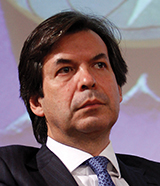
It has demonstrated Intesa Sanpaolo’s commitment to its business in Italy, particularly in comparison with UniCredit.
It is also telling how local rivals’ occasional criticism of Intesa Sanpaolo focuses on elements of Messina’s strategy – such as keeping up the share price by prioritizing high-dividend pay-outs – that they then try to emulate themselves, often less successfully.
When the coronavirus struck, Intesa Sanpaolo was right to prioritize its social role, giving €100 million to the government’s civil protection unit. It has donated to field hospitals, medical research and distance learning.
It also made €15 billion in new credit available to businesses, later increasing it to €50 billion as the government stepped up its guarantee framework.
Intesa Sanpaolo’s earlier advances in digital banking have also stood it in good stead during social distancing. Its mobile app is one of the highest-rated in Europe by Forrester and it has invested heavily in digitalization in its global transaction banking department.
Until the coronavirus crisis, the biggest news in Italian investment banking over the last year was the shakeup in the shareholder structure at Mediobanca, winner of the investment bank award for the last two years running.
The exit of UniCredit and arrival of local billionaire Luigi Del Vecchio as the biggest shareholder was the talk of the town in Milan at the end of 2019.
Although Mediobanca’s management retains much respect, the shareholder shakeup was not easy for them to manage and there were signs of tension with Del Vecchio.
Meanwhile, the coronavirus crisis has hurt the bank’s results, especially through its proprietary trading arm.
International investment banks are not giving Mediobanca a free run in Italy, and this year Bank of America, Italy’s best investment bank, had a particularly strong showing.
At the start of the period, it was global coordinator on the €2.1 billion IPO of payments firm Nexi, later working with the firm to issue bonds and purchase Intesa Sanpaolo’s merchant acquiring activities. It also acted as global coordinator on Sanlorenzo’s €194 million IPO in December.
In M&A, BofA was mandated lead arranger and bookrunner on EssilorLuxottica’s €8 billion bridge facility for the acquisition of a majority stake in Grandvision. It advised Carlyle on the sale of Golden Goose to Permira, advised TIM on the merger between INWIT and Vodafone Italy’s towers and is advising Fiat Chrysler Automobiles on its €42 billion merger with PSA.
In the debt capital markets, BofA was bookrunner on all three tranches of Enel’s €2.5 billion sustainability-linked offering in October.
It was also bookrunner on a dual-tranche additional tier-1 bond from Intesa Sanpaolo in February, and later on the Republic of Italy’s €16 billion dual-tranche bond, after the coronavirus outbreak, which received €110 billion of orders.
 |
LuxembourgBest bank: BGL BNP Paribas |
As elsewhere in Europe, Luxembourg has called on its banks to help businesses’ cash-flow problems during the coronavirus outbreak through repayment holidays and by distributing new state-guaranteed loans.
Luxembourg’s best bank, BGL BNP Paribas, has reacted to this by speeding up its decision-making processes and actively engaging with business clients to help them manage the lockdown and its associated effects.
Thankfully, the local economy is relatively robust and the country’s biggest bank went into the crisis on a solid footing. Following the acquisition of the local unit of ABN Amro in 2018, which added some upfront costs, BGL’s net profit was up slightly in 2019 at €340 million.
Its net banking income rose 5% in 2019, with 9% growth in outstanding loans in retail and corporate banking, and average deposit volume growth of 12%. It also saw a 9% rise in assets under management in the wealth division. The first quarter saw similar growth in loans and deposits.
The period also saw the bank bring Apple Pay to its customers, along with other digital banking milestones such as a new point of sale cashless payment facility in partnership with Six Payments.
It also launched a green desk in the corporate division to help clients manage their energy transition.
One other interesting player to watch in the country is Banque Internationale à Luxembourg (BIL), which is channelling investment into international wealth management and corporate banking following its acquisition by China’s Legend Holdings in 2018.
During this awards period, however, BIL did not threaten BGL’s dominance of banking business in Luxembourg.
 |
NetherlandsBest bank: ING
|
Dutch banks are some of the best in Europe on the key themes for the future of banking, including digitalization and sustainable finance.
In the immediate future they are under pressure from the persistence and depth of negative rates in the eurozone, as well as heightened concern about their earlier shortcomings in anti-money laundering.
After the coronavirus outbreak, these banks have faced even greater difficulties. However, the Netherlands’ best bank, ING, has proven relatively robust in terms of its financial results in 2019 and the first quarter of 2020, which has been reflected in its relative share price performance.
Much of this is to do with ING’s much better efficiency compared with its main domestic competitors.
It also faces less intense debate about the viability and future of its corporate and investment banking division as is the case at ABN Amro.
ING is also working to lower its reliance on net interest income, with the launch of a new insurance partnership with Axa, for example.
ING shows no signs of complacency over its digital lead.
A bold if problematic transformation project, aimed at unifying its national IT platforms under one umbrella, reached an important milestone in early 2020 when the bank announced its Dutch, German and Belgian mobile customers are now all being served by the same app.
Beside other fintech initiatives, notably in transaction banking, ING has also boosted its credentials in the environmental space. It set ambitious new targets to cut pollution from its buildings and business travel, and published the first results from its ‘Terra’ approach to aligning its loan book with the Paris Agreement on climate change.
ING’s corporate and investment bank launched the world’s first sustainability improvement derivative for SBM Offshore, and the world’s first sustainability improvement fund financing for Quadria Capital Management.
Dutch wholesale lenders are pushing hard in sustainable finance and in digitalizing businesses such as trade finance and cash management.
However, the Netherlands is a rare example of a large western European economy where none of the domestic banks hold a top-five position in equity, debt capital markets or M&A in their home country.
With the exception of certain niches that the likes of Kempen & Co can viably target, such as healthcare, international banks dominate – and competition between them is intense.
So Bank of America, led in the country by Ference Lamp, can be proud of its status as the Netherlands’ best investment bank.
Takeaway.com’s €10 billion all-share merger with UK peer Just Eat was one of the standout European M&A deals during the awards period. Bank of America, having been global coordinator on Takeaway.com’s 2016 IPO, was instrumental in securing agreement from Just East shareholders for the Dutch firm’s bid, trumping a rival cash offer from technology investor Prosus.
BofA’s other Dutch deals in the awards period included advising local bank NIBC on a €1.4 billion public offer by Blackstone. It also advised Hellman & Friedman on the acquisition of Partners Group’s stake in Action and advised PostNL on its €130 million acquisition of Sandd.
In leveraged finance and debt capital markets, BofA was joint global coordinator on a €1.5 billion debut offering by Q-Park, the $1.5 billion refinancing of Nexperia, and on a $1.4 billion bridge facility and €1.7 billion refinancing of senior credit facilities following the acquisition of Cooper Lighting Solutions by Signify.
 |
NorwayBest bank: DNB
|
Compared with other European states, Norway faces a uniquely challenging coronavirus period as the collapse of oil prices poses just as great a problem for its national banks as any virus-related lockdowns.
Nevertheless, the country can count on one of the continent’s strongest lenders going into the crisis. Norway’s best bank, DNB, could still boast a common equity tier-1 ratio at the end of the first quarter of 17.7%, slightly higher than a year earlier, in addition to a double-A rating by Moody’s and Standard & Poor’s.
In 2019, DNB’s profit rose by 5% to NKr25.7 billion ($2.6 billion), with a return on equity of 11.7% and a cost-to-income ratio of 44%. During the year, DNB welcomed a new chief executive, Kjerstin Braathen.
It gained ground in the local savings market, notably through its mobile channel. It also completed the sale of 60% of Luminor, the Baltic bank it jointly owned with Nordea, to a consortium led by private equity funds managed by Blackstone.
Norwegian corporate troubles were the centre of attention in Europe in early 2020 for reasons other than the oil price crash. Norwegian Air, previously a fast-growing global budget airline, was pushed into a debt restructuring following coronavirus-related travel bans.
Norway’s best investment bank, ABG Sundal Collier, acted as joint financial adviser to Norwegian Air Shuttle ASA in connection with its NKr12.7 billion recapitalization. It was also joint bookrunner in the related NKr400 million equity offering. This is just one indication of the firm’s importance to the Norwegian capital markets and corporate sector.
In the period of these awards, ABG’s advisory work included the €2 billion merger between Evry and Tieto, as well as the sale of Seagull to Oakley Capital, which also acquired Videotel.
It facilitated the €130 million acquisition of VWD by Infront through an equity placement and underwritten bond of €105 million. It advised Data Respons on its €370 million public-to-private takeover by AKKA.
In the equity capital markets, ABG acted as global coordinator in the NKr1.5 billion IPO of SATS and IPOs by Norske Skog, Klaveness, Ultimovacs and XXL.
 |
PortugalBest bank: Santander Portugal
|
Portugal’s economy, which was growing faster than the wider euro area before the crisis, is expected to continue to outperform in 2020, despite the coronavirus.
As elsewhere, the government has responded with a programme of state guarantees and support for staff temporarily furloughed, as well as tax and social security deferrals. Banks have rolled out loan repayment moratoriums.
Before the coronavirus, an improving economy in Portugal was proceeding hand in hand with progress in the restructuring programmes of the weaker banks, including improvements in their business focus and efficiency – especially in the reduction of their non-performing loan ratios.
Despite these improvements, most banks are some way off matching Santander Portugal, the country’s best bank.
It posted net income of €527 million in 2019, up 5.5% and its best ever result. Its return on equity rose to 12.7%, while its cost-to-income ratio fell to 45%. Its NPL loan ratio fell to 3.3% and its common equity tier-1 ratio rose to 15%. It increased lending to companies and made progress in attracting customers.
Adoption of digital channels and work methods allowed the bank to dramatically reduce the time it takes to apply for a mortgage. Such agility was especially important when the coronavirus struck, as it took a 36% share of government-guaranteed loans to small and medium-sized businesses in the first tranche of the scheme – markedly higher than its overall share of SME loans in Portugal.
Sadly, Santander Portugal’s retention of this award comes at a time when the bank is mourning its chairman and long-standing former chief executive, Antonio Vieira Monteiro, a man who must take much of the credit for this award. He was one of the first people in Portugal to die from the coronavirus.
Restructuring by some Portuguese banks has inevitably hampered their efforts to keep hold of corporate advisory and capital markets business.
Despite competition from other international banks, this has allowed Santander Portugal, the country’s best investment bank, to come to the fore.
Santander’s biggest deal in Portugal this year involved acting as adviser to Cellnex in the acquisition of the telecoms towers business, Omtel, for €800 million. It also advised Sonae Sierra and ABG in the disposal of a 50% stake in Sierra Prime for €525 million and advised Glennmont Partners in the sale of a Portuguese Solar energy portfolio to Finerge.
 |
SpainBest bank: Banco Santander
|
Spain has been one of the countries hit worst by the coronavirus crisis; as a result, its economy is expected to suffer one of the deepest post-crisis recessions anywhere in the world.
A mitigating factor is that its banking sector is one of the strongest in Europe.
That is no longer just because its big banks can fall back on other countries in their network, but rather because its bad-loan clean-up happened relatively soon after the eurozone crisis, and because banking consolidation has since taken place to a greater extent than in countries such as Germany and Italy. Progress through consolidation in the home market has been especially visible at Spain’s best bank, Banco Santander, which completed the technology migration of 3.5 million Banco Popular customers and 1,600 branches last July.
|
|
|
Rami Aboukhair, |

Thanks to Popular, Santander can add the country’s biggest share of small and medium-sized enterprise clients to what was already a leading position in corporate banking and among wealthier individuals.
Santander Spain, led by chief executive Rami Aboukhair, saw its underlying attributable profit rise to €1.6 billion in 2019, with a return on equity of 10.5%.
A 7% drop in operating expenses helped improve its efficiency ratio to 53%.
Digital progress during the year included the international rollout of Openbank and the launch of its Smart Bank offering in Spain.
Meanwhile, in the SME sector, it backed the launch of Tresmares Capital, a private debt and equity financing platform that works independently from, but in coordination with, Santander’s commercial network. It also launched Financia&Go, an electronic invoicing service.
Once the Covid-19 crisis struck, Santander established a €20 billion SME liquidity fund, which came before the state’s own guaranteed loan programme. It had a special focus on the hard-hit tourism and hospitality industries.
Between mid March and late April, the bank extended €12 billion in loans at its own risk, in addition to almost €10 billion of state-backed facilities, €7 billion of which went to SMEs and the self-employed.
Sustainable finance has been a particular area of focus for investment banks across Europe. This is especially important in Spain, given the importance of renewable energy and infrastructure businesses in the country. This business is one of the strengths of Spain’s best investment bank, BBVA.
BBVA’s sustainable finance activity included multi-billion euro deals for Siemens Gamesa, Masmovil, Merlin, Iberdrola, Enagas, Acciona and Gestamp, in addition to a plethora of smaller trades.
Its renewable energy project finance deals included Zero-E, for €434 million, and Naturgy Renovables, for €600 million, in addition to several wind energy debt refinancings totalling €700 million.
Other work by BBVA in Spain included advising Ferrovial and Unicaja on the €585 million sale of an 85% stake in Autopista del Sol to Meridiam and advising Telefonica on the €550 million sale of 11 data centres to Asterion.
It also advised on the sale of Cubico Sustainable Investments’ 49% stake in Aguajerez to FCC Aqualia.
In the debt capital markets, BBVA was behind a €500 million inaugural senior bond for Cepsa following its 37% acquisition by Carlyle and a €1.5 billion dual-tranche deal for Abertis, refinancing acquisition loans.
It also inked deals for financial institutions, including the inaugural senior non-preferred transactions by Kutxabank.
 |
SwedenBest bank: Handelsbanken
|
Despite Sweden’s unorthodox healthcare policies on Covid-19, the country’s banks have not been shielded from its impact. As a small and open economy, heavily reliant on manufacturing exports, the country still faces an even deeper recession than the one it suffered after 2008. The crisis also threatens a decade-long housing boom.
But Handelsbanken, Sweden’s best bank, emerged from the coronavirus outbreak as Europe’s highest-valued lender by price-to-book value – the best-performing quality bank stock in the continent in early 2020.
Chief executive Carina Akerstrom has positioned the bank well for the simple and resilient models that European bank investors are looking for in the post-Covid era. Shortly after she arrived in early 2019, she faced up to the firm’s profitability challenges relative to peers.
|
|
|
Carina Akerstrom, |

She also suspended the company’s profit-sharing scheme for staff, but was then able to reinstate it in early 2020, partly thanks to exiting subscale operations in the Baltics, Germany and Asia.
Heightened compliance needs internationally made such small offices even less viable and, from an investor’s perspective, the decision has reduced operational risk and made Handelsbanken easier to understand.
The bank still faces challenges. In the UK, it is exposed to commercial real estate, while it has also grown more rapidly in Norway recently than in Sweden, giving it greater exposure to the oil price crash.
Nevertheless, Handelsbanken’s earlier strategy to focus more to the West than the East has shielded it from the worst of the recent money-laundering scandals.
Above all, investors find comfort in the bank’s exceptionally high capital ratio – 17.6% at the end of the first quarter of 2020 – and its exceptionally low non-performing loan ratio (just 0.04% at the end of 2019).
Sweden’s best investment bank, Carnegie, dominated the country’s equity capital market in the period of these awards, surpassing other banks both by volume and number of deals, according to Dealogic. The firm then helped clients raise hundreds of millions of krona during the coronavirus crisis, with new share issues for firms such as Sinch, Embracer and Oncopeptides.
Carnegie’s ECM deals included acting as sole global coordinator in the SKr2.8 billion ($299 million) IPO of Karnov Group and joint global coordinator in smaller listings for John Mattson Fastighetsfõretagen, K-Fast Holding and K2A Knaust & Andersson Fastigheter. It was particularly active in the healthcare sector, raising funds for clients both in the public and private markets.
Carnegie’s advisory work included a private equity takeover of Nordic travel company Vinggruppen, after its former parent, Thomas Cook, went into bankruptcy. It also advised on the reorganization of bitumen manufacturer Nynas Group.
It is also working with clients looking for takeover targets following the coronavirus crisis: in February, it advised Stillfront’s acquisition of US gaming rival Storm8, for example.
 |
SwitzerlandBest bank: Credit Suisse
|
The last year has seen a dramatic change in the leadership of Swiss banks: both the biggest firms replaced their chief executives. Despite this, in the first quarter of 2020, Swiss lenders were the only ones in Europe to have higher profits before tax than a year earlier, according to research from Deutsche Bank.
The positive trend, both before and after the coronavirus, is particularly evident in the home franchise at Credit Suisse, Switzerland’s best bank.
Its Swiss universal bank saw profit before tax rise by 27% in 2019, with net revenues up by 8% and costs down by 3%. It posted a 21% return on regulated capital, assets under management swelled and its cost-to-income ratio dropped from 60% in 2018 to an outstanding 54% in 2019.
|
André Helfenstein, |
Credit Suisse’s offering for small and medium-sized enterprises included the investment in 2019 of more than €140 million of venture and growth funds in 58 companies through Credit Suisse Entrepreneur Capital.
In a joint effort with other Swiss firms, the bank further helped the Swiss Entrepreneurs Fund complete two fundraising rounds for a total of SFr250 million ($264 million), starting capital deployment with three local firms: Nexxiot, SkyCell and Lunaphore.
On the digital side, it expanded its open-banking offering for businesses through agreements with firms such as local software provider Klara. This was in addition to a retail offering that included the launch of Apple Pay, Samsung Pay, Google Pay, Garmin Pay, Swatch Pay and Twint (a Swiss instant payment service).
Credit Suisse’s speed in serving domestic SMEs became clear again during the coronavirus crisis. The bank was instrumental in the design and implementation of a scheme of state-guaranteed loans that became a model for the rest of Europe. Swiss universal bank chief executive André Helfenstein and the new group chief executive Thomas Gottstein were both heavily involved.
As it continues to refine its international business, Credit Suisse remains Switzerland’s best investment bank. This is clear not just from its position at the top of Dealogic’s equity and debt bookrunner league tables in Switzerland, with more than three times the share of the number two bank. It is also present on a good number of the most important deals of the year, including those in M&A.
In one of the key European deals in 2019, Credit Suisse advised Nestlé on the SFr10.2 billion divestment of its skincare division to a consortium led by Nordic private equity player EQT and the Abu Dhabi Investment Authority. Credit Suisse also advised Nestlé on the $4 billion sale of its US ice cream business to Froneri, a joint venture with PAI Partners.
The bank’s other advisory work included Zurich’s $2.1 billion acquisition of OnePath from ANZ, in the Australian life insurance sector, with a 20-year distribution agreement attached. It advised Six on its acquisition of Spain’s BME for €2.8 billion in the financial market infrastructure sector.
In equity capital markets Credit Suisse acted as joint global coordinator in the SFr1.5 billion IPO of Stadler Rail, the SFr752 million IPO of Software One and the SFr547 million IPO of Medacta. It also acted as joint bookrunner for Onex in three consecutive accelerated bookbuilds of its shares in SIG Combibloc and joint global coordinator on Schmolz + Bickenbach’s SFr325 million rights issue.
 |
United KingdomBest bank: Barclays
|
The UK’s best bank, Barclays, has had a particularly good year relative to its peers, which was reflected in stock price performance, especially in early 2020. While the group has seen its return on equity rise for the last three years, the UK ring-fenced bank – led by chief executive Matt Hammerstein – saw underlying profit rise by almost 7% in 2019.
The previous winner of this award for the last seven years, Lloyds Banking Group, still had a higher underlying return on equity in 2019 than Barclays’ group figure, which includes much more activity outside the UK. But the underlying return on equity at Barclays UK at 17.5% is higher than Lloyds’ 15%.
Moreover, the recent growth of Lloyds’ UK consumer credit business was becoming a worry, even before the coronavirus crisis.
|
Matt Hammerstein, |
Barclays’ cost-to-income ratio is slightly higher than that of Lloyds, but Barclays’ 55% in 2019 does not suggest an inefficient business. It is, moreover, a UK franchise of an unrivalled quality, not just in corporate and investment banking but also in areas such as private banking and wealth management, and in some areas of banking for small and medium-sized enterprises.
Barclays more than holds its own in the digital arena, with US research company Forrester ranking its mobile app joint top in the UK alongside local neobank Monzo. Among the features it added this year was a facility to allow customers to use its app to make payments from current accounts held with other UK banks.
Despite this emphasis on digitalization, Barclays pledged this year to halt branch closures where it is the last branch in town. In the late winter it launched a £50 million Adverse Weather Fund to support SMEs and farmers after a period of flooding – which was a precursor of its considerable response to the coronavirus in both banking and philanthropy.
Fees in Europe’s biggest investment banking market by far held up better than elsewhere on the continent this year, but they still fell steeply. Success in this context has been all about gaining share in a shrinking market, and that is exactly what the UK’s best investment bank, Barclays, has continued to do.
The bank’s markets business saw income swell by 7% to reach £5.2 billion in 2019 while banking fee income also held up better than peers at £2.5 billion. The first quarter of 2020 was a record one for the markets business, with fixed income, currencies and commodities income up by 106% to £1.9 billion and equities income up 21% to £564 million.
While its relatively strong US business makes Barclays a rare success among European investment banks, its UK home is also vital. In Dealogic’s UK league tables for the awards period, only Barclays and JPMorgan are in the top three in more than one product. Of those two only Barclays is top of any one product – debt capital markets – in which it took the lead from HSBC this year.
This leadership in the debt markets became especially apparent after the coronavirus struck, as Barclays arranged almost half of commercial paper issuance under the Bank of England’s Covid corporate financing facility scheme, amounting to £9.9 billion by late May.
Before this, it was instrumental in key industry developments such as helping issuers Lloyds and Nationwide establish Sonia benchmarks and in Danish energy company Orsted’s green sterling issuance – the latter coming in a year that also saw Barclays set up a new sustainable and impact banking group.
On the equity capital markets side it doubled its market share to 10%, according to Dealogic, bookrunning IPOs such as Trainline’s £1.1 billion listing. It helped lead the reopening of UK ECM activity during the coronavirus crisis, with capital raisings for firms such as SSP and Hyve. Its corporate broking build-out also saw it act as defence adviser for the London Stock Exchange against a hostile bid by the Hong Kong Stock Exchange.
In M&A, Barclays advised on deals including GIP’s £2.9 billion sale of a majority stake in Gatwick Airport to Vinci, Ovo Energy’s £500 million acquisition of SSE Energy Services and the LSE’s £27 billion acquisition of Refinitiv.
It also advised on Pennon’s £4.2 billion sale of its waste management business to KKR and on the £8.2 billion sale of Tesco’s Thai and Malaysian operations to Charoen Pokphand.