Last year was a challenging period for the fintech sector. According to CB Insights, global funding volumes were down 46% from 2021, with the fourth quarter of 2022 recording the lowest quarterly level since 2018.
Analysis of fintech mergers and acquisitions undertaken by The Paypers shows fintech M&A activity at its lowest level since 2017.
But this did not stop United Fintech making its latest FX-focused acquisition with the purchase of post-trade processing network Cobalt in December, which followed a deal in 2021 to acquire trading analytics firm FairXchange and the purchase of trading data provider NetDania.
In late March, the company announced that its most recent acquisition would relaunch as CobaltFX and focus on credit optimization and post-trade FX, with its digital asset division being spun off.
Marc Levin, chief executive of CobaltFX and group COO of United Fintech, says that while digital assets and FX are likely to merge in the future, they are currently at very different stages of maturity and therefore require different approaches to be successful.
The settlement process in the post-trade space is just one aspect of the FX market that is still behind the curve in terms of the use of technology
Christian Frahm, United Fintech
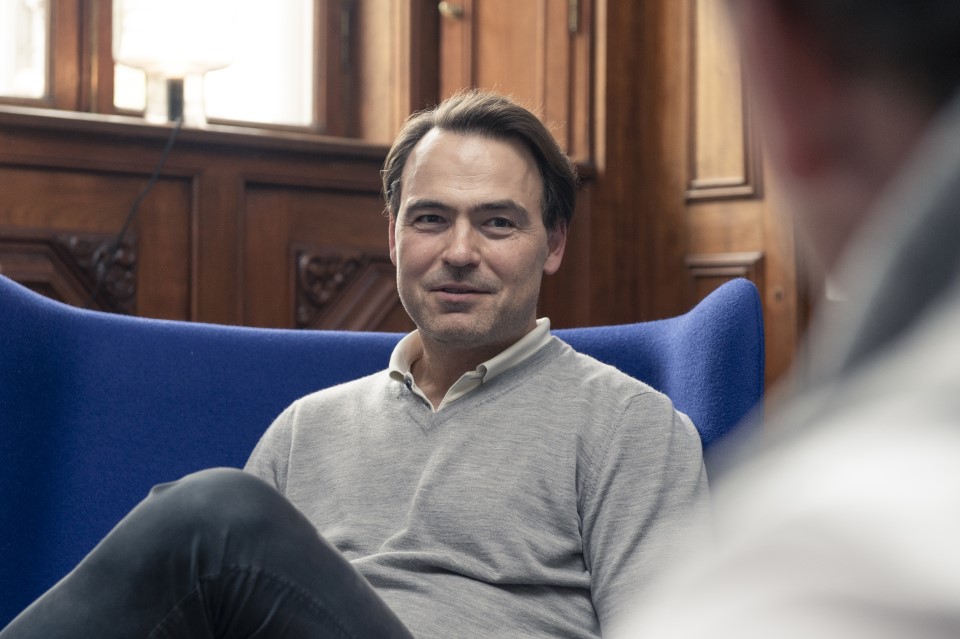
Christian Frahm, founder and chief executive of United Fintech, adds that with FX being a core asset class for banks and large institutions, deals like these fit into his company’s strategy to help these clients move away from outdated technology and reduce costs.
“The settlement process in the post-trade space is just one aspect of the FX market that is still behind the curve in terms of the use of technology,” he says. “Reconciliation is another process which is still largely manual.”
Frahm adds: “If we look at FairXchange, there is a business that has combined FX market information with data-analysis techniques to present data in a simple format.
“We could see that it made sense for banks to be having conversations with their customers based on highly accurate data for each trade.”
The United Fintech founder’s background is more build than buy: he set up CFH Group, later renamed Finalto, in 2008, with the intention of developing proprietary technology. He says this experience gave him an insight into which elements of the FX market were inefficient.
“There are talented people building great products based on innovative technology, but getting those products into banks and large institutions is difficult,” he says. “Our model is to partner with the people building the best technology and bring it to our customers.”
As a result, the company is focused on acquiring businesses with products that are enterprise-ready and have industry references.
Frahm says the product roadmaps for all the businesses in his portfolio will be determined by what they see in their own industry.
“We are not trying to force new development or functionality that we think customers may like,” he adds. “However, we will definitely have input and insights from a broader perspective of what is needed in the future.”
The right thing
Even though 2022 was not a vintage year for fintech acquisition or funding, Frahm says he had no doubts that proceeding with the Cobalt deal was the right thing to do.
“When you set out to help banks digitize, you have to accept that it will be long journey, so what happened in 2022 is not that relevant in the longer term,” says Frahm. “When we looked at Cobalt, we asked if it made sense in terms of the people and the product fit. We understand how sales cycles and business work.”
In fact, he reckons the challenging market environment has strengthened United Fintech’s position by making it a more attractive partner for companies that need to accelerate their growth by getting access to a large pool of customers.
“It is a difficult space for funding right now, so we are seeing a lot of interest in what we do,” he adds. “We think it is attractive to become part of a bigger play, as opposed to staying standalone in this type of environment.”
Frahm is confident that there are many other elements of the FX market ripe for optimization and is particularly interested in the potential of digital currencies. To this end, the digital assets business of Cobalt will be confirmed as a separate venture under the United Fintech umbrella in the coming weeks.
“Digital currency is going to be an exciting space to be in – and we want to be part of that,” he concludes. “I can also see us doing more acquisitions in the FX space, where we are comfortable and understand the market.”