
Euromoney spent much of this summer talking to issuers, investors and intermediaries about conditions in the large and growing private equity capital market that has continued to supply funding to growth companies, even as the public primary markets, notably for initial public offerings, closed down.
Jump to:
Issuing pure common equity is tough though.
“I would say it’s not just difficult,” the head of one payments fintech told Euromoney. “If you don’t have strategic investors to turn to, it’s almost impossible.”
This company founder was sounding out investors at the same time as Klarna, the Swedish buy-now-pay-later company that raised $800 million in July at a post-money valuation of $6.7 billion.
That is down from the $45.6 billion valuation investors attributed to Klarna in June 2021.
“I would say that the valuation last year was the outlier, not the most recent mark,” one private equity fund manager tells Euromoney. “That it came to be valued higher than many national champion banks showed the private markets had gone a bit crazy.”
The payments company chief executive went quiet in September and may have turned to the strategic investors, including a small handful of banks, that backed the company when it first emerged.
They may still fund its scale up, even if the direct returns on investment aren’t compelling, as long they see the potential for the company to cut their own expenses or expand the client fee pool they can then chase.
Being highly regulated, banks are under greater pressure to take valuation adjustments on their private equity holdings than many funds. Yet they continue to make investments through the cycle, even as valuations fall.
Three approaches
There have been successive waves of investment in fintech over the past decade: in exchanges; in market infrastructure; in blockchain and in artificial intelligence.
As strategic investors motivated not just by financial returns, banks take three approaches to backing fintechs.
They run incubators that search for new technologies that might improve their own offerings; they participate alongside peers in consortia that might share the cost of a new technology that bolsters a particular business line; and they invest in proven new technologies, typically just as companies go to market and start to sign up paying customers.
“Venture capital funds are well positioned for seeding fintech startups up to series A and B,” says Junaid Baig, head of strategic investments, global markets at BNP Paribas. “Banks’ strategic investments desks have historically been more comfortable investing from series B and beyond, when fintechs have established their offering and are ready to issue enterprise contracts.”
We want to stay close to disruption that benefits our clients and be a catalyst for it, not a force against it
Aurélie Deleuze, BNP Paribas

BNPP wants to get in earlier.
The global markets strategic investments group includes among its previous portfolio investments stakes in Symphony, the bank messaging service turned collaborative workflow management systems provider; Kantox, which automates identification of FX exposures and execution of hedging transactions for corporate treasurers; Saphyre, which expedites onboarding between asset managers, custodians and brokers; and Forge Global, a marketplace platform looking to bring greater liquidity to private equity investments.
Back in April 2022, BNPP also made its first investment through Anthemis, a venture capital investor in fintech and insurtech founded in 2014 by former investment banker Sean Park that was an early backer of eToro, the social trading and investing network, and Azimo, the remittance and payments disruptor.
The French bank’s aim is not just to boost financial returns from earlier-stage investments in a broader array of startups than its own incubator might gain access to, it also wants an advance insight into what new technology may be coming into play and to secure partnerships with those promising fintechs and potential disruptors as well as subsequent co-investment opportunities.
Aurélie Deleuze, chief of staff, global head of strategy and strategic investments, global markets at BNPP, says: “We want to stay close to disruption that benefits our clients and be a catalyst for it, not a force against it. A bank can be a valuable partner for a fintech venture capital fund as a check on the viability of new products and services that investee companies are developing. And we do not both have to co-invest at the same time. If a VC provides seed investment, it might be three years down the line, when the VC can take a relatively more passive role and the bank can step in to provide scale-up funding and platform.”
Hedging
Throughout its history, the banking industry has continuously adopted new technology. Fintech became a term for disruptors only about a decade ago when banking was still in disgrace after the great financial crisis. In the 10 years since, banks have transformed the way they operate.
Banks’ strategic investment groups are not looking for the ultimate hedge of owning the technology that will replace them. If banks once feared the costs and inefficiencies of their legacy systems might render them obsolete, that moment has passed.
Rather, they want sizeable enough early stakes to have a strong say in how companies develop new financial technology, to shape it in ways that suit the banking industry – and then to profit from it.
The hedge is that if we see an offering that banks might benefit from in future and that technology or service requires a premium, as an equity holder we will also be receiving a dividend
Junaid Baig, BNP Paribas
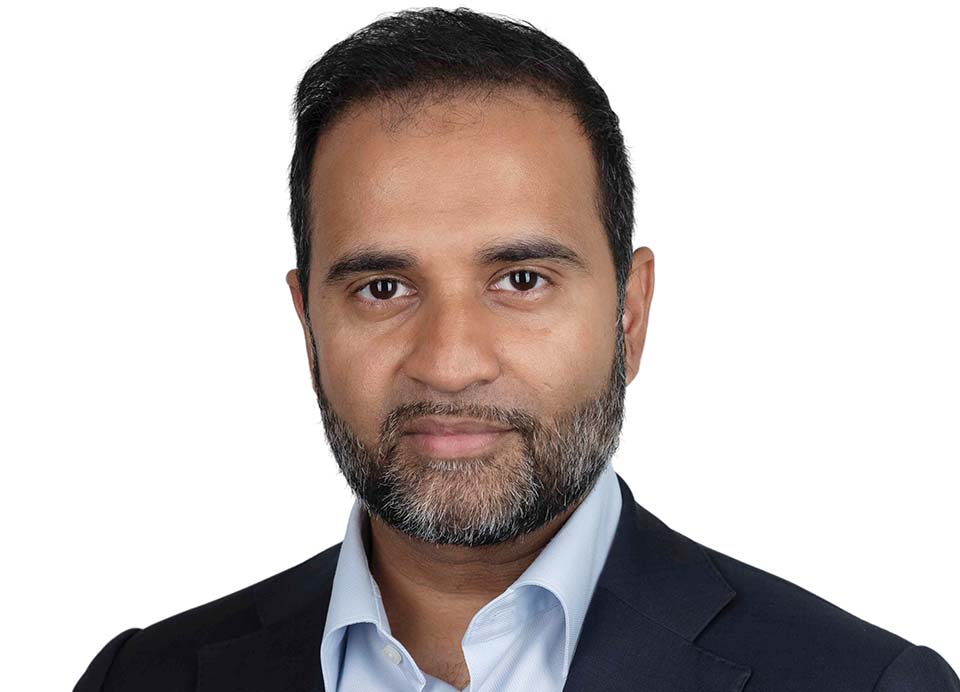
“Bank strategic investment units might be happy to take a smaller ownership stake in a promising new technology company if there are other banks in the capitalization table to ensure the industry has a voice; or bigger stakes if they are the only bank,” Baig says. “The imperative is to ensure there is sufficient industry representation on the boards.”
He adds: “The hedge is that if we see an offering that banks might benefit from in future and that technology or service requires a premium, as an equity holder we will also be receiving a dividend.”
While a strategic investor may derive internal benefits from supporting a new technology that are not available to VC funds focused purely on financial returns, it must still do a cost-benefit analysis to assess the valuation of a stake in the company even after weighing these advantages.
“As with any other asset held on balance sheet, we are obliged to deploy a number of different methodologies to make sure valuations are realistic and in line with the market,” Baig says. “And we are probably a little more conservative in valuations than VC and private equity funds because the banking framework is more stringent.”
We can all see what has happened this year in public equity markets. On Monday September 12, Affirm Holdings was down 72% for the year to date; Shopify was down 71%; Coinbase down 67%; Block down 54% and PayPal down 50%.
Baig adds: “Generally on valuations, while multiples for many companies have been challenged, there are also fintechs focused on capital markets and the payments sector that have sustainable growth plans and are profitable or close to profitability. Their valuations are proving more robust.”
Strategic investors also take a different approach to holding periods from VC funds that must periodically exit in order to realise returns and hand cash back to their investors.
But that does not mean banks accumulate strategic investments and never sell.
BNPP invested in the equity of Forge Global, a trading, settlement and custody provider to investors in a wide range of private markets, in April 2019. Back then, there were around 300 private unicorns collectively valued at $1 trillion and the equity derivatives team at the French bank wanted to sell structured products offering exposure to their pre-IPO securities to its customers.
In an unlikely seeming move, Forge Global went public in March 2022 after reversing into Motive Capital Partners, a special purpose acquisition company (Spac), previously headed by Blythe Masters.
“When it is in the interest of the wider ecosystem to exit an investment, because keeping it private might inhibit its growth, we will do that, and Forge Global is a great example,” says Baig. “The company believed it would be able to grant access to private stock to a much wider spectrum of investors if it went public itself.”
Deleuze says: “There is a trend across the private equity markets that we first saw in the US to bring greater liquidity to private securities, and we are seeing a lot of that in Europe now too. We see early-stage businesses that want to bring liquidity to private assets and not just for institutional investors but for retail too.”
Fresh air
Strategic investors that stay committed for the long haul may need to keep re-investing in companies if they are to maintain their influence and avoid dilution.
It can be an expensive habit.
Founded in 2014, Symphony first set out to be a cross-company messaging service for banks, many of which backed it as a warning shot across the bows of Bloomberg, which they felt was over-charging for its data services but which traders mainly used for messaging.
But Symphony then pivoted to become a markets infrastructure company and provider of standardized and automated workflow processing software for banks to collaborate on in many businesses. Last year, for example, it partnered with Digital Asset to digitize workflows in syndicated loans. It made a couple of acquisitions and rolled out Symphony 2.0, the second generation of its core collaboration platform.
In 2019, it tapped banks for another $165 million to make the switch from messaging to collaboration platform in a deal prominently supported by BNPP, Goldman Sachs, JPMorgan, Mitsubishi UFJ and Standard Chartered as well as other banks and that took its total funding raised to $460 million.
“Symphony is a consortium that has provided a breath of fresh air in taking a fresh look at workflows and which benefits not just banks’ own internal processes but also the experience of our clients,” Baig says. “Symphony remains a core pillar of our technology transformation. Yes, it has shifted strategy, but we are not passive shareholders. We believe it was the correct pivot. And while any transformation does not come cheap, no bank would want to build a platform like this on their own. Now, Symphony is getting to the point where it will be self-sustaining. It has been a great investment for the banking industry.”
Connections
It is natural for banks’ corporate venture arms to invest in fintechs that already provide a benefit to customers that banks would like to offer but don’t have yet.
In March 2022, BNPP invested alongside JPMorgan and HCAP Partners in a $18.7 million series-A funding round for Saphyre, a company founded in 2017 that uses AI-powered technology to digitalize pre-trade data and manage shared documents as well permissioned counterparties between asset owners, asset managers, custodians and brokers.
“We will invest in any part of the value chain, pre-trade or post-trade, that enhances the client experience,” says Baig. “Saphyre helps us to onboard clients much more efficiently and integrate with them seamlessly. We are investing more and more along the client satisfaction journey and partnering with fintechs that have already got the technology rather than trying to build it all in-house.”
And these investments connect. Following a partnership agreed in 2021, Saphyre is already integrated onto the Symphony collaboration platform, allowing real-time notification updates for all onboarding and maintenance-related activities and ready-to-trade statuses of funds, trades, allocations and settlements.
Elsewhere, the bank is embracing blockchain technology and tokenization. In May, it became the first European bank to trade intraday dollar repo on JPMorgan’s Onyx Digital Assets platform, which uses a digitized version of the dollar and serves as both a payment platform and deposit account ledger, enabling participants to realize immediate settlement for US Treasury repo transactions and to receive or pay repo interest calculated with to-the-minute accuracy.
“Working with JPMorgan on securities tokenization allows us to enhance settlement and provide a better service to clients and a more efficient market for them to operate in,” Baig says.
There is no point in banks investing in technology transformation too far ahead of their clients.
In 2019, BNPP invested in Kantox, a software provider to corporate treasurers that enables them to automate the collection of data on currency risk exposures embedded in their current and future cashflows and then to price, time and execute appropriate hedges.
“It’s not just about us automating,” says Baig. “It is about helping our clients to automate in the markets where we serve them. Kantox is helping to transform FX risk management at many corporate treasuries.”
CDPQ invests through the cycle
Caisse de dépôt et placement du Québec (CDPQ), manager of public and other pension and insurance plans in Canada’s biggest state, is the world’s second-largest private equity investor, as ranked by Private Equity International.
At the end of December 2021, its private equity portfolio was worth C$82.5 billion ($59.9 billion), mostly invested in the US, Europe and Canada and spread across technology, industrials and transportation, consumer products, financials and healthcare.
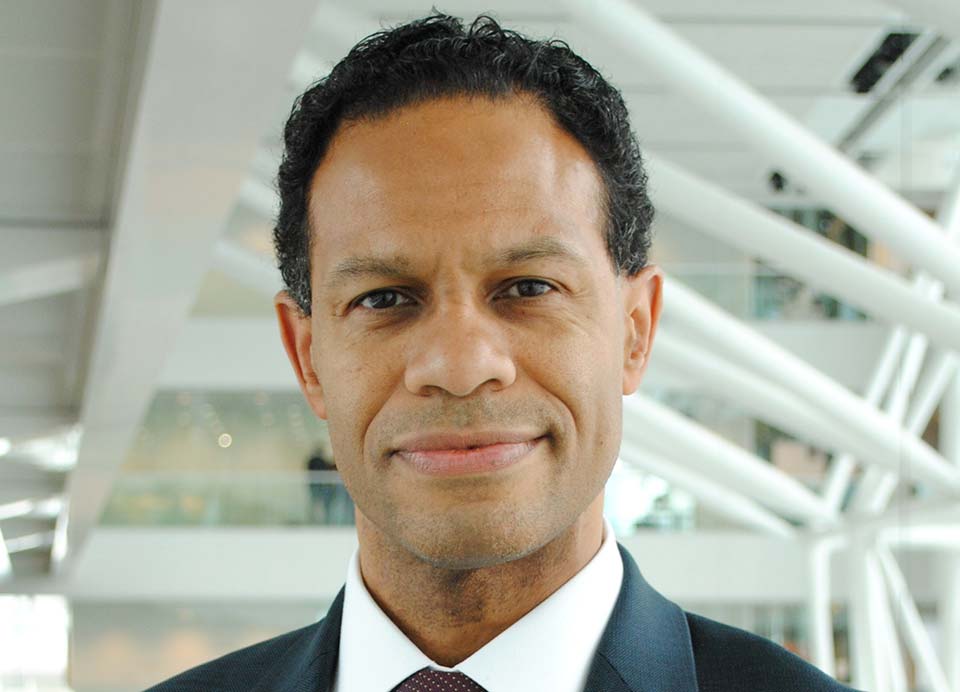
However, like every investor, it has had a rough year so far. CDPQ published results for the first half of 2022, the worst six months for bonds and equities in its 50-year history, in late August.
Overall, CDPQ suffered a 7.9% hit, bringing total assets down to C$392 billion from C$420 billion at the start of 2022.
The loss in equities, combining both public and private, was 10.6%. And while that is better than its selected benchmark, which lost 11.9%, there had been one big mistake. President and chief executive Charles Emond admitted that CDPQ had gone too early into cryptocurrencies, after it led, along with WestCap, a $400 million investment in Celsius Network in October 2021 that valued the company at $3 billion.
The leading crypto lender filed for bankruptcy earlier this year, after the crypto crash that followed the collapse of Terra.
However, the private equity portfolio suffered a fall in the first half of just 2.4%, compared with 16% for public equities. And CDPQ can still claim an annualized five-year return of 17.6% from its private equity investments thanks to its sectoral spread and engagement with portfolio companies.
Martin Laguerre, executive vice-president and head of private equity at CDPQ, tells Euromoney: “People often say that if public equities are down X%, then surely private equity must be too. But while valuation multiples of ebitda went up very high in public equity – close to 20 times – they didn’t go quite so far in private equity, maybe to the low to mid teens.”
This year, he continues, “we have stayed disciplined, but have continued to invest through the cycle because it is a fallacy that you can time markets. You always need to have your hook in the water. We have a large portfolio, and while our priority is to protect the portfolio and support our portfolio companies, we may also take opportunities by investing further to fund their acquisitions.”
Capacity to influence
CDPQ takes minority investments that do not give it control but are still large enough to bring board seats and a capacity to influence and engage with companies, far beyond just keeping an eye on governance.
It varies, but the sweet spot is around 20% to 30% ownership. It can go up to 50%. CDPQ is not an accumulator of assets. It underwrites for a typical hold period of five years, but may re-underwrite and extend if it sees more potential to grow with a company before exiting.
Its biggest deal this year attracted few headlines, being a re-investment in UK insurance company Howden Group to support its $1.6 billion US acquisition of TigerRisk, a leading risk, capital and strategic advisor to the global insurance and reinsurance industry.
“We are a co-control shareholder alongside General Atlantic and Hg Capital – with employees owning a large stake in the company,” says Laguerre. “This is a great challenger company, and we took the opportunity to support management in a deal initiated by the two CEOs and to invest in Howden’s expansion into a global company.”
There was a similar thesis behind CDPQ’s most recent big deal announced in mid August. It invested $75 million out of a $105 million series-D raise by Indian B2B software-as-a-service company CleverTap.
CleverTap provides the customer engagement and retention technology within 10,000 apps used by 1,200 brands of companies including Canon, the English Premier League, Gojek, Papa John’s, TD Bank, Tesco and others.
Now headquartered in California, CleverTap acquired San Francisco-based customer engagement platform Leanplum in June 2022.
Laguerre says: “We appreciate software as a service for its revenue visibility and stickiness. CleverTap’s superior architecture also allows high gross margin and gives it the right to win in a growing market. The Leanplum acquisition, which was the catalyst for raising this capital, will enable it to become an even more global company.”
That transaction also offers an intriguing insight into how these investments come about. There were no investment banks in a deal that included some structuring beyond pure equity.
“We often track companies in our preferred sectors for a long time, looking for the right opportunity to come in,” says Laguerre.
Direct investors
CDPQ invests as a limited partner through some funds in geographies where it lacks boots on the ground. But the majority are direct investments. And while there is competition for assets and for alpha, big direct investors such as CDPQ talk to each other.
“Sequoia is a great investor that had previously put money into CleverTap,” says Laguerre. “We have good relations with other lead investors that we partner with and may review each other’s portfolios and see how a coming investment may align with our various strategies.”
Sequoia also took a smaller chunk of the series D.
“It was a perfect fit for us,” Laguerre says.
Though energy transition is not a big sector for its private equity investment teams, CDPQ has put money into clean aviation fuel, climate-risk analytics, vertical farming and other ESG themes.
“These are modest cheque sizes for us, but we are happy to start small and invest more if these companies are successful,” Laguerre says.
In 2021, CDPQ announced a $10 billion transition envelope to help decarbonize heavy emitting sectors.