

The profile of the last two years of bank provisioning looks like a hill – one that is steeper on one side than the other.
The steep side is the billions of dollars of allowances banks took in expectation of a wave of defaults through the Covid-19 crisis. The shallow side is banks unwinding the vast majority of those provisions and releasing them as the credit crisis persistently fails to arrive.
As Euromoney explained in September, a combination of factors brought us to this surprisingly modest hit to bank stability. The biggest were government stimulus to keep companies in good shape and central bank stimulus in the form of dramatically lower rates.
The knock-on effect of this was the interest burden on debt was so low that most clients could ride their way out of trouble, borrowing cheaply where necessary.
Also in the mix are improved standards of risk management and client selection on the part of most banks; IFRS9 rules that required heavy upfront provisioning, even if it turned out not to be necessary; and the fact that the worst corporate suffering was concentrated in a few sectors such as tourism and aviation that were often bailed out by governments well before their problems ever hit the banks.
Still, it is only now that the vast majority of debt moratoriums are coming to an end that we can be sure the industry is out of the woods.

“I kept waiting for the moratoriums to end,” says Piyush Gupta, chief executive of DBS in Singapore, Euromoney’s best global bank for 2021. “Because, ex-moratorium, the rest of the portfolio actually behaved much better than anybody expected. The large-ticket counterparties you know pretty well, and I’ve been quite confident we didn’t have any issues there, but it’s in the granular business – really two portfolios, SME [small and medium-sized enterprise] and consumer – where you’re reliant on what’s happening to the macro economy.”
DBS’s consumer portfolio is mostly mortgages, and the impact was small, except for a jump in the cost of credit in the Indonesia book.
“So that left me with the SME book,” says Gupta, “where we had to keep waiting to see what happens when the moratoriums run out. And that’s just been very comfortable. The short story is that I think the worst is behind us and I’m not expecting any cliffs.”
Familiar story
DBS’s story is similar to dozens of others played out across the industry. It built S$3 billion ($2.2 billion) in reserves – half of it model driven and half as a management decision – and has been steadily returning it all year.
“I do think that, like everybody, we’re over-reserved,” Gupta says. “Net-net this year, we will show almost zero cost of credit. My outlook for next year looks pretty similar.”
At Standard Chartered, chief financial officer Andy Halford is also taking stock.
“I’d say the majority of the moratoria have now finished,” he says. “Not all but the majority.”
Most of the remainder are in the consumer space, he adds. For Standard Chartered this tends to mean mortgage lending, which is typically well secured. Therefore, when moratoriums have rolled off so far, “the financial consequence of that has been very muted. Generally there’s been a slight deferral for when people pay, but ultimately we have recovered broadly what we would have done anyway.”

All over the world, banks are telling a familiar story as 2021 comes to an end.
“2020 obviously was a year of big provisions for us, as for many banks around the world,” says Alexandra Buriko, CFO of Russia’s Sber. “We can see now that our estimates of the impact of the pandemic were much more conservative than the reality.”
Sber, like many, has found its clients in much better shape in 2021 than in 2020. Buriko says that lower interest rates have helped retail customers, while corporate clients in Russia have in many cases been helped by commodity price rises. The construction industry has grown too, with strong demand for housing.
Put it all together and Buriko reports a cost of risk this year at “significantly below 100 basis points” and below 60bp at the third-quarter results. “We do not expect any huge surprises in the fourth quarter.”
The sense of improved client strength is commonplace across the industry.
“Many businesses and households globally have benefited from government measures and actually improved their resilience,” says Thomas Gottstein, chief executive of Credit Suisse. “Of course, this varies by country. Overall, a low interest rate, tight credit spread, high stock-price environment suggests that asset quality is not a major issue – at least while those conditions persist.”
Martin Tricaud, group head of investment banking at First Abu Dhabi Bank, adds: “Thanks to superb support from governments and central banks, we have not seen the wave of failures some predicted at start of the pandemic, so in terms of asset and credit quality, I’m not too concerned. But we should not claim victory too soon.”
Caution
Heading into 2022, bankers are very cautious about sounding too optimistic. There is widespread recognition that there is still work to be done and that nobody should be complacent.
Santander, for example, provisioned more heavily than most of its peers this year and has not been so swift to give provisions back, even though consumer debt moratoriums in Spain expired in the Spring. Partly, this has to do with longstanding questions about southern European non-performing loans, which date back the eurozone crisis, and the fact that the strength of tourism in Spain is highly relevant to the broader economy.
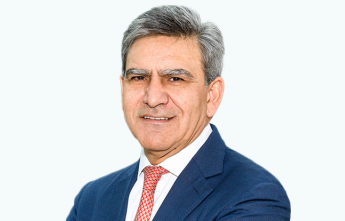
“We still need to see how Spanish corporates behave when the government schemes taper off in 2022,” says Santander chief executive José Antonio Álvarez.
“We prefer to be cautious in providing for these books until we see what happens when borrowers start to repay the principal on the government loan schemes in April.”
Because of that, he feels 2022 will be the year when the true impact of Covid on the corporate sector is felt, particularly in Spain.
Rabobank chief executive Wiebe Draijer warns against assuming too much about the good health of European banking just because of the most recent run of results.
“Don’t be misguided by the profit numbers that the financial sector is producing this year,” he says. “There’s an enormous effect of IFRS9. We have an almost record half-year profit. You can’t connect it to what’s happening in the world of our clients.”
In truth, Draijer says that Rabobank’s scenarios for the future “have become much more positive” and that, even beneath the IFRS9 effect of the rebound, clients are doing well in a strengthening economy.
“But you’ve also got the low interest-rate environment, which continues to eat into the structural P&L of banks, especially those that are largely domestically orientated.”
For this reason, he feels 2023 profit numbers will be a fairer reflection of the true picture than 2021 numbers.
It is also important to note that not every part of the world economy is recovering at the same rate. Take Brazil, for example. Itaú CFO Alexsandro Broedel points out that the bank is forecasting zero or -0.5% GDP growth in 2022 but also inflation and rising rates.

“People ask: ‘You made a lot of provisions for Covid last year and some of the international banks have already reversed those provisions,’ and so on and so forth,” he says. “And we say: ‘Yes, but we are in a different landscape here in Brazil.’”
Broedel continues: “We see a lot of uncertainty of a different nature, more of a macro nature for 2022. So that’s why we are prudent relating to what’s going to happen next year.”
The situation was so bad that Itaú lost market share in 2020 as it prioritized client survival over growth. But Broedel says it was the right call.
“In 2020 our focus was not to grow the portfolio, it was focused to help our clients pass through the crisis,” he says.
Itaú created a programme to help people with grace periods and renegotiation to keep clients on their feet.
“And our focus was more on that than on growth and I think it is paying now. You see our delinquency levels are so low and the portfolio is so solid,” Broedel says.
Ninety-day NPLs account for 2.6% of the overall portfolio as of September 2021, with a coverage ratio at 234%.
“It was rational and it was by design. It was not something that happened by accident.”
Employment challenge
Looking forward, many executives note that the macro environment in 2022 is going to bring challenges. Many mention wage and employment pressures.
“One of the surprises of this crisis is employment,” says Santander’s Álvarez. “Employment levels in Spain are now the same as pre-Covid.
“Some sectors, such as construction and truck drivers, are finding they’re unable to find workers. We were not expecting this to happen, probably because the nature of the crisis was different.”
At Sber, Buriko is similarly surprised.
“It is important to note that nominal salaries have increased in line with or above inflation,” she says. “In some industries salaries have risen 10% to 15% over the past year, so people are able to service their loans.”
Meanwhile, she expects cost of risk to return to a more normalized level.
Generally, there has been a lot to learn about asset behaviour during this crisis. It has been nothing like the global financial crisis, for example.
“Economists were used to more traditional crises, due to assets bubbles or over leverage,” says Álvarez. “This was a health crisis, and the dynamics are totally different, both in employment and in credit risk.
“The combination of a different crisis by nature and of a big, quick reaction from central banks and governments significantly affected the outcome in terms of employment levels and credit quality, particularly on the consumer side.”

Halford at StanChart has drawn some conclusions on the crisis and the responses to it.
“I think the biggest learning has been where businesses have found themselves with heavier indebtedness on their balance sheet then they had previously envisaged,” he says. “If interest rates are low at the same time, then the net cash cost for those businesses clearly becomes more affordable than might otherwise have been the case.
“Without doubt, there are lots of businesses that have managed to tough it out through this difficult period as a consequence of lower interest rates and the affordability that has come with that.”
Halford also notes that the sectors that have been under particular stress have been very easy to identify – such as hotels and airlines – and therefore easy to deal with. He believes his bank was protected by dispersal of risk, so that no sectors were too important.
As regards IFRS9 and provisioning standards, he speaks of the “encouragement for regulators early on not to let the impact of conservative provisioning have a consequence on capital ratios, which was going to stall the amount of funding that banks were prepared to put into the community.
“Clearly, society would have been worse if banks had instead retained funds to build up capital and society more generally would not have benefited from it.”
This, the thinks, was a good call.
In Asia, Gupta at DBS has been analyzing why credit books weren’t hit as badly as expected.
“Travel, entertainment and hospitality are important but not that important in the Asian construct,” he says. “If you look at Asia’s growth engines, exports are booming, manufacturing, infrastructure spend has been good because of the governments.
“So, it’s quite interesting that despite the borders being shut and despite the F&B [food and beverage] trade being slow, the overall macroeconomic picture has been very good.”

Executives are also trying to work out what the knock-on effects of recovery will be – and how they can be on the right side of it.
“Covid has accelerated a whole lot of things we had before, such as digitalization and technology, and one of the impacts has been on world savings,” says Shemara Wikramanayake, chief executive of Macquarie Group.
“There’s been huge fiscal stimulus as governments have locked down economies to help tide borrowers through, so savings in investment has gone up a lot and there’s much more money trying to get invested.
“We’re in a very low interest rate world, even if we have some inflation and nominal rates go up a little bit,” she says. “If you look at savers trying to fund retirement, there is a much lower rate than they had some decades ago.”
That’s a problem, but it’s also a chance for new business.
“So I think finding different opportunities that deliver superior returns for those investors is becoming more important,” Wikramanayake says.