

On August 20, 2021, the total market capitalization of all cryptocurrencies stood at $2.02 trillion, according to CoinMarketCap. That is up 160% from $775 billion at the start of this year and over 16-times higher than at the beginning of 2019 when cryptocurrencies together amounted to $128 billion.
It is notoriously volatile, of course.
Having been driven up by Tesla buying $1.5 billion of bitcoin in February and saying that it would accept it as payment for its cars, together with BNY Mellon getting into crypto custody and the listing of Coinbase, the cryptocurrency market hit $2.53 trillion in the second week of May.
Jump to
Euphoria had set in. With volatility low, the smart money in crypto began looking for cheap put options.
Sure enough, Elon Musk tweeted his concerns about the environmental impact of all those computer rigs running proof of work, the Chinese government threatened to expel bitcoin miners from the country and the US tax authorities weighed in.
The crytpo market subsequently halved in value, to below $1.15 trillion in June, before its summer recovery.
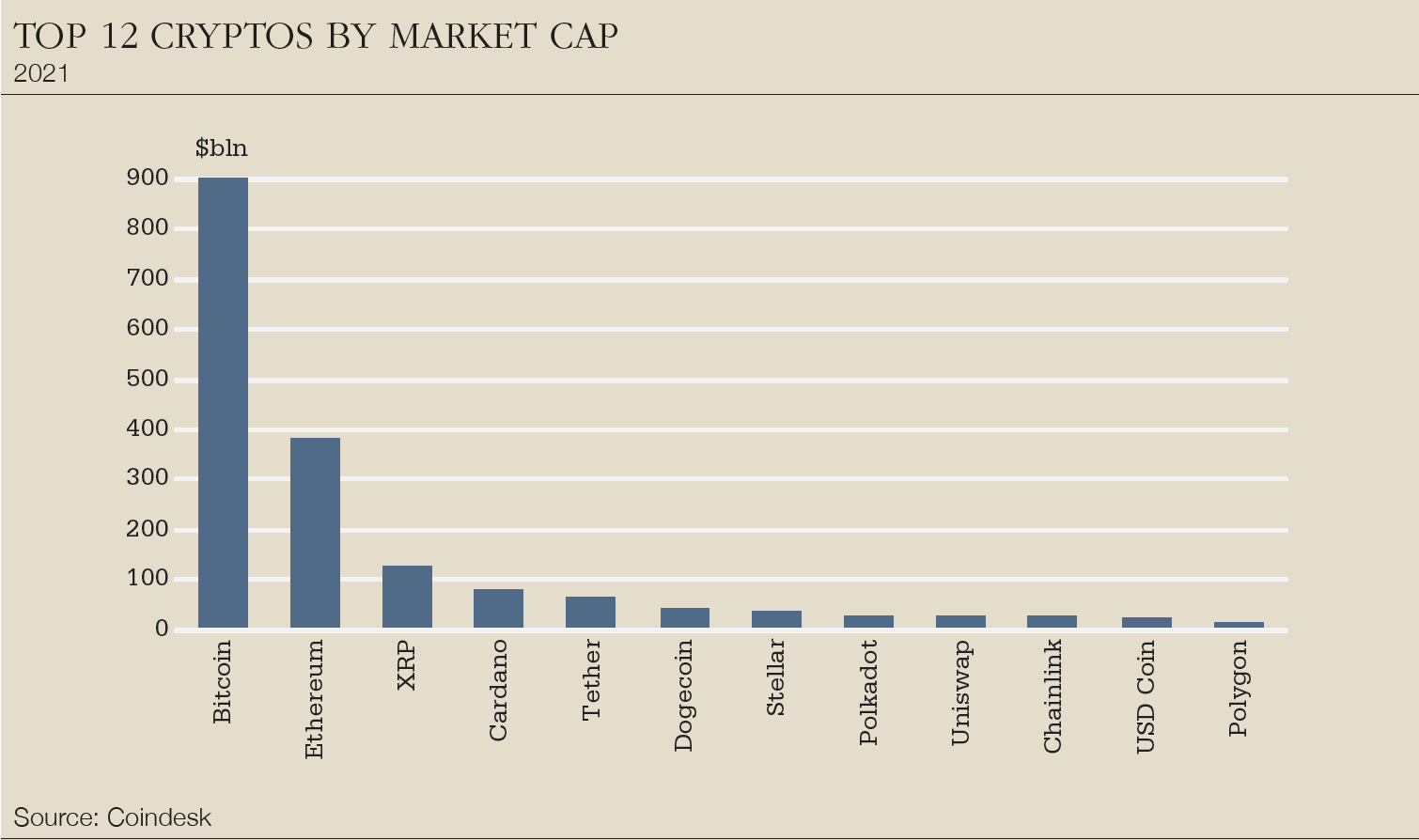
It is a sizeable asset class now, no longer dominated by bitcoin, which makes up 47% of the market, down from 70% at the start of this year.
Amber Ghaddar, co-founder of AllianceBlock, a company set up by former investment bankers and technologists to build a bridge between the new world of decentralized finance (DeFi) and the old world of traditional finance, tells Euromoney: “Bitcoin has proven to be a great asset to place in investors’ allocation to alternatives.”
Alternative assets should serve at least one of four roles: capital growth, income generation, diversification and/or hedging.
“Bitcoin, with its excess positive kurtosis definitely fits in the capital growth bracket,” says Ghaddar. “It can also be a hedge for a black swan event in the case of a loss of trust in the Fed or the US government, while DeFi products on the Ethereum blockchain can serve as great high-yield generating products.”
As for diversification, Ghaddar says that the recent frenzy in crypto has increased correlation of the crypto asset class to risk-on assets “which is something we expect to continue while in an equity bull market.”
Composability
Institutional investors tiptoed up to bitcoin during its first great bull run up to $20,000 in 2017, when banks were getting ready to set up trading desks. Then came the scorn of Jamie Dimon, an 84% price collapse and the crypto winter of 2018 that left institutions suspicious even as the price rallied in 2019 and 2020.
The pandemic has made investors think again.
The funding of large budget deficits at one remove by central banks buying the bonds that governments first sell to commercial banks looks like monetary financing pure and simple.
Central banks have been repressing interest rates for a decade now.
The recent debate about whether sharply rising inflation is due to big increases in the prices of just a few items and merely transitory or becoming embedded in the expectations of consumers and workers has transfixed economists and investors this year. But there’s no argument that valuations are stretched across traditional financial markets, bubbles are forming while real yields on trillions of dollars worth of low-risk assets are negative.
If they are not being taxed, savings are being devalued.
Investors desperately want a hedge, something with low correlation to traditional financial assets, the chance of capital appreciation and also yield. Cryptocurrencies have long promised the first two. More recently, decentralized finance (DeFi), in which holders commit their cryptos to lending, staking or automated market making protocols, has offered income in a world of return-free risk.
Yes, crypto is risky too. It is roughly three times as volatile as equity. Bitcoin is a so-called currency that almost no one uses as a medium of exchange let alone as a unit of account – the price is always quoted in dollars – with no central bank behind it and no trusted central parties to appeal to if keys are lost or wallets hacked.
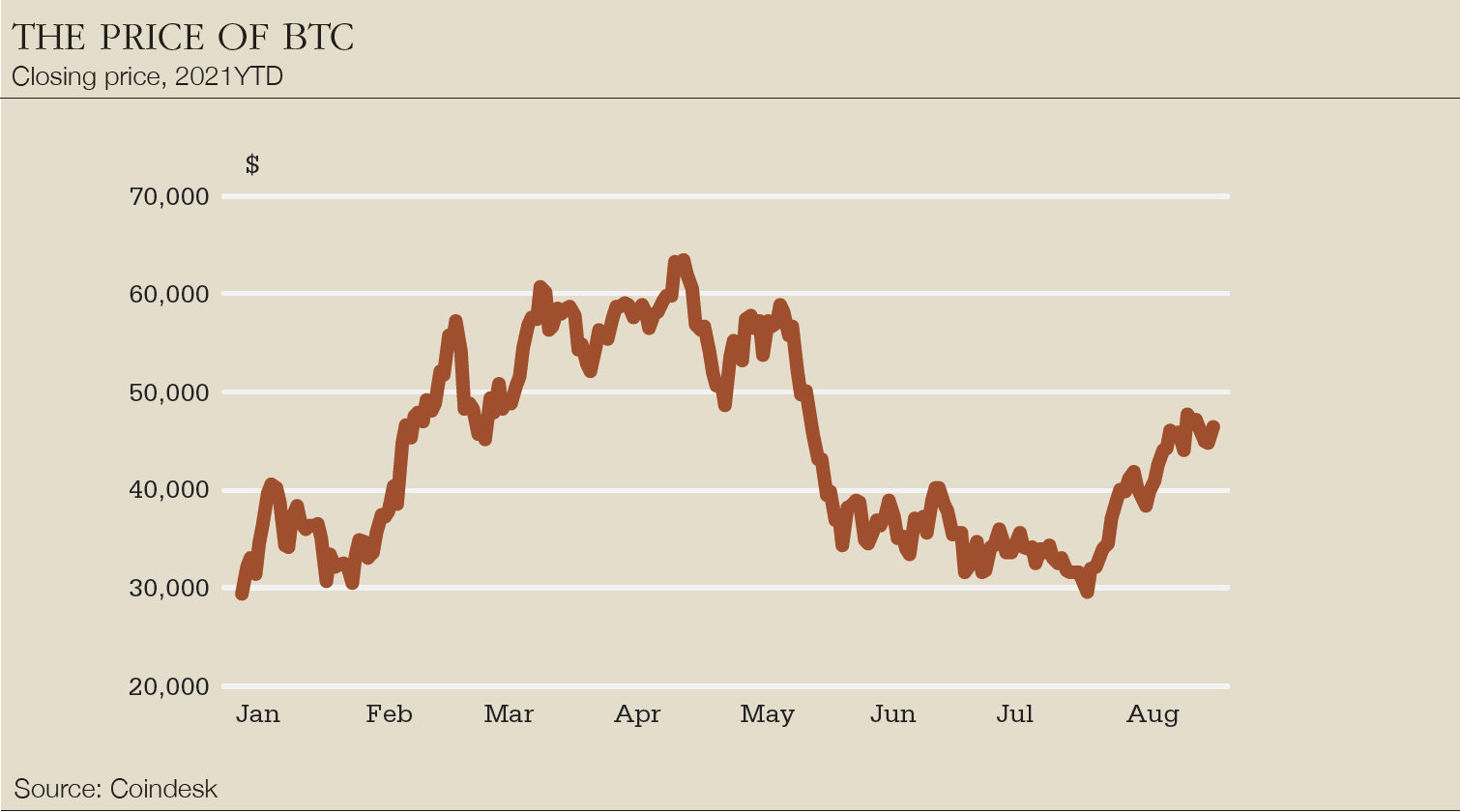
There is no tested framework for fundamental valuation. But by mid-August it was up 57% year to date.
Retail holders have flooded deposit aggregators with a generous supply of bitcoin and ether to lend out to traders, who might be looking to borrow to bet against the crypto when others are piling in.
Composability is a key property of digital assets
Ken Timsit, ConsenSys
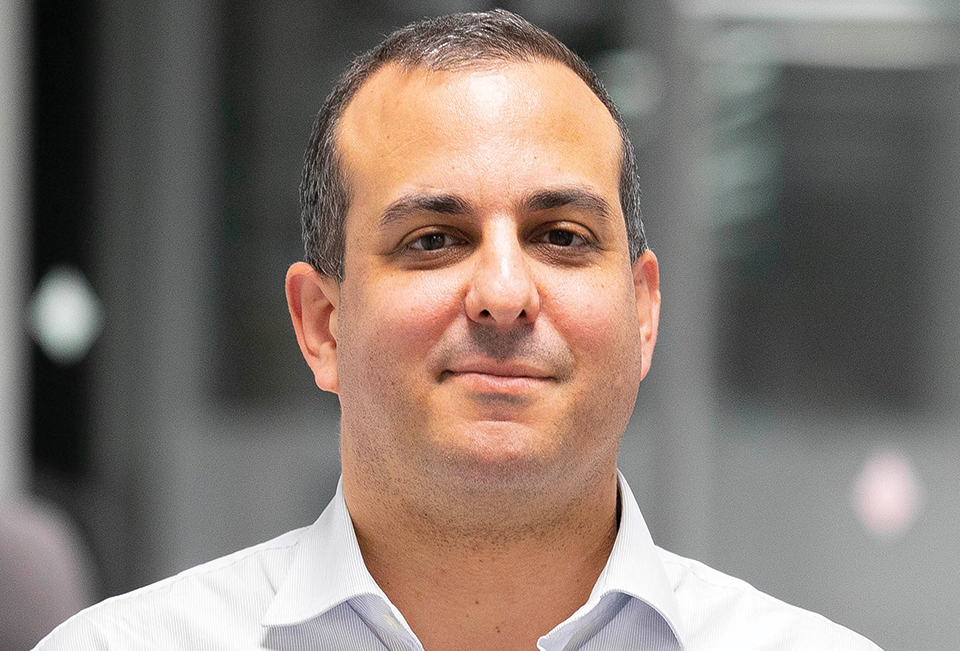
“Composability is a key property of digital assets,” says Ken Timsit, chief revenue officer at ConsenSys, the leading software developer on Ethereum. “It means that almost any digital asset you own can be used as collateral in any other financial transaction.”
So to take the simplest example, holders can use their bitcoin to borrow dollars. Many then use those dollars to buy more bitcoin.
In traditional finance, institutional investors tend not to leave cash or securities idle on their balance sheets but rather lend cash out and borrow against securities. Retail investors can only borrow against their houses.
In DeFi, that kind of institutional lending, staking and provisioning of collateral is becoming automated and available to everyone.
“Most traditional financial market investors and banks don’t really need instant settlement in underlying cash markets, but they would say yes to it, if it becomes possible to repo assets and use them to raise liquidity instantly,” continues Timsit.
“We are seeing all manner of digital assets held on public blockchain networks, including stablecoins, being used as collateral to raise liquidity and we will also see high-value collectibles in the form of NFTs [non-fungible tokens] used for that too.”
Could the deployment of a new and growing asset class as collateral for new types of borrowing have a social benefit by helping grow GDP? Or is it an ugly value trap?
“Repo and margin lending for derivatives trades has been a driver of innovation in traditional finance,” says Timsit. “There is a parallel to what is now happening in DeFi.”
Cryptocurrency risks
Bitcoin may be a store of value, but it is still a highly speculative one for investors used to dealing in regulated markets. Trading costs can be high, as the disclosures in Coinbase’s IPO showed and which perhaps explains why Robinhood and Revolut have been so keen to provide cryptos to retail. Revolut is the new darling of the crypto world.
The DeFi market is very fragmented with a proliferation of decentralized exchanges on different blockchains
Amber Ghaddar, AllianceBlock

Impressive aggregate daily turnover volumes can disguise isolated liquidity pools on particular crypto exchanges and obstacles in dealing between them.
“The DeFi market is very fragmented with a proliferation of decentralized exchanges on different blockchains, which makes it very hard to navigate,” says Ghaddar. “Additionally, new liquidity pools pop up every day, but there is no regulatory standard-setting body on top of them.”
This is how cash management bankers used to talk about the pain points in correspondent banking networks and we must hope the world’s central banks get on top of interoperability before launching central bank digital currencies.
High so-called gas fees for processing transactions on Ethereum, the blockchain at the centre of DeFi, have been another cost, although solutions are being devised. Best execution is a theoretical concept.
Lisa Shalett, chief investment officer, and Denny Galindo, investment strategist, at Morgan Stanley Wealth Management pointed out three bigger potential risks in an April paper on investing in cryptocurrencies. One is flaws in their codes that might allow double spending, another is attacks by governments, but perhaps the biggest comes from the rise of quantum computing and increased processing power.
“It is likely that the encryption backing Bitcoin will one day be broken, opening the possibility that owners’ wallets will be hacked,” write Shalett and Galindo. They point out that future developers could upgrade the encryption and coin tracking services might be able to catch hackers as they try to spend their crypto cash.
That seemed to be the case in August when PolyNetworks reported a $611 million hack, the biggest ever in DeFi. Some of the stablecoins were quickly frozen by the issuer and the hacker or hackers returned half the assets they had taken when cybersecurity firms said they could be identified.
Regardless of how it may happen, bitcoin would likely suffer a serious price decline even if encryption only appears to be broken. “While the chances are low in any given year, over 100 years, the risk is likely to emerge,” say Shalett and Galindo.
Waiting on regulators
However, what is playing out right now in traditional debt and equity markets looks equally or, perhaps even more, alarming: the financial world equivalent of long-running environmental degradation now threatening imminent climate catastrophe.
Investors are searching for regulated vehicles to take exposure to crypto. The US Commodity Futures Trading Commission allowed bitcoin futures in late 2017. And although that didn’t boost cash market volumes or institutional participation quite as much as many had expected, mutual funds have been buying those futures.
Daily turnover in bitcoin increased from $5 billion a day in 2017 to close to $30 billion a day during its surge in the first months of 2021. Investors have been buying private placements of funds that track the prices of particular cryptocurrencies, notably bitcoin and ether, while waiting for exchange-traded funds (ETFs).

Crypto boosters hope that Gary Gensler, chairman of the Securities and Exchange Commission (SEC), will push forward regulation to enable traditional money to flood in to crypto. He used to teach a course in crypto at MIT. One source tells Euromoney: “The regulators always seem two years behind because it takes so long to set new rules. So they are still going on about initial coin offerings being securities according to the Howey test when no one has been launching them since 2018. Maybe under Gensler the SEC might get to 18 months behind.”
On August 3, Gensler offered some thoughts at the Aspen Security Forum. “Right now, we just don’t have enough investor protection in crypto. Frankly, at this time, it’s more like the Wild West,” he said.
Up, up and away
When bitcoin goes up, it really goes up. It can fall just as hard, but the overall trend has been rising for five years. In August 2016 you could have bought 10 bitcoin for $5,700. In mid-August 2021, they would have cost you $480,000.
More institutional investors now want a part of it, muscling in alongside the West Coast venture capitalists and ultra-high net-worth families that make up the market whales and the digital-native retail buyers that have been accumulating and often holding on, since the middle of the last decade.
“Exchanges, banks, asset managers and central securities depositories have been working for years on blockchain projects to streamline communication between counterparties,” Ken Timsit, chief revenue officer at ConsenSys, tells Euromoney. “But the business case for migrating the old financial markets onto new infrastructure has not been fully established. And this year has seen a big shift away from interest in blockchain as a pure database technology back to digital assets as a new asset class that is enticing partly because it is a hedge when all other assets except gold are correlated, but also because DeFi has introduced the notion that digital assets are composable.”
The crypto community developed DeFi for its own purposes because it needed its own way to borrow and lend. Traditional banks would not handle crypto for their own customers, much less lend against it. If bitcoin owners wanted to spend their gains they could sell and convert into fiat currency through exchanges, but that would incur hefty transaction fees, create a capital gains tax liability and leave them out of a market in which bitcoin can rise $10,000 in a day.
So operators began to lend: keep your bitcoin, use it as collateral. The composablity of crypto tokens means that now they can easily be deposited or locked into apps that offer yield through various functions, from lending to market making.
Innovation has proceeded at dizzying speed, with new apps being launched every day. From an investor point of view, Timsit compares the impact of DeFi on crypto to the impact of securitization in traditional finance.
“It has opened the eyes of asset managers to what is possible in the digital asset world; and we are now seeing the largest institutions take steps to recognizing digital assets as an asset class for them.”
“This asset class is rife with fraud, scams and abuse in certain applications. There’s a great deal of hype and spin about how crypto assets work. In many cases, investors aren’t able to get rigorous, balanced and complete information.
“If we don’t address these issues, I worry a lot of people will be hurt.”
Revealing the strain on regulators to get their arms round crypto, Gensler made a plea for more resources and suggested what Congress and the Biden administration should focus on. “In my view, the legislative priority should centre on crypto trading, lending and DeFi platforms.”
He hinted that the SEC might look more favourably on ETFs investing in bitcoin futures rather than cash markets.
While the ETF debate continues, Grayscale Bitcoin Trust, the biggest crypto asset manager, just gets bigger. It had $29.7 billion of assets under management in the middle of August and was showing a trailing 12-month return of 288%.
No wonder more institutional investors want in, even if only for a small strategic allocation of assets inside their alternative portfolios.
In July, Fidelity Digital Assets, a subsidiary of the leading asset manager, which has $10 trillion of assets under management and administration, released a survey of 1,100 institutional investors in the US, Europe and Asia.
This forecasts a continued acceleration in adoption over the next several years as slightly more than half (52%) of institutions surveyed already invest in digital assets.
While adoption rates are higher in Asia (71%) than in Europe and the US, participation increased in both those markets as 56% of European institutions and 33% of US institutions now hold investments in the asset class, up from 45% and 27%, respectively, the year before.
“The increased interest and adoption we’re seeing is a reflection of the growing sophistication and institutionalization of the digital assets ecosystem,” stated Tom Jessop, president of Fidelity Digital Assets.
Maybe it is. But it is also a sign of mounting concern about traditional finance.
“The pandemic – and fiscal and monetary measures in response to it – has been a catalyst for many institutional investors to define their investment thesis and operationalize it,” said Jessop.
There is actually higher visibility in crypto than in traditional finance
Michael Shaulov, Fireblocks

The big banks have changed their minds too. Once they ignored cryptocurrencies, then they mocked them, now they see a chance to make money and a risk of being left behind.
That Morgan Stanley Wealth Management paper in April follows a March study entitled ‘The Case for Cryptocurrency as an Investable Asset Class in a Diversified Portfolio’. The title is the executive summary. It’s fair to say that Morgan Stanley is in.
The same two authors suggested that cryptocurrency has already: “Crossed the critical thresholds of market liquidity, regulatory scrutiny and institutional acceptance.”
They took a 60/40 stock and bond portfolio, based on the MSCI world index for stocks and the Bloomberg Barclays US aggregate index for bonds, then added 2.5% exposure to bitcoin and back tested it based on monthly rebalancings.
From the start of January 2014 to September 2020 (a period that includes the great crash of 2018 but excludes bitcoin’s rally from $10,700 in October 2020 to $46,400 in mid-August 2021) that small exposure boosted annualized returns from 6.1% to 7.8% without increasing volatility or maximum drawdowns.
‘Bitcoin bad, blockchain good’
Something has changed here. The banks started to take the blockchain technology underpinning bitcoin seriously in 2015 when they saw the chance to free some of the capital trapped in the complex plumbing of traditional financial markets.
If they could just make the delivery versus payment settlement infrastructure more efficient, they could boost their lousy returns on equity by turning over smaller amounts of it much more rapidly.
Genesis of an idea
One of the longest-established SEC and Financial Industry Regulatory Authority regulated broker dealers in crypto is Genesis Trading. The company grew out of the financial crisis of 2008, when its founders left their investment bank employers to set up SecondMarket, a firm trading distressed credit assets from the broken securitization business.
Nasdaq acquired SecondMarket and the founders created Genesis, adding cryptocurrency in 2013 to the esoteric securities they dealt in. Now it trades predominantly in crypto spot and derivatives markets, provides lending for repo and is building out custody to become a prime broker.

“Our first users were crypto-native institutions like the venture firms, the crypto exchanges and some of the miners as well as ultra-high net-worth investors that were early adopters,” Joshua Lim, head of derivatives at Genesis Global Trading, tells Euromoney. “They are still trading but are now a smaller fraction of our franchise mix. Our firm has evolved to face more institutional counterparties from the traditional finance world.”
In the second quarter of 2021, the Genesis derivatives desk’s counterparty base grew by 15%, including the notable addition of large macro discretionary hedge funds looking to enter the crypto derivatives market for the first time.
Lim explains how they are doing this. “Market-neutral yield strategies in crypto are quite familiar to macro traders used to dealing across emerging market FX, commodities and credit, for example,” he says. “They can show to their investment committees smart ways to take advantage of retail euphoria without putting on directional exposure.”
These are typically basis trades between the cash and derivatives markets, often called cash-and-carry trades. Investors might buy in the spot cash market and sell bitcoin futures at a premium or go short during market falls on spot exchanges, such as Kraken that allow borrowing, and long in the futures.
“The big banks view it in much the same way,” Lim adds. “The thesis for bitcoin has changed from the original idea of a payments layer to a digital store of value, a digital equivalent to gold. The CME [Chicago Mercantile Exchange] listing futures was a big step in approval and almost made the market too big to fail. The global investment banks see bitcoin as just another commodity to offer investors and it is usually their commodity and FX desks that deal in crypto.”
While retail buyers bought the trashy bitcoin on top, banks aimed to build their own version of the new rails. ‘Bitcoin bad, blockchain good’ was the phrase repeated at every conference.
Distributed ledgers as an immutable golden source of truth for who owns what, eliminating the need for manual updates of proprietary records as well as all the time and cost of reconciling errors against the ledgers of other counterparties: bankers tried to get excited about all this.
There followed years of proofs of concept, pilot projects and even working examples from trade finance to debt capital markets. But none of this is as exciting as making money. ‘Bitcoin good, blockchain whatever’ became the cry this year.
It was widely reported in July, first by Business Insider, that JPMorgan is offering private banking clients who want to invest in crypto access to Grayscale Bitcoin Trust (GBTC) and three other Grayscale products, Grayscale Bitcoin Cash Trust, Grayscale Ethereum Trust and Grayscale Ethereum Classic Trust.
Ethereum is the public blockchain at the centre of DeFi, the cutting edge of digital assets against which bitcoin now looks like traditional crypto.
A Grayscale spokeswoman states: “There’s been a notable increase in digital currency adoption from large asset managers. As investors continue to ask questions about digital currencies, wealth managers are taking the time to learn about the asset class and firms like JPMorgan are identifying the best ways to offer Bitcoin, including Grayscale Bitcoin Trust – the world’s largest Bitcoin fund, and other crypto-related products through their platforms. We believe this is yet another important sign of the growing maturation of the crypto ecosystem.”
Yes, it’s mildly embarrassing given Jamie Dimon’s previous comments on bitcoin, but JPMorgan has embraced blockchain more eagerly than any other global bank, setting up its Onyx division as a centre of innovation inside the wholesale payments business. On the Quorum protocol layer, it launched the interbank information network, now called Liink, with JPM Coin as a key product. JPMorgan invested in ConsenSys.
Together with DBS, another global leader in digital banking, and Temasek, JPMorgan has created Partior, an open industry platform that could move cross-border payments beyond the pain points of correspondent banking and reach near instant transfer of value in foreign exchange payment versus payment and atomic settlement of payment versus delivery in securities markets.
This is digitized commercial bank money, a potential alternative to central bank digital currency.
Naveen Mallela, global head of coin systems at Onyx, part of JPMorgan, asks: “Are you going to have central bank digital currency moving peer to peer across the globe, replacing correspondent banks? That would have implications, for example on who becomes responsible for KYC [know your customer] and AML [anti-money laundering]. We think it is unlikely that central banks will want to do that themselves for millions of companies and hundreds of millions of people. Banks can do that.”
JPMorgan is testing new advances in programmable payments for corporate treasuries. Separately, its Blockchain Launch accelerator team is looking at various high-impact businesses and some no doubt will relate to digital assets.
In July, Goldman Sachs filed an application with the SEC for what it called the Innovative DeFi and Blockchain equity ETF, which it says will track the Solactive Decentralized Finance and Blockchain Index.
This does not yet appear on the German provider’s enormous list of indices. Goldman says the ETF will invest in shares of companies that are aligned with two key themes: the implementation of blockchain technology and the digitalization of finance. There’s no mention of buying cryptos and then locking them up in yield-farming, staking or automated market-making protocols.
So maybe Goldman was just trolling the DeFi crowd. Let’s see what is in the index when Solactive publishes its constituents.
Tipping point
While we wait for that, the leading banks in traditional custody and safekeeping are already turning to the infrastructure required for big investors to own and transfer digital assets. The Office of the Comptroller of the Currency issued an interpretive letter authorizing the custody of digital assets by national banks back in July 2020.
A tipping point came in February of this year when BNY Mellon announced a new digital assets unit. “Enabling the use of digital assets is critical to transforming the future of custody,” declared Caroline Butler, head of custody at BNY Mellon.
Why do we need a bitcoin ETF?
Since 2013 qualified investors have been able to buy shares in the Grayscale Bitcoin Trust (GBTC) on over-the-counter markets – without the bother of buying, storing and safekeeping bitcoins directly – in return for a hefty 2% management fee.
It is by far the biggest such fund.
The trust comes as a private placement, opened only periodically, with a minimum $50,000 investment and then subject to a six-month holding period. Bitcoin promoters have long argued that an ETF would be better for investors, allowing cheaper and easier access as well as greater liquidity.
It has not applied to the SEC for a bitcoin ETF, but Grayscale Investments has long been in conversation with the regulator and says it is fully committed to convert GBTC into one as soon as that is permitted.
It is not immediately clear what the point of a bitcoin ETF is. ETFs tend to replicate diverse portfolios and allow for cheap tracking. Bitcoin is a single asset. Why not just buy it in the cash market? The answer is that cash markets are unregulated. Exchange-traded products for cryptos on European exchanges have attracted some interest, but trading crypto is a quintessentially American sport.
Enormous symbolic significance will attach to this step; if the SEC ever takes it. This will be its endorsement, even though the SEC will never admit that. It needs to be confident in the maturity of the underlying markets in bitcoin and other cryptos.

David LaValle, managing director and global head of ETFs at Grayscale, is confident it will get there.
“For many years the question has been if the SEC will approve a bitcoin ETF,” LaValle tells Euromoney. “It is no longer a question of if. It is a question of when.
“The story of Bitcoin has become the story of digital assets developing into their own asset class and that has created a new dialogue between different types of investors, exchanges, regulators, broker-dealers, custodians, index providers, wealth management platforms, you name it.”
His appointment suggests that if Grayscale sees approval for ETFs as a threat to its signature product, it intends to get ahead of it.
“We have seen many times before a novel exposure in an ETF wrapper expand accessibility to a much broader group of investors,” says LaValle. “The S&P 500 was an exposure for institutions until someone came up with this crazy disruptive idea of a market cap-weighted ETF. That opened it to everyone. Factor-weighted strategies were the preserve of hedge funds until ETFs allowed the whole world to take the same exposure. And ETFs have brought new liquidity to bond markets. I am confident we will get GBTC into an ETF structure.”
Many asset managers have applied to the SEC to launch a bitcoin ETF, expecting huge demand if they succeed. None has been approved. There is a big difference between an equity ETF and a crypto one. Underlying shares trade on regulated, liquid stock markets often in large volumes and prices are reliable.
Underlying cryptos do not trade on regulated markets. And the SEC worries about the potential for gaps to emerge between a regulated exchange where an ETF might trade and the underlying spot marketplaces where the cryptos change hands and from which bitcoin index providers draw their prices.
Could those prices be manipulated? It’s a terrible thought.
But it needed help. In March, the bank took a stake in Fireblocks, a company founded by former members of the Israeli military who had worked for cybersecurity firm Check Point on the investigation into a 2017 hack of four South Korean exchanges when $200 million of bitcoin was stolen.
They set up Fireblocks in 2018 and it has since raised close to $500 million from venture backers and strategic investors such as BNY Mellon to build an easy-to-use digital asset security platform. It is already a double unicorn, worth $2 billion.
In July, Grayscale Investments announced that BNY Mellon will provide Grayscale Bitcoin Trust with fund accounting and administration services effective October 1, 2021. Additionally, it expects that BNY Mellon will provide transfer agency and ETF services for GBTC upon its conversion to an ETF.
In June, State Street also announced a new division, State Street Digital. “The financial industry is transforming to a digital economy, and we see digital assets as one of the most significant forces impacting our industry over the next five years,” said Ron O’Hanley, chairman and chief executive of State Street Corporation.
As digital assets are quickly becoming integrated into the existing framework of financial services, custodians know they must have new tools to meet institutional investors’ needs.
Fireblocks uses multi-party computation (MPC) technology to provide hot and cold wallets for big clients such as Revolut and BNY Mellon to securely store their clients’ funds, without the single point of vulnerability of losing private keys.
In crypto, if an investor accidentally transfers money to the wrong accounts as Citicorp famously did with $500 million, there is no appeal. Similarly, if a private key is lost, then so is access to whatever was in the wallet.
“The problem with the private key as a single password in a large organization is that multiple people may need to sign off a transaction and also the insider risk of one person with the key to an institutional wallet with hundreds of millions of dollars in it,” says Fireblocks chief executive Michael Shaulov.
“MPC is a distributed method of signing transactions. It has been around since the early days of computer encryption, but there was never such an obvious need for it. In the last 18 months we were able to increase the speed of processing with our MPC-CMP technology.”
Fireblocks has built a settlement network that allows big regulated financial firms to deal with the complex operations of transacting with multiple counterparties across many crypto exchanges and different blockchains, almost akin to a Swift for crypto.
“When we started Fireblocks three years ago, I was hearing then that the number of crypto exchanges would inevitably fall and the market would consolidate. In fact, there are more and more of them today,” says Shaulov. “One vision is for hundreds of exchanges each specializing in a particular token or tokens.”
As a technology provider, Fireblocks is not a regulated entity, but it spends a lot of time with financial market regulators explaining its own technology and the marketplace, and what can make it more secure and compliant.
The key steps in institutional custody for crypto will be embedding know-your-customer and anti-money laundering controls, so that, for an asset manager subject to a particular set of national regulations, certain exchanges and counterparts will be white-listed to deal with and it will simply not be possible to transact with others.
“There is actually higher visibility in crypto than in traditional finance and the technology can block transactions that contravene the rules of an organization,” says Shaulov. “But these solutions need to come from the financial industry. It is not the role of regulators to recommend technology providers.”
Revolut moved early and fast, seeing the competition intensifying to provide investment in crypto to retail clients eager to tap into the alpha and yield generation.
Institutional firms are slower. BNY Mellon has yet to unveil its offering. But the regulated financial service providers are beating a path to the door of Fireblocks.
“We have maybe 500 clients, but most are crypto brokerages, exchanges and trading apps with no more than five or 10 fintechs and conventional banks,” Shaulov says. “But we are in conversations with 70-odd neobanks and traditional banks and in the process of enabling from 40 to 50 of them. We are also working with dozens of payment providers.”
And Shaulov uses the example of his own company to explain a different view of the future relationship between DeFi and TradFi from those who believe the two will remain separate.
“My opinion is that traditional finance will re-platform to the new world infrastructure. Traditional finance is almost in a perfect storm right now. Valuations have got so high in public equity markets. You get so much value created in private companies like ours becoming unicorns, but secondary transactions in private stock are such a super-complicated process.
“Improving that through tokenized equity is a huge opportunity.”
The powerful allure of decentralized finance
DeFi has changed crypto investing by offering yield. Owners of crypto can lock their assets into protocols that generate income in various ways: for example, by lending them out or by becoming liquidity providers to automated market makers on decentralized exchanges.
A mass of outside investors is now being attracted into the crypto world by DeFi.
Large DeFi protocols include Uniswap, Aave, Compound, Curve, MakerDao, SushiSwap. These can provide annual percentage yields anywhere from 2% to 15%, with even higher rates on offer sometimes when a newly launched protocol is trying to suck in users to buy its own token.
Grayscale Investment Trust, the leading crypto asset manager, has launched a DeFi fund largely comprising these leading protocols, as well as some others to offer qualified investors exposure with diversity.
“These protocols have a lot of value inside them, they are all publicly exposed and have been running for several years during which time everyone has tried to hack them,” says Michael Shaulov, founder and chief executive of Fireblocks. “The fact no one has yet succeeded doesn’t mean they never will – though you could say the same about any bank – but is one reason why they are so popular.”
Lower risk
Newcomers may be attracted to passive income from locking their dollar stablecoins, heavily used when trading in and out of cryptos that are not paired on the leading exchanges, into decentralized apps that lend them out in return for 2% to 5% annual yields.
This is the lower risk end of DeFi. It looks good when traditional finance savings accounts offer zero, 10-year Treasuries yield 1.3% and high-yield bonds just 4% to 6%.
Crypto specialists see less risk in borrowing and lending the biggest cryptos, such as bitcoin and ether, and in locking into protocols tokens where such a high percentage has been staked that the circulating supply is reduced and so the price is supported.
A rule of thumb is that medium risk DeFi offers 5% to 10%, where, for example, there is a chance that an automated market maker may have sold an asset staked into a liquidity pool and not replaced it by the time the owner wants to withdraw their funds.
Higher risk, often newer protocols offer 10% to 15%. You can see yields of 25% or even higher being advertised but this is buyer beware territory and clearly not sustainable. It’s rather those 10% to 15% yields that now bring envious glances from mainstream investors peering into the crypto world.
Amber Ghaddar, co-founder of AllianceBlock, tells Euromoney: “When I worked in cross-asset solutions at a bank [JPMorgan] post GFC, yield enhancement strategies were among the most popular. Today, post the pandemic crisis you wouldn’t believe how many requests we are getting from family offices and HNWI [high net-worth individuals] asking me: ‘Amber, find us a way to get access to this 12% product.’”
Protocols offering high returns partly reflect volatility in supply and demand for different digital assets and also market risk. “Institutional investors will need to determine an acceptable level of risk that can be modelled and hedged before making big allocations,” says Ken Timsit, chief revenue officer at ConsenSys. “Today the market risk in crypto is substantial.”
Founded in 2018, EQIBank holds a full offshore banking licence in the Caribbean Community and is regulated by the Financial Services Unit of Dominica and the Eastern Caribbean Central Bank. It was set up to be a single bank in which customers could hold both crypto and traditional assets.
In August, EQIFI, its decentralized protocol for pooled lending, borrowing and investing launched a new range of DeFi products that includes fixed or variable-rate borrowing and lending, interest rate swaps and a yield aggregator.
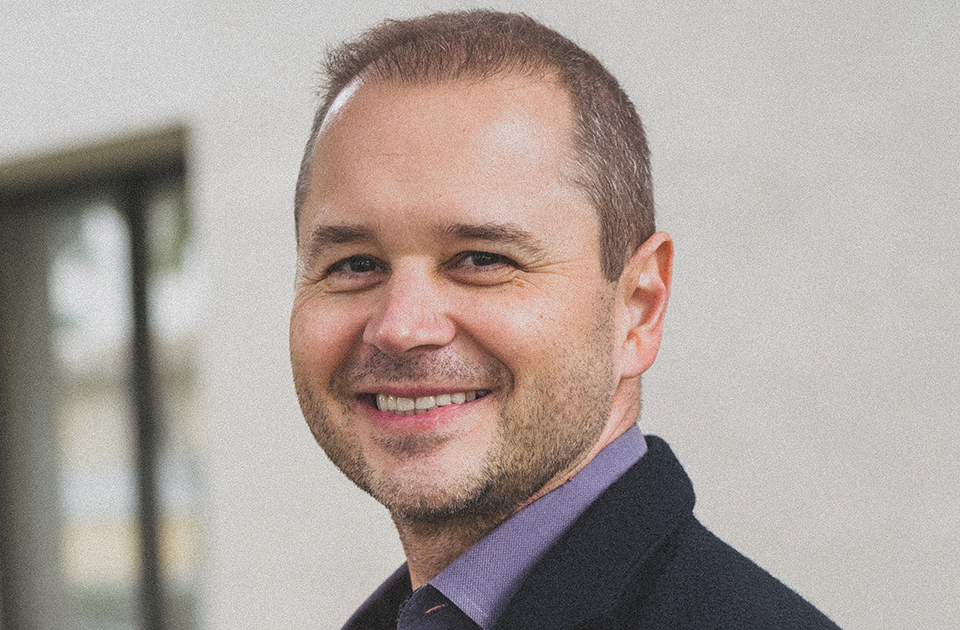
Brad Yasar, chief executive of EQIFI, explains the aggregator as a means to simplify investing in DeFi. “There are dozens of new products emerging every day and it’s almost impossible to keep track and set yourself up to deal across exchanges and blockchains in them all. We wanted to create a product that looks into the DeFi market, spots the best yielding products, does a risk analysis and then offers diversified pools to investors based on their risk appetites.”
Like a traditional wealth manager segregating investments based on a client’s loss tolerance, EQIFI offers low-risk pools based on the leading cryptos, medium-risk pools with a sprinkling of newer offerings and high-risk pools concentrating on the most promising up and coming DeFi projects.
All these pools are actively managed.
EQIBank was founded by former HSBC, Credit Suisse, Bank of New York and UBS bankers and that shows in the language and design of these new DeFi offerings.
Blockchains were first built by technologists who saw a use case in payments but did not necessarily have deep understanding of finance. “Now financial people are bringing that knowledge and new products are coming for example through staking and liquidity pools on decentralized exchanges that are higher yielding than in traditional finance and that in some cases might pay 200% per year,” says Ghaddar.
High yields, high risks
This might be a parallel world, one still in its infancy and proceeding through trial and error, but some truths are eternal. Very high yields imply very high risks.
“I would say a lot of these products are similar to ‘very’ emerging market credit; where you replace credit and political risk with security risk. But this is an opportunity for the millennial generation that has missed out on housing and equity to build its future wealth,” says Ghaddar. “But we do need to diversify. My portfolio is invested in a lot of these products, but I figure it doesn’t matter if I lose everything on some of them if I am making 200% on others.”
Fear of missing out can be a powerful incentive. “As these protocols mature, risk will decrease and the yields they are paying will likely decrease,” says Ghaddar.
DeFi protocols are black boxes. The crypto crowd claims that while some are not well tested at launch, the whole community looks for weak security or poor logic, and that they improve fast. Because they are open source and public, they are at least transparent.
Maybe they are if you have a PhD in computer science. But there is a clear echo from the days of collateralized debt obligation squareds and cubeds that led traditional finance into crisis 14 years ago. You would be forgiven for thinking some of the very same people who devised those toxic structures in the mid 2000s are now in DeFi.
One source tells Euromoney: “Think of each protocol as operating like its own central bank. It helps for bankers who are used to thinking how different economies and their various government systems work.”
A second suggests: “For all the talk about being open-source, public, distributed and permissionless, the DeFi protocols and even the blockchains themselves can look a lot like companies. You launch a major upgrade. It works straight away. That sounds like a corporation.”
That would imply their tokens are securities and that lies behind much of regulators’ discomfort with the whole crypto and DeFi market.
Mainstream banks want to offer regulated DeFi, a notion that has some of the crypto crowd bemused. One asks: “What are they going to call it, centralized DeFi?”
Others explain that the key risks are different.
“There are a couple of categories of risk that are not present in traditional finance,” says Yasar. “Has the code been written in a way that protects users or can a line be inserted that hacks it? Who is behind the product and what is their intention? There are many good people in crypto trying to build useful, sustainable projects who have created enormous value. But there are scams and pump and dumps just as in traditional finance, and people who offer high promotional rates and then might disappear.”
He continues: “Me and my team have invested in a couple of hundred of these projects, got our hands dirty and learned how to do technology audits, talk to the teams behind projects, spot what’s likely to fail, what might be sustainable and what might work but only for a while. If a yield looks like it might only be sustainable for 12 to 24 months, that could still be a good 11-month investment.”
Impermanent loss
While the workings are complex and obscure, the risk of capital loss in DeFi is real. The crypto crowd likes to call it impermanent loss. “The way these liquidity pools work, impermanent loss is equivalent to a mark-to-market loss on an investment with negative convexity in traditional finance,” says Ghaddar. And just as in traditional finance, mark-to-market writedowns become permanent when you need to sell.
It’s probably safe to assume that many investors attracted by the rewards in DeFi won’t appreciate the potential for loss until that moment comes.
“It’s very new and changing very fast because everyone is building on top of everyone else,” says Yang He, chief executive of Aspen Digital a new custody and investor services provider. “I think people coming to DeFi need to understand the risks, but it is a supercharged financial market.”
In the ‘code is law’ world of decentralized finance, hackers will try every trick to find a weakness and take money out of these protocols.
On August 10 the cross-chain PolyNetwork announced that more than $600 million had been removed, the biggest ever such loss in DeFi.
The issuers were able to lock some of the stablecoins and the hacker or hackers were reported to have quickly returned half of what they took.
But it is a reminder that while techniques familiar from traditional structured finance are being reborn inside DeFi, this is also a battle between techno geeks and if there are bugs left in the code that they can exploit, they inevitably will.
“In the conventional asset management world there is a key concept of strategic asset allocation,” says Timsit. “Cryptos are still not part of that yet for conventional asset managers. The main buyers are still family offices, hedge funds and increasingly corporate treasuries, which are not subject to the same guidelines as, say, pension funds. If digital assets do come to be recognized as an acceptable part of strategic allocation, just as private equity is, then the demand will be enormous. First movers can establish competitive advantage.”
Exiles from traditional finance have helped build a new decentralized financial marketplace that operates in parallel to it. It is less regulated and innovation there proceeds much faster than in traditional finance, which simply cannot keep up and for that attracts much scorn.
But that flood of money from the old world is what many in the new world dream about.