
Euromoney’s first award for innovation, a new category in our awards for excellence, goes to the EIB’s €100 million two-year bond, joint lead managed by Goldman Sachs, Santander and Societe Generale.
The deal priced on April 27, 2021. It was issued registered and settled on Ethereum and is the debt capital market’s first multi-dealer-led, primary issuance of digitally native tokens on an open public blockchain.
Digitally native security tokens are issued at the outset on blockchains in the form of smart contracts that pre-programme the whole lifecycle of coupon and principal repayments.
There are going to be more and more of them. If traditional finance does eventually transition onto new blockchain rails, new issues will lead the way.
The three underwriters also used central bank digital currency (CBDC), provided as part of the Banque de France’s testing of this new form of money, to transfer to the EIB the €100 million they received in conventional payment from outside investors.
“We started looking into this in late 2019 when it appeared to us that digitalization and distributed ledger would be a main theme in the future development of debt capital markets,” Richard Teichmeister, head of funding at the EIB, tells Euromoney. “Up to that point, it appeared as if the industry was trying to build a car and someone had built the brakes, someone else had built the steering wheel but no one had put it all together.
“We wanted a digital native new issue on a public blockchain that combined as many features as possible, that would be lead managed by a syndicate of banks, that would follow the normal distribution model, be open to an unlimited number of institutions and with the cash leg settled on chain.”
It was quite a breakthrough in part because it looked so much like a normal bond.
However, this raises as many questions as answers. It remains unclear whether representations of non-native securities may increasingly trade in tokenized form and the vast stock of pre-existing debt and equity also move onto blockchain.
Part of the crackdown by global regulators on crypto exchange Binance this year has centred on its listing of tokenized representations of stocks in public companies such as Tesla and Microstrategy that have been big buyers of bitcoin as well as in other companies that have not, such as Apple and Microsoft.
We are seeing a dramatic acceleration in the acceptance curve
Jean-Marc Stenger, Societe Generale Forge

These were not actual shares. Rather, they were designed to track them almost like stablecoins pegged to a fiat currency but not backed one for one by cash reserves.
Regulators warned that listing these stock tokens breached securities laws. In July, Binance backed down and announced that it would no longer offer them.
The debt markets are also highly regulated and have been slow to embrace distributed-ledger technology (DLT). The World Bank sold an A$110 million bond sole-led by Commonwealth Bank of Australia on a private permissioned blockchain back in 2018, a deal that did not include cash on chain.
Santander sold a $20 million issue on a platform developed by Nivaura, but this did not go to outside investors and was more an internal transfer of funds. It was the same with the first digital bonds issued by Societe Generale on a platform developed by Societe Generale Forge (SG Forge).
Regulation mainly constrains banks and issuers but only some investors. Change is coming.
This deal is a big step forward towards a marketplace that John Whelan, managing director in digital assets at Santander CIB, who worked on the transaction for a year, describes thus: “My own belief is that in the future many forms of value, including securities and cash, are likely to be digital and programmable and that means that they may be blockchain based in some regard.”
Jean-Marc Stenger, chief executive of Societe Generale Forge, tells Euromoney that there was a first tipping point five years ago when banks began to adopt blockchain technology from the crypto community. “We had many conversations with IT providers but very few with clients.” In the second phase, the legal and regulatory authorities began to catch up with these projects.
“The EIB deal marks the start of a third phase, which is mass adoption of this new form of tokenized securities by clients including issuers and investors,” says Stenger. “We are seeing a dramatic acceleration in the acceptance curve.”
The EIB had been working on this transaction for 15 months before launch, choosing to issue under French law thanks to that country’s DLT ordinance in 2017 that made France one of the first countries to authorize the registration and transfer of unlisted securities using blockchain technology.
There is no custodian for these bonds. An investor’s ownership is directly registered on Ethereum through its wallet, although SG Forge plays an important role as more than a back-up registrar.
It is still not possible to launch listed bonds in this way. That will be one of the next hurdles to clear. Securities tokens do not fit inside Central Securities Depositories (CSDs), which are a main focus for the regulation of public markets.
Democratic primary
Far removed from European supranational bonds, in August, Investcorp, the leading Middle Eastern private equity and alternatives manager, announced a partnership with Singapore-based and regulated private capital exchange ADDX.
This aims to use digital securities to offer accredited investors easier access to alternative asset classes that traditionally require high minimum ticket sizes, such as private equity, real estate, credit management, absolute returns, strategic capital, infrastructure and other private funds.
Investcorp is a big real estate investor and the first offering was a diversified portfolio of US residential properties, the Sunbelt Multifamily Portfolio, which includes five large apartment complexes in Texas, Arizona and Georgia.
Security tokens are called smart contracts in the language the blockchain community uses. In fact, they are neither smart – they have no native intelligence – nor are they contracts. They are mini-computer programmes.
They can do more than calculate and pay coupons. Actions such as capitalization table management, dividend payment and secondary trades can become digital and self-executing. That reduces the time and cost needed to issue, custodize and service securities and, so the theory goes, makes it possible to offer private market investments in fractional sizes.
Oi Yee Choo, chief commercial officer of ADDX, stated at the announcement of the partnership with Investcorp: “In the case of the Sunbelt Multifamily Portfolio, the efficiency gains from digital securities meant investors on ADDX could take part in the fund with a minimum amount of $20,000 – significantly lower than the $500,000 typically required for private real estate funds.”
The Singapore regulatory regime that ADDX operates under defines an accredited investor as an individual whose net personal assets exceed S$2 million ($1.5 million). Part of the hook for blockchain technology, now digging into regulators being pressed to endorse crypto, is that it might allow retail investors access to private markets that have been the preserve of a select group of pension plans, sovereign wealth funds and other institutions and where much of the value is being created today as companies delay going public.
Of course, one should always be wary of people talking about democratizing finance as they are usually just looking for more punters to sell whatever it is they are loaded up with. But security tokens will change markets in ways that are hard to foresee.
The EIB selected its lead banks in 2020 and they worked together on the technical issues and with Linklaters and Allen & Overy on the dense legal complexities, as well as on enabling access to investors.
Doing the first syndicated deal required banks that came to the transaction with different ideas of how to proceed to agree a common approach, including common data standards, for delivering a deal that would look like a normal bond issue to investors but use a very different infrastructure.
SG Forge acted as registrar, fiscal agent, settlement agent and platform manager.
“We agreed to use the CAST [compliant architecture for security tokens] framework first proposed by Societe Generale and now an open-source project, which suggests common business practices and data standards to ensure interoperability, so that various investors with different blockchain wallets can read a security token in the same way and transfer it between them,” says Stenger.
Even more important is incorporating into security tokens compliance with all the know-your-customer (KYC) and anti-money laundering (AML) regulations that prevail in conventional markets.
“We spent a lot of time on this,” says Stenger.
The issuer of a security token and any investor that owns or transfers it is identified through a public address on the blockchain, which functions almost like an international bank account number. The holder controls the public address and transfers in and out of it with their private key.
But who exactly is behind that public address?
Stenger explains that when a security token is first created, CAST gives responsibility to the platform operator and registrar to embed certain conditions within it that are hard coded and cannot subsequently be altered.
These include a white list, managed by the registrar, of public addresses that are allowed to own and transfer the security token. To operate as a registrar you need to be approved by a regulator. “It is the legal responsibility of the registrar to ensure that the white list of public addresses contains only investors on which proper KYC and AML checks have been performed by regulated entities such as banks,” Stenger says.
If this sounds cumbersome, it simply mirrors what happens in today’s financial markets.
Without incorporating KYC and AML, the transition of traditional finance to security tokens on blockchain is a non-starter. There is an opportunity here for banks that have already KYC’d their own client bases to find a new role.
“Blockchain is a tool for making securities markets more efficient, quicker, simpler and cheaper than they are today, running as they do on technology that dates from the 1980s and that requires lots of manual intervention,” says Stenger.
“It is bringing to the capital markets the same kind of digital transformation that Amazon brought to e-commerce and which changed the way people consume goods and services in the real world. This is about improving the user experience. It is not a way to change KYC or AML rules or eligibility rules either. If you are not eligible to own a security today, that stays the same with a security token. This is not the wild West. It is not bitcoin.”
There can be even more transparency in tokenized bonds than in conventional markets, especially for participants such as issuers, registrars and maybe banks that operate nodes on the network.
This sounds like the preserve of the tech geeks but there are third parties who will manage this for companies.
In June, Goldman Sachs invested in Blockdaemon, a company that helps financial institutions, funds and other market participants to host nodes on 40 blockchains, including Ethereum, Bitcoin and most of the large ones. It also aims to offer access to the new financial infrastructure to exchanges and custodians as well as to small, agile crypto native firms and developers.
Benefits
What were the benefits of doing a deal this way?
Settlement and payment versus delivery normally takes place five days after a new issue has priced and the issuer and lead banks have allocated orders to different investors. This deal shortened that to settlement on the next day.
“We could have done T+0 but wanted to take some time and watch it carefully, given the complexities and all the work that had gone into this,” says Mathew McDermott, global head of digital assets at Goldman Sachs. “Shortening that cycle from T+5 vastly reduces liquidity, operational and settlement risk, which can tie up a lot of capital. And that helps reduce costs. The actual process of settlement for this transaction took just 90 minutes.”
Euromoney wonders by how much costs can be reduced.
“If you look at digitization of the entire new issue process, recent studies have shown it could reduce costs by anywhere from 35% to 90%,” says McDermott. “We’re certainly not at 90% today, or close. That would need a fully functioning digital market with all or most participants on chain, but the potential is clear. The EIB has played a pioneering role here, mobilized other participants and boosted their confidence to explore applications of this technology.”
Lots of banks now have digital assets units that are working on three linked areas. The first is securities tokens of the kind the EIB issue exemplifies. The second is digital cash in the form of central bank digital currency, stablecoins or digital deposits like JPM Coin that can be transferred almost instantly.
Third and perhaps most exciting are new digital assets such as the decentralized finance (DeFi) protocols that institutional money is now poised to pour into. The EIB deal combines the first two elements and is groundbreaking for doing so.
Frustration
How was it for investors?
“Having seen the obstacles we identified from an internal IT perspective, we wanted something that would be plug and play for investors and that didn’t require too much IT development from them,” says Teichmeister.
But while many investors expressed interest; only a small handful were able to participate and this may be the single biggest frustration for those involved.
While the issuer, its banks and the lawyers worked on the deal for 15 months, devoting maybe 50 people to an investment in staying ahead of the technology, investors had 10 days from announcement to consider it and then commit.
Buying the bonds involves setting up digital wallets to connect to the blockchain and requires that the digital assets fit within internal compliance, legal, reporting and risk management systems. That’s not straightforward.
“We had 25 investor calls in the first five days after announcement from investors who had been tracking developments in this technology,” says Teichmeister. “They knew that cars existed but unfortunately did not quite know how to drive one. Ten days to pricing was too short a time for them to set up and buy bonds and that was a bit disappointing. But this raised awareness and we had many requests for follow up not just from investors but other issuers and regulators as well.”
If only a handful of investors are set to buy on blockchains, that means big issuers cannot achieve price tension. That has to change if this is to become the primary market’s core technology. Issuers cannot accept worse pricing from tokenized securities. There may even be a period when issuers run dual-track processes on old and new infrastructure.
Associated with the small number of investors is an absence of liquidity in security tokens. “We need more good quality tokens to increase liquidity, as investors are waiting for qualitative projects,” says Luc Falempin, chief executive of Tokeny Solutions, which works with participants in private markets on security tokens.
That absence is largely due to regulatory uncertainty.
Blockchain can now enforce compliance and allow eligible buyers and sellers to meet while the blockchain executes a transfer
Luc Falempin, Tokeny Solutions
Euronext has taken a strategic stake in Tokeny, indicating perhaps that the pan-European exchange group sees a future in which tokenization may make unlisted securities as liquid as public ones, or perhaps that it sees new rails for public markets.
“Blockchain can now enforce compliance and allow eligible buyers and sellers to meet while the blockchain executes a transfer,” says Falempin. “This already works in private markets. And regulation needs to change for the public market.”
But tokens don’t distribute themselves. They still require someone to bring an audience.
For now, it’s a classic case of chicken and egg. Pioneering banks want to future-proof their business and sense that it is even possible that more investors might participate in security token markets than do in conventional markets today.
That’s the vision.
“Blockchain can shorten time to issuance, from days right now to hours, which is much more appropriate to the digital world,” says Stenger. “And issuing a security token on blockchain can provide a borrower with immediate global reach to a pool of investors around the world and to competing demand.”
One asset manager that jumped on board the EIB deal was Union Investment, part of the German cooperative network. Christoph Hock, head of multi-asset trading, stated: “We expect the use of blockchain in combination with tokenization to become a game changer for the industry. We have been working on this innovative technology for several years and see a chance that it will be established as a market standard in the future.”
Time will tell.
“The EIB deal shows that from a technology, regulatory and client perspective the digital securities market is now mature enough to do big transactions on blockchain without any compromise on the financial terms,” says Stenger.
This was a zero-coupon bond re-offered at 101.213% for a negative yield of -0.601%, so in line with the short end of the EIB’s euro yield curve.
The small number of investors that bought these bonds is not the whole story.
“What surprised me was the sheer number of investors that wanted to engage,” says Oliver Sedgwick, head of EMEA investment grade capital markets at Goldman Sachs. “I thought it might have been a dozen or so, but we had 50 calls after 10 days and close to 100 by the time of pricing. This is a big focus for many people now. They can see that this is the way the market is going.”
Returns
Banks see an obvious benefit. Digitizing manual processes still dominated by emails and Excel spreadsheets allows them to reduce headcount. Reducing capital and margin tied up in clearing and custody cuts costs and improves returns.
“Following the EIB bond, it is easier to imagine a future where an issuer launches a 30-year bond as a smart contract and all the lifecycle events, including calculation and payment of coupons, are pre-programmed and automated,” says Joao Simao, global head of the digital solutions group at Santander CIB. “That is very appealing. Are we going to see more digital bonds? Absolutely. That train has just left the station.”
More banks are poised to go all-in on this, knowing that issuers still need them. Issuers are not going to run KYC and AML checks on hundreds or thousands of investors themselves. They are not going to suggest switches to investors that boost liquidity.
“This new format brings big advantages for issuers of securities and for investors, but it will not develop without the banks,” says Stenger.
“We are doing a lot of work on this, bringing in more investors, more fungible trading venues, introducing more capabilities in pre-issuance and in derivatives. And we are going to see this spreading across other asset classes, such as real estate and private equity, where tokenization allows fractionalization. Smaller ticket sizes potentially open markets up to many more investors,” says Sedgwick.
Disintermediation
The debate about disintermediation through blockchain at first focused on the potential institutionalization of peer-to-peer transfer and the possibility that issuers could sell direct to investors and that investors could then trade directly between each other, taking bank intermediaries out of the picture.
Could security tokens mean that an emerging market government, instead of selling 10-year bonds to banks at 4% and watching the banks pay a fraction of that to depositors, might just as easily sell bonds straight to its citizens?
That has been possible for decades. It doesn’t require blockchain. People were asking the same question about the internet in 1999. Bond investors trade directly with each other in all-to-all platforms such as MarketAxess. But there is far more to capital structure advisory, assessing investor and issuer intentions and appetites than automating transactions.
You cannot just take traditional finance and do it on blockchain. It doesn’t work the same way
Luc Falempin, Tokeny

The direct impact of re-platforming the financial markets to security tokens on blockchain could land harder elsewhere than on banks.
“Usually in public markets, there are six or seven layers between issuers and investors, such as broker-dealers, exchanges, CSDs, CCPs [central clearing counterparties], custodians, paying agents and others,” says Falempin. “With security tokens, issuers can control much of this themselves because the lifecycle of the token is more automated.”
The question becomes how confident are issuers in the mechanics of smart contracts and, once they have issued a security, how much responsibility for it do they want to take?
There were no CSDs, clearing systems or custodians in the EIB deal, although that was a private placement. What happens if this is the model that the whole market moves towards?
“The nature of different intermediaries may change and they are all getting serious about the effect of digital securities on their businesses,” says Simao.
The traditional finance market is bigger than the crypto finance market and it wants to take its core technology and bend it to its own shape. “But you cannot just take traditional finance and do it on blockchain. It doesn’t work the same way,” insists Falempin.
Investors in security tokens need reporting and risk management systems to incorporate smart contracts and also wallets that are as secure as possible.
“Regulators want wallets to work more like bank accounts. Why? Because wallets are actually browsers for the internet of value and they don’t really contain tokens – they just provide access points,” says Falempin. “What people really need is a blockchain identity, which then ties ownership of security tokens to the identity and displays them in the selected wallet associated with that identity. Tokenized assets become recoverable and secure on DLT and we can ensure that through on-chain identity as the crucial compliance layer.”
Excitement
There has been much excitement this year about central bank digital currency (CBDC) stirred up by the launch of the e-CNY. But what China is doing may not be a model for wholesale markets. China has focused on retail payments. The notion that this is some kind of geopolitical power play to replace the US dollar as the world’s leading reserve currency is a red herring.
The government is unsettled by the duopoly in domestic payments between Alipay and WeChat Pay, which control well over 90% of the market between them. It wants to promote competition and, different to western governments, hopes banks might take a bigger role in a payments business that has by-passed them and become important distributors of government money.
The Chinese central bank will throttle back on accepting retail CBDC deposits in any crisis that threatens a run on banks.
In the West, government experiments with CBDC are encouraging innovators to take securities issuance and trading onto blockchain infrastructure, cash being the crucial second leg in payment versus delivery and so essential to instant settlement. Tokeny has recently completed a pilot delivery-versus-payment settlement project with BNP Paribas, Credit Agricole, Caisse des Dépots and the blockchain XDEV involving the exchange of securities tokens and cash tokens on the same ledger.
“For a year, we’ve been working with those institutions to validate the compliance of the framework, define the operational processes and evaluate the benefits of DLT,” says Falempin.
This echoes the experiment with CBDC on the EIB bond and hints at other ways of achieving atomic settlement with cash on chain.
“If you have a digital security, then digital cash becomes almost obligatory,” says Whelan.
The EIB may have gone ahead with its digital native security tokens on a public blockchain even without adding CBDC. But the decision of the Banque de France to include it was an important part of the transaction, one that has been underappreciated.
Commercial bank cash has been digital for decades. CBDC pilots may encourage adoption of blockchain in wholesale bond and equity markets but are not essential for its use.
Remember the utility settlement coin, originally conceived by UBS, Barclays and a couple of other banks for wholesale securities markets on blockchain? That is now Fnality, a payments network also backed by Banco Santander, BNY Mellon, CIBC, Commerzbank, Credit Suisse, ING, KBC Group, Lloyds Banking Group, MUFG Bank, Sumitomo Mitsui Banking Corporation and State Street.
Many central banks are still thinking in a domestic silo
Charles d’Haussy, ConsenSys

It is now seeking regulatory approval from central banks including the Bank of England to be a first DLT-based payment network operating on a real-time gross settlement system.
And don’t forget stablecoins, despite regulators’ attacks on Tether for its claims always to be fully backed.
“There’s going to be some real grind and friction introducing KYC and AML rules into blockchain based finance as regulators figure out how to balance encouragement of innovation and competition with investor protection. It seems slightly odd that stablecoins are in the crosshairs right now,” says Lex Sokolin, head economist and global fintech co-head at ConsenSys, the leading Ethereum software developer.
“Stablecoins are not so much private money in a deposit account. They are more like money market funds in brokerage accounts and provide a cash sweep in blockchain-based capital markets. You need a cash sweep. You don’t buy your sandwiches with holdings in your money market funds and nor will you with stablecoins.”
Charles d’Haussy, Asia managing director for ConsenSys, has worked on many CBDC projects for Asian central banks, including the Bank of Thailand, the Hong Kong Monetary Authority and the Monetary Authority of Singapore, on the mCBDC bridge project. “Many central banks are still thinking in a domestic silo. And while it is important to solve for the domestic payments system, that is not enough,” says d’Haussy.
“People are missing the potential competition between CBDCs and stablecoins. We will see a lot of privately issued digital money and we may see well-regulated stablecoins from large banks that move on global rails and come with very useful features: programmable money that can be directed only to certain payments.”
The competition between CBDC and stablecoins will not be about faster money. Money is already pretty fast. It will be about smarter money.
The search is now on for forms of money that can do things impossible to achieve in simple transfers of value on the traditional payment rails. What about smart money that calculates your VAT and settles other taxes due. That would be a game changer for small and medium-sized enterprises.
CBDC needs to meet a market need. That could relate to on-chain identity, which central banks might want to focus on instead of speed, although no one seems keen to take responsibility for identity. “Much of our identity lies in government hands,” says d’Haussy. “If CBDC came with KYC and AML pre-vetting and banks didn’t have to do all that, it would lower costs for banks. Maybe you could get a 1% discount if you pay for something in CBDC.”
There are a lot of funky ideas out there right now.
If central banks play a lead role in developing new global digital payment rails, are these a public good? Do small businesses and individuals get to transfer their money cross border at the same exchange rates and percentage charges as the big banks?
JPM Coin
Discussion of regulated stablecoins running on global rails inevitably leads to JPM Coin.
The bank likes to distinguish it from the mass of dollar stablecoins that are often one side of the trade when crypto investors buy or sell bitcoin or other cryptocurrencies. The bank says that JPM Coin is not a stablecoin at all. It is a general liability of the bank.
“It’s a deposit on blockchain,” Naveen Mallela, global head of coin systems at Onyx, part of JPMorgan, tells Euromoney. “A stablecoin would be more like e-money. JPM Coin is a general deposit moving on blockchain rails. That allows clients holding deposits at JPMorgan to transfer them in real time.”
Together with DBS and the Monetary Authority of Singapore, JPMorgan has created Partior, an open industry platform that could enable cross-border payments to reach near instant transfer of value. The aim is to move beyond the hub and spoke model of international payments through correspondent banks often requiring multiple confirmations and reconciliations.
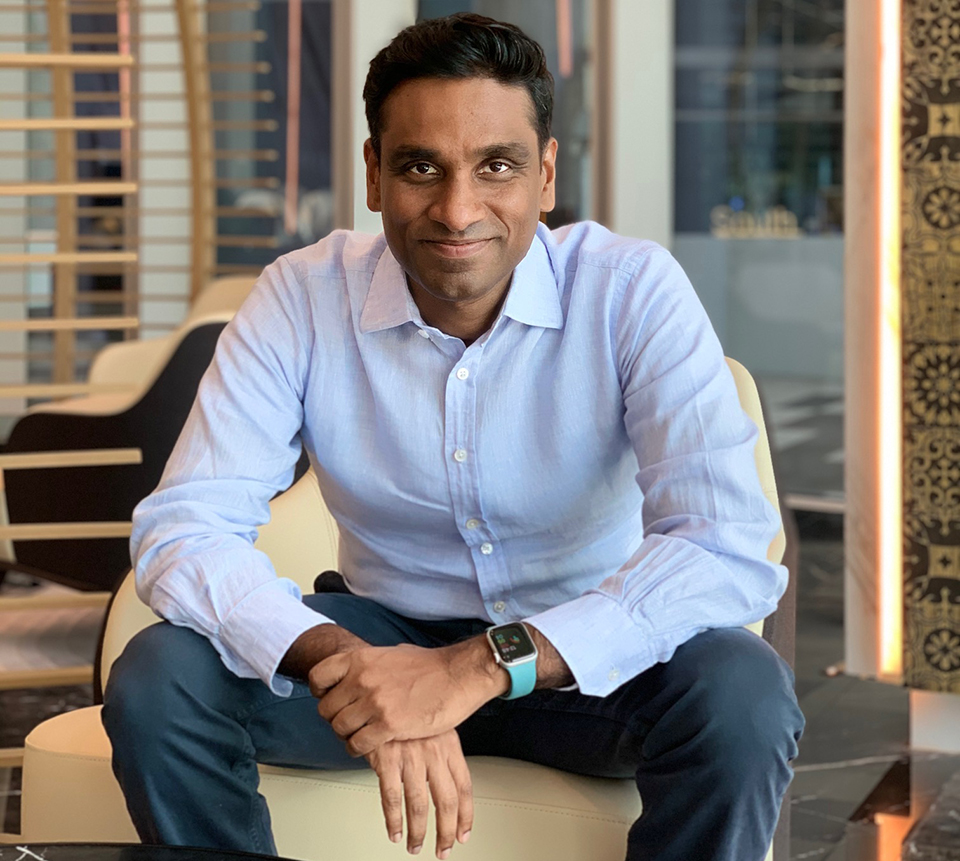
“The vision for Partior is a new distributed-ledger-based, multicurrency, global payment network for atomic settlement of wholesale payment versus payment and payment versus delivery. We don’t need cryptos for this, we don’t need stablecoins. It can work with commercial bank digital currency. It doesn’t even need CBDC,” says Mallela.
He qualifies the thought.
“In fact, commercial bank digital currency and central bank digital currency could coexist. But I would guess that commercial bank digital currency would have 10 times the role to play as CBDC, just as M1 today is 10-times bigger than M0. So the currency could be JPM Coin for US dollars and DBS coin for Singapore dollars.”
Central banks don’t have global payment rails of their own. JPMorgan does. It may be that a global settlement network emerges on a combination of private permissioned and public blockchains.
D’Haussy, like many working in this business, comes back to an analogy with the internet. In its early days, universities developed their own intranets for sharing papers and when the intranets connected to each other that became the internet, web 1.0.
“The early days of CBDC are built on the DLT equivalent of private intranets. But the forward thinkers are now leaving those intranets behind and going to global networks,” says d’Haussy. “Users converge on technology that is global and neutral and it will be the same with new digital forms of money.”
If web 2.0 was the social, interactive internet of Facebook and Twitter, web 3.0 is the internet of direct peer-to-peer interchange of value – and not just monetary value.
D’Haussy argues that CBDC and stablecoins arrive at a moment of transformation in the assets that they will pay for, based on the technology behind non-fungible tokens (NFTs). These are not just for art or NBA player highlight reels. As any crypto-type will tell you: it is possible to tokenize any asset.
“NFTs are a wrapper,” d’Haussy says. “They started with art, but in 2022 they will be in the capital markets. The insurance contract you sign is not fungible, but it can be reinsured and sold and that’s one place where NFTs will pop up. Another is exchanges bundling derivatives contracts in NFTs. At ConsenSys, we are working with two Australian banks and one Brazilian bank on starting to build an exchange for carbon credits as digital assets.”
D’Haussy says that web 3.0 is the blockchain-powered internet. “It is not the future. It is here today.”
Hitting the gas
Blockchain identity technology doesn’t come from the banking industry. It comes from the crypto industry. One thing that teaches: a lot of the cost of running a network is externalized, for example to bitcoin miners and other validators on different blockchains. That’s a change in business model that financial institutions, each used to running their own core systems, are starting to pay attention to.
“We start from a world with 25,000 banks and maybe a million financial institutions, most with their own core operating systems. We may be about to move to a world still with many banks but far fewer systems, maybe even one or two each for securities, for cash, for trade finance, for interactions with DeFi,” says Santander’s managing director in digital assets John Whelan.
“Will the roles of CSDs, custodians, central clearing counterparties, payment agents, stay the same? I guess not. But no one can be sure what they will become,” he adds.
It is a fair bet that the various groups that now own multiple stock exchanges will be examining whether blockchain is a means to put their associated central securities depositaries onto a single system (or at least more easily interoperable systems) and whether doing so might preserve them if public securities also become tokenized.
The kind of recoveries Tokeny Solutions CEO Luc Falempin talks about and, perhaps, also immobilizing assets that have been hacked, could be new roles that custodians might charge for.
The analogy for any technological disruption is always the internet. Bitcoin was the first blockchain; Ethereum is the first blockchain for smart contracts and decentralized finance. Others could yet emerge. Bitcoin and Ethereum may yet be AOL and Yahoo and not Google.
When the internet first appeared it was static content, loading academic treatises and then company and newspaper web pages to be read just like hard copy documents, before it became interactive. You couldn’t run Facebook on first generation internet. It needed something much faster.
There has been much concern in DeFi about so-called ‘gas fees’ on the Ethereum mainnet, the cost of processing transactions when blockspace is limited and miners prioritize the highest paying transactions.
It’s good to rent a network only when you use it instead of building and running your own, but it is not so much fun when you have no idea how much rent might be and suspect it is going up.
The problem with transaction fees is that they are paid in a blockchain’s own token. In March 2020 ether cost $130. In mid-August 2021, the price was $3,000. In part it has been driven up by the rise in NFTs. Regulated financial institutions cannot hold cryptos on their balance sheets and that is a big problem for them. Even crypto natives dealing in other tokens don’t always have ether in their wallets.
Right now, a fair question is what kind of gas fee is unacceptable for a €100 million bond deal.
“The cost of a transaction really relates to the amount of blockspace that is currently available for the transaction,” says Whelan. “We are still working with the equivalent of dial-up internet. You can’t run today’s internet under a dial-up connection. But we are about to move to early broadband and we can already imagine what the blockchain equivalent of fibre broadband will look like. What will happen then is the cost of transactions will drop. I believe that within a year transaction cost will cease to be an issue.”
Ethereum 2.0, known as “the merge” between the mainnet and the currently separate beacon chain, is due next year and should shift the key DeFi blockchain from expensive proof of work to lower cost proof of stake. In the pseudo anarchist world of crypto, stake equals capital and proof of stake is pure capitalism. The more money you have, the more power and influence. Users won’t mind if the blocks run on time and are cheap.
Already in early August, Ethereum managed its so-called London hard fork, Ethereum Improvement Proposal 1559. This aims to reduce transaction costs by setting a base fee rather than having users bid in blind auctions for miners’ work and to improve processing through variable sizes of blocks.
It appears to have been successful, boosting hopes for the merge when it eventually comes.
Falempin claims that Tokeny has already tackled high gas fees in another way. “We believe we have solved it with Polygon, a layer 2 protocol, secured by Ethereum. Now a transaction takes only a few seconds and the gas fee is nearly zero. And we’ve taken it a step further by offering a ‘gas tank’ that eliminates the whole complex process of gas fees.
“We believe that the real adoption of tokenization can only come when we make this complex technology simple for mainstream users,” he adds.
[…]
DBS, the digital exchange and the future of capital markets in a tokenized world

When the DBS digital Exchange (DDEx) was launched in December 2020, the headlines went to crypto. Here was a big moment: bitcoin (among other things) was being brought into institutional market norms, traded on a bank-backed exchange with its own custody services within the bank.
That’s all significant, but it overshadowed the potentially most interesting part of the new exchange: security token offerings (STOs). The exchange includes a regulated platform for the issuance and trading of digital tokens backed by financial assets – bonds, property, unlisted companies, Series B or C funding, private equity funds, you name it.
Private marketplaces for digital assets do exist, all over the world, but the significance of this one is that it is being housed within a major multinational bank, which is under the supervision of a leading regulator, with origination tied to some of the most senior figures in the bank.
It’s still early days. Although 400 investors had been brought onboard to trade on DDEx by the end of June, with S$180 million ($134 million) in total trading value in the second quarter, this is pretty much entirely on the crypto side.
Only one STO, in the form of a S$15 million digital bond, has so far made it onto the exchange, in June, and it was only on August 12 that DBS Vickers, the bank’s brokerage arm, received in principle approval from the Monetary Authority of Singapore under the Payment Services Act to provide digital payment token services.
But everything has to start somewhere and once this part of the exchange is active, it could prove an interesting barometer for where a tokenized financial world takes us.
“We see exponential growth potential in the private markets,” says Eng-Kwok Seat Moey DBS’s group head of capital markets.
She’s seen two big trends in her time.
The first is the growing popularity of non-IPO methods of gaining equity funding, firstly with companies like Grab that can go to the private markets time and again for billions of dollars over time and then more recently with the rise of special purpose acquisition companies (Spacs).
The second is the challenge around liquidity that comes with private funding.
“There’s a gap which we want to fill with this private exchange: the gap between raising capital in a private way and allowing more investors to have access to that market.”
Faster, more efficient and more transparent
Eng-Kwok has been handling placements of private funds for multinational companies, regional and Singaporean conglomerates and developers for years, and so has much of the infrastructure – from origination to distribution – in place already.
Putting the private fundraising process on a digital platform makes it faster, more efficient and more transparent; and ultimately ought to bring liquidity too, she says.
“Liquidity is a chicken and egg thing,” she says. “You must have STO offerings and you must have an investor base.”
Building both also requires a certain amount of due diligence – these might not be public markets, but they still involve know-your-customer and anti-money laundering restrictions.
Eng-Kwok thinks that in the early days the gap is for smaller companies, those wanting to raise perhaps S$25 million, maybe family-owned but growing, and a step too small for the bigger institutional clients who already dominate the headline funding rounds of unicorns.
This works in two ways: clients don’t have to raise too much and investors don’t have to put in too much either.
“This is the beauty of fractionalizing. You don’t have to invest millions. You can invest $10,000 if that’s what you want.” Investors on the exchange do have to be accredited and early on many are likely to come from DBS’s private banking side. They don’t have to be institutions.
But where’s market rigour here? Public markets require the due diligence of an IPO prospectus. What are we saying in a fractionalized private market – just buyer beware?
Eng-Kwok argues that there is “more transparency” in her approach to a tokenized private market.
“Here, because it’s a managed group of members and investors, you can do a briefing to 50 people who are interested, not try to explain a story to millions for the retail market.”
Then there’s cost of funds.
“Definitely this will be cheaper” than public markets, Eng-Kwok says; but it will also be more efficient than standard approaches to private capital, with the greater opportunity for investor exit and at least a modest secondary market. DBS says a market maker is already active on the exchange but declines to say who it is.
If this becomes the norm, what happens to underwriting fees? Is this ultimately bad for investment banks?
“You still have to underwrite it, just like any other product,” she says. “You don’t get the same fees as you would in an IPO, but there are still fees. It’s not that you’re never going to earn money again. What you want is the volume.”
Chris Wright