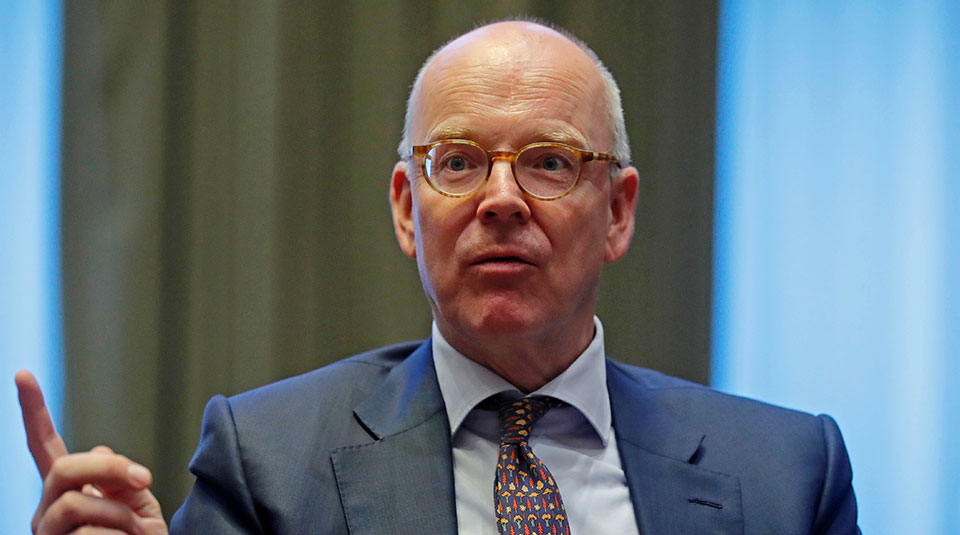
Martin Blessing is the latest high-profile European banker to set up a special purpose acquisition company (Spac) focused on financial services and fintech.
As chief executive, he heads an impressive team at European FinTech IPO Company 1 (EFIC1), which intends to float on Euronext Amsterdam before the end of March and to raise €415 million – more than most Spacs, which typically raise between €250 million and €300 million – through the sale of shares and warrants.
The group will look for targets across European financial services hoping to acquire a fintech unicorn already valued at least at €1 billion.
This venture comes as the number of European Spacs picks up and as a growing number of large European fintechs look beyond private capital to a future as publicly listed companies.
The opportunity is there for Spac sponsors, but the competition is increasing.
Blessing is in jovial mood when Euromoney catches up with him.
I was trying to make big financial companies quicker. Now I am looking to make a quick company bigger
Martin Blessing, EFIC1
“For the last 30 years of my career, I was trying to make big financial companies quicker,” he says. “Now I am looking to make a quick company bigger.
“We are looking not only for European targets but in particular for companies that want to list in Europe. And we believe that plenty of companies do want to list in Europe.”
He bats back Euromoney’s suggestion that the founders and private equity owners of European fintechs will be tempted by the higher valuations available on US exchanges.
On Tuesday, the day after Blessing unveiled his venture, eToro, the 14-year-old Israeli-founded social investment platform now being touted as Europe’s answer to Robinhood, announced it will reverse into a US Spac sponsored by Betsy Cohen, founder of The Bancorp and chair of FinTech Acquisition Corp V.
The company will now take its growth story to public investors through a listing on Nasdaq. Isn’t this the route many more will follow?
“If you look on an index basis, US indices do have higher valuations, but that is because of index composition,” says Blessing.
“Nasdaq is more weighted to technology and the leading European exchanges to the traditional economy. But decompose it to the individual stock level and a company like [payments platform] Adyen now has a valuation on Amsterdam comparable to or ahead of many US peers.
“It also has a market cap greater than most European banks.”
Targets
EFIC1 is defining European financial services broadly and will look at targets from the UK to Israel. Spac sponsors are not allowed to contact targets – or pay anyone else to contact them – before their own IPOs.
If eToro was ever on Blessing’s list, that chance vanished immediately.
Its story shows how fintech companies can grow steadily for over a decade and then suddenly accelerate. In 2019, eToro’s monthly registrations of new users averaged 192,000. In 2020, that grew to 440,000. And in January 2021 alone, it added more than 1.2 million new registered customers.
Blessing believes that private capital can only take growth companies so far.
“They need more capital to grow,” he says. “I was talking recently to a private equity fund manager looking to list a portfolio company to fund its growth and I asked: ‘Why not provide the capital yourself?’
“They told me that the cost of equity is higher for a private equity fund now than it is for a portfolio company in the public markets.”
Blessing is now keen to get on with it.
He says of putting the team together: “A lot of us knew each other and had been talking about this opportunity for a while. Conversations accelerated around Christmas and we intend to list before Easter.”

Ben Davey, previously head of venture capital at Barclays, head of group strategy and head of FIG for EMEA at Barclays investment bank, is the vehicle’s chief investment officer.
Nick Aperghis, founder of his own M&A and IPO advisory firm after a 25-year career in investment banking at JPMorgan and Deutsche Bank, is chief financial officer.
Hélène Vletter-van Dort, who chaired the Dutch Central Bank committee on supervisory policy and served on the boards of Intertrust as chair and NN Group, first as chair of the nomination and governance committee and then of the remuneration committee, will chair EFIC1.
Klaas Meertens, founding partner of Dutch investment firm HTP – which will be a cornerstone investor in the IPO, likely contributing €40 million – is a non-executive director.
Clara Streit, who has served on the boards of Deutsche Börse, NN Group, Vonovia, Vontobel and Jerónimo Martins, and brings connectivity with the European founder and early-stage investor community, is an operating partner.
“Any target business will be working with a highly experienced team, committed for the long-term journey,” Davey tells Euromoney. “Martin, for example, has been a CEO and run retail banking, corporate banking, SME and wealth management businesses.
“This is a team that can help ambitious skillful founders to manage the complexities of being a public company, for example ensuring they have appropriate risk and governance functions in place, and also bringing deep experience of working with regulators and investors.”
He adds: “We think that should be helpful to founders and their teams.”
New winners
Davey offers a little more detail on the particular areas where EFIC1 will be seeking targets.
“We are interested in banking as a service and banking technology broadly, as well as companies addressing particular verticals such as wealthtech and insuretech, where there are great opportunities for disruption and new winners are likely to emerge.”
EFIC1 is not looking for early-stage moonshot investments, rather revenue-earning companies with a clear path to profitability. It may consider carve-outs from bigger, possibly listed companies.
Davey says: “We are also looking at cross-industry infrastructure providers and enablers that the large incumbent banks are now much more willing to engage with than in the past, as they look to replace fixed costs with variable costs.”
The team may also look to areas where finance and payments are present, but which may not be traditionally defined as financial services, such as healthtech.
Davey offers a few statistics to back up Blessing’s contention that time has arrived for more European fintechs to go public.
There is significant pent-up supply of great companies and great management teams now ready to step into the public capital markets
Ben Davey, EFIC1
He says: “These companies have benefited from long-term private capital. From 2012 to 2020, fintech accounted for around 14% of venture capital and private equity invested in Europe. In the last couple of years alone, nearly $15 billion has been invested, yet fintechs have represented just over 4% of European IPOs.
“Our thesis is that there is significant pent-up supply of great companies and great management teams now ready to step into the public capital markets.”
In that case, why shouldn’t they just IPO on their own?
Blessing, Davey and the other sponsors are risking up to €8.5 million of their own money to launch this Spac. Should 24 months run down without them securing a deal, then that risk capital may all be gone.
However, if the promise of a simple route to a listing, new capital through a private investment in public equity (Pipe), and the advice and support of experienced operators attracts a good target, and they end up owning even just 2% of a company worth, say, €3 billion, then that becomes €60 million, even before any founder warrants are cashed in.
Those are fairly standard numbers for the promote, and sponsors are typically subject to lock-ups and cannot immediately cash in.
EFIC1 has yet to publish its prospectus, but its aim, as with the sale of one warrant with every three shares in the IPO, is to import onto Amsterdam structures familiar to regular investors in the biggest market for Spacs.
These units will be sold to a mix of US and European accounts, including hedge funds, real money asset managers and family offices. Credit Suisse, the leading investment bank for Spacs, won the beauty parade to lead the deal.
As to company valuations, fintech deals are getting bigger.
Chamath Palihapitiya’s deal for SoFi in January valued that company at $8.6 billion pro-forma or $6.6 billion pre-money from the $1.25 Pipe deal and $805 million held in trust by his Social Capital Hedosophia (SCH) Holdings Corporate V, the Spac into which SoFi reversed.
Now eToro is expected to become a public company with an implied equity value of around $10.4 billion.
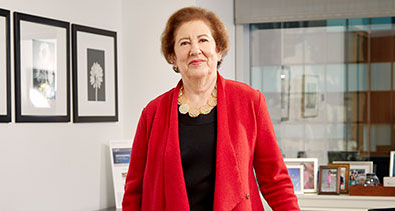
No wonder Cohen is excited.
“In the last few years, eToro has solidified its position as the leading online social trading platform outside the US, outlined its plans for the US market, and diversified its income streams,” she states.
“It is now at an inflection point of growth, and we believe eToro is exceptionally positioned to capitalize on this opportunity.”
IPO v Spac
A growth company’s management team can be distracted for six to nine months preparing for a conventional IPO and then find the stock market crashes in the week it aims to list and the work is wasted.
Or the offering succeeds, but the team ends up giving away a lot of value to short-term flippers through a big first-day pop in a stock priced to sell through a discovery process dominated by banks with investors to keep sweet.
Blessing says: “The classic IPO is a perfectly valid way for owners to gain liquidity and for companies to raise growth capital. Even if founders don’t want to sell out, it becomes easier for them to diversify their wealth if they are seeking to borrow against listed equity instead of unlisted.
“But the IPO process is longer and the price discovery point comes only at the very end.”
By contrast, he argues, “the Spac process is faster, and that price discovery comes earlier through discussions around the Pipe. Plus, in the case of EFIC1, you get all the know-how and expertise of a very experienced pan-European team.”
He concludes: “You can go up the IPO escalator to be publicly listed, or you can ride the Spac elevator.”