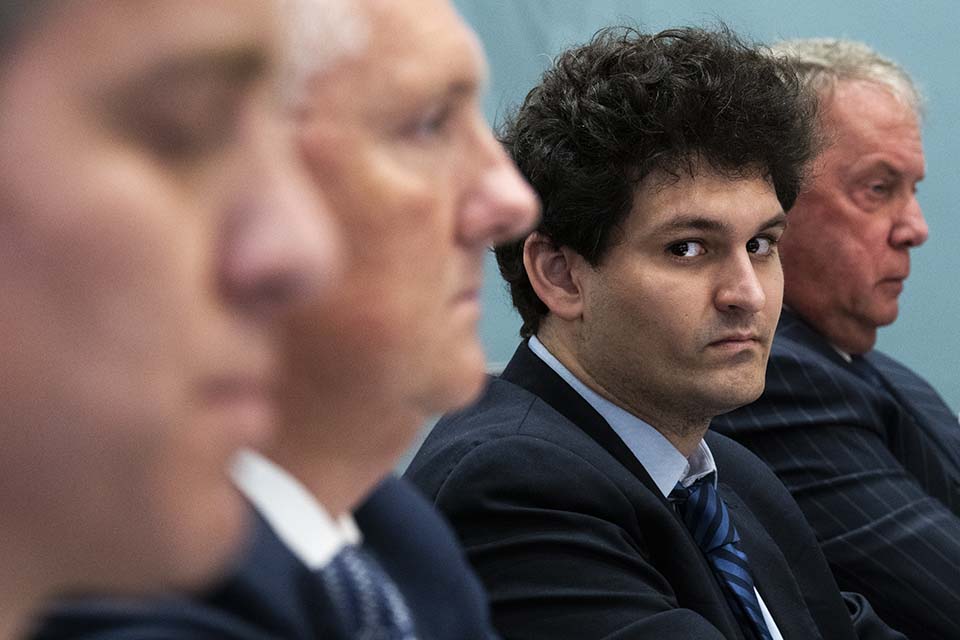
Unusual doesn’t begin to cover it. The story of Sam Bankman-Fried and the swift and dramatic collapse of FTX may be grubby, but it is so compelling.
There are the delicious images of the young billionaire in grey T-shirt, shorts and socks staring at his phone and barely noticing the besuited former US president Bill Clinton and ex-UK prime minister Tony Blair paid to sit next to him and tout crypto at the firm’s conference in the Bahamas; the grotesque TV ads with American football player Tom Brady, now facing a class action lawsuit from investors gulled into investing on the failed crypto exchange; perhaps most entertaining of all the humiliation of investing firms such as Sequoia Capital, Temasek, Tiger Global, BlackRock and Ontario Teachers Pension Plan that together decided in October 2021 that FTX was worth $25 billion.
“Sam Bankman-Fried is a special founder who is ambitious and daring enough to build the future of crypto by establishing FTX as the global exchange with the best overall product offering and leveraging the world’s crypto rails to build the future of finance,” Alfred Lin, general partner at Sequoia Capital declared at the time.
If you missed the future of finance, maybe that is because you blinked. A year is a long time in crypto.
When FTX filed for bankruptcy, those masters of the private equity universe soon began writing their investments down to zero.
The firm that painted itself as crypto’s JPMorgan turned out to be its Bear Stearns
Here was the apparently well-capitalized saviour of other crypto firms that had been hit by the failure in May 2022 of Terra’s UST stablecoin and subsequent collapse of Celsius and Three Arrows Capital itself suddenly crashing down.
The firm that painted itself as crypto’s JPMorgan turned out to be its Bear Stearns.
John J Ray, the insolvency expert appointed as chief executive to recover whatever can be saved for FTX creditors – which may not be much as there is little left and scarce precedent for treatment of crypto assets in a bankruptcy – offered no comfort to those equity owners who trusted their fund managers to do proper due diligence on a new age company that didn’t have anything as old fashioned as a board of directors.
“I have supervised situations involving allegations of criminal activity and malfeasance (Enron),” says Ray. “I have supervised situations involving novel financial structures (Enron and Residential Capital) and cross-border asset recovery and maximization (Nortel and Overseas Shipholding). Nearly every situation in which I have been involved has been characterized by defects of some sort in internal controls, regulatory compliance, human resources and systems integrity.”
Sounds like there’s a big “but” coming. And here it is.
“Never in my career have I seen such a complete failure of corporate controls and such a complete absence of trustworthy financial information as occurred here.”
It is quite the opening to a normally dry-as-dust Chapter 11 petition.
The language FTX evokes is less the US bankruptcy court for the district of Delaware, more a Netflix police procedural.
“We don’t know where the bodies are buried: we only know that there are more bodies,” Ryan Shea, crypto economist at Trakx, said in a discussion of the aftermath for the wider crypto market.
“There’s still more downside to come,” he suggested in November, “another 20% to 30% wouldn’t be surprising.”
The bodies have been surfacing ever since. Crypto lender BlockFi filed for bankruptcy at the end of November. Genesis Trading, one of the longest-established crypto brokerages that sits at the centre of the Digital Currency Group, announced that its lending business had “temporarily suspended redemptions”.
Just the start
The tremors spread.
Alesia Haas, chief financial officer of Coinbase, points out: “There are apparently $8 billion of losses [from FTX], but we haven’t seen $8 billion of loss disclosures come through. I don’t know where they are, but I don’t think we have seen the end of this yet.”
Genesis Global Capital was the lending partner of the Earn programme, run by another separate exchange, Gemini, co-founded by the Winklevoss twins, Cameron and Tyler.
Gemini Earn lent out customers’ cryptos to generate yield, but those customers cannot now get their funds back. Gemini has banded together with other creditors to press Genesis, the Digital Currency Group and its founder, Barry Silbert, for restitution.
Having profited from the little people sucked into crypto, the billionaires are now at each other’s throats.
Investors in other businesses of the Digital Currency Group, which also owns Grayscale, manager of the large bitcoin trust, and, ironically, CoinDesk, the crypto news outlet whose investigative reporters first broke the story of potential holes in the balance sheets of FTX and Bankman-Fried’s own hedge fund Alameda, now worry about inter-group loans.
The crypto community talks a lot, especially on Twitter. One key lesson from FTX is that you can’t trust a single word
How far could the damage spread from a collapse of Genesis’s lending business and what recourse might external creditors have to other group subsidiaries?
If FTX is Bear Stearns, could Digital Currency Group turn out to be crypto’s Lehman? Or could Binance: the big rival of FTX that seeks business from small punters in crypto while FTX went after larger traders?
Binance chief executive Changpeng Zhao sought to assume Bankman-Fried’s mantle as crypto saviour after FTX collapsed, announcing an industry recovery fund to pick up good crypto projects suffering liquidity problems.
“Most valuations are much more reasonable than a year ago,” Zhao said in November in a rare and masterful piece of understatement.
Overshadowed by news of Bankman-Fried’s arrest in December, Reuters reported that the US Department of Justice is moving forward with investigations into Binance, which has admitted that users of Iran-based crypto exchanges “attempted to move crypto through Binance’s exchange”.
Chagri Poyraz, global head of sanctions at Binance, admitted in a blog post: “The big question for centralized exchanges like Binance is: ‘How do we keep sanctioned individuals from accessing our platform while simultaneously extolling the values of decentralization?’ I believe that no exchange out there, not even Binance, has cracked this issue.”
Customers began pulling large sums from the exchange in December, though Zhao assures his Twitter followers that Binance has seen this all before, can handle it and considers it business as usual.
Trust no one
The crypto community talks a lot, especially on Twitter. One key lesson from FTX is that you can’t trust a single word. It is probably safer to assume that most of them are lying, even if one or two might occasionally be telling the truth.
The key message is always: ‘We are OK. We wouldn’t lend out customer funds parked with us, at least not without specific permissions from customers to do so’. But that is exactly what Bankman-Fried declared – “FTX is fine, assets are fine” – just before the exchange sank, taking billions of dollars of other people’s money down with it.
‘I wasn’t even trying’
It only took a month. On December 12, Sam Bankman-Fried was arrested in the Bahamas at the request of the US government, pending the filing of charges in the Southern District of New York as well as separate charges from the US Securities and Exchange Commission over alleged violations of US securities laws relating to the bankruptcy on November 11 of the crypto exchange he founded, FTX and its web of affiliated entities.
The SEC accuses Bankman-Fried of orchestrating a massive, years-long fraud, diverting billions of dollars of customer funds for his own personal benefit and to help grow his crypto empire.
It claims that he diverted FTX customer assets to his own crypto hedge fund, Alameda Research, which he used as his “personal piggy-bank” to make undisclosed venture capital investments, lavish real estate purchases and what the SEC’s lawyers describe as “large political donations”.
The SEC alleges that when crypto asset prices collapsed after the failure of Terra’s Luna in May 2022, he used customer funds from FTX to repay loans taken out by Alameda to punt on cryptos.
“Unusually in his circumstances, and perhaps contrary to legal advice given, SBF has given a number of media interviews since the implosion of FTX,” says Kate Gee, counsel at specialist disputes law firm Signature Litigation. “These are likely to have contributed to the speed at which the US authorities were able to put together their case for his arrest.
And indeed, central to the SEC’s case seems to be Bankman-Fried’s oft repeated claims to investors that FTX had state-of-the-art risk management.
The SEC quotes him from a TV interview on December 1: “I wasn’t even trying, like, I wasn’t spending any time or effort trying to manage risk on FTX. What happened happened – and if I had been spending an hour a day thinking about risk management on FTX, I don’t think that would have happened.”
Set against, this Bankman-Fried can point out that he has at least repeatedly said sorry to the customers whose $8 billion has disappeared.
Almost immediately, surviving crypto exchanges began publishing proof of reserves in wallet addresses.
“But the numbers are meaningless without proof of liabilities,” Shea complains. “What users actually want is proof of solvency.”
Timo Lehes, co-founder of Swarm Markets agrees, suggesting in mid December that: “With reports circulating about another major crypto platform, the idea of ‘proof of reserves’ (PoR) seems dead on arrival. Investors need more transparency when it comes to collateral than just a snapshot of assets at one moment in time.”
He points out: “The best way to see if your assets are where they should be is by redeeming them.”
Investors have indeed been pulling their money from centralized crypto exchanges since FTX went down.
PoR is a symbolic device to wave at retail investors in the hope of keeping them enthralled. It is not going to reassure institutional investors, and neither is the admonishment to individuals that they should have maintained self-custody of their own coins in their own wallets with their own keys.
Institutional investors don’t do self-custody.
If that is the only way to keep their money safe, you can simply forget about any institutional asset owners still considering allocating to crypto ever doing so. Intermediary asset managers aren’t going to have the graduate trainee hold the keys to billions of dollars of their customers’ money on a memory stick that he can pop in his backpack either.
The many cheerleaders for cryptocurrency as the foundation of a new decentralized financial system would love to pin the blame for recent collapses on a few bad actors. But the entire edifice of miscalculated counterparty credit exposure and mishandled collateral has been teetering ever since. And that is because most of the underlying stuff being traded – that shot up in value through the speculative bubble era of low rates and rising inflation – is worthless.
“The crypto industry remains small and interconnected,” Christopher Perkins, president of CoinFund, a crypto-native investment fund and asset manager, tells Euromoney. “To grow, centralized exchanges became big clearing houses and custodians as well. Due to operational and regulatory challenges, banks could not participate or bring their experience in mitigating credit issues.”
“It’s going to be highly volatile,” Binance CEO Zhao told the audience on Twitter for one of those endless our-assets-are-fine-here’s-our-proof-of-reserves broadcasts, while predicting a cascade of contagion effects from FTX.
“You should not invest in crypto with money you need next week or next month,” Zhao says. “You should invest with money you don’t need for two years.”
There is one question that nobody seems to be asking: beyond those who handed their money to FTX and lost everything, does the collapse of the third-largest crypto exchange actually matter?
It remains to be seen if prosecutors will be able to prove Bankman-Fried guilty of fraudulently siphoning off customer funds to support leveraged bets on crypto in his own fund, or whether he will get away with the story that this was bumbling incompetence among a group of drugged up nerds who no one in their right minds should ever have trusted with the spare change from buying pizza.
It will certainly make a fun movie. Talk to people in the crypto world and the plotline is still being debated, though.
This latest winter is the beginning of the end of crypto.
No, it’s the moment when crypto is cleansed of bad actors and emerges as a bright new financial system, with proper regulation to protect consumers that will also allow for full institutional adoption.
Nonsense. It is impossible to regulate decentralized finance (DeFi): if you do, it’s not decentralized and it’s not true crypto. Code is law. We don’t need no stinking regulators.
This is really nothing to do with crypto at all; it’s just a replay of scams and failures from traditional finance that took place on an old-style centralized exchange, thus proving the need for DeFi.
Please.
Contagion
Hard facts are yet to be established in court. In the post-truth world of Twitter, FTX has becoming a meme through which crypto apologists and opponents holler their prior convictions.
There is one question that nobody seems to be asking: beyond those who handed their money to FTX and lost everything, does the collapse of the third-largest crypto exchange actually matter?
The good news is that the spillover has been limited.
“The contagion from the collapse has thus far been largely isolated to the crypto ecosystem as the wider populace has yet to access the crypto asset class,” says Perkins at CoinFund.
Policymakers had worried that investors facing heavy losses in crypto might have to sell other assets, so prompting an avalanche of collapses spreading across conventional markets already damaged by rising rates, where liquidity is thin and price gapping a big danger.
“This is a new industry facing its version of the great financial crisis in microcosm,” says Perkins.
The notion that this is a cleansing moment for crypto, that it will be purged of miscreants and become a more stable and dependable asset class worthy of institutional adoption now hangs on the notion that the regulators are coming
Perkins knows of what he speaks. He was on the trading floor at Lehman Brothers in September 2008.
“The difference is that there are no central banks coming to the rescue,” he says. “There are no bailouts in crypto. So, I’m hopeful that a stronger foundation will emerge.”
Until it does, risk aversion has reduced the volume of mainstream institutional capital now looking to fund the makers of shovels for hopefuls in the crypto goldrush after such humiliating losses for some that had invested in the equity of companies dealing in those assets.
Aside from a few hedge funds and family offices, institutions did not invest in cryptos directly.
At least those private equity losses have been modest. The famous B-1 funding round may have valued FTX at $25 billion, but those big investors only handed over a mere $420 million for their table stakes in the doomed business.
A couple of hundred million here or there is not going to hurt the likes of Sequoia and its limited partners or Temasek.
Banks have spent some money hiring crypto analysts, but they haven’t, thank goodness, been allowed to hold the stuff on balance sheet.
Long-term narrative
The notion that this is a cleansing moment for crypto, that it will be purged of miscreants and become a more stable and dependable asset class worthy of institutional adoption now hangs on the notion that the regulators are coming.
“This is not the first crash in financial markets or the first shock to the system,” Oliver Linch, chief executive of Bittrex Global, a crypto exchange based in Liechtenstein and registered with that principality’s Financial Market Authority as well as also being regulated by the Bermuda Monetary Authority, tells Euromoney.
I don’t want to do KYC and AML just so that a regulator pats me on the head. I want to do it because enabling terrorist and criminal financing is evil
Oliver Linch, Bittrex Global

“Nothing we have seen so far fundamentally changes the long-term narrative of crypto adoption,” he says. “Blockchain technology is game changing. If anything, the story of the current bear market is that the level of institutional interest has grown stronger. The FTX saga is certainly having a short-term effect, but almost everyone agrees that, long term, institutional interest is here to stay. Every major bank has a substantive crypto desk. Every asset manager has to have a crypto offering. Investors are looking at utility tokens, altcoins, cryptocurrencies.”
What will disappear and already should have, according to Linch – a lawyer who came to Bittrex Global from Sherman & Sterling where he advised some of the world’s largest securities and commodities exchanges, as well as banks and fintechs – are “institutions that adopt the language of regulation but don’t do the hard work.”
He says: “The only way crypto becomes mainstream is to be regulated meaningfully. I have seen what it takes to do compliance properly, with hard business decisions and heavy investment. But that’s what it takes to inspire consumer confidence. You wouldn’t put your money in an unregulated bank, so why would you put your money on an unregulated exchange? And I don’t think there is a place for crypto if it hides in the shadows. I don’t want to do KYC and AML [know-your-client and anti-money laundering] just so that a regulator pats me on the head. I want to do it because enabling terrorist and criminal financing is evil.”
Liechtenstein and Bermuda may be small jurisdictions but, Linch says, they show that when the political will is there, it is possible to develop good rules quite quickly, “by engaging with crypto on crypto’s terms rather than endlessly debating whether these are securities or commodities when they are really neither.”
He points out the work Liechtenstein did four years ago has had a big influence on the EU’s proposed Markets in Crypto Assets (Mica) regulatory framework that may eventually come into effect in 2024 along with licensing and conduct-of-business requirements, as well as a market abuse regime for cryptos.
The challenge of regulation
Blockchains, when they eventually become scalable and securely interoperable, could be a regulators’ dream.
The cryptocurrencies that first spawned them, however, may remain beyond the pale. And while many of those who have invested money, time and effort in crypto now pretend to be fed up that regulators haven’t moved fast enough to stabilize the business and urge them to get on with the job, some are honest enough to admit the difficulties of regulating true crypto.
Large, centralized exchanges such as FTX, Coinbase, Binance and Kraken – as well as smaller regulated ones like Bittrex – aren’t really core to the vision of decentralized finance in which you don’t have to trust people or institutions, but rather you depend on the security of the system itself and the code of the decentralized apps on which your money moves.
However, that is not how regulators work. They can’t regulate code and they can’t deal with decentralized exchanges with their automated market makers and liquidators. Who would they call? If they are going to regulate crypto exchanges, they can only regulate centralized ones – ironically the ones where most of the collapses have happened – with executives and boards of directors they can question and approve – or not – as well as systems their own technicians can check.
And end users don’t really like decentralized systems either. Talk to people who live and breathe crypto, and they will admit to trembling with nerves when they transfer large sums of money, fearing that cryptographic keys may be lost – and with them access to everything in their wallets – or that they will be hacked.
The user experience in crypto is simply terrible. That is why people deposited money in accounts holding their cryptos at centralized exchanges and trusted that it would still be there when they wanted to withdraw it.
Responsibility
People want to trust people. And they want a central authority to call on when there is a problem or a mistake. Maybe that is just the way our brains have been wired. But even if a few computer scientists now think differently and a few whales who dived in early and secured fortunes want the rest of us to, that is not going to alter the thinking of the wider population.
The whole point of crypto was a censorship resistant – for which read unregulated – financial system which allows complete freedom to users at the cost of accepting complete responsibility.
Lose your keys and it is all gone. Invest in a protocol that crosses an unsafe bridge between blockchains and gets hacked and that is down to your own lack of due diligence. Didn’t you read the whitepaper? You mean you actually clicked on that pop-up and didn’t understand it was malicious code inserted by a hacker that you just sent your coins to? Well don’t complain because… there is no one to complain to.
“One criticism that cannot be levelled at crypto is a lack of transparency,” says Oliver Linch, chief executive of Bittrex Global. “You can read the whitepapers, examine the code. There’s almost too much information available.
“But crypto can’t continue promising 1000% overnight returns. That delegitimizes it. We need interesting products developed by credible communities that might offer 8% a year. That’s still an incredibly attractive investment opportunity, but crucially is not ridiculous speculation, and is also not guaranteed. Crypto needs to signal: ‘We’ve had our fun, now it’s time to grow up and behave like adults’. It needs to become more boring.”
After many years studying the crypto market, the Financial Stability Board finally managed in October 2022 to publish for consultation a proposed framework of international regulation, based on the core principle of “same activity, same risk, same regulation”.
This suggests that where crypto-assets and intermediaries perform an equivalent economic function to one performed by instruments and intermediaries of the traditional financial sector, they should be subject to equivalent regulation.
It is not immediately obvious that this takes us very far.
FTX’s failure, many in the crypto business argue, will inevitably speed up the process of regulation in leading financial centres: the US as well as the EU, not the Bahamas, where Bankman-Fried took FTX after founding it in Hong Kong.
There is regional competition at play here. Crypto trading is very much a US sport but Mica forms part of the European Commission’s wider digital finance strategy and is intended to cover stablecoins as well as cryptocurrencies and utility tokens.
In December, rumours spread of hedge funds selling Tether, perhaps to test the stability of one of the biggest stablecoins and profit from any ensuing further panic in cryptos if it breaks its peg to the US dollar.
Tether was holding steady at $1.00 in mid December, with a market cap of $66 billion, implying it should hold the equivalent in hard-currency reserves. But no one knows where those reserves are or what they consist of.
Crypto advocates were once again calling on Tether to fully disclose this.
If Mica becomes law, issuers of asset-referenced stablecoin tokens will have to be established and authorized in the EU, with reserve assets held in custody on certain prescribed terms and invested only in high-quality, liquid financial instruments.
“We think Mica is great,” says Haas at Coinbase. “It is the most comprehensive framework globally and removes the patchwork of national regimes. This gives us greater confidence to grow and invest in Europe.”
The debate between the US Securities and Exchange Commission and the Commodity Futures Trading Commission on whether most cryptos are securities or commodities must soon come to a resolution.
“I hope thoughtful, principles-based regulation emerges,” Perkins at CoinFund says.
Will it though?
Yes, central banks are looking at using distributed ledgers for central bank digital currencies (CBDC). They and policymakers will focus on stablecoins and require clear regulation of anything actually being used as money.
Meanwhile, banks are far advanced in tokenization of conventional debt and equity instruments and even registered funds. But let’s not confuse that with crypto.
Rather, this is the traditional financial industry adopting the underlying technology into closed, permissioned blockchains that come with all the regulatory paraphernalia, starting from KYC identity validation and extending to restrictions on transfers and exclusion of sanctioned individuals.
However, it is still not clear why the central authorities of a system crypto was meant to replace should save it now that it has been holed. After all, they can just take the best of its underlying technology and use that to improve traditional finance.
Shortcomings
Ahead of the draft text of Mica published at the start of December 2022, the European Central Bank published an unusually sharp blogpost, ‘Bitcoin’s last stand’, on November 30, looking at the fallout across crypto from FTX’s collapse.
Authors Ulrich Bindseil, director general of market infrastructure and payments at the ECB, and adviser Jürgen Schaaf, wrote that the biggest cryptocurrency of all suffers technological shortcomings that make payments through it cumbersome, slow and expensive.
Meanwhile it is an unsuitable and purely speculative investment with no underlying cashflows or productive uses and no intrinsic value.
They point out that the big crypto whales that hold most bitcoins still need new investors coming in and so fund lobbyists to push their case with lawmakers and regulators.
Bankman-Fried noted back at the time of that infamous B-1 funding round in October 2021 his intention to promote FTX “as a trustworthy and innovative exchange by regularly engaging with regulators around the world”.
DeFi continues to perform, and I think it holds incredible promise. But it is very, very hard to regulate software
Chris Perkins, CoinFund

Regulators are technicians who do what lawmakers tell them to. The crypto crowd has been spending heavily on politicians in the US, both Democrat and Republican, and around the world.
Former UK prime minister Boris Johnson, and health minister Matt Hancock, both still technically members of parliament, have recently taken to giving speeches extolling blockchain’s possibilities.
Bankman-Fried became so frequent a visitor to Washington DC it was almost as if he were trying to draft legislation for crypto himself.
The downside of regulation in top-tier financial centres is that this offers the impression that crypto is just another legitimate asset class.
This would benefit not just the crypto scammers, but intermediaries like banks, asset managers and custodians keen to boost profits by providing services to institutional owners of any financial asset. However, regulation might impose more risk on investors simply by appearing to approve crypto.
Fearing this, Bindseil and Schaaf argue, “since Bitcoin appears to be neither suitable as a payment system nor as a form of investment, it should be treated as neither in regulatory terms and, thus, should not be legitimized.”
The authors warn banks as well. Many of them already have crypto desks and research teams, even though they cannot for now hold cryptos on their own balance sheets. That is just as well given the overall market collapse from $2.9 trillion in November 2021 to $840 billion one year later.
“The financial industry should be wary of the long-term damage of promoting Bitcoin investments – despite short-term profits they could make (even without their skin in the game),” conclude Bindseil and Schaaf. “The negative impact on customer relations and the reputational damage to the entire industry could be enormous once Bitcoin investors will have made further losses.”
This sounds close almost to investment advice from the European Central Bank.
On December 1, Andrea Enria, chair of the supervisory board of the ECB, told the committee on economic and monetary affairs of the European parliament that “for now, the level of interconnectedness between banks and providers of crypto-assets remains low and banks have not been adversely affected by the significant correction in valuations of crypto-assets or by the defaults of major crypto players.”
But he also warned that: “The crypto-asset market may pose considerable challenges to European regulators and supervisors in the years ahead.”
Enria told the Financial Times that regulators will struggle to deal with crypto-asset companies that never think about financial risk and are difficult entities to engage with.
“I really don’t see how the ECB could ever hope to regulate cryptocurrencies with such a mindset,” Yves Renno, head of trading at Wirex, a leading crypto payments platform, tells Euromoney. “I think regulators should only consider one basic prerogative, which is to protect the consumer.”
Maybe the best way to protect consumers is to make it clear they will have no recourse if they choose to invest in unregulated markets.
Promises unfulfilled
It is not as if that would be holding back a valuable mechanism of capital formation for the real economy.
The sole function of most of the cryptocurrency ecosystem is to provide the means for transferring, trading and speculating in other cryptocurrencies. This all looked great at the stage of the vast Ponzi scheme when everything was going up, but its collapse hasn’t deprived the world of anything particularly useful.
Cryptocurrency was meant to allow us all to become our own banks and send money directly between each other at low cost in a trustless system, where cryptographic security kept our money safe and rewards encouraged third parties to achieve consensus to validate transactions.
But the original blockchains like Bitcoin and Ethereum are painfully limited, capable of processing maybe 15 transactions per second instead of thousands. The friction costs or gas fees for using them are ruinously high.

Many of the computer scientists in the field have been concentrating on solving this problem with so-called layer-2 solutions that take most of the processing off the main blockchains and onto side chains. There was much excitement at the launch of Polygon and more recently Solana as more efficient blockchains for decentralized apps.
But what do they enable? Solana pioneered a consensus mechanism called proof of history – as opposed to proof of work or proof of stake – for high-speed transaction processing on which the signature achievement, which drove its SOL token to a then high of $60, was the launch of the degenerate ape non-fungible token collection.
“It is not really about the degenerate apes,” one source tries to explain. “It’s about creating a community.”
But that seems like a lot of brain power spent to distribute rubbish.
Solana is also used in gaming and that drove its SOL token to an all-time high of $259 in November 2021. In December 2022, it was changing hands for just $14.
There was a moment in the summer of 2022, between the crashes of Terra’s stablecoin and various crypto schemes that had used crypto collateral to borrow and punt on other cryptos and the coming crash of FTX, when some in the crypto community wanted to use their financial resources to lend to the real economy.
MakerDao used a master trust for its Dai stablecoin to fund a small US bank lending to small and medium-sized enterprises. Confusingly for Euromoney readers, the crypto community call these bank loans RWAs, standing for real-world assets rather than risk-weighted assets.
However, this move into the real world carries with it the prospect of full regulation.
Rune Christensen, original founder of MakerDao, told his followers: “Financial regulation trends towards a post-9/11 paradigm of ‘either you’re with us or you’re against us’ with eventual zero tolerance for anything that doesn’t give full control and surveillance powers to the state.”
So, while some in the crypto world now proclaim the need for submission to proper regulation if they are to have a future, crypto purists still reject this.
Perhaps more telling was Rune’s assessment of what DeFi has turned out to be good for: “The window of opportunity for DeFi to prove that it is worthy of a new middle ground of being considered a public, neutral financial utility rather than regulated as banks has now closed because DeFi failed to deliver anything of real value, and the massive crashes of Terra, Celsius etc ruined its mainstream image.”
Why on earth should over-worked regulators put guard rails round and legitimize a new financial system if its own founders say it doesn’t deliver anything of real value?
Singapore warning
In late November, the Monetary Authority of Singapore responded to questions over why it had placed Binance – which has so far survived – on its investor alert list but not FTX, which has collapsed.
Singapore, where spot trading in bitcoin is legal, is positioning itself as a leading hub for innovation in digital assets, having granted in principle permission to Coinbase, though it has licensed neither FTX nor Binance.
In 2021, MAS learned that Binance was soliciting users in Singapore, offering listings in Singapore dollars and accepting Singapore-specific payments methods. To appease the regulator, Binance began geo-blocking Singapore IP addresses and removed its mobile application from Singapore app stores.
It is easy to tokenize traditional financial assets. Integrating with legacy systems and complying with regulatory requirements is the much sterner challenge
Dan Doney, Securrency

While Singapore users could access FTX online, it was not transacting in Singapore dollars nor, as far as MAS could tell, soliciting users there.
But the authority had some points to make.
First, it says: “The most important lesson from the FTX debacle is that dealing in any cryptocurrency, on any platform, is hazardous.”
Second, even if a crypto exchange is licensed in Singapore, it would be currently only regulated to address money-laundering risks, not to protect investors.
This is similar to the approach in most jurisdictions. Slow-moving regulation of crypto is focused on preventing its use for transferring money between terrorists and criminals, on the on and off ramps where crypto gets exchanged for real fiat money.
Regulation is not focused on consumer protection.
The MAS pointed out: “The ongoing turmoil in the crypto industry serves as a reminder of the huge risks of dealing in cryptocurrencies. As MAS has repeatedly stated, there is no protection for customers who deal in cryptocurrencies. They can lose all their money.”
But while it warns off retail investors in crypto, Singapore continues to explore the potential of blockchain as an enabler of more efficient regulated finance in digital or tokenized form.
Future function
If the FTX collapse eventually shrinks crypto trading on centralized exchanges, might decentralized finance still find a future in regulated form?
Perkins says: “DeFi continues to perform, and I think it holds incredible promise. But it is very, very hard to regulate software. And institutional adoption correlates with iron-clad regulatory certainty. As regulators and policymakers pursue principles-based outcomes, it is clear that smart contracts can transparently enable client asset protection. In the near term, hybrid solutions may emerge where institutions benefit from DeFi innovations while meeting their compliance obligations.”
This is already happening.
The MAS’s Project Guardian, designed to explore the application of DeFi to regulated wholesale funding markets, completed its first live trades in November 2022.
DBS Bank, JPMorgan and SBI Digital Asset Holdings conducted foreign exchange and government bond transactions against liquidity pools of tokenized Singapore and Japanese government bonds, Japanese yen and Singapore dollars.
The reason for doing this: trade, settlement and clearing is instant, finally taking out so-called Herstatt risk, which has been central to the structure of wholesale finance ever since the small German bank collapsed in 1974, having received Deutschmarks from other foreign exchange trading banks before it could deliver dollars in return, so landing its counterparties with hefty losses
Dan Doney, chief executive of Securrency, a company developing technology that sets into the smart contracts for tokenized securities identity authentication and authorization, securities regulations, and transaction and liquidity requirements, tells Euromoney: “JPMorgan conducting a DeFi trade on a public blockchain is big news and that first project Guardian transaction is the tip of a very large iceberg.”
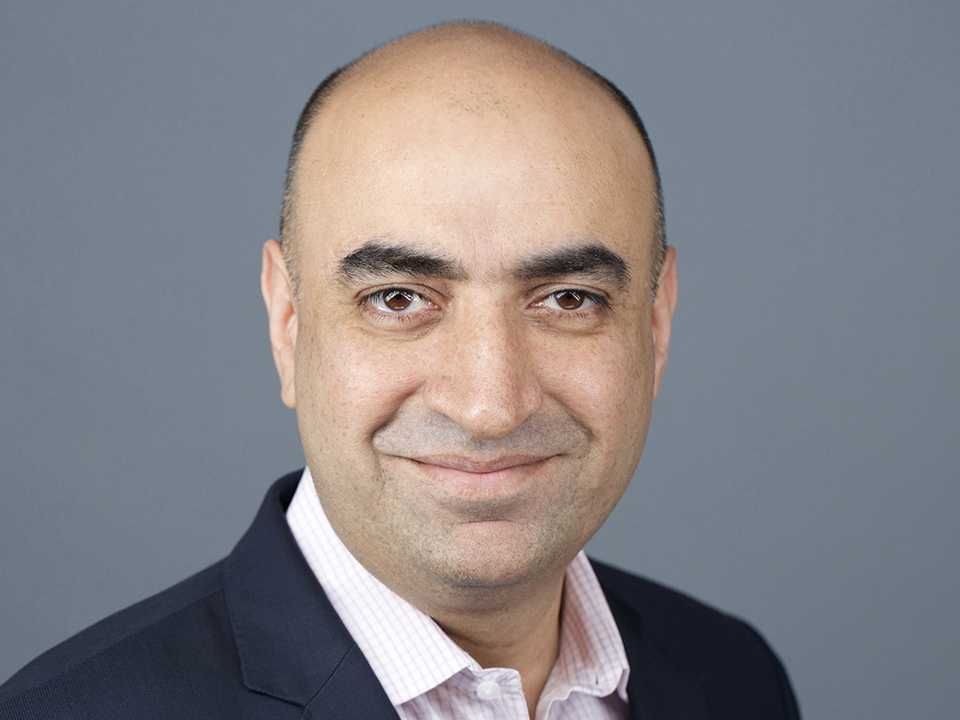
Umar Farooq, CEO of Onyx by JPMorgan, said when the MAS announced the trades: “By leveraging verifiable credentials to establish identity, we were able to execute a live transaction between known attested parties.”
This is an important step in the blockchain journey of closely regulated financial institutions.
Farooq says: “Project Guardian reinforces our continued conviction that tokenized deposits combined with identity on a public blockchain is a path to the future of money.”
In some ways, it seems as if the world of finance is caught on a hamster wheel with blockchain. Advocates have been pointing to this path to the future for instant settlement for six or seven years. Why has it taken so long?
Doney says: “It is easy to tokenize traditional financial assets – that is, to represent share ownership rights as tokens. Integrating with legacy systems and complying with regulatory requirements is the much sterner challenge.”
Cryptos are bearer instruments. Holding them legitimizes ownership. Your keys: your coins and all that.
Regulated securities are registered instruments with a record of who owns them held, for example, on a share registry.
Blockchains can do this and much more.
Securrency worked alongside State Street with Wisdom Tree on the launch at the end of September 2022 of its short-term Treasury digital fund, an open-ended 1940-act fund, like a mutual fund that requires an affirmative statement from the SEC as to its underlying assets. Wisdom Tree may have called it a digital fund, but it does not hold any cryptos. Rather, it invests in one- to three-year US government securities.
Unlike for traditional mutual funds, the transfer agent, in this case Securrency Transfers Inc, also keeps a secondary record of ownership of shares in the fund on either the Stellar or Ethereum blockchains.
This is blockchain and DeFi edging into US Treasuries, the world’s most important financial market, with the promise of embedded, code-based enforcement of traditional finance rules.
The fund has been years in development. What justifies all that work?
Doney says: “With compliance automation tools, it is possible to achieve global distribution for a fund reaching channels and investors that are inaccessible via traditional channels. WisdomTree focuses on channels in the US and Europe, but there is demand in many other parts of the world for high-quality securities like a US Treasury backed instrument.”
And when everyone is worrying about widespread illiquidity in US government bonds, that helps investors as well as issuers.
“By extending the network that can invest in an asset, you can expand its underlying liquidity,” says Doney.
And there is a direct business case as well arising from fee compression for passive index tracking investments that is now forcing managers to reduce costs. Taking out intermediation risk and two-day settlement removes expenses that inevitably get passed on to customers, even if they are not immediately visible.
“Movements between wallets can be cleared and settled in under five seconds,” says Doney, “whether that is a movement of $2 or of $2 million. And we can process, for example, 100,000 dividend payments for a penny.”
In the early days of blockchain in finance, banks were looking for new revenue opportunities. As recession hits, the cost-savings may come to the fore. Two of the biggest expenses for banks dealing in wholesale finance are middle-office processing and the costs of regulatory compliance.
Blockchain can help with both.
Doney says: “If there is a restriction on who can own an instrument, that can be encoded pre-trade, along with more nuanced restrictions for example on trading with an affiliated entity. If you look at all the difficulties with uncleared margin rules, restrictions can be encoded preventing overexposure or systemic risk resulting from under-collateralized positions.”
The collapse of FTX has had damaging knock-on effects in the withdrawal of capital invested in projects to develop blockchain technology in regulated finance. If blockchain still has a future, this is where it lies: as the technology that finally allows greater use of alternative assets as collateral.
So much analysis goes into the nominal and real returns of alternative assets and the volatility of those returns. But in the true heart and guts of modern finance, that is almost secondary. Yes, good returns from monetizing an appetite for illiquidity are nice to have, but if you invest in any asset and then can’t use it as collateral for borrowing, it becomes dead money.
When the story of Bankman-Fried is long forgotten, it will be the ability of blockchain to transform this – to breathe new life into dead money and allow greater use of alternative assets in collateralized borrowing and lending – that will resonate through the real financial world.