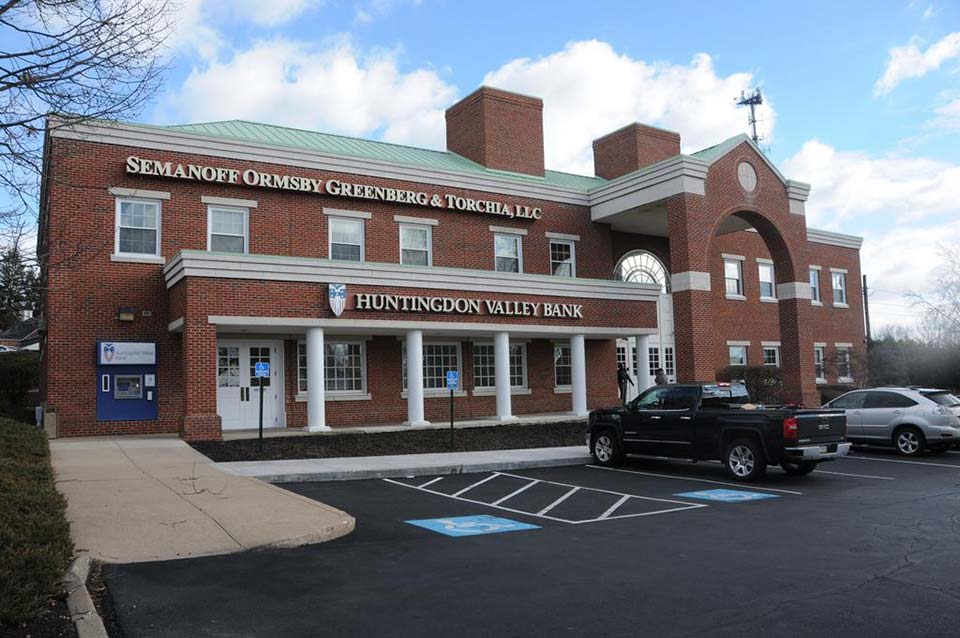

In August, MakerDAO, the organization behind the decentralized Dai stablecoin, provided $100 million of credit to Huntingdon Valley Bank (HVB), a Pennsylvania-based community bank, which it will use to provide new loans to local businesses in the Philadelphia area.
This is a remarkable moment.
One of the leading decentralized autonomous organizations in the cryptocurrency world is now funding a publicly quoted and regulated US bank, which is not allowed to hold cryptocurrencies on its own balance sheet, and in return deriving yield and collateral protection from conventional loans – mortgages, commercial credits to small and medium-size businesses – all held in a master trust.
Crypto is doing something useful for once.
This is a move that mainstream institutions now seeking exposure to crypto assets should take careful note of. Some of the crypto natives want to go the other way and take exposure to conventional assets for their yield and security.
But a backlash from the crypto purists now threatens to overwhelm this breakthrough.
Mainstream adoption
Surprisingly, even after the crypto crash that followed the de-pegging of Terra’s UST stablecoin in May and the collapse of crypto lenders such as Celsius, conventional investment banks and asset managers are still looking to profit from mainstream institutional investors’ adoption of cryptocurrency.
In August, BlackRock announced an agreement with Coinbase Prime that will enable institutional clients of the world’s largest asset manager to include bitcoin exposures and, eventually, other cryptos within their existing portfolio management and trading workflows.
Our institutional clients are increasingly interested in gaining exposure to digital asset markets
Joseph Chalom, BlackRock
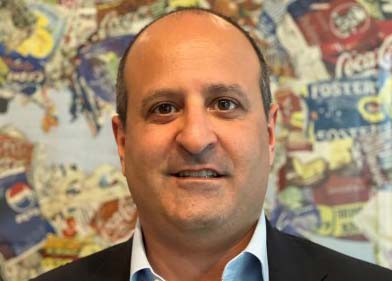
Joseph Chalom, global head of strategic ecosystem partnerships at BlackRock, says: “Our institutional clients are increasingly interested in gaining exposure to digital asset markets and are focused on how to efficiently manage the operational lifecycle of these assets.”
Euromoney has one question. Really?
According to CoinMarketCap, the total market value of all cryptocurrencies reached $2.9 trillion in November 2021. At the start of September 2022, it was down to just $985 billion. That’s a 66% fall.
Maybe conventional investors are bottom fishing. But they should take note of those in the cryptocurrency world who now want less exposure to native digital assets and more to real-world ones.
Dai was the first decentralized stablecoin. It has maintained a one-to-one peg to the dollar without backing from reserves of dollar cash and securities. Rather, it is collateralized against digital assets: to begin with mainly Ether and wrapped bitcoin; more recently other stablecoins, chief among them USDC, Circle’s dollar stablecoin, which does claim to be backed by reserves.
Some voters within the MakerDAO decentralized autonomous organization argue that the new arrangement with HVB – which will provide income to Dai holders, whereas USDC provides none – shows crypto has a bright future connecting to the real world.
But there now comes a counter-putsch from purists who argue that crypto should have nothing to do with regulated finance and that by embracing it, it is removing the case for its own existence and so heading to its doom.
Community work
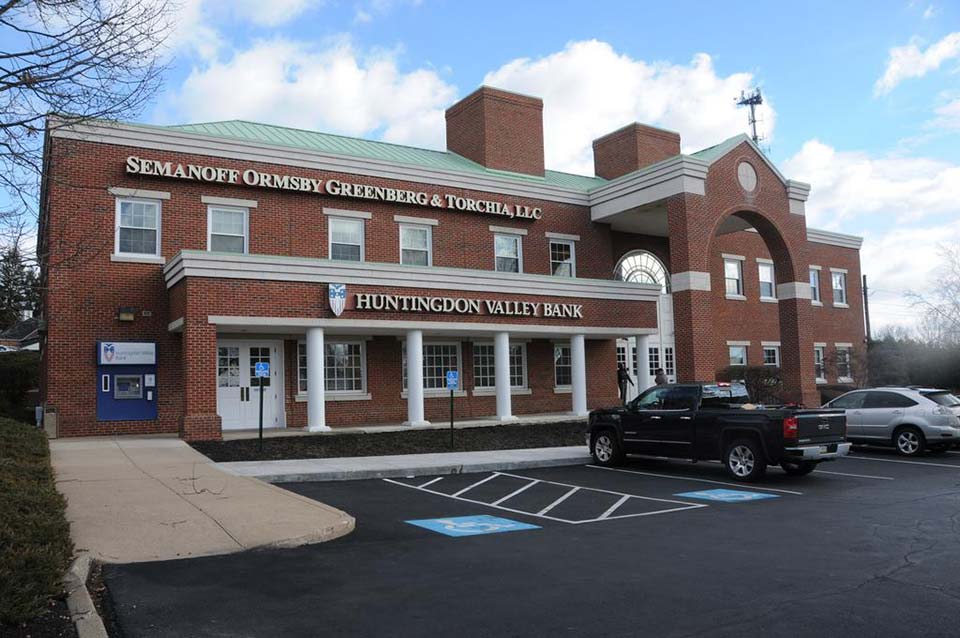
The arrangement with HVB bridges crypto to regulated finance through classic securitization technology.
A broker-dealer converts Dai into US dollars, which are then deposited in a Delaware Master Trust for the benefit of MakerDAO. The trust takes instructions from holders of the MKR governance token who authorize it to buy participations in new loans underwritten by HVB, subject to certain pre-agreed quality standards and approvals by another entity, Ankura Trust.
If Dai wants to grow as a leading stablecoin, it will have to have real-world assets behind it
Gregory Di Prisco, RWA Company
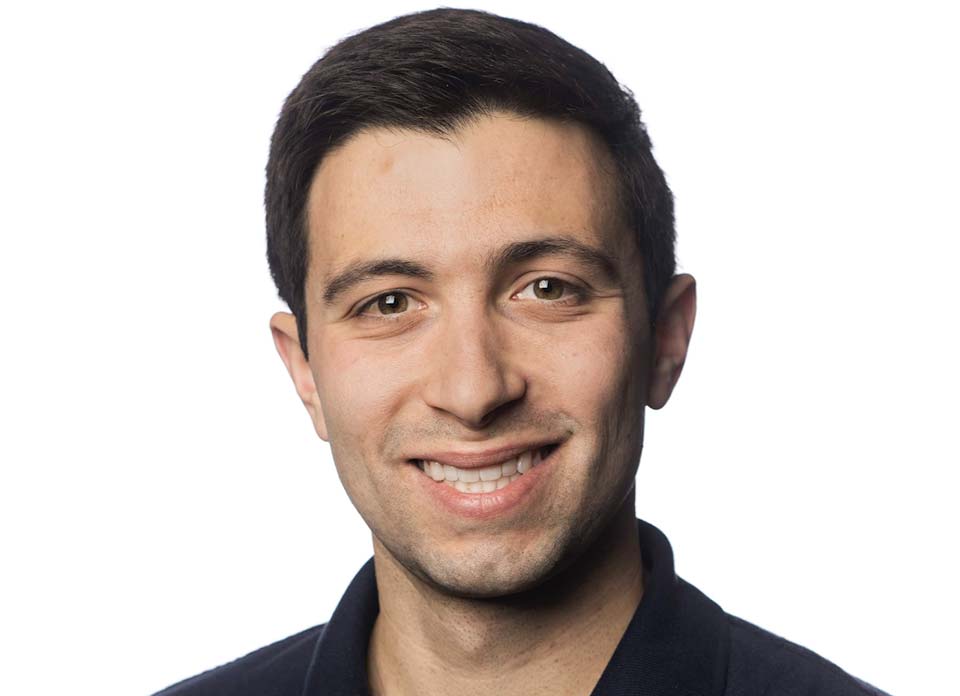
Gregory Di Prisco, former head of business development at MakerDAO and now chief executive of RWA Company, tells Euromoney: “We always wanted to work with a community bank that is close to local borrowers. A community bank faces lending limits whereby, if it continues to originate new loans, there soon comes a point where it has to syndicate them to larger regional and national banks that are competitors.
“Those larger banks may seek to take business from the customers the community bank has originated and underwritten. But the Delaware Master Trust is an off-balance sheet source of substantial funding from a neutral counterparty that will never compete with it.”
It is early days for the arrangement, which was announced on August 19. HVB has a balance sheet of just $570 million. It will take many months yet for it to generate enough loans to use up the $100 million line, given that it must retain a portion of each to reassure providers of the Dai funding that it has skin in the game.
“It is a long-term relationship,” says Di Prisco. But already, he says, “I have many more regulated US banks pounding on my door wanting to do deals like this. It has taken months if not years of work to establish the right structures and providers to enable this. What we have created for HVB is replicable and scalable.”
Stablecoins are mainly used in the crypto world as a place to park funds while choosing which native assets to speculate on next. However, as Di Prisco explains: “The demand for Dai is not correlated to demand for crypto assets. In the crypto bear market, demand for native tokens on blockchains has diminished and because of higher demand for Dai, the peg to the dollar is under strain to the upside.”
He says: “If Dai wants to grow as a leading stablecoin, it will have to have real-world assets behind it.”
The alternative would be deeply negative rates.
Meanwhile, Terra’s collapse has focused US regulators on stablecoins.
“My pitch to MakerDAO to do more deals like this first one with HVB is that what matters most to regulators is examples showing that we are making a positive impact to the real economy,” Di Prisco says. “Crypto is built on brilliant technology and it is going to be used in the real world. In the end, people want to buy real-world assets not just other cryptos.”
But no sooner had MakerDAO completed its breakthrough with HVB than a large faction of MKR holders, led by MakerDAO’s original founder, Rune Christensen, have proposed a different future.
This stems from the decision in August by the US Department of the Treasury’s Office of Foreign Assets Control (OFAC) to sanction the virtual currency mixer Tornado Cash, on the grounds that it has been used to launder money stolen from US citizens in hacks of blockchain bridges.
It’s the first piece of code – not a person – to be sanctioned, demonstrating the long reach of regulators, even into decentralized infrastructure
Philipp Pieper, Swarm
The FBI has said that malicious actors sponsored by North Korea were behind the theft of $620 million of Ethereum earlier this year in the biggest ever crypto heist and that $455 million of this was laundered through Tornado Cash.
OFAC blocked all holdings in Tornado Cash, which operates on the Ethereum blockchain to obfuscate the counterparties to transactions, but which has innocent as well as malicious users.
The news rocked the crypto and decentralized finance (DeFi) communities.
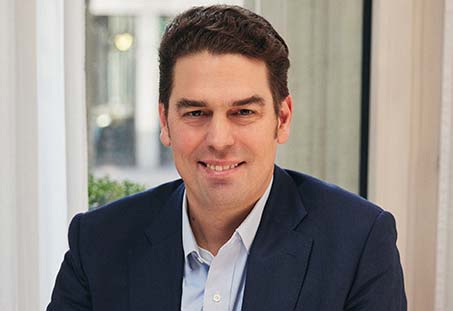
Philipp Pieper, co-founder of Swarm Markets, an automated market maker regulated by Germany’s Bafin that aims to bridge the traditional and DeFi worlds, speaks for many when he says: “It’s the first piece of code – not a person – to be sanctioned, demonstrating the long reach of regulators, even into decentralized infrastructure. At Swarm, we agree with other crypto CEOs that sanctioning Tornado Cash is unconstitutional and an overreach from regulators.”
The crypto community saw a lack of any legal due process behind the freezing of people’s assets. This caused particular alarm within MakerDAO because USDC, which makes up the majority of Dai’s collateral backing, has a blacklisting function.
“USDC has a kill-switch that can be tripped by the executive branch rather than by the justice system,” says Di Prisco. “Your money can be frozen at the stroke of a pen on an agent’s whim. And that is a problem.”
Submission
Unfortunately for Di Prisco and his fellow advocates of extending the bridge between crypto and real-world assets, the purists now want to blow it up.
Christensen has proposed that instead of submitting to state surveillance and control – as if it were just another bank – MakerDAO should limit exposure to real-world assets and consider a free-floating Dai rather than one pegged to the US dollar.
The moment Terra collapsed is the moment we should have realized there is no possibility we will be able to persuade the public that crypto should be treated differently from other financial services
Rune Christensen

His forum posts are an entertaining read. And they show that, far from recovering after the collapse of Terra now that prices have bounced a little, the crypto world is only just coming to terms with the calamitous failure of the algorithmic stablecoin.
“Essentially the moment Terra collapsed is the moment we should have realized that there is simply no possibility that we will be able to persuade the public that crypto should be treated differently from other financial services,” Christensen argues. “So not only has crypto produced nothing useful, but the mainstream awareness of crypto centres around disasters like Terra, Celsius and other crypto scams that have destroyed the savings of innocent, regular people that were lied to and in some cases even committed suicide as result.”
His conclusion could scarcely be more damning.
“We unfortunately managed to create the mainstream image of the crypto bro as the one type of person that’s even worse than the Wall Street banker bro.”
Christensen’s so-called Endgame Plan suggests that Dai float freely in a pure vision of decentralization and a turn to what he calls MetaDaos and the yield farming of MetaDao tokens.
Euromoney doesn’t have the time, space or inclination to delve into MetaDao economics, but it seems similar to what the crypto world already has: a vision of a decentralized economy with decentralized businesses run by token holders but which so far only has the financial pieces – the thousands of mostly worthless cryptocurrencies – with no actual profitable underlying real businesses other than those dealing in the tokens.
The pragmatists describe the Endgame Plan, which may well be voted through by MKR holders, as science fiction and question whether it can be implemented. It will certainly prevent any votes on more deals with banks for now.
Di Prisco says: “This is a battle for the soul of Dai. What is it and what is it for? These are questions that have been put off since the founding of Dai and can no longer wait.”
Di Prisco says that while people have inquired if the structures developed for HVB can be used with any other protocol, none has the scale and liquidity of Dai.
“There are certain realities that come with scale that MakerDAO would like to escape. But you cannot escape them,” he says. “The useful assets that people want to pay for and borrow against are in the real world, not the virtual world. If Dai is to become a currency that people use widely, how can it not be engaged with real-world assets?”
Is there a mid-point between either being, at one extreme, pure to the censorship-resistant founding principles of crypto but also trapped within a vacuum and so pretty much useless, or, at the other extreme, so integrated within the traditional financial world that you are taken over by it and lose your identity?
This is not just a battle for the soul of Dai. It is the defining issue for the entire world of cryptocurrency and DeFi.