
In September, Wells Fargo confirmed the expiry of a 2016 Consumer Financial Protection Bureau consent order over its fake-account sales practices. That followed the termination in January of a consent order from the Office of the Comptroller of the Currency in January 2021, concerning its anti-money laundering compliance programme.
The good news was short lived, however. The lifting of the CFPB order merely served to mitigate a separate $250 million OCC fine, announced the very next day. In this latest penalty, the OCC pointed to failures in Wells’ home-lending loss-mitigation programme and violations of a separate 2018 OCC consent order on Wells’ compliance risks.
Meanwhile, later in September, the bank agreed to pay $72.6 million to settle a New York fraud suit brought by the federal government. As part of that settlement, Wells admitted to overcharging hundreds of commercial customers for foreign exchange between 2010 and 2017.

All this has weighed somewhat on hopes for an imminent lifting of the most important consent order, from the Federal Reserve. Since 2018, that order has prevented Wells from growing its $1.9 trillion balance sheet, again because of issues arising from the fake-accounts scandal.
Wells’ discussions with officials on this and other regulatory constraints are shrouded in mystery. That said, analysts have noted a subtle change in messaging on the consent orders recently, and not for the better.
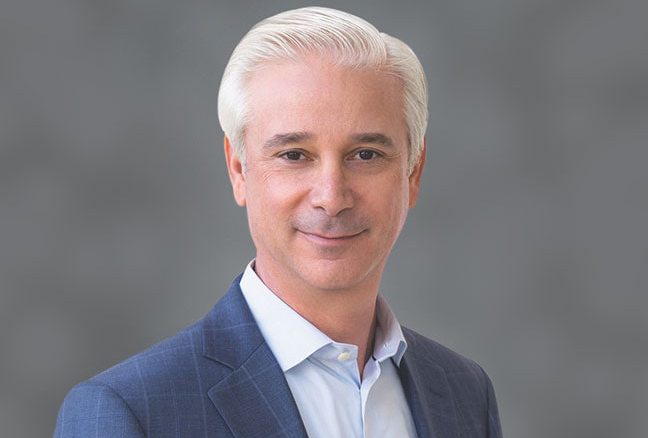
In previous results calls chief executive Charles Scharf had told analysts that Wells’ efforts to improve oversight of its sales practices and other compliance risks “may have setbacks” and that “progress may not be a straight line”.
[There are] new doubts about how soon the asset cap may be lifted and about the prospect of further penalties
In third-quarter results, however, he said the bank is “likely to have setbacks” in these efforts.
This doesn’t seem to mean another compliance blow up is inevitable. But as Scharf acknowledged on the results call, he chooses his words carefully on these matters. The shift in language therefore raises new doubts about how soon the asset cap may be lifted and about the prospect of further penalties.
Wells’ provisions for legal costs rose by another $200 million in the third quarter, having risen by $200 million in the first and second quarters. The total now stands at $3 billion, research from JPMorgan notes.
Positive notes
On a more positive note, 2021 saw Scharf complete his biggest single strategic action since becoming chief executive. In February, the bank announced the sale of its asset management arm to private equity firms GTCR and Reverence Capital, for $2.1 billion.
The newly separate firm, known as Allspring Global Investments and managing $587 billion in assets, began operations in November.
The bank also sold its Corporate Trust Services unit to Computershare in March, for $750 million.
Like all banks, wage inflation poses a challenge for Wells’ costs, although it announced $8 billion-worth of efficiency measures in January 2021. Meanwhile, the overhaul of Wells’ management staff continued, following Scharf’s clear out of most of the top leadership after arriving as CEO in 2019.
By November, Wells’ share price was up by almost two thirds over 2021, narrowing the discount to other big US banks – and showing that if there is reason for more caution on the regulatory front, so far, investors are generally willing to ignore it.