
There’s a new wind blowing through Itaú, and long-time watchers of the bank are noticing a renewed confidence. The firm is rediscovering its mojo.
For many years Brazil’s biggest private bank has been a little defensive in its posture. It still enjoys a position of market leadership, but has certainly never faced the level of competition that the emergence of digital players has brought in recently.
However, Itaú is under new management. Its chief executive, Milton Maluhy, and its CFO, Alexsandro Broedel, both took their seats at the beginning of 2021. Their strategy is already paying off, as is evident in the bank’s third-quarter results: profits are up by 38% to R$6.8 billion ($1.22 billion), return on equity is back above 20% in Brazil, and the bank is clearly delivering on its new strategy, picking up 5.7 million new digital clients in the quarter alone.
That strategy is called ‘phygital’: an amalgam of ‘physical’ and ‘digital’.

But whereas the physical element was often seen as a legacy weight, a cost burden dragging on Itaú’s ability to compete with digital platforms, the new management has strong ambitions for its branch network. They point to the growing omnipresence trend in retail: purely digital retailers have begun to creep into the physical world.
Itaú is going the other way, and has seen growth in its digital key performance indicators: it now records its ‘O2O’ revenues (offline-to-online), which were worth R$14 billion in the first nine months of 2021.
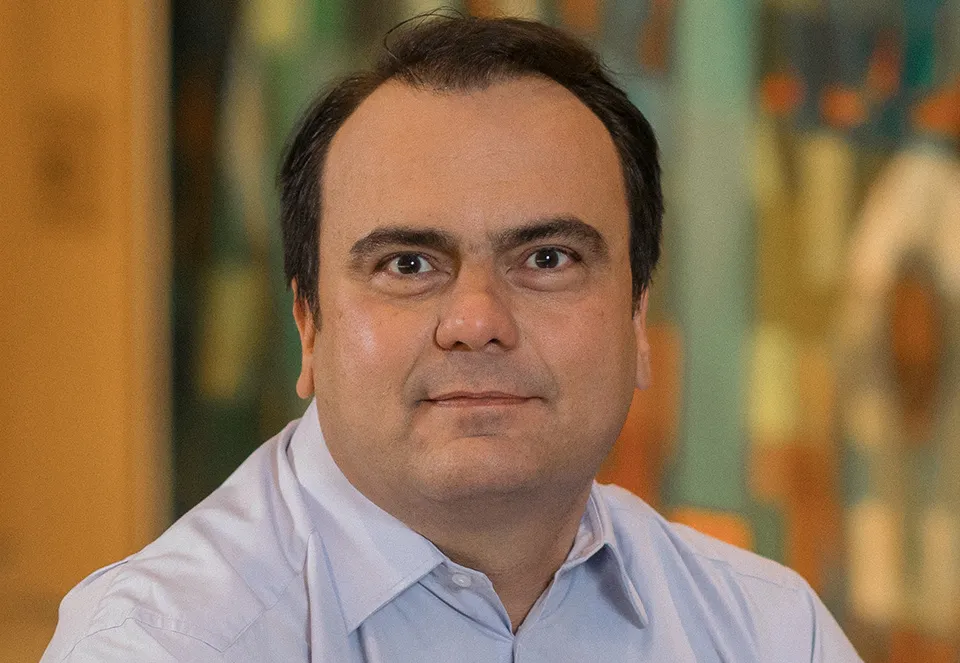
“We want to have a brick-and-mortar network because it still matters,” Broedel tells Euromoney. “Some people think it’s a disadvantage – we strongly disagree. It’s easy to close a branch – we can do that in three months.”
The implication is that unprofitable branches would be cut – and will be cut. “Probably over the long-term, they will become less important,” Broedel says. “We will be adjusting the network over time.”
The main thing we are trying to do is a cultural transformation
Alexsandro Broedel
Meanwhile, Itaú has finally added coherence to its full digital offering. It is investing heavily in replacing legacy IT, as well as bringing out completely new services.
It has expanded its electronic wallet – iti – into a full-service digital bank, which already has 10 million clients, some 85% of whom weren’t previously Itaú customers. The bank has also launched an investments platform app, Ion that has seen 400,000 downloads in its first early months.
The bank’s plans go beyond better IT. It lost market share across credit products during the last two years because of a conscious pull back in risk appetite in the face of the pandemic. But Broedel says the bank wants its market share back: it is aggressively growing its secured and unsecured portfolios into 2022, though there are risks in accelerating loan growth going into an election year, when the bank’s own economic team forecasts recession.
Broedel says the bank’s commercial appetite has been spurred by its new culture. Incentives have been linked to share performance, hierarchies have been flattened, risk taking is encouraged and the partnership team has been quadrupled to engage more senior managers.
He insists, however, that risk standards will be maintained; terms for vehicle financing, for instance, have tightened.
Broedel sums up the changes underway at the bank thus: “The main thing we are trying to do is a cultural transformation, which will lead to efficiencies, but efficiencies in the right way”.