It has been another good year for Deutsche Bank as it continues the transformation plan first laid out in July 2019 to substantially reduce risk-weighted assets; get out of businesses where the bank is not a leading player, notably equities trading; invest in technology and controls; and all while still cutting overall costs.
That has left it heavily dependent through the first two years of the pandemic on an investment bank focused on fixed income and currencies (FIC) trading and debt capital markets, though one that has somehow managed to grab a reasonable share of equity capital markets business and harbours ambitions to grow in M&A.
In the first nine months of 2021, the group reported revenues up 5% on the same period in 2020; adjusted costs, excluding transformation charges, down 4%; a cost/income ratio of 82%, down from 87% a year previously; and a return on tangible common of equity of 5%, up from zero.
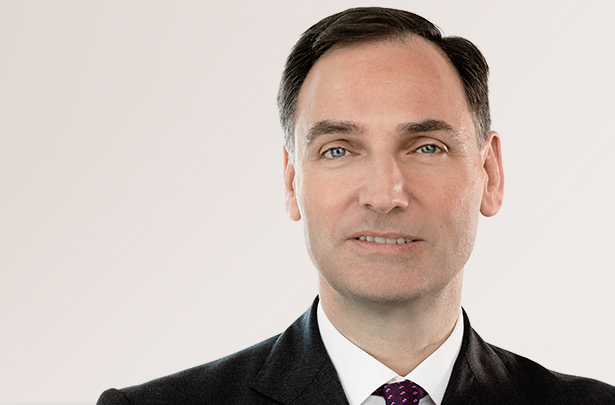
“We are really pleased with the progress we are making,” says James von Moltke, chief financial officer. “There is still work to do, for example on technology upgrades and control improvements, as well as costs, and 2022 is the key measurement year, but the report card so far is positive.”
The bank aims to provide an 8% group return on tangible common equity in 2022 and a 70% cost-to-income ratio. In 2021, improved profitability led to ratings upgrades from Fitch, Moody’s and Standard & Poor’s. In 2022, the bank’s aim is to start returning €5 billion of capital to shareholders through a mix of buybacks and dividends.
Is this credible?
Von Moltke takes heart from the upgrades – and not just as a sign of external validation. The bank had made the case that its previous ratings did not reflect its balance-sheet strength, that they were based on weak profitability and uncertainty around the transformation.
As profitability improves even amid negative interest rates those concerns are starting to abate.
Underlying performance in the private bank and the corporate bank has been encouraging
James von Moltke
Von Moltke says: “It is encouraging that Moody’s and Fitch have kept us on positive outlook, even after the upgrades. And now with S&P also restoring us to single-A at the senior preferred level, we have a clear opportunity as a significant number of customers are able to do more business with us, for example by increasing FX lines or doing more uncleared business.”
Key concerns for shareholders remain. How sustainable are those higher FIC revenues? And can Deutsche grow its other business and become less dependent on the investment bank? It was the corporate bank that management emphasized at the centre of the entire group back in 2019.
“Underlying performance in the private bank and the corporate bank has been encouraging,” von Moltke says.
Low interest rates have hurt Deutsche along with its European peers, but it has been able to pass on charges on corporate deposits. In the third quarter, it reported €94 billion of deposits at the corporate bank are now under charging arrangements that have brought in close to €100 million of revenue.
Von Moltke adds: “We have seen momentum in loan growth recently and in trade finance, which may be a secular growth story as companies re-engineer supply chains. And we have invested in improved product capabilities, for example in merchant payments.”