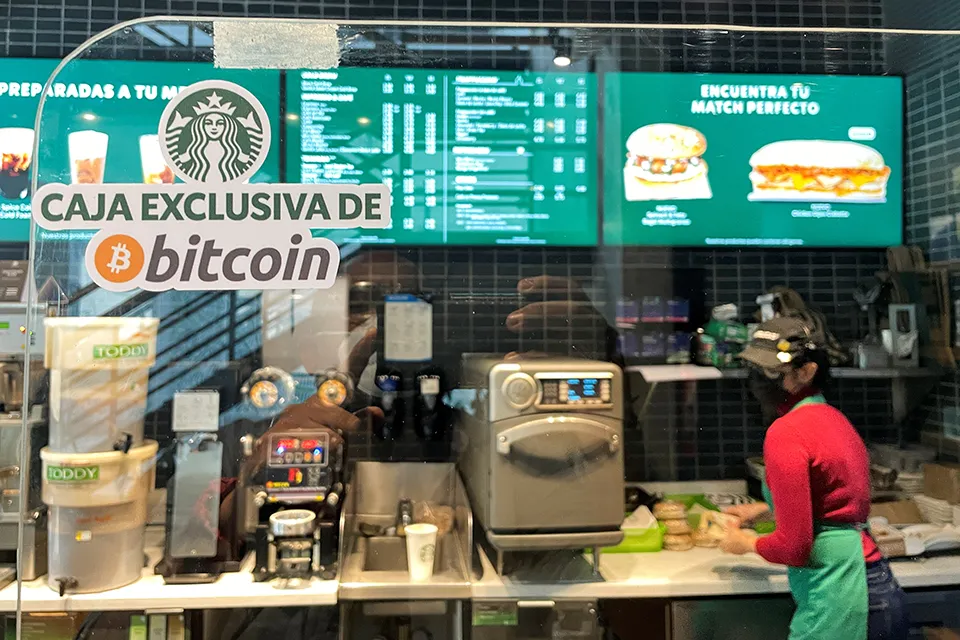
The first few days of El Salvador’s adoption of Bitcoin as legal tender have not been particularly encouraging.
A one-off incentive payment of $30-worth of BTC had been offered to each citizen and placed in new digital wallets called Chivo (cool). However, US dollar withdrawals from these Bitcoin-seeded electronic wallets were not possible as the system went offline after being plagued by technical problems.
Other Latin American countries such as Panama and Cuba, which are considering similar legal adoption of Bitcoin, will nevertheless be looking through these short-term technical issues and asking: will El Salvador’s experiment work?
The answer is almost certainly no. That is because El Salvador’s president Nayib Bukele is using the cryptocurrency to address a persistent structural problem that is the antithesis of the origins of bitcoin: US dollar scarcity.

Bitcoin was designed to address the debasement of the US dollar – it was seen as the answer to the risk of huge money printing rendering the US currency worthless.
But Bukele’s problem is the opposite: dollar tightness – the country has seen a run on its dollar FX reserves and has been unable to plug this dollar shortage with fresh IMF money. The country also has a challenging short-term debt maturity profile with $800 million due in January 2023.
Rather than dollar weakness in the face of multiple rounds of quantitative easing (QE), it is the value of bitcoin that has been subject to sharp falls – its 10% fall on September 7, the date of El Salvador’s official adoption, stands in contrast to recent dollar strength.
Bukele’s gamble is that the adoption of bitcoin might increase inflows of the cryptocurrency – and therefore promote much needed dollars in derivative form. Bitcoin is certainly a more efficient form of sending remittances.
There is also another possible source of inflows – tax-avoiding acquisitions of beachfront properties by international organizations sensitive to regulatory oversight; otherwise known as money laundering.
Volatility
These sources of liquidity will come at a cost: volatility. The adoption of bitcoin will require individuals to stomach large and rapid shifts in its value. It is one thing for speculators to hold through dips – the president’s glib tweet in the face of the large falls in the price of bitcoin on the first day of trading read ‘buying the dip’ with a winking emoji – but quite another for low-income individuals. Do even the most fervent bitcoin advocates argue that the cryptocurrency is a good medium of exchange?
In addition, the adoption of a system that seems designed to welcome money of dubious origin seems likely to alienate potential providers of US dollar liquidity. The IMF is not impressed, and neither is the US, which would need to agree to any further loans to El Salvador.
Indeed, the only way that the economy won’t be negatively impacted by bitcoin’s volatility is if all those digital wallets are converted into US dollars and then promptly abandoned. And that is hardly the answer to El Salvador’s liquidity problem or any other nation’s for that matter.
Even Paraguay, another Latin American country looking to adopt bitcoin and motivated by its potential for low-cost mining, may see the cost of embedding economic and financial volatility as a price too high for digital-driven liquidity.