When large investment banks report results for the first quarter of 2021, any of them that delivers weak revenues from equity capital markets (ECM) should brace for a backlash.
Dealogic numbers show that by mid March issuers had launched 557 IPOs worth $157 billion this year. Citi notes that a usual year would see around 100 to 200 by this point. They are a bigger source of revenues than M&A or debt capital markets (DCM).
The largest market has been the US, which accounts for $100 billion of that total with 303 deals. Of these, 74% relate to special purpose acquisition companies.
Last year, Spacs raised $83.3 billion, up from $15.5 billion for 2019 and an annual average of just $6 billion for the last decade. In just the first two-and-a-half months of 2021, they have already raised $47 billion.
The Spac business may look like the Wild West today … but expect it to institutionalize soon
Credit Suisse will be the biggest winner here, with a commanding market share ahead of second-ranked Goldman Sachs. Wall Street’s second-tier firms, notably Cantor and Jefferies, are muscling ahead of bulge-bracket firms such as Morgan Stanley and JPMorgan.
This will be a fascinating battle. Analysts will have to recalculate their earnings models because just one third of investment banking fees typically pay out when a Spac IPOs, with the larger bounty coming at the de-Spac.
However, the de-Spac only happens when a sponsor agrees a target that the IPO investors approve of.
And so, while the battle between banks to catch up with Credit Suisse in arranging Spacs will be intense and entertaining, the serious money will go to the winning Spac sponsors.
Euromoney has examined the efforts of former bank chief executives, such as Martin Blessing and Tidjane Thiam, to position their operating experience as a key attraction to founders and managers of fintechs with the greatest potential to achieve global scale.
They shouldn’t count their chickens.
Repeat sponsors
The best targets are heavily courted. Some will IPO on their own. Others will go to already-experienced Spac sponsors that promise the greatest likelihood of success and the highest valuation multiple.
Repeat sponsors are better set to win the best targets with each successful trade.
Think of Michael Klein and his track record with the Churchill group of blank-cheque companies; Chamath Palihapitiya who, having taken Virgin Galactic public last year, won SoFi for his fifth Social Capital Hedosophia (SCH) Holdings Spac in January; and Betsy Cohen.
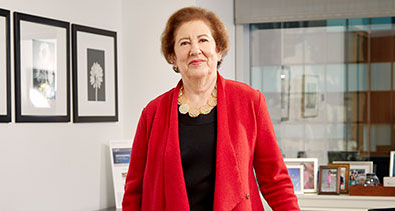
Cohen is the former chief executive of The Bancorp, which she founded at the end of 1999 as a branchless commercial bank, and has become a leading provider of private label banking and technology solutions.
Now as chairman of FinTech Acquisition Corp, Cohen has just announced her fifth de-Spac, having announced her fourth at the end of last year to take Perella Weinberg public, previously doing the same for payments companies Paya and International Money Express, as well as for CardConnect.
Her latest deal, for retail investment platform eToro, values it at $10.4 billion. Cohen and the sponsors will own 0.8% of it for a likely 10-times return on risk capital.
The Spac business may look like the Wild West today. Individuals can take their shot, but expect it to institutionalize soon, just as private equity did in the 1990s around a few leaders.
The new Spac equivalents to Apollo, KKR and Carlyle are already appearing.