

Imagine that a new purely digital bank account is created by a country’s leading fintech.
Imagine that the brand behind the bank is already strong, well-known and positively viewed. And that the fintech already has 2.8 million customers with investment accounts, with a total of R$660 billion ($114.5 billion) in assets under custody.
Imagine, too, that this new digital bank is being launched at a time that will enable it to take advantage of the efficiencies created by the central bank’s new-technology agenda.
Add in that one of the best-known bankers in the country has been recruited to head up the bank with the mandate to deepen the relationship with existing customers rather than make the new entity particularly profitable on a standalone basis.
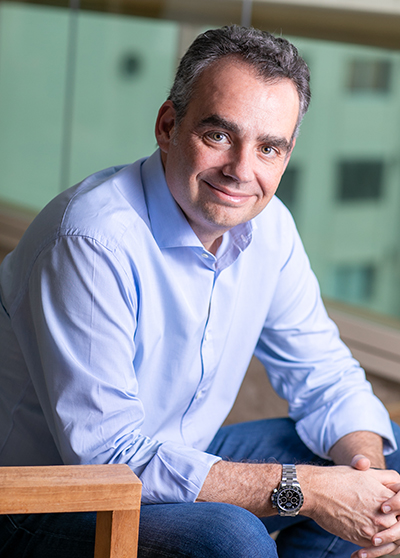
This is the reality for incumbent bank chief executives in Brazil who now face a new competitor, XP Bank. It is led by José Berenguer, former CEO of JPMorgan Brazil.
XP is beyond disruptive, it could be destructive.
“We want to use the retail bank to further penetrate our client base,” Berenguer tells Euromoney. “We don’t see the regular bank [products] – payments and checking accounts – as profitable enough to justify [on their own]. Rather this will be to talk to clients, ask them if they are happy with XP and if they can concentrate everything that you have here with us.
“They won’t need to have an account with another bank; they can do payment and have credit with us. The goal is to be better and lighter – more cost efficient – and have a better user experience.
“I want to be simple and cheap, and I want to be efficient.”
Berenguer points to the central bank’s new digital payment system Pix as an example of those three tenets; the costs of Pix are a fraction of the previous system.
XP aims to pass these savings on to clients, which will put pressure on the incumbents. The impact is already being seen: in the fourth quarter of 2020, for example, Itaú’s fee revenues fell by 4.8% year on year, and that decline will likely accelerate.
Brazil’s incumbent banks are trying to water down the central bank’s drive to open banking, but Berenguer says that the regulatory push for digitalization of the financial industry is “irreversible. We may have some delays and postponements, but the strategy is irreversible”.
He also says the fact that XP has started from scratch gives it a competitive advantage.
I want to be simple and cheap, and I want to be efficient
José Berenguer, XP Bank
“All of the large banks’ current account systems are still based on [the computer language] Cobol,” he says. “These old systems, with multiple [product] layers, mean that you then have to create integration between the layers and the bank’s digital platform.
“At the end of the day the data still comes from an old legacy system, which in some cases – but not all – cannot accommodate the demand.”
Berenguer says that he had recently been transacting on such a bank’s system and noticed sluggish responsiveness – something he attributed to it being a Friday and, therefore, peak demand.
“We want to provide an experience that is much lighter and easier, with no hidden contracts,” he says. “That will allow the client to concentrate their banking services needs with us.”
Creating opportunity
Berenguer explains that he began speaking to Guilherme Benchimol, XP’s founder and chief executive – and “an old friend and client” – before XP’s IPO in December 2019 (JPMorgan was a lead underwriter on that Nasdaq listing).
He says that then, he felt his time at JPMorgan was coming to an end and, as family reasons would prevent him moving back to New York, he began exploring his options.
He didn’t want to move to another established bank – but “wanted something different” and was mulling starting his own venture. Conversations with Benchimol soon turned to action, however, and Berenguer joined the bank in June 2020.
“We are going to make something very, very different. The size of the opportunity is unbelievable, I’ve never seen anything like it, because of the transformation of the markets and the tech aspects,” he says. “I feel like I’m 20 years younger and super-energized.”
Berenguer also believes that that transformation of markets and technology presents him with an opportunity to create a corporate bank.
The size of the opportunity is unbelievable, I’ve never seen anything like it
José Berenguer
A lot has been made of XP’s quick progress in its investment banking division, but it still has full-scale ambitions.
“We see a series of opportunities in the corporate sector as well. They are related, once again, to efficient pricing and user experience,” he says. “For example, we are developing credit card receivables funding for small and medium-sized enterprises. Today, the spreads on this product are super high. We are analysing the possibility to be a player in this market and offer something that is well priced to attract new clients.
“We want some products that are killers – door openers,” he says, giving a clear warning sign that market share is going to be the goal.
“Another is cash management. The idea is to have a super UX [user experience], with flawless tech and some killer products that open and attract. And the brand is good, the brand is attractive, and this will be helpful as well.”
Strategy
The underlying strategy will be to remain asset light. The bank will securitize portfolios as they grow, recycling capital into the markets and back to the bank.
It is this ability to distribute in the market – both for recycling its own capital and executing deals in the local markets for clients – that has been the nexus of the bank’s development in Brazil.
“We have a very effective distribution machine,” Berenguer says, adding that the bank has been effectively reverse-engineering its investment banking business from this growing distribution capability.
XP’s capital markets business has been growing at a rapid clip. In 2020, it was ranked third in the IPO league tables, according to local banking association Anbima – leading on 28 equity deals in total.
XP also claimed some senior roles as lead co-ordinator on the Grupo Mateus and JSL Logistica IPOs.
League tables are important… but what is more important is word-of-mouth marketing from our clients
José Berenguer
In 2021, the bank has already been involved in 11 equity deals, with a total volume of more than R$16 billion.
“League tables are important and clients value that, but what is more important is word-of-mouth marketing from our clients,” says Berenguer. “It is the best way to continue to expand our equity capital markets platform and to be more effective in this market.
“At the end of the transaction, clients regularly tell us that we made a difference, and in most of the cases our allocation of success fee is much larger than the initial allocation of fees that we received in the base fee discussion.
“The energy and intensity we put in front of the issuer is overwhelming – I’ve never seen anything similar to that in my life,” he claims. “And clients feel that.”
XP’s debt team has made similar progress: it was ranked first by Anbima in terms of fixed income and hybrids (with a 25% market share), first for the property funds called FIIs (with a 56% market share) and first for the distribution of Certificados de Recebíveis do Agronegócio (popular tax-exempt bonds) with a 46% market share.
Building business
The bank has been building its international business to compete beyond pure domestic distribution. It now has 200 people in its New York office and a presence in London as well.
Berenguer says the build-out of the capital markets business continues – the derivatives platform is operational and the FX desk is live but “has capacity issues – we have to slow down every day because we cannot accommodate the number of trades – so we are working on that.”
He acknowledges that the bank’s strategy to fully distribute its credit products – rather than passing them to an asset management division – puts it at a disadvantage.
“We will overcome this disadvantage with being consistent, by being close to the client every day and to provide different things within this asset-light strategy,” he says
XP also recently bought boutique M&A shop Riza to broaden its investment banking capabilities. Marco Goncalves, founder of Riza and an ex-BTG and Credit Suisse banker, will head-up the M&A business at XP, reporting to Pedro Mesquita, head of XP’s IB.
Berenguer concedes that risks in Brazil’s macroeconomic story could impact the bank’s momentum.
“We are not out of the woods yet,” he surmises.
However, referring to The Economist’s famous 2012 cover of the statue of Christ The Redeemer in Rio de Janeiro taking off, he adds: “It doesn’t matter to us if Brazil is on the cover of a magazine flying like it was in 2012.”
But he admits it “would make large capital markets transactions easier – especially IPOs and M&A”.
Rather, he says, XP’s growth will be about winning domestic market share.
“We are different,” he emphasises. “The local opportunity that we see is so huge that we have enough on our plates.”


