Read more: PNC Financial Services


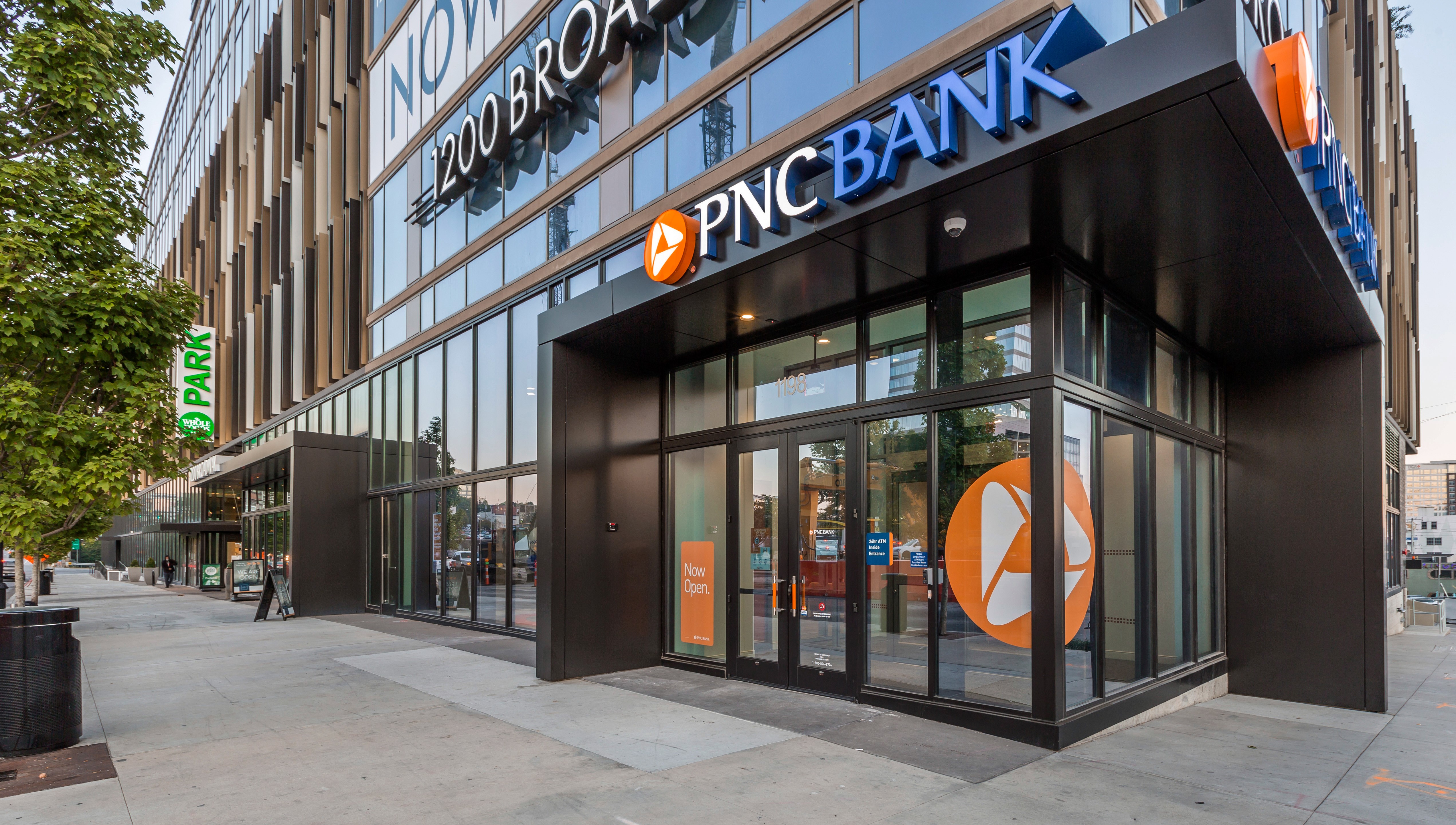
The €9.7 billion sale to PNC Financial Services of BBVA USA Bancshares has come not a minute too soon for BBVA, with it being one of the European banks hardest hit by Covid-19.
Although BBVA would never admit its financial position was weak, and indeed the buffer on top of its minimum requirement was already relatively high, investors simply didn’t believe that this was enough.
Before the uplift on Monday’s PNC news, its share price had fallen about 50% this year – even further than other European banks.
BBVA’s capital ratio, like that of fellow Spanish bank Santander, has long been relatively low. Out of the top 30 listed European banks, only Italy’s Banca Monte dei Paschi di Siena had a lower common equity tier-1 (CET1) ratio than these two banks at the end of the third quarter, according to Morgan Stanley research.
The PNC deal will lift the CET1 ratio at BBVA by 300 basis points to 14.5%, which suddenly looks exceptionally high. It values BBVA’s US business at 1.34-times book value, more than two-and-a-half times the valuation analysts gave it.
Covid-19 has made Spain’s Sabadell more in need of a merger partner
As BBVA is only trading at about 0.4% book value, the PNC deal amounts to about half its market capitalization. That is for a US business that made up less than 10% of the group’s 2019 earnings. It is also in cash, thanks to PNC’s $14.4 billion sale of its stake in BlackRock earlier this year.
This comes just in time. As at Santander, it had become hard for BBVA to defend its capital ratio, particularly after Covid-19.
BBVA’s main markets – Spain, Latin America and Turkey – have been among those hardest-hit by the pandemic and its economic effects.
BBVA is suffering unusually high provisions as a result of this footprint. Its cost of risk was 172bp in the first nine months of 2020, compared with an average of about 89bp among eurozone peers, according to Credit Suisse.
BBVA’s US sale is perhaps less opportunistic than it suggests, though, given it follows other exits in the last two years from its banks in Chile and Paraguay. It will probably increase its capital targets now.
This boost to BBVA’s capital from the PNC sale will, in addition, be vital for its ability to pay out more dividends, and thereby boost its share price. As the European Central Bank (ECB) considers whether or not to lift a dividend ban, one scenario is that only the more financially robust banks will be able to pay dividends.

Meanwhile, the boost from the US sale is so large that – although the bank has even broached the prospect of share buybacks – BBVA’s executive chairman Carlos Torres Vila now has the financial scope to do M&A, too.
Covid-19 has made Spain’s Sabadell, most obviously, more in need of a merger partner. Buying it will be even more necessary now, to give BBVA a better balance between developed and emerging markets.
Exiting the US operation, previously known as Compass, makes more sense for BBVA as it stood no chance of reaching top-tier national status there. The argument that it tied in with its ownership of Mexico’s largest bank, Bancomer, was always quite weak.
In Spain, on the other hand, CaixaBank’s takeover of Bankia this year – and Santander’s 2017 acquisition of Banco Popular – have put BBVA’s top-tier position under threat. Smaller Spanish lenders Ibercaja and Unicaja are also expected to announce a merger any day.
Onus on Santander
However, the PNC deal puts most onus on Santander, because the latter is suffering so many similar questions about its capital and business spread – and because it also owns a US business of questionable relevance to the group.
BBVA’s PNC deal shows how easy it would be for US banks to buy European banks – given their relative valuations – if there were greater regulatory alignment across the Atlantic. In the current situation, such deals seem mainly feasible for European banks’ US subsidiaries
Yet BBVA’s US operation offers a rare attraction for a US bank, as it is relatively advanced on the digital front and is focused on a US region – the Sun Belt – with higher levels of economic growth.
Santander’s US bank, which is based in the northeast, is less attractive: it was subject to regulatory restrictions on its strategy for much of the last decade due to prior weaknesses in its finances and governance.
As Santander’s US bank is, moreover, smaller than the old Compass, its real alternative for a transformational change for the better to its capital and business mix could mean selling out of the UK, where BBVA does not own an incumbent – or not yet, as Sabadell owns UK mid-tier lender TSB.
One problem for Santander is that UK banks are similar to European banks, in terms of their profitability and valuations, in part because of Brexit.