
Insurance has always played a key role in commodities, where there is no shortage of asset-level risk. It is surprising then that one environmental commodity in growing demand – carbon offsets – lacks an insurance support system.
Despite frequent criticism that the real environmental impact of offsets is oversold, demand for voluntary carbon credits is growing. The voluntary carbon market (VCM) grew in value to $2 billion in 2021, quadruple the figure for 2020. It is projected to grow to $50 billion by 2030, fuelling enthusiasm in the financial sector for its role in a net-zero economy.
Risk-sharing mechanisms could increase confidence in the VCM and boost capital flows. So, developing such products is its latest challenge.
At the macro level, sustainable development agencies are looking for ways to incentivize investors to finance projects in emerging markets.
“The World Bank could come in and provide their expertise through development banks to take away some of the risks from buyers,” points out Chris Leeds, head of carbon markets development at Standard Chartered and board member of the Integrity Council for the Voluntary Carbon Market (ICVCM).
The Multilateral Investment Guarantee Agency offers political insurance to carbon-offset projects. It started doing so in 2012 and has helped projects gain access to cheaper capital.
Commercial solutions
On the commercial side, insurers are just starting to come up with solutions. In September, global insurance broker Howden launched carbon-credit invalidation insurance, the first of several products to be designed for the VCM, it said.
“The product, which is wrapped around books of independently verified, high-quality carbon credits, provides cover for third-party negligence and fraud,” Howden says.
Another provider is Kita, set up in December 2021, which has designed an insurance product against delivery risk. Its carbon-purchase protection cover protects buyers of forward-purchased carbon removal credits against under-delivery, which can occur for many reasons, including the impact of natural disasters on projects.
There are legitimate buyer-seller concerns at the moment
Scott Eaton, Carbonplace
For insurers and banks alike, the logic driving these innovations is the same. The better buyers understand how the market operates, what the risks are and what options are available, the more likely they are to commit capital.
“We founded Kita because we were aware of the risks associated with CO2 removal projects,” says co-founder Thomas Merriman. “The removal market won’t be able to scale without third-party de-risking mechanisms such as insurance.”
As the market develops, other insurance brokers will put together solutions to mitigate these risks, but this young industry will have to pick up the pace as corporate demand for carbon offsets grows.
This kind of protection will also be essential for the VCM to shake off persistent questions over its credibility.
Participants are eager to move past what they claim to be unavoidable growing pains and get the infrastructure to work, but inconsistencies with the credits themselves are scaring corporates away from engaging with the VCM.
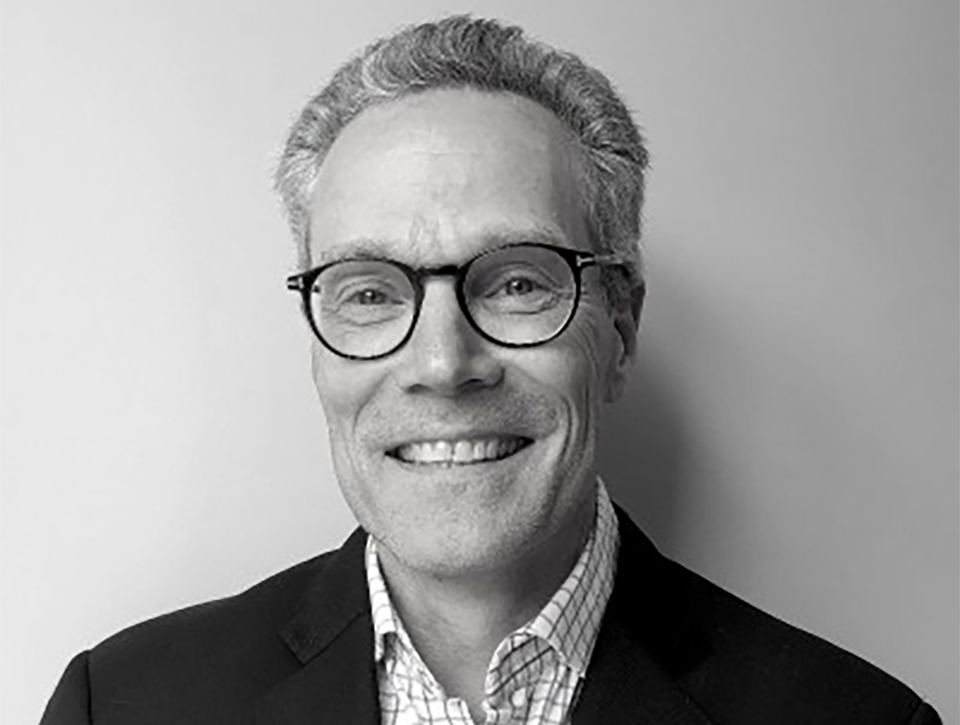
“There are legitimate buyer-seller concerns at the moment,” concedes Scott Eaton, the chief executive of global carbon credit transaction network Carbonplace.
Eaton recently joined Carbonplace, which connects buyers and sellers of carbon credits through their banks, from capital markets fintech Nivaura, where he served as chief executive.
Carbonplace became an independent organization in February, and secured £45 million in funding from its nine founding banks. Eaton is confident the banking model can help with the market’s integrity crisis.
“Through the user banks, Carbonplace can ensure a higher level of integrity amongst buyers and sellers who must all adhere to the Carbonplace rulebook and the user banks’ compliance frameworks,” he tells Euromoney.
Transparency is key. The ICVCM drafted the core carbon principles (CCPs).
“The CCPs will bring transparency to the market, so that people can trust it,” says Leeds. “Fixing integrity on the supply side will help buy side immensely.”
Standard Chartered’s carbon trading business is part of the bank’s energy transition desk, which encompasses carbon trading on mandatory emissions schemes, financial natural gas trading, physical gas and the VCM.
Carbon traders are eager to incentivize corporates to engage in the VCM.
Risks
Many big firms are still reluctant to get involved because of potential reputational and project-level risks. This is where the impact of insurance solutions could make the most difference.
In Turkey, several carbon-avoidance credits-issuing renewable energy projects were hit by the earthquakes in February. For example, on the registry for Verra – a non-profit organization managing “the world’s leading carbon-crediting” programme – these include the Gaziantep gas-to-electricity projects and energy biogas plant, the Babil Biogas power plant in Şanlıurfa and a biomass power plant in Malatya.
As far as trading credits goes, the situation does not change much because Verra only issues credits ex-post, that is, after the emission reductions have been verifiably achieved.
“Any credits the projects have been issued represent emissions that have been permanently removed from the atmosphere,” a spokesperson tells Euromoney. “These credits are not affected by the earthquake.
“If the earthquake has impacted a project’s ability to deliver emission reductions or removals, this will be taken into account during the next verification when an independent auditor verifies the emission reductions and removals a project has achieved.”
But what would happen to the credits that represent future avoided emissions – known as ex-anti credits?
This is especially relevant for nature-based solutions (NBS), such as forestry projects, which make up 97% of all NBS credits, which themselves account for about 35% of all carbon credits, according to Climate Focus data.
In 2020, an academic study by UCLA and the University of Chicago found that the California wildfires that year had emitted twice the amount of the state’s total greenhouse gas emission reductions since 2003.
To mitigate this risk of reversal, or impermanence, the registries have buffer pools, a collection of credits issued by projects that cannot be sold. The depth of these buffer pools – and whether they will be enough to mitigate natural disasters that impact offsetting projects – is still up for debate.
“The ICVCM is looking closely at how to have consistent approach to the question of permanence,” says Leeds.


