
Citigroup’s planned withdrawal from its Mexican consumer and small and medium-sized enterprise banking business has highlighted the tough operating environment in the country as its economy wrestles with the lingering effects of the coronavirus pandemic.
Jump to:
Chief executive Jane Fraser says that the bank wants to focus on wealthy consumers and large corporates in Mexico, and so is withdrawing from a country that she told Euromoney in 2018 that the bank would never quit “because the scale is so significant and, for Citi, it is our second-largest market after the US”.
What has changed? Five years is a long time in consumer banking and Citi is exiting Mexico at a time when the country’s mass consumer market is increasingly targeted by the country’s burgeoning fintech sector – which has more than tripled in size since 2016, with over 500 fintechs now active, according to Finnovista, a venture development and research firm.
One of those companies is Clara – the fastest fintech to reach unicorn status in Latin America. It was conceived by co-founder Gerry Giacomán Colyer while he was working at a street scooter company in Mexico City.
People have lost their fear of doing digital transactions
Juan Carlos Espinosa, HSBC Mexico
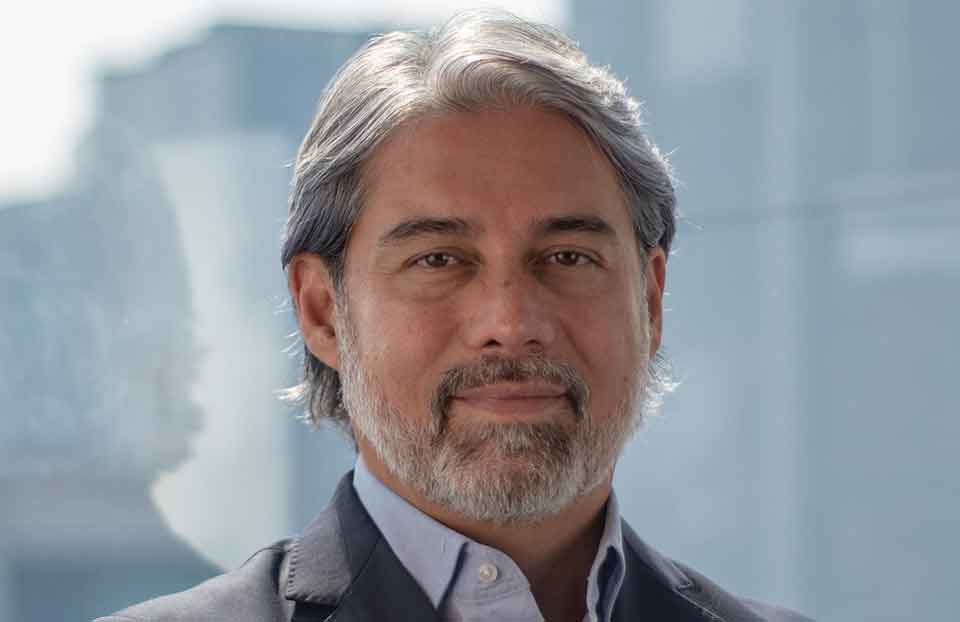
As chief growth officer of Grin Scooters – which started out with 50 scooters on the streets of Mexico’s capital but quickly expanded to 25 cities across seven countries in the region – Colyer saw an opportunity to match the speed and agility with which the company was growing. Having previously built a spend management tool at San Francisco-based startup Siftery – where he was head of growth – he recognized the value that having a clear view of a company’s overall expenses can deliver. With Latin America lacking a dedicated spend management platform, Clara was born. By December last year, just eight months after starting operations in Mexico, it was valued at $1 billion.
“My co-founder Diego [García] and I and a lot of our early engineering team who joined Clara realized this has been a huge pain point and there was a big opportunity to create the kind of spend management solution that the best companies across Latin America could rely on,” Colyer says. “Clara is a single command centre, where a company can manage all of their corporate spend and direct how the company uses its resources.”
Clara provides companies with corporate credit cards issued under licence from Mastercard, a platform for paying bills and making transfers, and an expense management system. It has almost 2,000 customers, including fast-growing startups and traditional corporates such as manufacturers, banks and airlines.
“We allow companies to generate as many cards as they need and assign different uses for them or assign them to different individuals, and those individuals each have a neobank-like consumer experience through a mobile app where they can visualize all their expenditures,” Colyer explains.
The Mexico City-based startup began operations in Mexico last March and has since opened in Brazil and is preparing to launch in Colombia.
“We do plan to continue that expansion through Latam,” Colyer says. “We have over two-thirds of the region’s GDP already with the markets we’ve launched in. Pretty soon the way that we would describe our footprint is very similar to what Nubank has on the consumer side, we will have for businesses.”
Investor-cash influx
Venture capital investment in Mexico has been booming. It more than tripled in 2021, clocking in at almost $3.5 billion – with 48% of that related to fintech, according to data from the Association for Private Capital Investment in Latin America. The influx of investor cash over the past 18 months has created a cluster of Mexican unicorns, with four of the six startups to reach that status operating in the fintech sector: Bitso, Clip, Konfío and Clara.
Bitso, a cryptocurrency exchange backed by investors including Tiger Global and Coatue, raised $250 million in a Series C round in May last year, which took its valuation to $2.2 billion. A month later, Clip – a payments-focused company that provides card readers to merchants – secured $250 million of funding from investors including SoftBank and Viking Global Investors, valuing it at almost $2 billion. In September, SoftBank-backed Konfío, which provides loans to small businesses, raised $110 million in an extension of its Series E round, lifting its valuation to $1.3 billion. Then in December, Clara became the country’s latest unicorn following its $70 million Series B funding round, which was led by Coatue.
We are not afraid of fintech … but we do want a level ground in terms of the regulatory landscape
Sergio Hinojosa, Banco Santander Mexico

Other fintechs have also been attracting interest from venture capital investors. Stori, which provides credit cards to people who have traditionally struggled to access credit, secured a $200 million funding round in November, including $125 million of equity and $75 million debt. That was followed at the start of December by a $202 million Series C round for Mexican buy-now-pay-later startup Kueski.
Part of this elevated interest in Mexico’s fintech sector reflects the shift to digital that happened during the pandemic, which shows little sign of reversing.
“Even though physical businesses in Mexico are open again, people are not going back to traditional physical transactions,” says Juan Carlos Espinosa, head of digital banking and innovation at HSBC Mexico. “People have lost their fear of doing digital transactions, they understand it is more convenient, and so that trend is only going to continue.”
Another driver is the fact there is a lot of demand for financial services in the country that is not being met by the incumbent banks.
“There is a huge opportunity in the Mexican market as there is still 50% of the population without a bank account, almost 70% without access to credit and almost 75% without any insurance,” says Hugo Nájera Alva, head of client solutions at BBVA Mexico. “Fintech is helping make financial services more accessible to an increasing number of people due to the lower cost they face.”
Mexico’s favourable demographics are another reason why investors are betting on fintech providers, says Andres Fontao, co-founder of Finnovista.
“Covid has accelerated something that was already happening and was bound to happen when you look at the age pyramid in Mexico where more than 40% of the population is younger than 25,” he says. “As these people start using financial services, their expectations are for their experience with a bank to be the same as what they get using other digital apps and services. They don’t want to have to go to a branch and stand in line to take money out.”
The introduction of the country’s fintech law in 2018 is also providing an extra layer of legitimacy to the market.
“Mexico has the most sophisticated regulatory framework for fintechs in the region today,” says Fontao. “It is liked by some and disliked by others, but it is a starting point that has brought certainty to the market – and that has been demonstrated through the interest of VCs who continue investing in Mexican fintechs.”
M&A activity
The growth in Mexico’s fintech market is sparking an increase in M&A activity. In November, Argentinean fintech Uala acquired Mexican bank ABC Capital for an undisclosed fee, which if approved by regulators will give Uala access to a banking licence and enable it to offer a broader range of services in the country.
Uala is the second fintech to purchase a bank in Mexico over the past year; Credijusto bought SME and agricultural-sector lender Banco Finterra in June, reportedly for less than $50 million.
These scrappy little startups can significantly impact, transform and disrupt the industry we’re operating in
Andres Fontao, Finnovista

The impact of the pandemic may have helped trigger those deals: in November 2020, Fitch Ratings flagged both ABC Capital and Banco Finterra, as well as Accendo Banco, as particularly vulnerable to the crisis given their smaller size and niche client base.
“On average, the financial margin of ABC Capital and Banco Finterra represented more than 90% of their total operating income as of 3Q20, which shows their little diversified structures with high dependence on credit interest,” Fitch wrote at the time.
Mexican fintechs are also buying other fintechs. In August, for example, Konfío acquired mobile card terminal provider Sr. Pago to extend its product offering.
“We definitely sense there is going to be more fintech M&A for two reasons,” says Fontao. “First, as non-Mexican fintechs spread into Mexico, they could look to acquire someone smaller that is operating a similar line of business to fast-track their presence in the local market. And as Mexican fintechs get bigger and more mature, they will want to broaden their value proposition for customers, so we’re going to see more acquisitions to expand product lines.”
Mexican banks have not acquired any fintechs directly since BBVA’s acquisition of Onepay in 2017 – in part because of the regulatory burden that comes with being acquired by a bank, says Nájera Alva at BBVA. However, other financial institutions have still been pursuing deals. Mastercard, for instance, acquired Mexican payments platform Arcus in November to help expand its Bill Pay service in Latin America.
Adjusted strategies
Unsurprisingly, the rise in venture capital and M&A activity has sharpened Mexican banks’ focus on the fintech sector and prompted executives to adjust their strategies accordingly.
“In the first wave of fintech growth in Mexico, there was a lot of disbelief that scrappy little startups operating out of garages would affect their businesses,” says Fontao. “Now they’re starting to realize these scrappy little startups can significantly impact, transform and disrupt the industry we’re operating in. As we progress from that first wave of fintech innovation to this new wave, banks are trying to figure out what their role will be.”
Santander Mexico, for example, is approaching this challenge in three different ways. Not only has it launched a purely digital banking service – Super Digital – which is targeted at customers at the base of Mexico’s financial pyramid, it is also investing in fintechs through Santander’s standalone Mouro Capital venture capital business, as well as forging partnerships to offer fintech products directly to its customers.
It is good that there is competition … and it creates pressure for everyone else to innovate
Gerry Giacomán Colyer, Clara

Mouro Capital, for instance, has taken stakes in Mexican fintechs such as Klar, as well as combining its portfolio companies Clikalia and Creditas to create an online property platform. Meantime, the bank’s partnerships with third-party fintech providers have enabled it to offer products such as Santander Tap, which allows customers to send money to their friends via their mobile phone, and Mis Metas (‘My targets’), which helps customers manage their savings goals.
HSBC Mexico is taking a partnership approach rather than acquiring fintechs or developing the technology itself. Espinosa says it is the ability of banks to connect with the right fintechs and to build those products at a commercial scale that can act as a differentiator to their competitors.
“What we do is assess different fintechs and how they fit in with the strategic pillars of the bank, so digital onboarding, payment, digital identity and so on,” he says. “We partnered with some of them to do pilot projects and some of them have already become commercial-scale partners.”
For example, HSBC is working with fintech partners to develop a QR payments system and a credit-risk assessment product that harnesses nontraditional data to better inform its credit decision process.
Esteban Domínguez, head of fintech partnerships and open banking at Citibanamex, told Euromoney in mid December that the trend towards joint ventures is mutually beneficial for banks and fintechs (Citi’s announcement of its retreat from its Mexican consumer business came shortly afterwards.)
“We see a lot of potential for partnerships because we see a lot of synergies,” he told us. “What fintechs bring to the table is the speed of innovation – the innovation cycles they have are much faster than traditional players – and second, a full base of customers who are fully digital. From our side what we bring to the table is, of course, the banking expertise as well as the regulatory and risk management expertise.”
Espinosa has called this relationship ‘co-opetition’ – a more relaxed mix of collaboration and competition than banks and fintechs have enjoyed in the past.
“It is a collaborative competitive ecosystem, so depending on the product and the segment, you may compete or you may collaborate; but where I see the most competition is not with fintechs but with big techs,” he says. “There you start having more blurred lines because they have scale and they have non-regulated asymmetric conditions with banks – banks being very regulated and them not regulated at all.”
Even with the introduction of Mexico’s fintech law, the regulatory backdrop remains uneven. That is creating an unfair advantage for some companies, says Sergio Hinojosa, executive director of digital banking at Banco Santander Mexico.
“We are not afraid of fintech, we like this trend, but we do want a level ground in terms of the regulatory landscape,” he says. “What is happening worldwide is we’re seeing different rules that banks need to play by compared to fintechs or even non-fintech entities offering the same services as banks, so all we’re asking is: let’s keep the same rules for everyone.”
While banks are seeking ways to better coexist with startups, some fintechs are going head to head with traditional financial institutions. Brazil’s Nubank, despite being just eight years old, is now Latin America’s most valuable listed bank and is competing at the same level as established incumbents.
“Fintechs are becoming more and more competitive for the banking sector, and some of the banks are losing market share against these startups and neobanks,” says Nájera Alva. “With a growing number of solutions and bigger investments, the startups can rapidly adopt new customers. However, they have yet to demonstrate that they have a sustainable business model and that, without continuous financing, they can remain over time.”
Quasi-fintech
Since 2020, some 52 Mexican fintechs either ceased operations or changed their business model, according to Finnovista. Payments and remittances companies saw the biggest drop off, with 11 companies no longer operating in that space.
“I’m sure we are going to see more Nu-type of neobanks and fintechs in the market, but I’m also sure that many of the current fintech startups will disappear,” says Nájera Alva.
Mexico’s fintech market is also expanding to include e-commerce and other online platforms that are becoming quasi-fintech businesses by selling financial services through their apps.
“From a fintech 2.0 perspective, you are seeing companies such as Mercado Libre, Rappi and Uber embed financial services into their products – and the reason they are being successful is because they have widespread distribution and millions of customers already using their platforms,” says Fontao.
Delivery startup Rappi, for example, joined forces with Mexican bank Banorte in 2020 to develop financial products, which resulted in the launch of RappiCard at the start of last year – a credit card that Rappi users can apply for through its app. Mercado Libre, meantime, has its own fintech business – Mercado Pago, a digital wallet provider. It also owns Mercado Credito, a digital lending business that offers loans to consumers and merchants.
And it is not just digital-native companies that are launching fintech products. Some traditional businesses are also creating their own fintech units. Take Mexican convenience store Oxxo. As well as being the largest banking correspondent in the country, last year it launched Spin, a digital wallet that allows customers to send and receive money on their phone or in store.
Not only is this innovation trend helping to shift the needle on financial inclusion in Mexico, it is also creating a positive feedback loop where startups and traditional financial institutions are pushing each other to keep improving their service offerings.
“We are creating solutions that were not there before; so primarily our focus is on increasing the size of the pie and challenging the incumbents to create something that is as good as what we are creating,” says Clara’s Colyer. “It is good that there’s competition, whether it comes from other startups or from the incumbents, and so what we’re doing should only have a positive effect as it just creates pressure for everyone else to innovate as well.”
Regulatory drag
While Mexico was one of the first countries to pass a dedicated fintech law in Latin America, the application of that legislation, which came into force in 2018, has been sluggish.
“The process of approving fintechs has been very slow – there have been hundreds of applicants that have still to be approved,” says Juan Carlos Espinosa, head of digital banking and innovation at HSBC Mexico. “Other markets like Brazil and Colombia have put in place fintech laws after Mexico, but they are now moving faster.”
In addition to the delays, some companies responded to the introduction of the fintech law by pivoting to a non-regulated business.
For instance, some fintechs have moved away from trying to sell directly to consumers and are instead providing the underlying tech rails that can enable other regulated financial institutions to offer digital services, says Espinosa. Other firms shuttered parts of their businesses that would be subject to the new regulations. Paypal, for example, closed its wallet offering in Mexico due to restrictions on deposit taking.
Fintechs that set up before the law was introduced have been allowed to continue operating while they go through the approval process. Those that have had the biggest success to date tend to be the ones that have targeted market segments ignored by incumbent banks.
Andres Fontao, co-founder of Finnovista, says: “From a fintech 1.0 perspective, the fintechs that have been succeeding are those that are focusing on what in Mexico are called the microempresas – or micro businesses – the smallest of businesses, and the middle-to-lower income consumer segments.”
For example, only 6.9% of banking incumbents across Latin America identified micro businesses as a priority, and just 3.4% say low-income consumers are a priority, Fontao says.
Pandemic push
That comes against a backdrop of broader digital adoption across Mexico, accelerated by the coronavirus pandemic. As many as six out of every 10 Mexican fintechs said their number of users and revenues had increased as a direct result of Covid-19, according to a Finnovista survey.
Meanwhile, 76% of incumbents reported an increase in the use of digital channels during the pandemic. Take Santander Mexico, for example. More than 55% of the bank’s sales are now completed via digital products, compared with 12% before the pandemic. More than 55% of monetary transactions executed digitally, up from about 20% three years ago, says Sergio Hinojosa, executive director of digital banking at Banco Santander Mexico.
“We believe it will grow to 80% to 90% in the next five years because accessibility to mobile internet devices is increasing,” he says. “Even before the pandemic people were already looking at the convenience of digital – you can be sitting on your sofa and making a digital transaction, you don’t need to go into a branch; so, people are understanding it is faster, cheaper and more secure, so we expect that trend to continue going up.”