
At the start of October, the IMF published the second chapter of its latest global financial stability report ahead of the rest of the document, conveying some sense of urgency.
Its 18 pages survey the rapid growth of crypto assets – now worth $2 trillion, a 10-fold increase from early 2020 – identifying fragilities in the emerging ecosystem of exchanges, wallets, miners and stablecoin issuers. It calls on regulators and policymakers to up their game, stating that the crypto boom poses new challenges to financial stability. It adds that while the risks are not systemic yet, they are growing and need to be closely monitored.
The fund enables clients … to further diversify their portfolio in a secure and regulated way
Bernadette Leuzinger, Crypto Finance

Beyond the obvious investor-protection concerns about hacks and so-called rug pulls – the IMF points out that 16,000 crypto tokens have been listed, but only 9,000 still exist today as creators abandon many of them – and excessive leverage of up to 125 on some crypto exchanges, the authors now worry about knock-on effects from crypto volatility on the conventional financial system.
$2 trillion is still modest next to global equity and government bond markets, but it is roughly equivalent to the market capitalization of US high-yield bonds. And while banks do not yet have big direct balance-sheet exposures to crypto assets, they do to hedge funds that are allocating to them.
There is also the risk of runs on stablecoins. We saw one in June on the small algorithmic stablecoin Iron, which had a quarter of its reserves in another crypto token, Titan, whose market price went to zero.
The worry now is of a run on one of the big dollar stablecoins, perhaps sparking a sell-off in other markets where reserves are invested, such as commercial paper to which banks are heavily exposed.
We have come a long way fast from October 2018, when the Financial Stability Board concluded the crypto market was too small to pose a risk to financial stability.
As the IMF warns regulators to step up, the conventional financial industry, fearful of missing out, is embracing crypto.
A Finma first
At the end of September, the Swiss Financial Market Supervisory Authority (Finma) approved the first crypto fund according to Swiss law. The Crypto Market Index Fund, which is restricted to qualified investors, is run by Crypto Finance, an asset manager and brokerage with offices in Zürich and Zug.
Bernadette Leuzinger, chief executive of asset management at the firm, says: “The investment fund enables clients of innovative wealth and asset management firms to participate in this upcoming asset class and to further diversify their portfolio in a secure and regulated way.”
[We are] enjoying excellent business momentum as institutional adoption … accelerates globally
Guido Buehler, Seba Bank
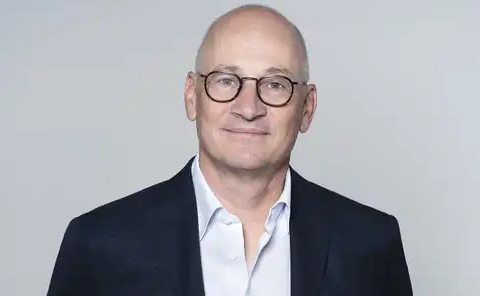
The custodian is Seba Bank, which received a Swiss banking and securities firm licence two years ago and has focused on digital assets. Chief executive Guido Buehler says it is now “enjoying excellent business momentum as institutional adoption of crypto and digital assets accelerates globally”. Finma has licensed it to act as a custodian bank for Swiss collective investment schemes.
“Asset managers can now offer strategies based on crypto or other digital asset underlyings to a broader audience utilizing Swiss-based mutual fund structures secured by Seba Bank as the CISA [collective investment schemes for digital assets]-licensed custodian,” Buehler says.
Because crypto assets involve particular risks, Finma has tied approval of the Crypto Market Index Fund to additional requirements. The fund may only invest in established crypto assets with a sufficiently large trading volume. Investments must be made through established counterparties and platforms that are based in a member country of the Financial Action Task Force (FATF) and subject to anti-money laundering (AML) regulations.
There are also specific requirements regarding risk management and reporting for the institutions involved in the management and custody of the fund.
But while the manager and custodian make much of Finma’s approval, this is by no means the only vehicle investors are using to take exposure.
Crypto tracker
Criptonite is a Geneva-based cryptocurrency asset manager founded by chief executive Florian Rais, a former private banker who started at Bank Pictet in the late 1990s and headed Pictet’s investment management team in London before setting up his own asset management company focused on private equity.
In 2017, he joined the advisory board of a large crypto project initiated by a group of California-based investors to launch in China that year. The four-day launch conference in Macao attracted a few thousand attendees.
We needed to offer traditional investors simple strategies to invest safely
Florian Rais, Criptonite

Rais tells Euromoney: “My first reaction was that we need to address this new asset class, if it lasts – because I thought there was a chance it might not – but that the established private banks would struggle. We needed to offer traditional investors simple strategies to invest safely. I wanted to focus on institutional-grade product in a regulated environment to give comfort to investors.”
Having recruited some traders, Criptonite in 2019 began offering actively managed certificates (AMCs), which allow registration at the Swiss stock exchange and come with an international securities identification number (ISIN). The first product invests in the 30 largest cryptos by market cap while a second, mid-cap offering, focuses on growth among the top 500 tokens.
Last month, it teamed up with Wave Financial, a US firm focused on digital asset management and an SEC-registered financial adviser, to offer an AMC tracker on Wave’s Bitcoin Income and Growth Digital Fund. This follows a covered-call writing strategy to generate income from selling options and distributing premiums.
In crypto derivatives terms, this is as low risk as it gets, indeed less risky than simple buy and hold.
“This is one of Wave’s flagship products and the beauty is that it gives investors a targeted monthly coupon of 1.5% as well as exposure to most of the upside of bitcoin,” says Rais. “Finding a new crypto that goes up 200% is great, but it’s a bit like hoping you can keep on winning the lottery. Good investment management is all about process and the process here delivers regular fiat income into investors’ accounts. That makes them comfortable.”
Rais sees this as the start of even bigger allocations from traditional investors to a new asset class. He says: “We have seen a massive change in the past 12 months with regard to investor appetite and big moves among the traditional banks and asset managers as they realize crypto is here to stay.”
He sees a risk for his country’s private banks, adding: “It’s impossible for all the mid-size banks to hire in crypto experts. But if their clients ask for exposure to crypto and the banks turn them away, then there is a danger – especially if crypto keeps rallying – that clients take their money out. And if clients then end up losing money by selling in a panic on unregulated markets, they will blame the banks that didn’t help them.”
Criptonite is set up to outsource its crypto investment services to those private banks, investment managers and family offices rather than to sell directly to their investor clients.
Rais preaches a conventional approach. Do not go all in on crypto, but do allocate a few percentage points of your wealth to it. Look for a core holding and then for income. Maybe use the bitcoin income and growth fund for both, then spice things up with some bets on large-cap or mid-cap cryptos.
This is a process familiar across all conventional asset classes.
As to regulation, we live in a competitive world. The SEC has registered a handful of firms such as Wave and allowed the listing of Coinbase. Kraken got a special-purpose banking licence in Wyoming.
There are now many tens of millions of wallets holding bitcoin.
It is no wonder that policymakers in Switzerland and Europe do not want to miss out and find a big new market effectively regulated from the US.
As the IMF urges: “Time is of the essence, and action needs to be decisive, swift and well-coordinated globally.”



