Morgan Stanley had another great year in mergers and acquisition advising on $1 trillion of completed M&A in our awards period, working on 297 transactions worldwide, including seven of the 10 largest.
It sits second in the global adviser league tables by value, just behind Goldman Sachs and ahead of JPMorgan, both of which worked on more transactions. Goldman has been hiring scores of bankers for mid-market M&A, which is also a natural for JPMorgan given its branch network.
Morgan Stanley focuses on fewer, larger deals that are often complex and transformational.
Shortlisted
- Goldman Sachs
- JPMorgan
It lead advised AbbVie on its $86.6 billion acquisition of Allergan and United Technologies on its $36 billion merger with Raytheon. It advised International Flavors & Fragrances (IFF) on its $26.2 billion reverse Morris trust (RMT) merger with DuPont Nutrition & Biosciences.
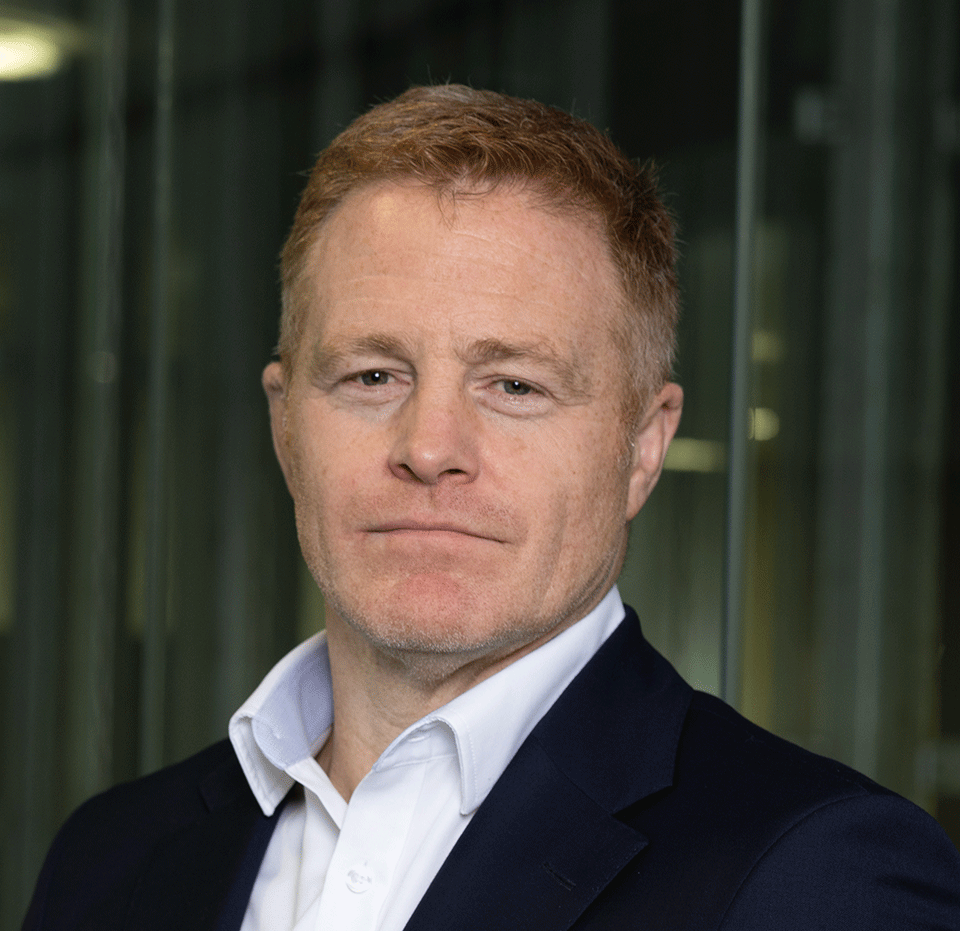
“We had worked with IFF on their previous acquisition of Frutarom, which led the path to this transaction. The RMT with DuPont N&B created a global leader in high-value ingredients and solutions for the food and beverage, home and personal care and health and wellness markets,” says Tom Miles, co-head of Americas M&A at Morgan Stanley. “It was a case of do this deal and continue on the journey to transform the company or watch someone else do it.”
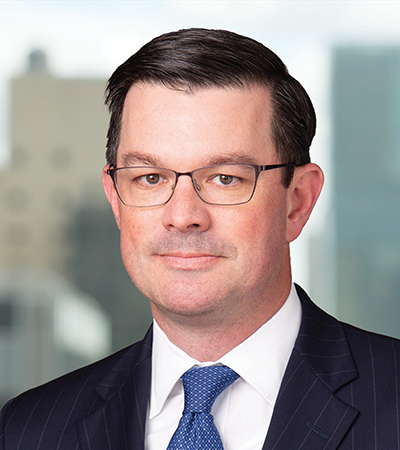
The firm is advising IHS Markit on its yet to be completed $43 billion merger with S&P Global, Square on its agreed deal to buy Afterpay and – in the biggest special purpose acquisition company (Spac) merger yet – Singapore-based Grab on its $31 billion de-Spac into Altimeter Growth.
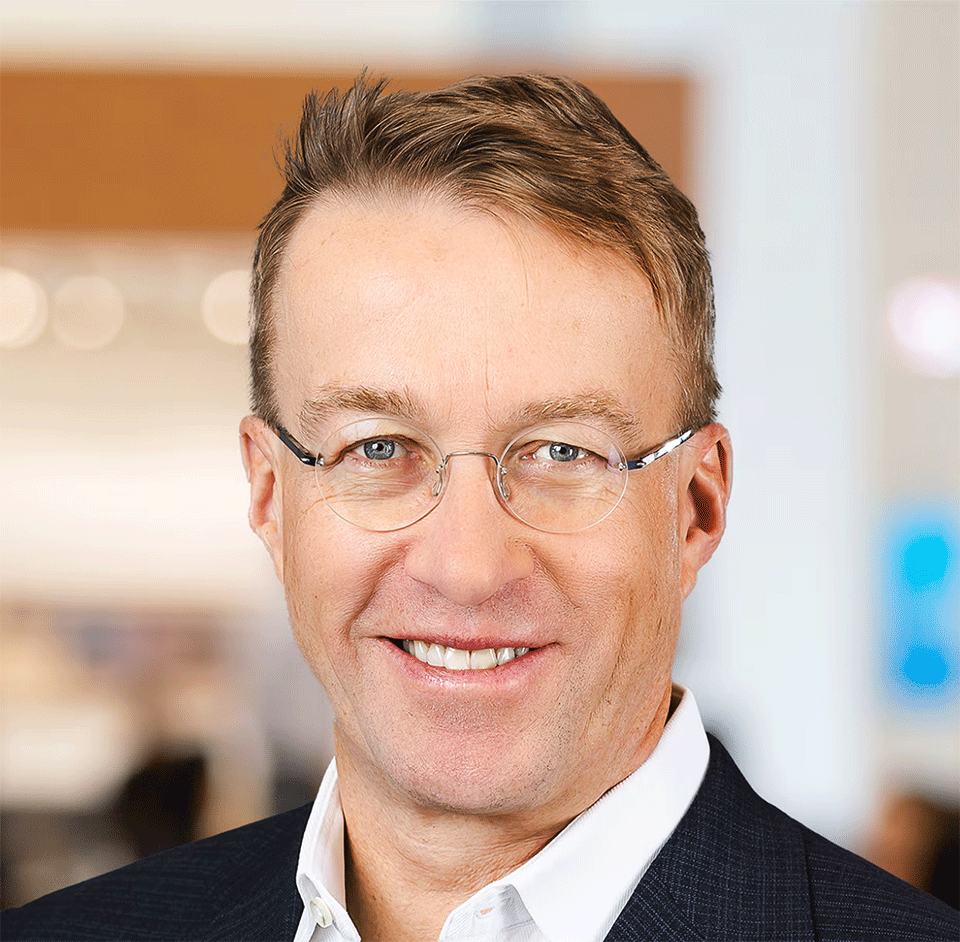
This last is noteworthy as Rob Kindler, global head of M&A, explains. “We stayed away from Spacs until three years ago for a number of reasons but particularly because of deal uncertainty for a seller given that Spac shareholder approval was required. When Spacs put in terms giving shareholders warrants on the deal while retaining the option to redeem their shares, that made approval much more likely.”
The firm hired Bennett Schachter, lead Spac banker at Goldman Sachs, in 2019, formed a team of Spac specialists in the US M&A business and has set out to be the lead adviser to Spac targets and their owners on selling to these vehicles.
De-Spac transactions have represented approximately 25% of US M&A volume in 2021, which accounts for about $500 billion of transactions. “There are 400 Spacs out there looking for targets, so there could be close to $1 trillion of M&A volume in de-Spac transactions that did not exist in scale in prior years,” says Miles.
Positive outlook
Morgan Stanley also has the world’s leading equity franchise and is well positioned to advise on how selling to a strategic buyer, which may encounter regulatory hurdles, compares to an IPO, which can take considerable time, or to going public through a Spac while raising capital through a private investment in public equity deal to fund growth. “Our franchise is perfect for adding the most value to sellers,” says Kindler.
It’s a nimble move for Morgan Stanley, as it sees the regulatory hurdles that the largest M&A deals must clear rising. US authorities blocked Aon’s agreed $30 billion acquisition of Wills Towers Watson in July after EU competition authorities had cleared it.
“Things were quite unpredictable under the Trump administration and companies were willing to attempt things that they likely would not, for political reasons, under a Democrat administration. A good example is T-Mobile and Sprint,” says Kindler.
Morgan Stanley advised Deutsche Telekom, a large shareholder in T-Mobile on that $68 billion merger.
“Going forward companies are likely to be conservative on regulatory issues and reluctant to take risks, and I do not expect to see many large deals over $15 billion to $20 billion,” says Kindler.
Whether you’re talking to corporate CEOs or private equity sponsors, confidence in the medium-term outlook is sky high right now
Tom Miles, Morgan Stanley
Even if the number of mega-deals contracts, Morgan Stanley still expects recent strong M&A activity to continue.
“Whether you’re talking to corporate CEOs or private equity sponsors, confidence in the medium-term outlook is sky high right now – especially in the US,” says Miles. “They see strong demand for products and services giving a clear runway for the next 12 months at least. It helps corporate confidence that stock prices are high and sponsor confidence that financing rates are low on six or seven-times leverage.”
And investors support M&A.
IHS Markit’s stock price stood at around $92 just before its deal with S&P Global was announced last November. Today it is at $119.
“There’s a lot of noise about premiums to market, but what really matters is value, which here was the percentage of the future economics that either side will own,” says Kindler. “That was key to the negotiation for the IHS Markit side, which wanted about 30% of the new company. It didn’t matter that when the deal was signed, the premium was single digit, since the IHS shareholders were going to own about 30% of the combined company. That is exactly the outcome in economics that IHS wanted.”