Judging the global financing category in this year’s awards for excellence was complicated by the division of the period under consideration into three starkly different market environments. The first part involved the onset of the pandemic and emergency funding conditions, the second saw a degree of market access established and the third a full transition to risk-on conditions. So banks shortlisted in this category needed to justify their initial response to the crisis; how they responded to the return of investor appetite and the emergence of a visible recovery path; and subsequently how they tapped into a more aggressive origination mindset in the latter part of the year.
Shortlisted
- Citi
- JPMorgan
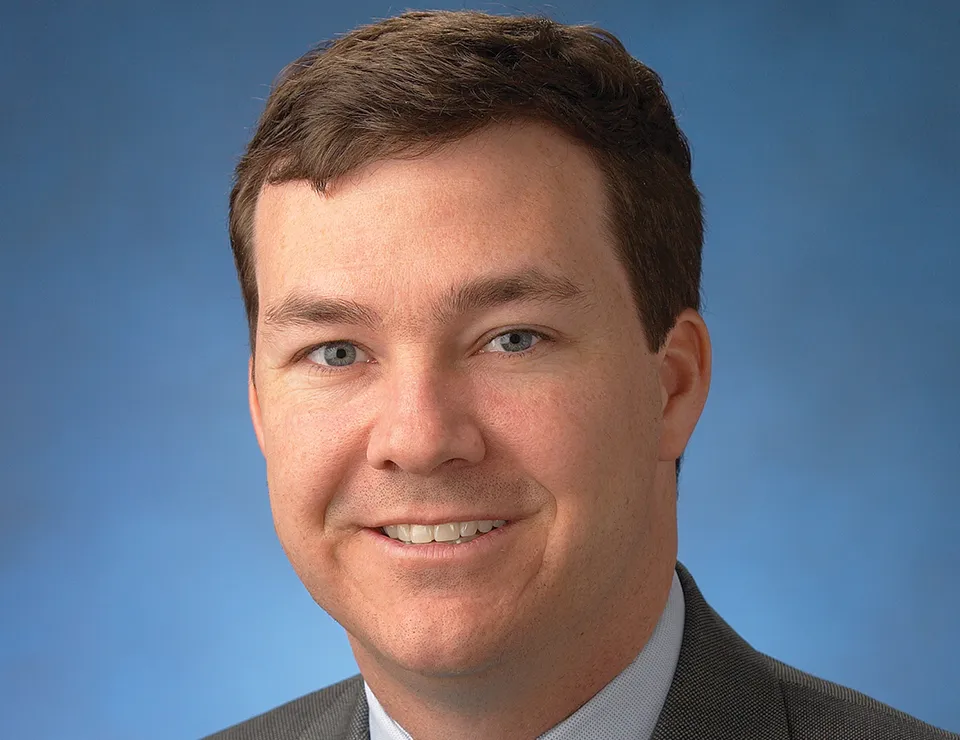
Denis Coleman, Goldman Sachs’ ebullient global co-head of financing, is in no doubt that the US bank rose to the challenge. “When it was time for clients to come back to the markets in every region and in every product, Goldman Sachs was hired to do the reopening transaction. The degree of trust that is required for that is at a totally different level,” he states. Early deals for McDonalds in the corporate space, Yum Brands in high yield and Unilever, Diageo, Verisure and others in investment grade back up this claim.
The bank was one of the first to tackle the financing demands of clients most impacted by the pandemic. It led the first large restaurant recapitalization for Darden, a $527 million deal, and was lead-left bookrunner and stabilization on the first gaming capitalization for Penn National Gaming Inc, a $676 million dual-tranche offering. Goldman Sachs was also the architect of the $2.2 billion capital raise for cruise operator Norwegian Cruise Lines, across secured notes, exchangeable notes, common equity and private exchangeable notes.

Coleman says that the differentiating factor in times of market stress is trust. “We have a reputation for having extremely diligent attention to detail and refined market judgement. When there are no data points to point to, you have to trust the people you are getting advice from.”
Operating in these conditions is not easy and demands commitment. The €17.2 billion deal to fund the largest European leveraged buyout since 2007 for thyssenkrupp Elevator’s acquisition by Advent, Cinven and Germany’s RAG-Stiftung was a good example of this.
“The volatility in the market during the M&A process had been extraordinary, but we had a staple on the deal and we made a commitment. The equity markets were dropping in huge size as the auction wrapped and despite that we stood by our clients in very challenging market conditions,” says Coleman. The entirely virtual global roadshow saw over 415 individual investors placing over 980 distinct orders across the capital structure.
Once the market had stabilized, coming up with innovative solutions for clients whose entire operating environment had been transformed was the urgent task of all banks. Goldman Sachs was the sole structuring agent and lead-left bank for perhaps the best example of this last year: the loyalty-backed financings issued by all major US airlines. These deals kicked off with $3.8 billion of secured bonds and $3 billion of loans for United Airlines’ MileagePlus-issued financing in June that used an entirely new investment structure. It marked the first-ever financing backed by the intellectual property of a US airline loyalty programme and used financial engineering from structured and leveraged finance to achieve investment grade ratings. The United deal spurred further financings for Delta SkyMiles in September 2020 ($9 billion) and American AAdvantage ($10 billion) in March 2021.
It is one thing to reliably execute the most important transactions, but clients also want to have banks that are looking around the corner for them
Denis Coleman
The opportunistic tone of the latter part of the period under review is perhaps best exemplified by the surge in special purpose acquisition company (Spac) issuance. “There was pent up demand for strategic activity with people believing that the go-forward world would involve lots of growth opportunities and parties wanting to get access to product to express that view,” observes Coleman. “The Spac product found itself in the middle of that.”
Over the awards period Goldman was involved in 66 Spac offerings worth $17.5 billion. The bank had advised on every direct listing to date in 2021 by mid-August.
The endurance of robust capital markets conditions well into 2021 will give the bank the opportunity to capitalize on the work that it has done over the pandemic period. “The data suggests that during times of stress clients turn to people they trust,” concurs Vivek Bantwal, co-head of the financing business with Coleman. “As the world reopens, we want to maintain our increased share and grow it. Flow and market insight begets flow and market insight.”
That will need to go further than just being on the biggest deals, which Goldman invariably has been with its involvement in the $17.9 billion multi-tranche T-Mobile follow-on from the Sprint merger, which was the largest selldown in equity capital markets history; the largest IPO in Europe for InPost (€3.2 billion); and in the private sphere advising the $1 billion strategic investment for Airbnb.
“It is one thing to reliably execute the most important transactions, but clients also want to have banks that are looking around the corner for them,” Coleman concludes. “Beyond the pandemic we haven’t confronted much in the way of durable exogenous shocks. There have been episodes of cyber risk and geopolitical risk and clearly inflation risks continue – there are a lot of things that could go wrong. Cyber risk worries me quite a bit.”



