When this correspondent visited Shanghai in the last week of January 2020, the city was all but deserted, its citizens sheltering from an oncoming storm. The glow of streetlamps in the rain revealed only an occasional taxi or midnight jogger.
They were right to hide. Before Covid engulfed the world, it eroded China’s growth story and briefly rattled its politicians. That it bounced back faster than other big economies is due to its efficient handling of the pandemic – after an admittedly rocky start – and strong export data.
Economic output expanded 2.3% in 2020, according to data from Beijing’s National Bureau of Statistics, making it the only major economy to grow last year.
It is still hard to get into China – something World Health Organization officials, keen to pinpoint the origins of the coronavirus in Wuhan, found when initially denied access to the country in January.
Economic output expanded 2.3% in 2020… making it the only major economy to grow last year
But standard health protocols aside, things feel back to normal in mainland cities.
More proof that China will be the first country to find its feet post-Covid arrived in the form of a press release issued on Tuesday by the New Development Bank (NDB), a Shanghai-based multilateral owned by five emerging markets, including China, India and Brazil.
In it, the NDB announced the disbursement of a RMB7 billion ($1.08 billion) emergency loan to help China support its post-pandemic recovery efforts. This will focus on key sectors most affected by the events of the past year, including health, trade, logistics and agriculture.
One wonders why a country that is successful and ostensibly rich would need the money.
The answer is, of course, that it does. The ruling Party has spent a lot of time in recent weeks patting itself on the back for eradicating extreme poverty at home.
But the truth is that if you venture far beyond the big east coast cities by train, a different China emerges. One that is, in many places, still poor and struggling, and unable to generate enough of the right kinds of jobs.
So when an AA+ rated development bank, part-owned by an A+ rated country, offers to lend it a sizeable chunk of money at a decent rate of interest, the correct response is to nod and hold out your hands.
But what is lost in the details of the loan is that it will be the last of its kind.
Back on track
In February 2020, the NDB formed an Emergency Assistance Programme, eventually worth $10 billion. A month later, it disbursed RMB7 billion to an embattled Beijing, to fund new healthcare facilities.
Similar-sized lending facilities were later extended to India, South Africa and Brazil.
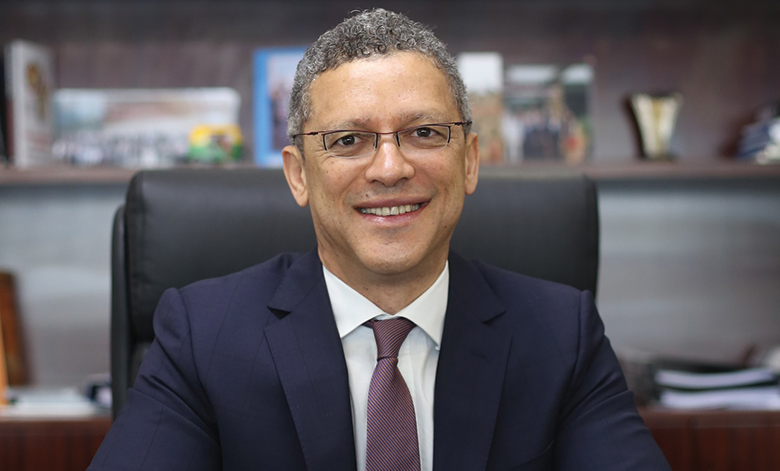
This week’s disbursement, the NDB’s chief financial officer Leslie Maasdorp tells Euromoney, will be “the second emergency loan for China – the second and the last”.
Despite the good vaccine news humming around the world, to those of us hunkered down in home offices, calling coronavirus “over” may seem premature – but not to Maasdorp and his colleagues in Shanghai.
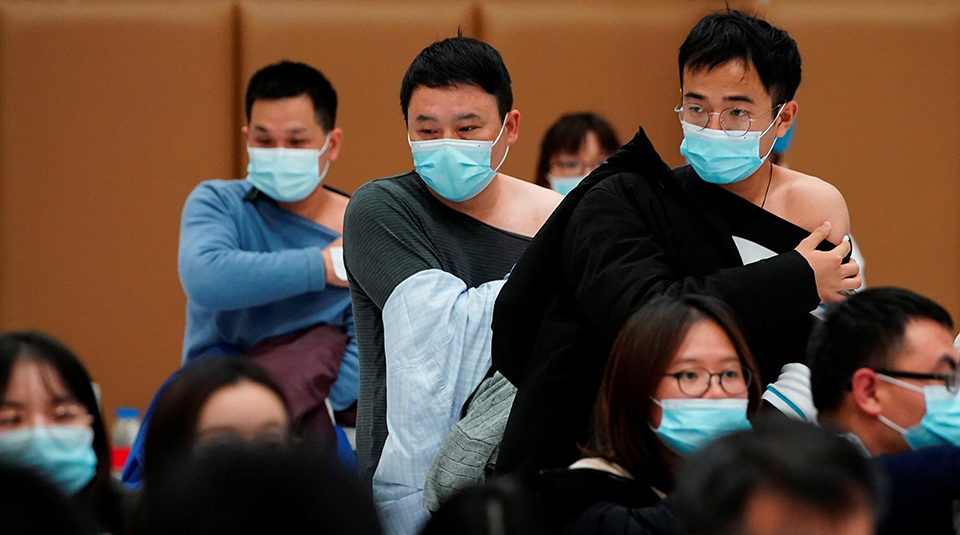
“We can absolutely start to draw a line under the Covid era,” he says. “Thanks to vaccine programmes here and in our other member countries, we can clearly see the light at the end of the tunnel. Life is back to normal.”
You may feel that is jumping the gun. The world has suffered its fair share of false financial and economic restarts during the past year.
And perhaps it is hard to extract a definitively positive global outlook from the statistical and anecdotal evidence of life in a single nation state, however big.
But it does feel as if we are finally, if laboriously, getting back on track. China’s economy is projected by the IMF to grow by 8.1% in 2021, with the US (5.1%) and the UK (4.5%) not too far behind.
Already, the Shanghai-based multilateral is moving into ‘what’s next’ mode.
“Now the health pandemic is nearly over, it’s all about economic recovery and ensuring that smaller enterprises are resuscitated,” says Maasdorp.
“We will focus on getting growth back, and on funding the right projects in our member states, including green and clean energy projects and smart infrastructure.”