Gary Gensler likes to make an impact, as he showed when he turned the US Commodity Futures Trading Commission (CFTC) from a second-tier regulator into the agency that led the implementation of tighter rules for Wall Street after the global financial crisis of 2008.
Gensler was also the driving force in making Libor manipulation charges a catalyst for change across the investment banking industry.
Banks paid around $10 billion in fines for manipulating Libor, and Gensler’s aggressive pursuit of Barclays for its involvement led to an important symbolic shift in 2012, when the firm’s chief executive Bob Diamond was forced to resign.
This took out the most vocal defender of free-wheeling industry practices and sent a stark warning to other bank heads about the post-crisis balance of power.
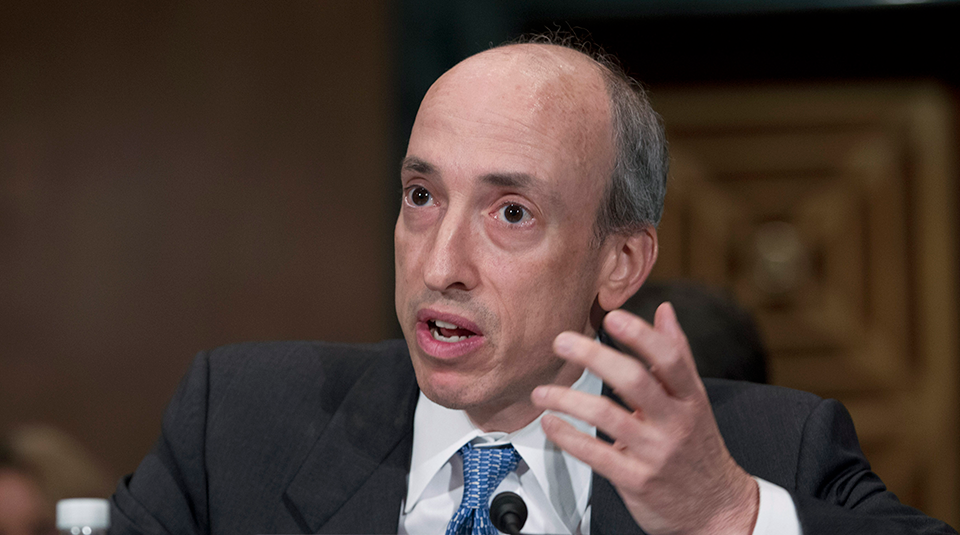
Now Gensler is set for another stint as a Wall Street cop, as president Joe Biden’s nominee for chair of the Securities and Exchange Commission (SEC). Allison Herren Lee is acting chair pending Gensler’s confirmation by the Senate.
A move to burst the current bubble in special purpose acquisition companies (Spacs) seems tailor-made for the combination of energy and a detailed understanding of capital markets that made Gensler feared by bankers when he ran the CFTC from 2009 to 2014.
Gensler had a successful 18-year stint at Goldman Sachs, including making partner at 30, before becoming a Treasury official in the Clinton administration in 1997.
In his early years on the supervisory side of the fence, Gensler conformed to the stereotype of a ‘Government Sachs’ former banker, who in effect represents Wall Street interests while in public service. He played a leading role in securing the 2000 legal exemption of over-the-counter derivatives from regulation by the CFTC, for example.
Aggression and tenacity
But Gensler came to regret that stance and his former colleagues on Wall Street were shocked by the aggression and tenacity he showed after the 2008 crisis when he set about implementing derivatives reform.
Goldman managers, who had become accustomed to being able to help to shape financial regulation behind the scenes, were particularly taken aback by Gensler’s uncompromising approach and use of surprise media statements to keep the industry off balance.
That is what made comments by Goldman’s chief executive David Solomon about Spacs on the firm’s earnings call on Tuesday intriguing.
The boom in Spac deals has become the biggest financial story since the Federal Reserve and other central banks calmed markets during the Covid-19 crisis in March and enabled another upward drive in global asset prices.
This revived the market for IPOs, and Spacs at around $82 billion accounted for roughly half of the funds raised in 2020.
The frenzied nature of the rush to cash in on Spac opportunities and confusion over incentives for dealmakers is now looking like a bubble
Euromoney has charted the many issues with Spac structuring – including a possible coming shift towards buying listed European companies, rather than just offering an opportunity to go public for private ventures.
But put simply, the frenzied nature of the rush to cash in on Spac opportunities and confusion over incentives for dealmakers is now looking like a bubble.
Goldman seems to be trying to position itself for a regulatory backlash, while still extracting fees as long as the Spac boom continues.
Solomon delivered what was clearly a prepared summary of his views on the Spac market during the analyst question-and-answer session on January 19.
“I do think Spacs have a good use case, versus a traditional IPO, and advantages for sellers and for investors,” he said. “But the ecosystem is not without flaws. I think it’s still evolving. I think the incentive system is still evolving.
“One of the things we’re watching very, very closely is the incentives of the sponsors, and also the incentives of somebody that is selling.”
He admitted that Spac volumes continue to be “very, very robust” in early 2021, but added: “I do not think this is sustainable in the medium term. And there’ll be something that will, in some way, shape or form, bring the activity levels down over a period of time.”
Is Goldman worried that Gensler will be the something that brings activity levels down? He could certainly have an impact once he has been confirmed as SEC head.
Jay Clayton
Gensler’s predecessor Jay Clayton sounded measured warnings about the Spac boom as it picked up pace last year.
“What investors need to understand and what the professionals who are involved need to help them understand, is that it’s not the same as an IPO,” he said in an October appearance on CNBC.
“The motivations of the Spac sponsors, the motivations of the company that they’re purchasing and the de-Spac-ing transaction are different from the motivations of your traditional owners and management teams in an IPO. Not saying that’s right or wrong, but they’re different; investors should understand that.”
This understated warning, with a mild admonition to banking advisers to make a bit more effort, was typical of Clayton, who is an industry insider through and through.
Clayton was a prominent Wall Street adviser when he was a senior partner at law firm Sullivan & Cromwell and worked extensively for Goldman Sachs, which also employed his wife as a financial adviser until she resigned when he was appointed SEC chair by then-president Donald Trump.
Clayton’s tenure as SEC head saw the agency bring the fewest insider trading cases since the Reagan administration, and his “what me worry?” Spac comments reflected his generally laissez-faire approach to regulation.
That is not Gensler’s style at all.
Gensler prides himself on understanding the mechanics of finance. He made his mark at Goldman as a mergers and acquisitions adviser with a flair for attracting publicity to his deals – much like Solomon.
However, Gensler then shifted to running debt and currency trading in Asia, which gave him a detailed understanding of the wholesale markets that would drive the boom in banking revenues in the decade running up to the 2008 crisis.
Technological innovation
More recently, in a stint as a professor at MIT, he co-wrote a paper that was released in November on deep learning – a subset of artificial intelligence – and its implications for financial stability.
Gensler might surprise some of his many Wall Street critics with his approach to cryptocurrencies and fintech. His grasp of market structure issues across asset classes might not lead him to a reflexive rejection of technological innovation, for example, though his November paper did warn that deep learning could create “regulatory gaps”.
But Gensler’s understanding of the narrative power of clear messages may tempt him to send an early warning to Wall Street that the reformer of private derivatives trading is coming to clean up the public capital markets.
A move to burst the bubble in Spac issuance would send a powerful signal that the old CFTC sheriff is back in town, but now patrolling a bigger patch as head of the SEC.