
 |
Bahrain
|
Ahli United Bank, Bahrain’s largest bank by assets, reported a 5% increase in profits to $730.5 million and saw its cross-border business grow to 20% of its loan portfolio in 2019. Its takeover by Kuwait Finance House has been postponed until December due to the coronavirus outbreak, ruling it out of this year’s best bank award.
|
|
Smaller but by no means less mighty rival National Bank of Bahrain (NBB) is Euromoney’s best bank in Bahrain after seeing profits increase by 6% in 2019 to $197 million, with a decent return on equity of 14.72%. Under the stewardship of chief executive Jean-Christophe Durand, formerly head of BNP Paribas’s Middle East and Africa operations, NBB embarked on a radical transformation programme in 2017 that is already delivering impressive results.
Digital development was core to the bank’s strategy in 2019 and it became the first bank in the Middle East and North Africa (Mena) to roll out Open Banking solutions. It also invested in interactive teller machines and was the first bank to issue cards, statements, cheque books and Iban letter printing through these services.
The bank also acquired a 78.8% controlling stake in Manama-based Bahrain Islamic Bank as part of a plan to deepen its activity in Islamic banking and help it enter new markets.
In keeping with its aim of bridging the gap between Bahraini-based issuers and international investors, NBB has also cemented its position as the number one debt capital markets house in the kingdom.
An early leader in its response to Covid-19, NBB launched a mobile medical insurance app and ensured the delivery of chronic medication to employees. It also launched several other initiatives, including deferment for all monthly loans to Bahraini citizens for up to six months.
Sico, Bahrain’s best investment bank, saw an impressive 63% year-on-year increase in net profit to BD6 million ($15.9 million) in 2019. Net fee income grew by 51% to BD6.3 million from the BD4.2 million recorded at the end of 2018.
A regional asset manager, broker, market maker and investment bank, Sico led Bahrain’s largest M&A transaction in the fourth quarter of 2019, National Bank of Bahrain’s acquisition of Bahrain Islamic Bank, which closed in the first quarter of 2020 for BD62 million.
Sico is also a notable player in cross-border transactions and in the fourth quarter of 2019 was appointed by Kuwait Finance House to advise on the cross listing of its shares on the Bahrain bourse. Earlier this year, it was again mandated by KFH to advise on and manage the execution of its voluntary offer to acquire up to 100% of Ahli United Bank, although Covid-19 has meant this deal has been pushed back to December 2020.
In March, chief executive Najla Al Shirawi announced the establishment of an asset management subsidiary in Saudi Arabia, Sico Financial Saudi Company.
Sico’s investment banking team is led by Wissam Haddad, an 18-year veteran of the investment banking, private equity and corporate finance sectors. In 2019 the division brought in revenues of $293 million.
 |
Egypt
|
Clear market leader Commercial International Bank (CIB) continues its run as Egypt’s best bank.
Strong digital innovation has seen the firm improve the services it offers to existing clients and promote financial inclusion. The bank has been investing heavily in data analytics, upscaling its infrastructure, and digitalizing and automating the way it does business, which sets it up to be a market leader in the shift to home working and digital banking accelerated by Covid-19.
CIB’s smart wallet is available to both the banked and unbanked in Egypt. As of December 2019, CIB says it had the highest activity rate for mobile payments through its smart wallet in the Egyptian market, 18% of the total, with a total value of E£1.4 billion ($86.6 million). The bank says it is also ranked first for digital domestic transfers.
|
|
|
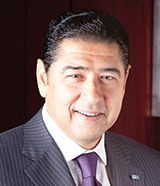
Hisham Ezz Al-Arab, |
It has embraced what it calls the ‘alphabet of the future’: ABCD – artificial intelligence, blockchain, cloud and data. In 2019 CIB became the first bank in Egypt to introduce a chatbot that supports both English and colloquial Arabic, using AI to help customers learn about the bank’s products.
A market leader in responsible banking, CIB is also upgrading its offering for small and medium-sized enterprises by launching a comprehensive loan programme tailored to SMEs in 2019. In 2020 it also plans to launch a special programme for women in business.
Its business banking segment serves over 54,000 SMEs with revenues ranging from E£1 million to over E£200 million. Retaining profitability, the division also saw profits grow 5% year on year to E£1.6 billion.
The bank’s respected chief executive, Hisham Ezz Al-Arab, is overseeing plans for international expansion into east Africa; it has opened an office in Addis Ababa and acquired a 51% stake in a Kenya’s Mayfair Bank.
CIB saw a 23% increase in year-on-year net income to E£11.8 billion in 2019. The bank is highly efficient with a cost-to-income ratio of 21.6%; in 2019 it reported a return on equity of 29.5%. It saw strong loan and deposit growth of 10% and 7% respectively in 2019.
EFG Hermes, Egypt’s best investment bank, is a truly regional player with a presence in Egypt, the UAE, Saudi Arabia, Kuwait, Oman and Jordan.
It packs a punch on regional mandates and is the principal player in Egyptian capital markets. In the awards period EFG Hermes’ investment banking team closed nine equity capital markets transactions, together worth $31.4 billion (including $29 billion for the Saudi Aramco IPO), and six M&A deals, valued at $1.7 billion in total.
It has a 100% market share of Egyptian ECM, advising on the five initial public offerings and accelerated book builds on the Egyptian stock exchange.
In M&A, EFG Hermes advised Suez Cement Group Company, a subsidiary of Heidelberg Cement, on the $39 million divestment of its white cement plant in El Minya to Emaar Industries.
In 2019, EFG Hermes deployed a three-pronged strategy to expand its deal count, bolster its DCM capabilities and widen its geographical footprint in the region.
The division completed seven DCM deals in Egypt and across the wider Mena region, at a value of $462.2 million, supported by the introduction of a dedicated DCM team.
In addition to multiple other international deals, EFG Hermes has proved itself a vital player in Saudi Arabia’s capital market development. The firm was appointed joint bookrunner on Saudi Aramco’s IPO, as well as the $749 million IPO of Arabian Centres, the first RegS/144a offering in Saudi Arabia. The landmark transaction was the second largest in the history of the kingdom.
Expanding beyond its traditional Mena market, the company also acted as joint bookrunner on Helios Towers’ $362 million IPO on the London Stock Exchange. EFG was also joint bookrunner on Finablr’s $429 million IPO on the London Stock Exchange, as well as LSE-listed NMC Health’s joint venture with Saudi Arabia’s Hassana Investment Company.
 |
Israel
|
Israel Discount Bank (IDB) wraps up a five-year digital-led transformation journey this year, emphasizing ‘mobile first’ to bring the bank into the digital age. Its strong growth momentum and good profitability means it retains its position as Israel’s best bank.
As well as upgrading its existing systems and services, the bank adopted more advanced digital features based on artificial intelligence and biometrics. In 2019 it introduced new business-management cash tools as well as automated banking services, and announced collaborations with fintechs nsKnox and PayBox.
The bank’s commitment to digital has helped it maintain strong profitability since 2014. Having reported record results in 2018, 2019 saw IDB return net income of NIS1.7 billion ($496 million), up 13.1% year on year, beating larger rival Bank Leumi, which saw net income up 8.1% to NIS3.5 billion.
IDB maintains a ROE of 9.4%, just shy of Bank Leumi’s 9.8%.
IDB has a 15% market share by total assets, 16.8% of credit and 15.95% of deposits. Again, the bank has maintained a strong momentum story and outpaces its larger rival in this respect.
Credit growth of 9.5% was well balanced across segments, with mortgages rising 14.5%, credit cards up 14.5%, corporates up 6.4% and lending to micro and small enterprises up 9.7%.
Its cost-to-income ratio remains high at 65.2%, but this has come down substantially from a peak of 87.1% in 2014.
Uri Levin, who has played a big role in the creation and implementation of the bank’s strategy in recent years, took over as president and chief executive of the group after Lilach Asher Topilsky stepped down at the end of 2019.
In Israeli investment banking, the award this year goes to Citi, which has had a stellar run across DCM, ECM and advisory.
In M&A, Citi advised on several large transactions, including Searchlight’s acquisition of control in Bezeq – a complex deal for control in Israel’s incumbent telecommunications provider as part of a debt settlement involving billions of shekels of public capital.
Citi topped the Dealogic DCM league table for our review period with an 18.9% market share and total deal value of $11.4 billion. Most recently it sole-led a €500 million tap of Israel’s January 2024 bond, helping the sovereign to front load the financing of the recently approved fiscal package in response to the Covid-19 crisis.
The original $5 billion multi-tranche offering, priced in March this year, was Israel’s largest-ever international bond.
Citi was also sole global coordinator and structuring adviser on Bank Leumi’s inaugural $750 million subordinated tier-2 capital offering. This was the bank’s inaugural international tier-2 and the first international dollar bond for the Israeli banking sector as a whole.
In ECM, Citi sits just behind market leader Barclays, with 56% market share, according to Dealogic, by managing three deals with a total value of $839.4 million.
The bank performed as an active bookrunner to leading Israeli technology and life sciences companies including Fiverr, Kornit and Eloxx, highlighting the sector to international investors.
 |
Jordan
|
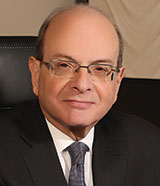
Arab Bank, one of the largest global Arab banking networks with over 600 branches across five continents, once again stands out as Jordan’s best bank. According to chief executive Nemeh Sabbagh, the bank’s resilience and persistent performance throughout the Covid-19 period, and the decades preceding it, are what differentiates it from other players.
“The operating environment in this region is challenging, and we know how to navigate through its complexity,” he says.
Arab Bank has a market capitalization of $5.2 billion and recorded revenues of $2.2 billion in 2019, up from $2.1 billion in 2018. Net income was also up on the year at $846.5 million from $820.5 million. The bank’s ROE was 9.3%.
|
|
|
Nemeh Sabbagh, |
The bank has invested heavily in technology and continues to innovate. It has launched an accelerator to bring in ideas from the market and to collaborate with fintechs in the region.
Its commitment to digital banking set it up well to operate when the Covid crisis hit. It recently launched a new mobile payment service Arabi MobiCash – the first of its kind in Jordan – and has expanded its digital and biometric service. It has also brought in digital onboarding.
A key pillar of the bank’s strategy has been the expansion of its footprint beyond its domestic market, and in 2019 it continued this by opening a branch in Shanghai.
“There are strong links between the international market and our part of the world,” says Sabbagh. “There are a lot of trade and project finance flows with China. Now we have upgraded to a branch and hope we will have deeper relations with our customers there.”
The bank continues to be a primary lender in financing vital infrastructure projects across Mena. It is also a leader in clean-energy financing and has worked as the main financier in funding provided by the International Finance Corporation to nine solar energy projects in the Benban region of Egypt.
As part of the national programme launched by the central bank of Jordan, Arab Bank provided preferential loan facilities to its SMEs clients to help them cope with the operational stress caused by the Covid-19 crisis. It also donated $25 million to the government’s response fund.
 |
Kuwait
|
Kuwait Finance House (KFH) showed strong growth momentum in 2019, making it Kuwait’s best bank for the second year running, ahead of larger rival National Bank of Kuwait.
Profits of KD251 million ($815 million) were up 10.4% on 2018, boosting KFH’s return on equity to 12.7%. Strong momentum was also shown in a deposit increase of 15%.
KFH’s ambition to become the dominant player in Islamic markets was almost realized in 2019, but its acquisition of Ahli United Bank has been delayed until December by the coronavirus crisis. The merged entity would have had assets of approximately $101 billion, making it the largest Islamic bank in the world and the sixth-largest banking group in the Gulf Cooperation Council region.
The bank’s drive for innovation continues to impress, with the rapid adoption of fintech and blockchain technologies. E-payment methods were activated, including transfers using Ripple technology, as well as Swift gpi.
Robotics have been used to minimize FX buy/sell transaction times, which has allowed the bank to better manage liquidity and has resulted in higher productivity and efficiency.
Last year, the bank launched KFH Xpress, a service for instant cross-border money transfer directly from a customer’s bank account.
In investment banking, KFH also holds a leading position as a market maker in the secondary sukuk market and the bank continues to extend its balance sheet to key regional players. It financed a KD350 million loan for Kuwait Petroleum Corporation and participated in the financing of Marmara Highway Project in Turkey.
HSBC has played a pivotal role in developing Kuwait’s capital markets, and for that reason is the country’s best investment bank this year.
Foreign investment and local market development are essential to Kuwait’s corporate funding landscape and Kuwait’s Capital Markets Authority (CMA) has implemented a series of expansive economic and market reforms to boost foreign investment.
HSBC worked alongside the CMA on this process, leveraging its expertise in custody and settlements. This led to MSCI announcing in December 2019 that it would be including Kuwait in its Emerging Markets Index, a move that could lead to billions of dollars of inflows.
Index inclusion will improve the country’s equity market structure as well as facilitate access for international institutional investors to trade local stocks, the bank says. HSBC has already helped clients throughout the year open accounts and get ready for MSCI inclusion. The bank supports 60% of the foreign funds invested in the Boursa Kuwait.
HSBC has also taken a big role in debt capital markets in Kuwait, leading deals for issuers such as Burgan Bank, Boubyan Bank, National Bank of Kuwait and Kipco.
The bank advised on the largest M&A transaction in Kuwait, Petrochemical Industries Company’s acquisition of a 49% equity stake in SKC’s chemical business based in Korea. The deal was closed on February 29, 2020.
HSBC returned to Kuwait after a 34-year absence in October 2005 and now has almost 80 staff on the ground, 21 of these are part of a dedicated global banking and markets team.
 |
Oman
|
Banks in Oman have shown resilience in difficult operating conditions following the sharp decline in oil prices. In a tough year, Bank Muscat, under chief executive Sheikh Waleed Khamis Al Hashar, retains its market leading position and is Oman’s best bank.
The bank reported profits of OR185.6 million ($482 million) for the year, up 3.3% on 2018, with net interest income from conventional banking and income from Islamic financing up 4.2%. Non-interest income for the same period rose 9%.
Net loans and advances did not continue the same growth reported in 2018, and fell 0.7% to OR8,878 million, which the bank attributes to the repayment of certain large corporate exposures in 2019.
The bank maintains a healthy capital adequacy ratio of 19.72% and has a return on equity of 10.73%.
Innovations in retail banking include the launch of Just Tap contactless debt, credit and prepaid cards and the upgrading and relaunch of its internet and mobile banking services.
As well as supporting its retail customers, Bank Muscat is also active in supporting the economic development of the country, playing an integral part in several key large-scale infrastructure projects in core sectors.
Its investment banking division completed a number of financial advisory and fundraising transactions, with an aggregate value of more than $2 billion. Key transactions included financial advisory for Oman Aviation Group and the electronic initial public offering of Musandam Power Company, which was 3.6 times oversubscribed.
Bank Muscat also advised on and executed one of the largest debt restructuring exercises for leading Omani corporate S&T Holdings.
In association with the International Finance Corporation, the bank launched Oman’s first green finance scheme for environmentally friendly homes, encouraging rooftop solar panel installation. In 2019, the bank also received regulatory approval to start a fintech investment programme of $100 million.
The bank has a strong commitment to micro, small and medium-sized enterprises and extended financing to more than 2,000 such businesses in 2019.
HSBC wins this year’s award for Oman’s best investment bank on the strength of its advisory business and its ability to deliver services throughout the pandemic.
HSBC acted as sole financial adviser to Chinese state-owned State Grid International Development Limited (SGID) on its acquisition of a 49% equity stake in Oman Electricity Transmission Company; the transaction closed in the midst of the coronavirus pandemic in March.
Privatization and private-sector development are key to Oman’s economic growth; this transaction, the first stage of the government’s planned privatization of its electricity transmission and distribution networks and the first electricity network privatization in Mena, was transformative in scope.
This was the first time China’s SGID had invested in the Mena region. Securing foreign direct investment is key to Oman’s economy and China offers a large pool of capital. The deal raised around $1 billion and is testament to HSBC’s global banking capabilities.
Innovations in digital loan and deposit growth also helped HSBC Oman to a decent year in corporate and retail banking, although it saw net profit fall 6.7% to OR29.3 million, down from OR31.4 million in 2018. The decrease was primarily driven by a rise in expected credit losses and other credit impairment charges.
 |
Qatar
|
Investment in technology and innovation last year helped Qatar National Bank (QNB) maintain its edge, but Qatar’s largest bank by assets is also showing leadership with its investment in sustainability, fintech and SME offerings.
In 2019, QNB published its first sustainability report, became a signatory of the United Nations Global Compact, headed the leader board for environmental, social and governance disclosure at the Qatar Stock Exchange and developed its green and social bond framework.
The bank was also awarded an ‘A’ sustainability rating by MSCI, the global index provider.
Recognizing the rapid pace of innovation and digital transformation, QNB launched QNBeyond in 2019. This four-month accelerator programme enabled the bank to collaborate with eight startups in building new products, such as a social money transfer app.
As part of its efforts to boost the socioeconomic development of the regions it operates in, QNB has also stepped up efforts to encourage entrepreneurship.
|
|
|
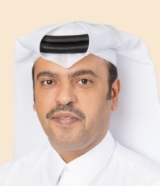
Abdulla Mubarak Al-Khalifa, |
In Qatar, the sector represents a critical component in the development of the national economy and its move towards greater diversity and self-sufficiency. QNB’s Simplify e-commerce platform offers SMEs a faster route to market and reported a more than 23% increase in e-commerce volumes.
The bank also offers financial education workshops and works alongside the Qatar Development Bank to support entrepreneurs. In 2019, QNB reported a 6% growth in SME deposits in Qatar.
Chief executive Abdulla Mubarak Al-Khalifa has overseen a profitable year for the bank; net profits are up 4% to QR14.4 billion ($3.95 billion) and ROE is 20.2%. Total assets grew 10% to QR944.7 billion and the bank saw loans and deposits each grow by 10% in 2019.
Our reporting period was a busy one for debt capital markets in Qatar, with 50 transactions worth a total of $9.7 billion. By far the most important player in this market was Qatar’s best investment bank, Standard Chartered, which led nine of these deals – total value $3.4 billion, for a 35.38% market share.
Standard Chartered’s financial institutions team in Dubai has also inked a series of innovative deals for Qatar’s banks.
For QNB, the bank arranged an $850 million three-year floating-rate note in April last year. Dual listed in Taiwan, the deal enabled QNB to take advantage of Asian liquidity – 97% of the deal was sold to international investors.
Standard Chartered also arranged the first floating rate – $2 billion two-year – note from the region linked to the Federal Reserve’s secured overnight financing rate for the same client, and in February this year, its longest-ever deal, a seven-year $1 billion bond.
Other firsts include Qatar International Islamic Bank’s dollar additional tier-1 sukuk, the first such deal from Qatar for which Standard Chartered was the sole international bank and structuring adviser.
But it isn’t just deal flow that has helped Standard Chartered clinch this award. It worked alongside the regulator in Taiwan to set up the legislative framework for sukuk issuance there and in February this year arranged the first ever formosa sukuk for Qatar Islamic Bank (QIB).
“The main thing was capturing Taiwanese liquidity and bringing QIB to a wider global audience,” says Ali Ahmad, head of the Africa and Middle East financial institutions group at the bank.
 |
Saudi Arabia
|
In a profitable year for the Saudi banking sector, privately owned Al-Rajhi Bank stands out as Saudi Arabia’s best bank.
Saudi banks have reported asset growth of 12% during 2019 with a healthy 40.9% growth in net profit, according to KPMG’s analysis of the 11 listed banks in the kingdom. But Al Rajhi has outstripped the sector with 170% growth in net profits, to SR10.2 billion ($2.72 billion) from SR3.8 billion in 2018.
Asset growth of 5.5% puts it below National Commercial Bank (NCB), which grew its balance sheet by 12% over the same period, but Al Rajhi reported a higher return on equity of 20.49%, versus NCB’s 18.4%.
Al Rajhi is aligned to the kingdom’s Vision 2030 transformation agenda and is driving growth in mortgages and the private sector, as well as enhancing its SME and corporate capabilities.
The bank has helped increase the number of Saudi homeowners dramatically: its mortgage portfolio grew by 63% in 2019, pushing the bank’s market share to 32.9% in 2019 from 27.9% a year earlier.
In keeping with the kingdom’s drive towards a cashless society, more than half of account openings are now digital and the majority of customer transactions are carried out on digital platforms. The bank has improved its digital-to-manual ratio from 56:44 in 2018 to 67:33 in 2019.
The corporate banking group achieved a cumulative 28% year-on-year growth in net income to reach SR2.15 billion. Retail banking net income increased 11.1% year on year to reach SR6.42 billion. In 2019 it provided SR4.9 billion in financing to SMEs.
Saudi Arabia is a core focus for the world’s largest investment banks and the rush to gain market share from the opening up of Gulf’s largest economy has seen many investing a lot of resources in the region. And then of course there was Aramco, the world’s largest IPO.
The kingdom’s best investment bank, Samba Capital, has proved itself integral to the development of Saudi’s capital markets. It was one of only three banks on the top line of the Saudi Aramco mandate, joining HSBC and local market leader NCB.
Samba is the leading ECM franchise in the region by deal volume since 2004, topping the Dealogic league table with a 4.67% market share during the awards period, and managing three deals, worth a total of $1.5 billion. As well as its role on Aramco, Samba worked on Saudi’s second-largest IPO, Arabian Centres Company
In strategic advisory and M&A, Samba Capital advised Ma’arif Education and Training on the sale of a 100% stake. The deal is the largest education sector private sale undertaken in the Middle East.
Samba Capital also advised Hassana Investment Company on its joint venture with NMC Health to create the second-largest healthcare provider in Saudi Arabia, but that may now be impacted by the collapse of NMC Health.
 |
UAE
|
Emirates NBD, UAE’s best bank, is one of the leading retail banks in the region, and it continued to expand its reach during the awards period. In July 2019, it completed its takeover of Turkey’s DenizBank, a full-scale commercial bank with around 13 million customers and 708 branches in Turkey and 44 in other territories.
The acquisition bolstered Emirates NBD’s total income and grew total assets by 37% year on year, to Dh683 billion ($185.9 million). The bank reported an increase in net profit of 44% over the year to Dh14.5 billion; of this, Dh609 million can be attributed to DenizBank.
|
|
|
Shayne Nelson, |
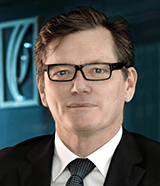
“DenizBank’s acquisition was a milestone achievement for the group,” noted chief executive Shayne Nelson in the 2019 annual report. “It established Emirates NBD as a true pan-regional bank and helped diversify our asset base and income profile to more than 25% from international operations.
“In addition, owing to the highly successful IPO of Network International and the subsequent disposals, Emirates NBD recorded a gain of Dh4.4 billion in 2019,” he said. “This further strengthened our capital base to support future UAE and international business growth.”
The bank’s loans and advances grew by 33% and total deposits by 36%. DenizBank contributed net loans of Dh86 billion and deposits of Dh98 billion at the end of 2019.
Emirates NBD continues to invest in digital development under a Dh1 billion programme that aims to revamp its IT infrastructure. The bank’s mobile penetration has increased to 92% from 76% of digitally-active customers. Around 94% of transactions are now automated.
In 2019, it rolled out multiple business platforms including core banking for international locations, international payments, treasury and trade.
Following the success of Liv, its lifestyle bank for millennials, Emirates NBD has announced the launch of a second digital bank aimed at business accounts: E20. It will target startups, sole proprietors, freelancers and gig economy workers, as well as fintechs and SMEs.
The bank successfully completed a rights issue of Dh6.45 billion in 2019, which was oversubscribed 2.8 times. It also raised its foreign ownership limit to 20%, with the intention to increase it to 40% if it can get regulatory approvals.
UAE’s best investment bank, First Abu Dhabi Bank (FAB), is a regional player that packs a big punch abroad.
The recent reorganization of FAB’s investment banking platform has seen the origination of bonds and loans consolidated as flow business to streamline origination and execution.
The bank remains the number one bookrunner for Mena loans with a 15.5% market share, arranging some 160 transactions, including $5 billion of syndicated loans. Recent deals of note include a $428 million term loan for Telecom Egypt and a $1.3 billion loan for Saudi Aramco Total Refining and Petrochemical Company.
FAB is a regional leader in sustainable finance and has aligned its strategy with the United Nations Global Compact’s 10 principles. It arranged a $600 million green sukuk for Majid Al Futtaim in May 2019.
Over the last three years FAB has looked to improve its equities and advisory business after cutting back its advisory team in 2018. In January 2019 it hired Tom Emmet to lead advisory and ECM, and made several hires in UAE and Saudi.
It is starting to see the benefits from this investment; it acted as a sell-side adviser to Abu Dhabi National Oil Company and was the only regional non-Saudi bank on the Saudi Aramco IPO.