 |
AfghanistanBest bank: Afghanistan International Bank |
There’s something hopeful about Afghanistan International Bank’s (AIB) name. The Kabul-based bank is very much a domestic lender, with 37 branches scattered across 11 provinces.

But while it has no international operations, it is outward facing. Its shareholders include the International Finance Corporation and it is the only Afghan lender able to offer international transfer services to most countries.
AIB’s systemic importance grew in 2019, when Standard Chartered withdrew completely from the market, leaving it as the only onshore lender able to transmit dollar payments to non-central Asian states.
And while it is the biggest fish in its own pond – no other domestic lender is more profitable, has as large a loan portfolio or has more assets and deposits on its books – it is far from being a default winner of this award.
AIB posted a profit of $610 million in 2019, up 21% over the previous year, with revenues up 14% over the same period. Fees from dollar remittances are a key driver of growth and earnings, accounting for 36% of non-interest income and 20% of total income last year.
Last year also saw AIB unveil a full-service digital banking platform, the first of its kind in Afghanistan. It allows customers to view and manage loans and accounts, and process local and international transfers via their desktop or smartphone.
Perhaps the most noteworthy aspect of AIB’s rise since its formation in 2004 is its 80-strong compliance team, overseen by Deloitte. In Afghanistan, nothing puts the customer more at ease than promising to adhere to global norms and standards – then sticking to your word.
 |
AustraliaBest bank: Commonwealth Bank of Australia
|
Commonwealth Bank of Australia (CBA) took its licks early from the Royal Commission into the behaviour of Australia’s banks. While that must have stung, it also allowed the Sydney-based bank to get on with rebuilding its reputation, while the regulators turned their attention to its rivals.
That gave chief executive Matt Comyn, who replaced Ian Narev in early 2018, a chance to ease into his new position and to patch up the bank’s tattered reputation.
|
|
|
Matt Comyn, |

Last year, he announced plans to spend $5 billion over five years to rebuild trust and transform CBA into the country’s most innovative lender. At the heart of its digital push is the CommBank mobile app, which has an estimated seven million active customers.
CBA posted a pre-tax profit of A$11.76 billion ($8.03 billion) in the full year 2019. That was lower than the previous year’s numbers, but it enabled CBA to remain the country’s most profitable lender.
It beat its chief rivals on almost every metric last year, from total equity to market capitalization, and from return on equity to its cost-to-income ratio, which still ticked up slightly to 46.2%.
When US private equity firm KKR announced plans to buy a controlling stake in CBA’s wealth management business in May 2020 for A$1.7 billion, it surprised many in Australia’s financial circles. The deal suggests Australia’s banks are indeed serious about getting out of wealth management – and the capital boost could hardly have come at a better time.
UBS had yet another banner year in Australia. It dominated equity capital markets, completing 51 primary and secondary equity offerings, worth just over $6 billion, blowing the rest of the competition out of the water.
The Swiss bank underwrote the five largest ECM transactions and the five largest block trades during the awards review period. It was just as prolific in advisory, completing 26 Australia-linked M&A deals worth $12.8 billion.
Its supremacy was perfectly summed up by a banker at a rival institution, who admitted: “I can’t look you in the face and claim we were number one in Australia last year, because UBS was.”
On the equity side, standout deals included Westpac’s A$2 billion placement in November 2019 and a A$1.36 billion block of shares in Ramsay Health Care, sold by the Paul Ramsay Foundation in September 2019.
UBS was also involved in Atlas Arteria’s A$1.35 billion accelerated offer and placement, and two chunky block sales in Coles Group by Wesfarmers.
On the M&A side, UBS advised Woolworths Group on the sale of its petrol business to UK retailer EG Group for A$1.73 billion; and Australian logistics group Brambles on the sale of its plastics business to a consortium of private equity firm Triton and Abu Dhabi’s sovereign wealth fund in a A$2.51 billion deal.
 |
BangladeshBest bank: Standard Chartered
|
Bangladesh doesn’t lack good lenders – The City Bank, Eastern Bank and Brac Bank are all excellent and innovative financial institutions.
But for the second year in a row, the award goes to Standard Chartered – and deservedly so. The emerging markets lender rarely puts a foot wrong in the south Asian country, posting net profit of $151 million in the full year 2019, up 14.3% year on year.
All the bank’s figures are heading in the right direction, from its return on equity – slightly up last year at 19.9% – to its cost-to-income ratio, which fell sharply last year to 26.2%, from 29.2% the previous year.
Size doesn’t always matter, but it does tell a story. Standard Chartered has 25% of the dollar clearing and 52% of the small and medium-sized enterprise financing markets in Bangladesh and dominates securities custody. When multilateral development banks disburse capital to local projects or recoup loan repayments, StanChart tends to be the intermediary.
Anyone keen to spot a weakness in the bank’s business will struggle. In 2019 it launched HeforShe and Lean in Circle, initiatives designed to promote gender equality, and it became the first international bank to form a partnership with the country’s leading mobile financial service, bKash.
It also reacted swiftly and decisively to the Covid pandemic, waiving late payment charges for eligible clients and introducing a three-month payment holiday for SMEs against property and mortgage loans.
IDLC continues to do sterling work in a difficult investment banking market and in a year that was anything but easy for Bangladesh’s capital markets. The standout deal was Telenor’s acquisition of ordinary shares in Grameenphone, which saw the Norwegian group increase its stake in the country’s largest telecommunications firm to 55.8%.
Another notable transaction was Robi Axiata’s Tk5.2 billion ($61 million) initial public offering, announced in March 2020 – the largest domestic IPO in nearly a decade. Robi’s largest shareholder, with a 68.69% stake, is the Malaysian telecoms group Axiata. IDLC was the sole issue manager on the sale.
What makes IDLC perennially useful to local and foreign corporates is its ability to do the fiddly stuff well. It was the issue manager on Runner Automobiles’ Tk1 billion Dhaka IPO in 2019, advised on the merger of two local bakery firms, Gweeberra and Erkina, and helped UK consumer goods firm Reckitt Benckiser to secure its local operating licence.
 |
CambodiaBest bank: ABA Bank |
In a country saturated with lenders – Cambodia has 43 commercial banks, serving 16 million people – one stands strong above the crowd.
Compared with its domestic peers, ABA Bank is a colossus. A relative veteran in its homeland – it turns 25 years old in 2021 – it caught the digital bug relatively early. In 2015 it launched a mobile app that complied with multiple operating systems including Android and Apple’s iOS.
Its E-Cash service, which allows customers to carry out ATM withdrawals without using a plastic card, was a hit from day one. In 2019 the service was used more than 1.6 million times.
Last year it rolled out an enhanced QR-code cashless payment service, ABA Pay, which works in dollars and Khmer riel, and launched mobile savings and mobile fixed accounts, both dominated in the local currency.
The big event of last year, both for ABA and for the domestic banking sector as a whole, was National Bank of Canada’s decision to spend $63 million to take its stake in the lender to 100%. The Montreal-based lender bought 10% of ABA in 2014.
Since then, its market share has risen in lockstep with its financials. ABA Bank posted net profit of $127.4 million in 2019, up 77% year on year, with net interest income rising 56% on an annualized basis to $212.4 million. It also posted a sharply higher return on equity and assets for the fourth straight year.
The bank continues to invest in digital and to expand its physical footprint. In 2019 it rolled out international Swift money transfers in its ABA Mobile app, letting customers make cross-border fund transfers direct from their smartphones. It also opened 11 new branches in the capital Phnom Penh, taking its nationwide tally to 77.
 |
ChinaBest bank: China Merchants Bank
|
For the second year in a row, China Merchants Bank (CMB) takes the best bank award. Its core strength was visible in the first quarter of 2020, when it posted a 10.12% year-on-year rise in net profit, more than double the rate of increase posted by its nearest domestic challenger.
In the full year 2019 and in the first quarter of 2020, it posted higher net interest margins, higher returns on equity and assets, and a lower non-performing loan ratio than any of its big-six peers.
The Shenzhen-based bank has long been an innovator, a leader in digital and a trailblazer, both onshore and offshore, in private banking and wealth management.
In 2019 the number of active users of its mobile banking app topped the 100 million mark for the first time. It also launched its new Zhaodai app, which lets customers apply for personal loans direct from their smartphone or tablet.
CMB is well positioned for the next stage of development. Onshore, it is strong in key first-tier cities and in smaller towns and cities where the rate of credit card adoption is growing fastest. Offshore, its focus on serving high net-worth Chinese families in Asia, Europe and, increasingly, the Americas is paying off.
The bank’s response to the Covid-19 pandemic was just as impressive. In January it donated Rmb200 million ($28 million) to charities in Wuhan and underwrote Rmb300 million in short-term bonds to finance a new hospital in the city. A month later it unveiled a special credit line worth Rmb10 billion, which it is using to support firms directly involved in containing the spread of Covid and in finding a vaccine.
In a year skewed strongly toward advisory, Goldman Sachs led the way in investment banking in China, heading Dealogic’s offshore M&A rankings and leaving its US and European rivals trailing in its wake.
There were few China M&A deals where it failed to snag a leading role. It was a financial adviser to GLP on the September 2019 sale of three of the global investment manager’s US funds to Blackstone, for $18.7 billion. Two months earlier it advised Daimler on the sale of a 5% stake in the German automotive firm to Beijing Automotive Group.
As ever, Goldman seemed to be able to map out its plan of attack long in advance. It works with the biggest and the best up-and-coming corporates, and is never afraid to embrace innovative products and structures.
Witness its role as a lead underwriter on China Railway Signal’s $1.5 billion IPO on the Star Market in July 2019, a month after the launch of Shanghai’s new Nasdaq-like exchange. Or its role on WuXi AppTec’s $298 million block trade in May 2019, the largest-ever healthcare A-share accelerated bookbuild.
Perhaps the most interesting deal of all during the awards period was China Yangtze Power’s 100% acquisition of Sempra Energy’s Chilean business for $2.23 billion in cash. The acquisition required careful coordination with US, Chilean and Chinese regulators, enabling the mainland utility to expand its footprint in Latin America.
 |
Hong KongBest bank: HSBC
|
There is no bank to compare with HSBC in Hong Kong. It is hard to think of an institution that so completely dominates any other developed and highly urbanized market.
Hong Kong accounted for 90% of group profits of $13.35 billion in 2019. That number is weighed down by losses in Europe, but it highlights the symbiosis that exists between the two – the bank needs the city as much as the city needs the bank.
That relative share is likely to fall as HSBC pivots to Asia, with the aim of boosting its earnings in mainland China, India and southeast Asia. But Hong Kong will continue to be core to its business – HSBC’s decision in March 2020 to merge its wealth management and retail banking divisions is a clever ploy to tap into China’s vast personal reserves of wealth, much of which is held in the southern Chinese city.
And in a tough year for the city that included riots and a pandemic, HSBC kept calm and carried on. It posted pre-tax profit of $2.85 billion in the first quarter of 2020, of which 88% was generated in Hong Kong.
Its willingness to stand strong with its corporate, SME, retail and private banking clients during the Covid crisis is a key reason why it remains the largest retail bank in Hong Kong, with a 28% market share.
In a highly competitive year, HSBC also emerges as the winner of the award for Hong Kong’s best investment bank. It dominated in debt capital markets, as you would expect, but also led the way in advisory and put in a strong performance in ECM.
Its excellence was visible across the board. HSBC led the Hong Kong government’s debut RegS green bond, raising $1 billion in May 2019, with a roadshow that took in eight cities including Amsterdam, Boston and Paris.
Standout deals on the M&A side include Blackstone’s $1.3 billion acquisition of a controlling stake in HKICIM, the Hong Kong-listed property subsidiary of China’s HNA Group. The bank was also sole financial adviser to CK Asset’s £4.6 billion acquisition of UK pub and hotel group Greene King in October 2019.
 |
IndiaBest bank: HDFC
|
Aditya Puri’s successor at HDFC will have much to live up to when one of India’s greatest bankers exits the bank in October 2020 when his term expires.
Since its formation in 1994, Puri has turned HDFC into India’s largest and best private-sector lender, with a balance sheet of around Rs14 trillion ($184 billion). While other banks, both state-run and privately owned, have flirted with bankruptcy and lost chief executives to scandals in recent times, HDFC and Puri have simply got on with doing business the right way.
|
Aditya Puri, |
The Mumbai-based lender posted a 24.6% rise in net profit in the financial year to the end of March 2020, with its non-performing loan ratio falling to 1.26% from 1.36% a year earlier.
That’s not just heartening but surprising, given that at most of HDFC’s key rivals both data points are heading in the wrong direction.
It is important to remember that this is no steady-but-stolid bank. Puri has transformed HDFC into one of India’s most innovative financial institutions. Its full-service payment management service SmartHub platform is used by thousands of private-sector firms. Meanwhile, the bank’s online share trading platform, DigiDemat, secured more than 15,000 customers within a month of its launch in May 2020. Next up for HDFC is the launch of online banking services on WhatsApp.
As was the case in many Asian markets, investment banking in India last year was an M&A game, and Bank of America receives its award courtesy of its bench strength in both advisory and equity capital markets.
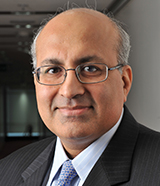
The bank’s presence in India stretches back to 1964, and it retains one of the country’s largest and most experienced investment banking teams, led by Asit Bhatia, Raj Balakrishnan and India country head Kaku Nakhate.
|
|
|
Asit Bhatia, |
Among the hits on the bank’s deal list during the awards period were Vodafone Idea’s $3.76 billion rights issue, completed in April 2019, and Embassy Office Parks’ March 2019 IPO – India’s maiden real estate investment trust raised $690 million for its shareholders when it went public on Mumbai’s twin bourses, the NSE and BSE.
For sheer size during the awards period, nothing comes close to Reliance Industries’ deal to sell a 20% stake to Saudi Arabia’s Aramco, announced in August 2019. BofA is acting as a financial adviser to the Indian conglomerate.
Perhaps most notable was BofA’s ability to keep the wheels of finance rolling during the pandemic. It was sole bookrunner on Standard Life Aberdeen’s latest sale of a block of shares in HDFC Life Insurance and lead manager on SBI Cards & Payments Services’ $1.444 million IPO.
Both transactions were completed in March, just as the coronavirus crisis was spreading from Asia to Europe and the Americas.
 |
IndonesiaBest bank: Bank Central Asia
|
Does Bank Central Asia (BCA) ever have a bad year? In 2019 the Jakarta-based bank generated post-tax profit of Rp28.6 trillion ($2 billion), up 10.5% year on year, matching the rate of expansion of its loan book over the same period.
It has a higher capital adequacy ratio (23.8%), a lower net non-performing loan ratio (0.5%) and generated higher returns on assets and equity (4% and 18% respectively) last year than any of its commercial banking peers.
|
|
|
Jahja Setiaatmadja, |

Under the leadership of chief executive Jahja Setiaatmadja, BCA has gained a well-earned reputation for knowing who to do business with and who to politely turn away. Analysts point to its patience and its lack of neediness – it tends only to do business with clients who really want its business, not the other way around.
But there’s more to Bank Central Asia than a sense of pragmatic patience. It is a leading player in transaction banking, and its reliable payment settlement services drive its sticky-and-solid current and savings account growth.
BCA moreover is widely seen at home as a digital pioneer. Its OneKlik service, which increases the speed of payments, was a hit with corporate and retail clients, as was BCA Keyboard, a feature on its mobile platform that lets customers access banking services via various online chat networks.
In a year dominated by M&A across key Asian markets, JPMorgan earns the investment bank award by dint of its advisory strength. The US financial institution was present on five M&A deals during the awards period, with a total value of $6.64 billion.
The standout deal of the year was the $3.63 billion investment in Bank Danamon by MUFG, announced in April 2019. JPMorgan was a financial adviser to the Japanese bank on the deal, which saw MUFG increase its stake in Bank Danamon to 94.1%, from 40%, marking the latest big-ticket acquisition by a leading Japanese corporation.
The US investment bank also advised Astra International and Standard Chartered Bank on the $2.7 billion sale of privately owned Bank Permata to Bangkok Bank, in a deal announced in December 2019.
 |
JapanBest bank: SMBC
|
Whether you’re big or small, it isn’t easy being a bank in Japan. Just staying the course is tough enough in a market struggling to combat an ageing population, low-to-no growth and loose monetary policy.
Add to that this year’s coronavirus pandemic, which threatens to hit the big-three domestic banks with an additional ¥1.1 trillion ($10.3 billion) in credit-related costs in 2020.
So for Japan’s biggest banks, the trickiest task is just running to stand still. Over the last year, no bank worked harder to do that than SMBC, which posted net profit of ¥703 billion in the full year to the end of March 2020.
That marked a fall of 3% over the previous year, but the numbers were worse at its chief rivals, a couple of whom had years to forget. MUFG, for example, saw profits attributable to the owners of the parent fall 39% in 2019 year on year.
SMBC’s core numbers were solid. Net income rose 34.1% year on year in 2019, with operating income up 60% and return on assets inching down to 6.6%. Its tier-1 capital ratio stood at 17.89% at the end of March 2020 – again, a cut above its main rivals.
Last year was a tough one for Japan’s big banks – but more pain lies ahead.
There was little to choose between three banks for the investment bank award, but the excellence of Nomura’s advisory team acted in its favour.
|
|
|
Kentaro Okuda, |
Nomura completed 107 M&A deals with a total value of $83.8 billion during the awards period, handily beating its main rivals Morgan Stanley and Mizuho.
Key deals include the landmark $2.7 billion acquisition of Australia’s DuluxGroup by Nippon Paint Holdings, which transformed the Japanese firm into Asia’s largest paint seller. Nomura was financial adviser to Nippon.
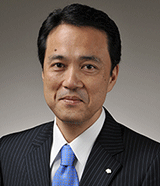
Last year was a return to form for Nomura, and under Kentaro Okuda, named the new chief executive in April 2020, the firm is hungry for more success. Okuda has come in with a clear remit to cut costs, particularly in light of the coronavirus pandemic.
In another sign of things to come, also in April, Nomura bought the boutique New York-based investment bank Greentech Capital.
The deal is interesting for two reasons: first, it is a rare M&A-led excursion by a Japanese lender into a developed market; and second, it points to Nomura’s hopes of profiting as the banking and investment world pivots toward a leaner and greener operating model.
 |
KoreaBest bank: Shinhan Bank
|
Shinhan Bank continues to do excellent work in a tough market, even as its footprint across Asia grows.
At group level, Shinhan Financial posted a record profit of W3.4 trillion ($2.83 billion) in 2019, up 7.8% year on year, testament to a willingness and ability to diversify its revenue base away from traditional interest income.
Shinhan Bank continues to push ahead. Net profit rose 2.3% on an annualized basis in 2019, to W2.3 trillion. Another key data point was interest income, which rose 5.1% in 2019, while its non-performing loan and cost-to-income ratios fell to all-time lows of 0.52% and 46.5% respectively. It posted a return on equity of 9.4% in 2019, flat over the previous year.
But what really stands out is not so much an ability to continue to eke out a solid profit in a stodgy, developed market, but rather the bank’s surprising capacity to post sparkling results in hard-bitten foreign markets.
At a group level, Shinhan Financial generated W398 billion in net profit from its overseas operations in 2019, up 23.3% year on year. It is present in 11 countries across Asia, and no foreign market is more important to its future than Vietnam, a focal point of a host of big-ticket Korean chaebol, most notably Samsung.
Since buying ANZ’s retail business there in 2017, Shinhan Bank Vietnam has been transformed into the country’s largest non-domestic lender, with total assets at the end of 2019 of $5.3 billion and a loan book with a value of $700 million.
Last year the bank launched a local app-based lending service and an online utility payments services in partnership with two local fintech companies, Momo and Payoo.
Morgan Stanley pipped its chief challengers to the investment bank award this year by coming top in M&A in a year that was dominated by domestic consolidation, and which included some chunky cross-border mergers with firms in Korea, Japan and Vietnam.
The big deal of the awards period was the $23 billion merger of Yahoo Japan operator Z Holdings and Line Corporation, a Tokyo-based division of South Korean internet search firm Naver Corporation.
Morgan Stanley acted as exclusive financial adviser to Z Holding on a complex cross-border trade designed to help the enlarged firm compete with its Chinese and US competitors.
Elsewhere in the digital corporate world, Morgan Stanley acted as exclusive financial adviser to Germany’s Delivery Hero in its $4 billion acquisition of Korea’s Woowa Brothers, a deal that created one of the world’s largest food delivery platforms.
The US bank advised on a host of other consolidations and acquisitions, including the $2.5 billion sale of Daesung Industrial Gases by MBK Partners to a private equity arm of Macquarie Group.
 |
LaosBest investment bank: Credit Suisse |
Euromoney doesn’t often hand out an award for investment banking in a market with few if any good commercial banks, but occasionally it makes an exception.
That’s the case this year in Laos, where Credit Suisse executed two landmark transactions for the government.
A €135 million five-year senior unsecured financing facility was completed in June 2019 for the finance ministry, a couple of months after it finalized a similar facility, this time raising €88 million for the Bank of the Lao PDR.
|
|
|
Rehan Anwer, |

Credit Suisse was lead arranger and bookrunner on both deals. It anchored financing by funding both deals and acting as the sole lender.
Both were completed at a tough time for a country, still recovering from widespread floods in 2018, which caused the external debt to GDP ratio to spike to 70% from 55%.
Both deals reinforce the bank’s status as the adviser of choice for the government of any Asian frontier market desperate to raise capital from discerning risk-on investors. In recent years, it has raised capital for a host of economically smaller regional sovereigns, including Cambodia, Maldives and Papua New Guinea.
The Swiss lender does not cover Laos for the sake of it.
The country is a small but high-growth frontier market and a piece of the puzzle for a financial institution intent on covering the mainland southeast Asia region under co-heads Rehan Anwer and Pankaj Goel.
 |
MacauBest bank: Bank of China Macau Branch |
In the former Portuguese micro-colony, Bank of China Macau Branch stands alone. It has served the leisure-oriented market since 1950, where its 36 sub-branches manage around $94 billion in total assets.
It accounts for around 40% of the local banking market in terms of loans, savings and total profits. Its 1,800 staff account for three out of every 10 people employed in Macau’s banking sector.
During the review period, BOC Macau launched a Greater Bay Area-themed bond fund, focusing on a loose geographic region taking in Macau, Hong Kong and central Guangdong province.
The fund, the first of its kind to be denominated in Macanese pataca, drew subscriptions of $70 million on its launch in April 2019, all from local residents.
BOC Macau’s capital markets business also had a standout year. The bank was sole global coordinator on China’s finance ministry’s maiden local Rmb1.7 billion ($240 million) three-year offshore renminbi-denominated bond, priced in July 2019.
In February 2020, at the height of the coronavirus outbreak on the mainland, Bank of China issued a dual-currency Covid-19 linked bond in Macau. The bank raised HK$4 billion ($516 million), with the local portion raising P1 billion ($124.5 million).
Coronavirus will hurt every bank in Asia, but in the first quarter of 2020, BOC Macau at least kept its head above water, posting a net profit of P1.35 billion, up 19.7% year on year.
 |
MalaysiaBest bank: Maybank
|
Throughout 2019, with its global growth jitters and the background noise of the US-China trade war, and into 2020, a year that saw the first global pandemic in a century, Maybank marched serenely on; if not untroubled by the regional and global backdrop then certainly unruffled.
The Kuala Lumpur-based lender, southeast Asia’s fourth-largest bank by assets, posted a record net profit of RM8.2 billion ($1.92 billion) in the full year 2019, aided by a strong performance from its Islamic banking and insurance divisions and a record quarterly set of results in the final three months of the year.
Despite the onset of the coronavirus pandemic, Maybank continued to press on strongly in 2020. It posted a net profit of RM2.05 billion in the first quarter, up 13.3% year on year, driven by a 14.7% rise in net operating income.
That stands in stark contrast to its main rivals, with net profit at Public Bank falling 5.7% year on year in the first three months, and profits at CIMB Group Holdings down by more than half.
Maybank is a worthy winner of the best investment bank award, courtesy of its strength in debt capital markets and its peerless performance in advisory.
The bank completed eight M&A deals during the awards period, according to Dealogic, with a combined value of $2.83 billion, enabling it to outpace and outflank its rivals.
One of the more notable transactions over the last year was YTL Cement’s $757 million acquisition of Lafarge Malaysia in June 2019, with Maybank advising the Malaysian infrastructure conglomerate.
It was a joint lead manager on DRB-Hicom’s latest RM1.5 billion sukuk, and sole book runner on Press Metal Aluminium’s RM1 billion sukuk – the largest of its kind to date in the domestic metals and mining sector.
In a sign of the bank’s continued push into sustainable finance, Maybank helped Cypark Resources print a RM550 million socially responsible investment-themed sukuk, with the proceeds to be used to finance solar power projects across the country.
 |
MongoliaBest bank: Khan Bank |
No other lender comes close to competing with Khan Bank in Mongolia. It has a compelling array of attributes: a big bank that refuses to rest on its laurels and continually disrupts itself and the wider banking sector to the benefit of its 2.5 million-plus loyal customers. It is an institution that in many towns and cities is akin to a community centre, its branches a place people come to gossip.
|
|
|
John Bell, |

With each passing year those branches (it still has 550 scattered across the country, more than any other bank) become ever more like social spaces.
In 2019, Khan Bank processed 47 million digital transactions (up from 31 million the previous year) but just 1.9 million teller transactions, boosting net income directly attributable to its digital operations by 53% year on year and card fee income by 46.7%.
Last year, Khan Bank made another key investment, rolling out dozens of self-service kiosks.
These are popular among an older generation of Mongolians less comfortable with digital banking: each kiosk connects the user visually and aurally with an online assistant located in the capital, Ulaanbaatar.
Chief executive John Bell reckons that since the first kiosk was unveiled in November 2018, over 1.2 million customers have used them.
Bell describes 2019 as “great year for the bank”, pointing to record profits of $68 million, up 11.7% on the previous year, with total assets up 12.6%, deposits growing 12.1% and the loan book expanding by 10.8%.
“The bottom line is that we were already in a very good capital position at the turn of the year, which has helped us to battle through these tough times,” he says.
 |
MyanmarBest bank: UAB |
Christopher Loh has transformed UAB. Since joining in 2017 as chief executive, he has shaken up management and invested heavily in digital. In October 2019 the bank moved its head office from a decrepit building next to a highway in the Yangon suburbs to a gleaming new high-rise in the heart of Myanmar’s capital.
|
|
|
Christopher Loh, |

UAB splashes details of its funky new headquarters everywhere. The branch boasts facial recognition technology, an open workspace designed to encourage innovation and a Sony PlayStation for staff.
Of course, none of this would matter if UAB were unable to cut the financial mustard. Here, too, its success is undeniable. Net profit doubled in 2019 year on year, to K13.64 billion ($9.87 million), with total income up 35%, deposits up 10.8% and the bank’s loan book growing by 12.8%.
Its returns on equity and assets rose by a whopping 56.4% and 87% respectively over the period, with the bank’s capital adequacy ratio rising to 9%, from 7.9% a year earlier.
Loh has boosted net interest margins and profits while suppressing bad loans – the NPL ratio was below 5% in 2019 for the third straight year.
Over the awards period, UAB also signed partnerships with foreign institutions including insurer Manulife, Goethe University’s Frankfurt School and Singapore fintech firm Kashtec.
 |
NepalBest bank: Nabil Bank |
Nepal is a fascinating frontier market. The government came to power on a platform of financial inclusivity and has proven to be true to its word. Banks were compelled to open up new physical branches across the land and no lender now has more than Kathmandu-based Nabil Bank, with its 118 branches and 178 ATMs.
The last year has been a typically busy one for Nepal’s largest and best private lender. Net profit in the 12 months to April 12, 2020 was NRs3.16 billion ($25.9 million), slightly down on the NRs3.19 billion posted in the same period a year ago. (Nepal’s financial year ends on July 15).
That could be viewed as a portent of things to come, with the Covid-19 crisis hovering over the global economy. However, Nabil Bank posted a 10% year-on-year rise in net profit in the three months to April 12, a sign of the bank’s strength and of customers’ willingness to commit assets to it when times get tough.
During the awards period, the bank launched Nabil Nari, a suite of services targeting women entrepreneurs; Nari Karji, a low-interest SME loan product; and e@Nabil, an updated digital banking platform aimed at SMEs and larger firms.
Unveiled at the height of the coronavirus pandemic, e@Nabil lets customers carry out intra-bank and interbank fund transfers without having to visit a branch.
 |
New ZealandBest bank: Bank of New Zealand
|
Bank of New Zealand saw cash earnings rise 5.6% year on year to NZ$562 million ($360 million), in the six months to the end of March 2020 – even though earnings at its parent National Australia Bank more than halved. In the full financial year to the end of September 2019, BNZ also posted a strong set of results, with net interest income rising 5.9% year on year to NZ$2.06 billion and operating income up 3.9% to NZ$2.66 billion.
The bank reacted swiftly to the threat presented by the Covid pandemic. Announcing first-half results in April 2020, BNZ chair Doug McKay said the board would donate 20% of directors’ fees to charities that support the most vulnerable communities.
BNZ also rolled out a slew of measures to support businesses affected by Covid-19. Its Business Finance Scheme made NZ$1 billion in loan support available to struggling enterprises.
The programme is available to any company with annual revenues of up to NZ$80 million a year. Eligible firms can draw down loans with a maximum term of three years and with a special variable interest rate before September 30.
Consider it one last hurrah for Deutsche Bank as New Zealand’s best investment bank. In December, it exited New Zealand during the awards period, after selling its 49.9% stake in local broker Craigs Investment Partners back to staff.
The German lender and its erstwhile local partner certainly went out with a bang, topping the domestic M&A table, according to Dealogic. The big deal of the year was the sale of 100% of Vodafone New Zealand to a consortium comprising local infrastructure investment firm Infratil and Canada’s Brookfield Asset Management.
Deutsche Bank and Craigs acted as sole financial adviser to the British telecommunications group, which completed the NZ$3.4 billion divestment in July 2019. It was the largest M&A transaction completed in New Zealand since the sale of National Bank of New Zealand to ANZ in 2003.
 |
PakistanBest bank: Habib Bank
|
Habib Bank continues to evolve in surprising and impressive ways under its chief executive Muhammad Aurangzeb. The Karachi-based bank has been transformed in recent years, becoming the country’s most profitable, most innovative and most outward looking lender.
Its financials continue to impress despite having to operate from a country struggling just to balance its books.
The bank posted a profit of PRs15.5 billion ($92.9 million) in 2019, up 25% year on year. In the first quarter of 2020 profits rose 29% on an annualized basis, to PRs4.1 billion.
|
Muhammad Aurangzeb, |
Its branchless banking platform, HBL Konnect, has brought 6.9 million people into the banking system, 60% of whom are women – testament to Habib Bank’s focus on financial inclusion.
In 2019 HBL Mobile registered its one millionth app user, continuing the bank’s shift away from physical branches and toward digital banking.
In 2019 it processed 340 million digital transactions, an increase of 35% over the previous year. It is the only bank in Pakistan that lets customers apply for and secure a loan via their smartphone or tablet.
Meanwhile, the bank continues to do great work at home and abroad. In December 2019 its Beijing branch was upgraded from representative office to full branch status; it is the only Pakistani bank permitted to settle trades in renminbi in mainland China.
At home the most striking feature of the bank’s desire to effect lasting change is its partnership with Ehsaas Kafalat. The government-led programme set out to provide millions of the poorest citizens with a way to receive social welfare payments in a safe and cost-efficient manner.
Habib Bank was the obvious partner of choice for Islamabad, with its 40,000-plus nationwide agents and electronic channels.
Bank and state are working to disburse PRs90 billion to around 7.5 million beneficiaries via Habib Bank’s HBL Konnect platform by the end of 2020.
Asia’s frontier-market specialist came up trumps again in Pakistan. Credit Suisse makes tricky trades look easy in a market where nothing comes for free. In a volatile environment that included investor concerns about the country’s budget deficit.
The $250 million syndicated financing facility it completed in November 2019 for Pakistan International Airlines was a notable success story.
It was the fourth loan facility the bank has arranged for Pakistan’s national flag carrier.
The bank also completed two syndicated term loan facilities for the finance ministry, worth $250 million and $155 million, in May and September 2019 respectively, as pressure rose on the sovereign to tame its rising external debt.
In M&A, Credit Suisse led the privatization of two liquefied natural gas-fired power plants, which secured 23 expressions of interest from investors in Europe, China, Japan and the Middle East.
It also led the $1.77 billion sale of a 66.4% stake in local utility K-Electric to Shanghai Electric Power, by the Dubai-based private equity firm Abraaj.
 |
The PhilippinesBest bank: Bank of the Philippine Islands
|
“Bank of the Philippines Islands is a port in a storm – and right now, we are in a storm.” The quote from a senior banker at a rival lender concisely explains why Bank of the Philippine Islands (BPI) is the right choice for this year’s award for the Philippines’ best bank.
It isn’t the country’s biggest bank as measured by assets – BDO Unibank takes that crown. But the Ayala-backed BPI has a higher tier-1 capital adequacy ratio (15.19% at the end of March 2020) than its chief rival.
|
|
|
Cezar Consing, |

And while net profit slipped 4.9% year on year in the first quarter, to P6.39 billion ($128 million) due to higher provisions against Covid-related loan losses, all other banks saw their profits slip farther and faster.
Under the leadership of its chief executive, Cezar Consing, BPI is in the middle of a multi-year digital transformation plan and has ploughed money into its investment banking division, with evident success.
BPI Capital generated revenues of P599 million in 2019, more than double the P221 million the division posted a year earlier.
A sign of the faith that investors have in a bank set up to thrive in tough times is BPI’s stock price.
It is down 17.5% in the year to June 22, but BDO’s shares fell 36.2% over the same period and other domestic lenders have fared far worse.
Bank of America had a stellar investment banking year in the Philippines, covering all the bases, particularly in M&A and debt capital markets.
It was lead adviser to Metro Pacific and Singapore’s GIC on the $1.3 billion sale of Metro Pacific Hospital Holdings to KKR, completed in December 2019.
The deal was complex from the start, featuring a dual-track buyout/initial public offering, more than 40 international investors and an accelerated negotiation process that compressed all the action into a single week.
It marked the largest buyout deal ever completed by the US private equity firm in southeast Asia.
Bank of America also demonstrated the depth of its commitment to sustainable finance. It advised Bank of the Philippine Islands on its inaugural Green Finance Framework and was a lead manager and bookrunner on Rizal Commercial Banking Corp’s $300 million sustainability bond, printed in September 2019.
 |
SingaporeBest bank: DBS
|
Singapore has three great home-grown commercial lenders, but one name stands head and shoulders above the others in the Lion City. DBS had another record year in 2019, posting a 14% year-on-year rise in net profit, to S$6.39 billion ($4.6 billion), with total income rising 10% and return on equity hitting a record high of 13.2%.
In 2019 it posted higher net profit, total income and net interest income than any of its domestic peers, as well as lower non-performing loans. In the first quarter of 2020, it recorded a cost-to-income ratio of 38.6%, down from 42.2% the previous year.
But where DBS really stands out is in its ability to be everywhere it is needed. It topped the domestic equity and debt capital markets rankings in 2019, where standout deals included a S$1.3 billion rights issue by Ascendas real estate investment trust and the IPO of Lendlease Global Commercial Reit.
As ever, the bank continued to invest in technology. Its roster of digital customers in the consumer and small and medium-sized enterprise space in Singapore rose in number by 400,000 in 2019 to 3.3 million, meaning that digital customers outnumbered traditional ones for the first time.
And it continues to democratize financial services, thanks to new services like DBS digiPortfolio, which lets retail customers access analysis and advice offered from the bank’s best wealth management strategists.
Morgan Stanley wins the award as Singapore’s best investment bank by dint of its track record across the year – and across all sectors – in M&A. Last year was strongly advisory-themed in Singapore, and the US investment bank was rarely absent from the big transactions, advising on 11 deals with a Singapore buyer or seller, with a total deal volume of $26.62 billion.
Among the standout transactions during the awards period was the bank’s role as exclusive financial adviser to Singapore-based ride hailing firm Grab, which secured a $706 million investment from Japan’s MUFG.
It also acted as sole financial adviser to Temasek on its $3 billion acquisition of 30.55% of Keppel Corporation, announced in October 2019, taking its stake in the conglomerate to 51%.
In a year that also saw more M&A activity in Singapore’s prolific real estate investment trust space, Morgan Stanley advised Ascendas Hospitality Trust on its merger with Ascott Residence Trust, creating the seventh-largest trust listed on the Singapore Exchange.
 |
Sri LankaBest bank: Commercial Bank of Ceylon
|
It was a tough year all round in Sri Lanka. The awards period began with a series of terror attacks and ended with the spread of Covid-19 to south Asia. But there is reason for cautious optimism. From a hard-fought presidential election emerged a clear winner and the hope of renewed political stability.
In the banking sector Commercial Bank of Ceylon (Combank) emerged as a clear star under the leadership of its chief executive S. Renganathan. It posted a higher level of net profit and net interest income than any of its big domestic rivals in 2019.
None of its peers can compete with it in terms of sheer size, from assets to loans to market capitalization. Last year, it also became the first private-sector lender to pass the SLRs1 trillion ($5.4 billion) threshold in deposits.
Sri Lanka is no one’s idea of a digital pioneer: for years, banks have fought to get their customers to engage with them more online, via desktops, tablets and smartphones. That now seems to be changing and Combank is one of a number of lenders investing heavily in new digital platforms and services.
Last year, it unveiled Flash, Sri Lanka’s first multilingual digital banking app; and it was the first financial institution to sign alliances with two leading Chinese payment platforms, UnionPay and WeChat Pay.
It also launched Combank RemitPlus, an app that lets customers living overseas remit money directly to their families back home.
NDB Investment Bank has made the investment bank award its own in recent years. A subsidiary of National Development Bank, it dominated M&A in a year that was generally lacking in big advisory or capital markets deals.
It acted as sole financial adviser to Lotus Renewable Energy, a division of Singapore’s G&G Group, on its acquisition of Hatton Plantations, in a deal valued at SLRs2 billion.
In a year marred by political instability, budgetary woes and slow growth, NDB Investment Bank was there when it mattered.
It helped Indocean Developers raise $25 million via a syndicated loan facility and acted as the sole financial adviser and manager on the initial public offering of Maldives Islamic Bank, the country’s first fully licensed Islamic lender.
 |
TaiwanBest bank: CTBC Bank
|
CTBC Bank goes about its business in Taiwan in exactly the right way. In an overbanked market with super-thin margins, it runs a tight ship under the leadership of its president Daniel Wu, keeping its cost-to-income ratio low and squeezing every drop out of each New Taiwan dollar.
In 2019 a year marred by low growth, political turbulence and the fallout from the US-China trade war, CTBC posted a record pre-tax profit of NT$38.46 billion ($1.3 billion), up 7.6% year on year.
|
|
|
Daniel Wu, |

Net interest income at the group level increased 13.2% year on year in the first quarter of 2020, although net profit slipped 9.4% over the same period, as expenses and provisions rose to counter the debilitating impact of the coronavirus pandemic. But that needs to be put into context: no other onshore lender was more profitable in the first three months of the year.
CTBC’s digital platform is solid if unspectacular – 39% of its personal banking customers, about 3.4 million people, are digital users – and its capital markets team made a reasonably loud splash in the international markets over the 12 months under review, completing deals in India, China and Indonesia.
But it is the bank’s offshore operations that really make it stand out. Its plan of following in the footsteps of Taiwan’s big corporates then buying undervalued financial firms and assets in key markets usually pays off.
CTBC operates in 14 countries and regions, including Japan and Thailand, and in early 2020 it opened its fourth fully licensed branch in China in the tech-heavy southern city of Shenzhen.
Once again in investment banking, Yuanta Securities rose to the challenge topping the rankings last year in both the equity and debt capital markets league tables.
In total, it completed 56 primary and secondary offerings with a total value of $2.64 billion.
And it did pack the deals in. It completed seven IPOs during the awards period, including those for Ventec International Group, Taiwan Biomaterial and Hiwin Mikrosystem.
In the secondary equity space, it completed 34 deals, including global depositary receipt listings for BizLink, which raised $80 million, and China Petrochemical Development ($129 million).
In M&A, Yuanta’s light dimmed a little, but it still carved a niche for itself. It advised on the $89.8 million privatization of Glac Biotech and on the sale of auto component maker Gatetech to China Motor Corporation.
 |
ThailandBest bank: Siam Commercial Bank
|
Through thick and thin Siam Commercial Bank (SCB) reliably posts the best numbers of any Thai bank. The Bangkok-based lender posted pre-provision operating profit of Bt95.6 billion ($3.08 billion) in 2019, up 30% year on year, with net interest income rising 3%.
Every one of the bank’s key figures is strong or is heading in the right direction, from its cost-to-income ratio – 42.5% in 2019, down from 47% a year earlier – to its net interest margin, which inched up from 3.21% in 2018 to 3.34% last year.
In the first quarter of 2020, no big domestic lender posted better returns on equity or assets, a lower ratio of non-performing loans or higher net interest margins than SCB.
It is also a domestic pioneer in digital. Throughout the awards period the bank added new features to its Easy platform, helping its number of digital customers pass the 10 million mark for the first time.
A host of external partnerships has been a boon to the bank’s small and medium-sized enterprise clients, notably its tie-ups with Amazon Global Selling and e-commerce firm Lazada.
Another innovative service unveiled in early 2020 was a tie-up with convenience chain 7-Eleven. It uses facial recognition technology to let new customers open a savings account at any one of the country’s 12,500 7-Eleven stores, eliminating the need to visit a bank branch.
That in turn paves the way for it to deliver in the future a host of other services, from investments to credit card and loan applications, digitally via retail businesses across Thailand.
The award for Thailand’s best investment bank was closely fought, with UBS emerging as the winner courtesy of its strength across M&A and equity capital markets. If there was a key deal in a year heavily slanted toward advisory work, it was CP Group’s $10.6 billion acquisition of Tesco’s operations in Thailand and Malaysia.
By any measure, it was a big transaction: the largest-ever consumer and retail deal in Asia ex-Japan, and the largest M&A deal in any sector in southeast Asia. UBS was a joint international adviser and financier to the Thai conglomerate.
It was one of three lenders to underwrite a dual currency bridge loan of $7.15 billion, denominated in Thai baht and US dollars, to support the deal.
The Swiss lender was also present on pretty much every primary equity issuance that mattered in Thailand during the awards period.
It was an international coordinator on real estate owner and developer Asset World Corporation’s $1.6 billion initial stock offering, the largest property IPO in southeast Asia in nearly a decade.
Two other standout deals were Bangkok Commercial Asset Management’s December 2019 $1 billion IPO and Central Retail’s $2.3 billion stock sale, another blockbuster trade and the largest IPO ever completed in southeast Asia by a retail group. UBS was an international coordinator on both.
 |
VietnamBest bank: Vietcombank
|
Vietcombank is streets ahead of its main rivals in its home market. In 2019 it became the first domestic lender to post an annual pre-tax profit of more than $1 billion. Deposits rose 16% year on year in 2019, to D950 trillion ($10.8 billion), with assets growing 13.8%.
Its capital adequacy ratio inched higher to 9.6% – benefiting from the bank’s decision to raise $265 million last year by selling new shares to Singapore’s GIC and Japanese lender Mizuho. That raised its level of charter capital to $1.6 billion.
It was a standout year in many other ways for a lender determined not to take its foot off the accelerator.
Vietcombank, led by its chief executive Pham Quang Dung, sealed a 15-year bancassurance partnership with fast-growing insurer FWD Group and became the first onshore bank to launch a contactless card into an increasingly digital consumer market.
During the awards period the bank also began its foray into sustainability, after securing a $200 million credit line from the Japan Bank for International Cooperation. The facility will be drawn on to support renewable energy projects, green energy and environmental protection projects in Vietnam.
Number one in equity and equity-linked by volume and deal count, number one in M&A, number one in financing, not to mention top of the heap in fee generation. There is simply no other financial institution able to compete with Credit Suisse’s investment banking team in Vietnam.
For decades Credit Suisse has brought its top-tier execution and origination capabilities to fast-growing frontier markets, and it shows no sign of deviating from its course. It is a model that works: few corporates or government officials forget getting a helping hand when they need it most.
It was another strong year in M&A, with Credit Suisse completing four deals worth $1.9 billion for a 31.7% market share. A key deal completed during the awards period was the $1 billion investment in Vingroup by Korea’s SK Group.
Credit Suisse was exclusive financial adviser to the Vietnamese conglomerate in a deal that marked the country’s largest-ever M&A transaction.
The bank also advised Vietcombank on the formation last year of a 15-year bancassurance partnership with FWD Group and the $400 million sale of its stake in its local life insurance joint venture Vietnamese-Cardif, also to FWD.
It was a far more enervating year in equity and debt capital markets, and the loan markets, but Credit Suisse still made its presence felt. It was named mandated lead arranger and bookrunner on Novaland Investment’s loan market debut. The Vietnamese property developer tapped investors for $250 million in July 2019.