Awards for Excellence 2020
|
|
As the Middle East enters a new phase of development, one in which governments can no longer rely on endless petrodollars and in which economies built on global trade and travel will have to adapt to survive, it will need banks with outstanding M&A and advisory capabilities. Citi is such a bank.
Having stepped up efforts in the Middle East two years ago, the US bank has started to see this bear fruit across the board. In 2019 it ranked first in the Middle East’s M&A league table – advising on the region’s most transformative transactions.
In February, Citi advised Abu Dhabi Power on its reverse merger into Taqa. The new entity will be one of the largest utilities companies in the Gulf Cooperation Council area and a top 10 integrated utilities player in the Europe, Middle East and Africa region.
|
|
|
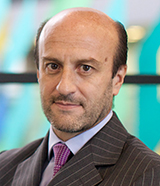
Miguel Azevedo |
Another transaction of note was the Ahli United Bank (AUB) merger with Kuwait Finance House. Citi acted as sole financial adviser to AUB in a deal now delayed by the coronavirus crisis. Citi also acted as the exclusive financial adviser to Adnoc on its partnership with OCI NV to create the world’s largest nitrogen fertilizer export platform in June 2019.
“Restructuring and consolidation will be big themes,” says Miguel Azevedo, Citi’s head of investment banking for Middle East and Africa.
“[Covid-19] means companies have lost the benefit of running less efficient operations,” he says. “The OCI merger with Adnoc Fertilizers is a good example of a local state-owned entity teaming up with a foreign player to create a giant. We will see more of this pursuit of efficiency.”
Bankers point to Port and Free Zone World’s (PFZW) take-private acquisition of DP World as a key transaction, with financing for the deal closed during the Covid 19 crisis. Citi acted as joint financial adviser to PFZW and is mandated lead arranger for the acquisition financing. It co-underwrote $9 billion of debt with Deutsche Bank, including some Islamic elements in the financing. The deal is the biggest in the UAE since 2011.
Privatization and monetization of assets will be another big theme as governments look for new ways to raise funds, says Azevedo. And this will only be accelerated by the Covid-19-related economic downturn.
“We haven’t seen much of it yet, but we expect more monetization opportunities in the GCC,” he says. “Monetization in a minority fashion will be the topic of the next 12 months also as a way of strengthening local balance sheets.”
The bank has made good progress in Saudi, having only received its licence two years ago. As well as a role on the Aramco IPO, it acted as exclusive adviser to Sabic on the sale of its 100% stake in Sabic Agri-Nutrients Investment Company to Saudi Arabian Fertilizer Company.
Citi’s capabilities in the region are not just linked to the Gulf. In Egypt, the bank is advising Telecom Egypt on its strategic options in respect of its 45% stake in Vodafone Egypt in relation to Saudi Telecom Company’s plans to acquire Vodafone Group’s stake in Vodafone Egypt.
The bank is also ranked number one for both equity and debt capital markets in the region.