
|
| © 2019 Euromoney |
| Regional awards |
| View full 2019 results |


 |
AustriaBest bank: Erste Bank |
Austria’s economy expanded by an above-forecast 2.7% last year on the back of strong domestic demand, bringing welcome relief to banks struggling with wafer-thin margins in a highly competitive market.
The winner of this year’s award for best bank in Austria, Erste Bank, posted a 9.9% increase in net profit on the back of 4.6% growth in customer loans. That in turn knocked 2.1 percentage points off the bank’s cost-to-income ratio, which came in at 62.4% for the year.
Overall, Erste Oesterreich and its associated savings banks increased their market share of total assets to 23.1%. This success was largely driven by Erste’s leadership in digitalization, which remains the key differentiator in the Austrian banking market.
The bank’s platform, George, boasted 1.7 million users – a third of the total Austrian online customer base – at the end of December. A new all-online consumer finance product launched last year also saw rapid take up, while a new corporate banking platform will allow Erste to offer related-party services, as well as banking and cash management functions.
Erste also continued to play a pivotal role in Austria’s capital markets during the awards period, acting as bookrunner on a clutch of bond issues for local financial institutions and corporates, as well as leading the €22.4 million IPO of Marinomed Biotech in January.
 |
BelgiumBest bank: KBC
|
Belgium has a bank that is taking on the might of the US in terms of financial performance, while also competing with banks with big positions in its home market that, unlike this year’s winner, are bolstered by strong positions in the bigger economies of France and the Netherlands. BNP Paribas and ING are also among Europe’s best digital banks and some of their most innovative features have sprung from their Belgian operations.
Yet a bank based in Brussels, KBC, is Belgium’s best bank. It is Europe’s most highly valued bank by its price to book, and in its home market it is also able to compete head on in the digital space despite its relatively small balance sheet.
Indeed, KBC is comfortably ahead of its peers in a ranking of Belgium banks’ digital customer experience by France’s D-Rating agency.
This year it was able to boast an array of new digital features, such as Fitbit Pay, and is own match-making app for entrepreneurs, Vindr. It also launched new cooperation agreements with fintech companies to provide working capital management, cash-flow forecasting and management reporting support for Belgian businesses.
It is not just in commercial banking that Belgium can boast a reinvigorated homegrown champion. In investment banking the 2015 merger of merchant bank Banque Degroof and stockbroker Petercam created a firm that combines a sizeable local private bank and asset manager with a plugged-in and unusually large team of local corporate finance bankers on the ground in Belgium.
The resulting entity, Degroof Petercam, is Belgium’s best investment bank. Its 2018 Belgian equity capital markets transactions included acting as global coordinator in rights issues of up to €100 million for Intervest, Leasinvest, Cofinimmo, FNG and Xior. In debt capital markets, it brought a string of bonds to the private placement market.
The firm won a total of 35 M&A and advisory mandates in 2018 and signed a mid-market M&A partnership with Germany’s IMAP for deals in France and Belgium. Its M&A deals included advising Belgium-listed real estate investment trust Aedifica on the sale of its apartment buildings business unit to regional asset manager Primonial.
 |
CyprusBest bank: Bank of Cyprus |
The takeover of Cyprus Cooperative Bank by Hellenic Bank, completed in September last year, shows the extent to which the island’s banking sector is still in the middle of a dramatic overhaul. Hellenic’s subsequent capital raising and ratings upgrade is one sign that it is heading in the right direction. Euromoney acknowledged Hellenic’s position and achievements last year.
|
|
|
John Hourican |
Yet during the awards period Bank of Cyprus took sufficient steps to secure its leadership of the local banking sector to merit it being named Cyprus’s best bank this year. One important event was the £103 million sale of Bank of Cyprus UK to the Cynergy investor consortium, agreed in July and completed in September 2018. This disposal increased the group’s common equity tier-1 ratio by 65 basis points.
In August, the bank agreed the sale of a non-performing loan portfolio with a gross book value of €2.8 billion, gaining approval from the ECB for transfer of risk in March. Funds affiliated with US private equity firm Apollo, one of the usual suspects in Europe’s NPL market, bought the portfolio. The sale had an adverse impact on the bank’s 2018 financial results; however, in the first quarter of 2019 the bank swung back to a post-tax profit of €95 million.
While much work remains to be done, chief executive John Hourican – originally in place for five years but agreeing in August to remain in his post until the end of 2020 – can boast having decreased the bank’s NPL portfolio by 70% since the end of 2014, with a clean-up involving 16 consecutive quarters of organic NPL reduction.
 |
DenmarkBest bank: Nordea
|
Clean and cosy Denmark has been at the centre of the money laundering scandal sweeping European banking over the last year, mirroring Germany in terms of the discrepancy between its relatively healthy economy and its far less healthy national banking champion.
The country’s biggest bank, Danske Bank, is not the only bank to have been affected by the worries about anti-money laundering deficiencies in the Nordic region, but its international operation has caused the greatest concerns so far. It was the worst-performing big bank stock in Europe in the year to spring 2019, below even Deutsche Bank.
By contrast, Nordea, Denmark’s best bank, saw its stock price outperform the Stoxx Europe 600 bank index, according to Berenberg. Although it is now domiciled in Finland, Denmark is Nordea’s biggest market and it is Denmark’s second biggest bank in terms of household customers, numbering 1.6 million.
While Nordea’s profit increased slightly in Denmark, it has not been immune to falling deposit margins in the country, mainly thanks to higher deposit guarantee fees, which have weighed on net interest income.
Denmark is heavily involved in Nordea’s wider group replacement and unification of its core banking systems. New digital offerings included the launch of its open banking platform, as well as the introduction of contactless payments using Apple Pay and Google Pay for its customers.
With a market share in corporate business second only to Danske, Nordea is also Denmark’s best investment bank. Led by investment banking co-heads Mathias Leijon and Michael Zeier, it posted a strong performance in both advisory and capital markets. Nordea’s work for Danish telecoms company TDC stood out in particular. It advised the consortium of local pension funds plus Macquarie that launched a public takeover of TDC early in the awards period. Nordea took care of the foreign currency and financing implications for the buyers and later advised on the sale of TDC’s Get and Norwegian subsidiaries to Telia.
Other Nordea deals in the period included advising and financing the sale of broadband provider Nianet to private equity player EQT, while for a very different client it advised state-owned Energinet on the acquisitions of municipally owned NGF Nature Energy Distribution and HMN GasNet as part of the government’s aim to consolidate gas distribution in Denmark.
Nordea arranged the financing for DFDS’s acquisition of Turkish shipping group UN Ro-Ro for €950 million, acting as global coordinator on the accompanying DKr1 billion ($152 million) accelerated book build for newly issued shares in DFDS.
Nordea also arranged the financing for DLF’s acquisition of PGG Wrightson’s seed and grain business, acting as global coordinator in a €90 million unrated hybrid issue.
 |
FinlandBest bank: OP Financial Group
|
Finland may be a country with a small population on the edge of Europe, but it is at the forefront of the global digital revolution affecting the financial sector.
Of note recently are the country’s efforts, in which its banks have played a central part, to use blockchain to eliminate the physical paperwork involved in establishing limited companies and in trading and registering shares.
It was also a year of quiet technological leadership at OP Financial Group, Finland’s best bank, as its continued investment in its transformation included the introduction of digital-only home loan applications. But its successes went well beyond the purely digital sphere.
In the 12 months after the arrival of new group president and chief executive, Timo Ritakallio, the mutual group saw a healthy increase in its lending business. Meanwhile, profits held up relatively well in 2018, thanks to higher net interest income and fees, despite the continued negative rate environment in the eurozone. It also issued its first green bond in February.
This was the year that saw Scandinavia’s biggest bank by assets, Nordea – Finland’s best investment bank – complete its redomicile from Stockholm to Helsinki. It is a group whose strengths across the Nordic region are particularly clear in corporate and investment banking, partly as a result of the promotion to group chief executive four years ago of former wholesale banking head Casper von Koskull, an alumnus of Goldman Sachs in Scandinavia.
The country that is now Nordea’s home market is also the one where its regional corporate and investment banking leadership is most obviously in evidence. It is the only bank to have leadership both by number and volume of deals across equity and debt capital markets, and M&A, according to Dealogic.
Nordea’s deals during the period included arranging a leveraged buyout of Finnish healthcare and social care service provider Mehiläinen by a consortium led by CVC Capital Partners, involving a total debt quantum of €1 billion.
It arranged the equity and debt financing package for the $615 million acquisition of US speciality paper producer Expera Specialty Solutions by Ahlstrom-Munksjö; acted as joint global coordinator in the €553 million IPO of Kojamo; and was sole financial adviser to Finland’s Cramo in its SKr2.7 billion ($290 million) acquisition of Nordic Modular Group from Nalka Invest AB.
 |
FranceBest bank: Crédit Agricole
|
The struggle to maintain the viability of investment banks, given the ever more difficult environment in the capital markets, has preoccupied much of the higher echelons of France’s financial sector over the last year. Moreover, the postponement of expectations for higher eurozone interest rates has done little to bolster margins for these banks’ retail divisions in France.
France’s best bank, Crédit Agricole, has had fewer of the first distractions, largely thanks to having cut back its investment bank more drastically years earlier. At the same time, the mutual group’s greater scale within France means it is much more confident about its ability to survive and thrive in the domestic retail arena, even if low ECB rates are here to stay. As a result, the group’s revenues and profit showed unusual resilience during the awards period.
The key is perhaps the large number of products Crédit Agricole distributes – on average between eight and nine per client at its core regional cooperative banks – ensuring healthy revenue flows from insurance and asset management. This means that although profit margins on home loans in France are very narrow, it should still make money out of growing its loan book in this segment in the long run.
|
|
|
Philippe Brassac |
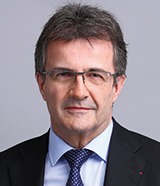
It is a model that chief executive Philippe Brassac has had the chance to focus on developing, including as it looks to gain cross-border product-level synergies across Europe. Crédit Agricole recently secured partnerships with Italian banks Banco BPM and Credito Valtellinese for consumer finance and insurance distribution, respectively; and in Spain with Bankia (consumer finance distribution) and Santander (merging their custody arms). It also agreed a partnership with Germany’s Wirecard last year as part of its plans to build up its payments business.
Finally, as all French banks vie with each other to tout their sustainable finance credentials, Crédit Agricole has emerged as a leader in this area, not just as the top arranger of green bonds but also in schemes such as a new €200 million investment fund targeting the energy-transition capital needs of small and medium-sized enterprises.
The mutual groups in France are less occupied by cuts in investment banking today because of their earlier recognition that they were less well placed to build world-class operations than the joint-stock groups. Among this latter group, depth and resilience in its home market – coupled with innovative features leveraging digital technology – makes Société Générale France’s best investment bank.
Despite the challenges in its markets businesses, SocGen’s financing and advisory franchise saw encouraging growth in net banking income in 2018, rising 7% year on year. That is in part thanks to its access to the largest corporate clients, but another thing that marks SocGen out from its competitors is the range of business in which it is active in France. For example, it announced a new advisory and capital markets partnership for mid-caps with Gilbert Dupont and acquired the renewable energy crowdfunding platform Lumo.
SocGen’s biggest deals in the period included advising and leading the financing on Thales’ €5.6 billion acquisition of Gemalto and structuring an innovative interest rate swap for the refinancing of the Tours-Bordeaux high-speed rail link. Yet investments in specific industry groups, such as energy and renewables, also yielded advisory mandates on multi-billion euro M&A deals by EdF, Engie and Total, as well as a series of mandates for inaugural green bonds and even a green covered bond.
Equity, as ever, is where SocGen shines most brilliantly and this year it was no different. In the year after hiring former BNP Paribas banker Stéphanie Arnaud as co-head of equity capital markets for France, Belgium and Luxembourg, SocGen comfortably secured its place at the top of Dealogic’s ECM league table in France – both by volume and number of deals.
While this was not a year for multi-billion euro IPOs, SocGen led numerous accelerated book building processes, including Safran’s €1.25 billion part-privatization and acted as sole global coordinator on Safran’s €700 million convertible bond. In DCM it is particularly strong in euro-denominated bonds, acting as global coordinator on long-dated deals for firms such as Group ADP and Unibail-Rodamco, and on landmark deals such as Sanofi’s €8 billion senior unsecured issue.
 |
GermanyBest bank: ING
|
Germany’s banks, or at least its two biggest private-sector banks, have been to hell and they have yet to come back. The aborted merger between Commerzbank and Deutsche Bank looked like an unworkable act of desperation. Few were surprised when it was called off, but it only underlined the absence of better ways for the two lenders to get back onto a path of commercial sustainability.
The ability of other banks active in Germany to contemplate taking over Commerzbank, despite their smaller size, illustrates their superiority. Whether or not any of them will take the plunge is unclear, but of the banks that might make a move on Commerzbank, ING, Germany’s best bank, is the one whose retail operations in the country have performed best in recent years.
|
|
|
Nick Jue |
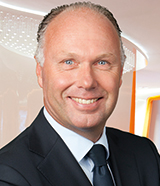
Commerz and Deutsche, after all, face some of their greatest difficulties in German retail banking. By contrast ING has built a fast-growing and efficient business in German retail – despite or perhaps because of an almost total lack of branches. ING now counts some eight million customers in Germany, up from about half a million when it acquired DiBa around the turn of the millennium, and customer numbers continue to grow rapidly.
While ING’s clients in Germany are increasingly switching from savings to current accounts, its mortgage production in the country (which also includes a green option) reached a record high last year, reaching €73 million. ING has been too reliant on net interest income in the past in Germany, but this is changing, as its new Welcome Platform should allow it to better distribute third-party products to retail customers, including insurance.
Overall, ING’s German retail business saw underlying profit before tax increase 12% to €972 million last year, partly thanks to higher fee income, as well as lower costs. It is an achievement for the team led by Nick Jue, chief executive of ING in Germany.
This is perhaps the one big European country where the advance of JPMorgan, Germany’s best investment bank, is most painful for its rivals. Deutsche once sought to challenge the big US firms in their home market and globally, now it is finding it increasingly difficult to beat JPMorgan on its own home turf, especially in equities.
Overall, Deutsche may still be second, but JPMorgan now comes top of Dealogic’s investment banking fees ranking in Germany. In fact, Germany is JPMorgan’s biggest lending market outside the US. It occupies top-tier positions across debt and equity capital markets, and M&A. It is not just the result of a handful of big deals; JPMorgan chalks up a higher number of M&A transactions than Deutsche, for example, whether it is deals announced or completed during the period, according to Dealogic.
JPMorgan was behind a string of milestone advisory mandates including the $8 billion takeover of Qualtrics by SAP and ZF Friedrichshafen’s $7 billion purchase of Wabco. By contrast, Deutsche’s highlight this year in investment banking was perhaps its role on Knorr-Bremse’s €3.9 billion IPO. It was joint global coordinator alongside Morgan Stanley – and JPMorgan.
 |
GreeceBest bank: Eurobank
|
It is four years since the Syriza-led government effectively overturned a referendum to reject its sovereign bailout. The bailout programme ended last summer, and this year the political and economic focus is on a general election that most investors believe Syriza will lose.
The elections may not solve Greece’s problems immediately, but some of the big banks, including Greece’s best bank, Eurobank, show signs of heading back to normality, taking steps to reduce their crippling bad-debt books with the aim of offering new lending.
The most transformational development in Greece’s bank clean-up during the awards period was the announcement of the all-share merger between Eurobank and Grivalia, valuing the property investment and management company at €780 million. The deal would make Eurobank Greece’s best capitalized lender, according to the bank, allowing it to target a single-digit non-performing loan ratio by 2021 and a return on equity of more than 10% in 2020. It is an important milestone for chief executive Fokion Karavias.
By the first quarter, the European Commission had approved the deal’s compliance with competition rules, allowing the merger to close and the new group had already received bids for a €9.5 billion securitization programme. It also signed an agreement with Italian credit management firm Cerved to manage its real estate exposures for the next five years.
Eurobank’s achievements were not restricted to the Grivalia deal. Its stock of non-performing exposures already dropped by €3.5 billion in 2018, while its deposits rose by €4.2 billion in Greece, with fees up and costs down. As well as rationalizing its international network in Bulgaria and Romania, it signed a string of agreements to secure public-sector backing to finance small businesses and continued its involvement in the Trade Club Alliance network alongside Santander and other international banks.
One firm that has remained committed to doing business in the country throughout these difficult times is Citi, Greece’s best investment bank. Citi’s work during the period included advising Alpha Bank on a €1 billion NPL deal with Apollo and the World Bank’s IFC. It was sole arranger of a $1.7 billion recapitalization of shipping company Danaos, allowing it to avoid a bankruptcy process. It also advised Star Bulk on the $450 million acquisition of 16 vessels from Augustea.
Citi was bookrunner on the €2.5 billion 10-year benchmark bond from the Hellenic Republic in March, the sovereign’s first syndicated benchmark deal of that duration since 2010. Citi was bookrunner on a €1 billion 15-year benchmark deal for the Republic of Cyprus in February and it advised on the sale of €10.3 billion of Cyprus Cooperative Bank assets to Hellenic Bank.
 |
IcelandBest bank: Landsbankinn |
Iceland’s economy is entering more difficult times again as the tourism boom cools, exacerbated by problems in the airline sector. This time, however, local banks themselves seem far less of a source of risk. Arion Bank’s IPO last year was an important sign of the domestic financial sector’s rehabilitation in international markets, although the bankruptcy of Wow Air and other events have put a dampener on the after party, hurting the secondary market performance of Arion’s shares.
|
|
|
Lilja Björk |

Landsbankinn – led by chief executive Lilja Björk Einarsdóttir – saw its net income hold up well during the period of these awards, underlining its leadership of Iceland’s banks, especially in terms of profitability.
The bank’s relatively strong financial performance is largely the result of efficiency gains boosted by digitalization; good customer satisfaction is also shoring up its market share leadership in Iceland.
The bank enjoys a cost-to-income ratio of about 45%; it also marked up healthy increases in loans and deposits during the period.
Crucially, Landsbankinn is making sure its products and systems are capable of staying ahead as Iceland’s banks vie for digital supremacy. It launched some 20 digital solutions for individuals and corporate clients in 2018, including international contactless card payments alongside Visa, and tripled the number of services allowing electronic signatures.
Other events during the year included an inaugural tier-2 bond issuance of €100 million in September 2018, followed by senior unsecured bonds in Norwegian kroner and Swedish kronor in February. The bank also signed its third loan agreement with the Nordic Investment Bank in October, borrowing $75 million over seven years to finance small and medium-sized businesses and environmental projects in Iceland.
 |
IrelandBest bank: Allied Irish Banks
|
Last year saw the end of deleveraging in Ireland, as the big banks managed to grow their loan books for the first time since the property crash that crippled the all-important mortgage sector after 2008. However, as elsewhere in Europe, shrinking interest margins are offsetting the profitability benefits of the banks’ cost-cutting programmes. At the same time, the threat of a hard Brexit remains a worry for the economy as a whole.
|
|
|
Colin Hunt |
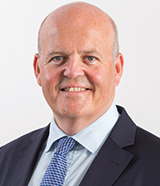
While Bank of Ireland’s investments in its technological standing give promise for future years, Allied Irish Banks remains Ireland’s best bank in 2019. In part thanks to a healthy cost-to-income ratio of around 55%, AIB is one of the best capitalized and most profitable banks in Europe, with a fully loaded common equity tier-1 ratio of 17.3% at the end of March 2019 and a return on tangible equity of 12.4% in 2018. Add in a 56% risk-weighted asset density and return on assets of around 1%, according to Berenberg, and the picture is even brighter.
AIB’s underlying profit before tax held up relatively well at €1.25 billion in 2018 and its net interest margin and new lending saw further improvements in the first quarter of 2019. Its non-performing exposures ratio fell below 10% in 2018 and further reductions in the first quarter saw the bank well on its way to reach its NPE target of below 5% by the end of 2019. The bank also completed further digital initiatives including a mortgage app, voice identification and Fitbit Pay for its customers.
News in October that chief executive Bernard Byrne was leaving for local investment bank Davy caused concern among investors, especially as the chief financial officer had also recently announced his departure, but the chairman was quick to announce a successor, Colin Hunt, previously managing director of wholesale and institutional banking at AIB.
A string of important local and international Ireland-related deals makes Citi Ireland’s best investment bank. In M&A, Citi advised Dublin-based packaging company Smurfit Kappa in its successful defence against International Paper. It also arranged a €500 million bridge facility to support Smurfit Kappa’s acquisition of privately owned Reparenco and acted as global coordinator and left lead on the issuance of senior bonds by the firm. Its equity capital markets work included acting as corporate broker to Ryanair, leading the company’s €750 million share buy-back.
In DCM, Citi managed the Irish government’s €3 billion inaugural green bond offering and a €4 billion 10-year benchmark bond. In the financial institutions sector, it was joint bookrunner on senior holding company notes from Bank of Ireland in September and for AIB in October. It was sole arranger and lead manager on Permanent TSB’s €1.3 billion non-performing loan securitization in December.
 |
ItalyBest bank: UniCredit
|
Pity Italian bank chief executives, who despite their best efforts to cut costs and reduce non-performing loans, must now contend with a deteriorating economy, as well as strained relations between their government and the EU over the state’s financial predicament.
Given this environment and its own legacy problems, UniCredit – Italy’s best bank – is doing extraordinarily well. The bank continued to dispel market worries about its condition and even caused speculation that it might be in a position to lead a new wave of big cross-border bank mergers in Europe, although chief executive Jean Pierre Mustier has told Euromoney that the time is not yet right for such deal making.
In its financial results, UniCredit consistently beat market expectations over the period, notably on costs and capital. After the completion of the €17.7 billion Project Fino securitization in February 2018, further non-performing loan transactions in July and September helped keep the bank on track to reach its NPL goals set out in 2016.
The dynamism with which the bank is managed is impressive, especially in terms of managing its risk perception and therefore cost of funding. Witness its recent plans to accelerate its balance sheet clean-up and cut its exposure to Italian sovereign debt, while many of its rivals seek to replace poor loan demand in Italy with government bonds. It is also hiking its targeted capital buffers.
UniCredit is more internationally diversified than other big Italian banks and it has one of the most convincing cash management and trade finance offerings in Europe, making it an attractive partner for its corporate clients. Its domestic market remains by far UniCredit’s biggest revenue earner and this was the business division that saw the most marked declines in costs over the year.
Many European investment banks regard Italy as a relatively easy target in their international battle with the US banks. Barclays and Credit Suisse have notched up some successes in this regard.
Milan, however, has a less high-profile champion – Mediobanca, Italy’s best investment bank, led by Alberto Nagel. Despite the relatively small size of its balance sheet, Mediobanca continues to dominate its home market and is even taking share in neighbouring countries France, Greece, Spain and Switzerland. It hammered home its advantages this year with its acquisition of a majority stake in French corporate finance house Messier Maris & Associés.
A quick look at the most notable financing deals in Italy of the last year makes its local standing clear: the €290 million IPO of Carel, the €2 billion IPO of Nexi and the rights issues of €500 million and €300 million for Prysmian and Anima, respectively. Mediobanca was global coordinator on all these deals. On the debt side, although it steered clear of big sovereign deals, it handled many of the more complex transactions, especially for banks.
In M&A, it advised on a wide variety of situations, from relatively small private deals right up to the €47 billion merger of Luxottica and Essilor, which closed in October. It also stayed close to the country’s bank sector restructuring, advising on BPER’s acquisition of Unipol Banca, UBI Banca’s €2.7 billion NPL securitization and Crédit Agricole’s consumer finance and insurance partnership with Banco BPM and Credito Valtellinese.
 |
LuxembourgBest bank: BGL BNP Paribas |
It is encouraging for investors in European banks to see that the much-needed consolidation of the continent’s struggling financial sector, spurred by new regulatory challenges, is occurring somewhere in Europe – Luxembourg.
It is also good to see that Luxembourg’s best bank, BGL BNP Paribas, is not resting on its status as the country’s biggest and is instead taking an active role in local bank M&A with a particular focus on boosting its local wealth management activities.
The French firm’s acquisition of the Luxembourg activities of ABN Amro closed in September. The former ABN Amro corporate and insurance activities were respectively transferred to BNP Paribas’s corporate department and to Cardif Lux Vie, its insurance subsidiary in Luxembourg. The acquisition brought in more than 2,000 new customers and €8 billion in assets under management.
BGL BNP Paribas subsequently rose to the top of Euromoney’s 2019 private banking and wealth management survey in Luxembourg, passing UBS.
Other events at BGL BNP Paribas during the period included the launch of a new money management tool using artificial intelligence in collaboration with Personetics, an Israeli fintech company. It also launched Apple Pay for its customers, while the microfinance institution the bank co-founded in 2016, Microlux, continues to thrive.
 |
NetherlandsBest bank: ING
|
The banking sector in the Netherlands has been quiet in most respects since the financial crisis. Any hint of new ambition soon gets knocked back by local politicians, investors – or by the banks themselves. Nevertheless, Dutch banks are pushing change and innovation as hard as banks in any country, ruthlessly replacing branches with digital channels and exploring new areas such as blockchain and artificial intelligence.
The national reputation for digitalization in banking is largely thanks to the prioritization of technology by the country’s biggest lender, ING, the Netherlands’ best bank. Chief executive Ralph Hamers is obsessed by digitalization and, given ING’s previous expertise as a direct bank, this has allowed him to create a bank and strategy more compelling than any other Dutch lender.
In terms of results, ING’s performance in 2018 also stood out for the right reasons. Return on equity improved, partly thanks to better efficiency, including lower costs in the Netherlands. It is comfortably earning its cost of equity, which is more than many banks in Europe can say. It is also a leader in terms of its cross-border banking strategy in Europe, the most obvious facet of its digital leadership.
The Netherlands is a difficult banking environment and all the big banks have serious issues to manage. It is encouraging to see ING acting to counter these challenges head-on. It has not shied away from questions about money laundering, instead moving the matter to the top of the agenda at its investor day in Frankfurt earlier this year to show how seriously it is taking the matter and what measures it is taking to tackle it.
At a time when the prospect of continued negative rates pulls down the banking sector across Europe, ING is working hard to boost its revenues from fees and commissions. It has agreed a new insurance distribution partnership with Axa, for example, while its wider platform strategy – making use of the widespread use of its app in the Netherlands – has even seen it invest in an online estate agent, Makelaarsland.
Despite the lack of a return to the global ambition of the past, the local leadership of ABN Amro, the Netherlands’ best investment bank, is still clear.
The bank has been working hard not just to maintain its market share at home but also to make sure the corporate and institutional banking business as a whole is sustainable in terms of its own profitability – and its impact on the environment. The division’s operating income and net profit are heading in the right direction; its cost-to-income ratio in wholesale banking has fallen below 60% from above 70% three years ago.
In Dealogic’s league tables, ABN Amro is still a long way ahead of its local peers in equity capital markets, acting as listing agent on the €947 million IPO of Adyen in June, as well as bookrunner on its €1.5 billion accelerated book build in March. It is also a top-tier debt capital markets bookrunner, with particular strengths in financial institutions and green bonds, including advising on structuring the Dutch government’s green bond programme.
In M&A, ABN Amro’s deals included advising on the acquisition of Delivery Hero’s German operations by Takeaway.com, the acquisition of Hema by Marcel Boekhoorn, and the sale of Stage Entertainment to Advance Publications. It also launched a €200 million Energy Transitions Fund focusing on sustainable energy, energy efficiency, smart infrastructure and clean mobility.
It comes out top in national rankings of cash equities capabilities, notably in the Extel and Institutional Investor surveys.
 |
NorwayBest bank: DNB
|
Rising domestic interest rates and better news in the oil markets have made Norway a bright spot in Europe’s banking sector. Time will tell how the banks’ fortunes evolve as they pass on the rate hikes to savers and as borrowers face higher repayments.
By early 2019, over a 12-month period, Norway’s best bank, DNB, was one of the best-performing bank stocks not just in Scandinavia but in Europe. Fees, margins and loan volumes all rose – in stark contrast to its peers elsewhere on the continent. Its profit in 2018 of NKr24.3 billion ($2.86 billion) was around NKr2.5 billion higher than the previous year. Return on equity rose from 10.8% to 11.7%. The positive trend continued in the first quarter of 2019.
The bank, which vies with Nordea for the status of Scandinavia’s biggest bank by market capitalization, is not resting on its laurels. During the year it launched a new non-life insurance joint venture, Fremtind, with savings bank SpareBank 1. Its focus on growth companies included the launch of a new financial management app for small businesses.
In line with its new and bigger ambitions in the field of renewable energy and infrastructure financing, DNB also launched green mortgages, offering more favourable rates for energy efficient homes.
A healthy economy and startup scene is also a boon for Norway’s vibrant crop of home-grown investment banks, despite challenges such as Europe’s Markets in Financial Instruments Directive. This year the firm that led the way was Arctic Securities, Norway’s best investment bank.
While Norwegian firms dominated Dealogic’s equity capital markets league table during the period, Arctic was ahead of the other independent investment banks both by volume and number of deals. It also stood out in its position as global coordinator on deals including Kongsberg’s NKr5 billion rights issue and one of the year’s few IPOs, Sparebanken Telemark.
Arctic, which was founded in 2007, has seen its list of transactions rise steadily and in 2018 it notched up more than 100 investment banking deals. This work encompassed IPOs, rights issues and private placements, as well as M&A advisory mandates totalling several billion euros (notably the acquisition of Shell Denmark by Oslo-listed Noreco) and managing a series of high-yield bond issues in Norway.
 |
PortugalBest bank: Santander Portugal
|
BPI, CaixaBank’s newly majority acquired Portuguese bank, has continued to make progress after it won this award last year. Lending to households and businesses rose, as did deposits, while costs and non-performing loans fell. It continued to benefit from La Caixa’s sector-leading charitable activity.
|
|
|
Pedro Castro |

However, this year the best bank in Portugal award returns to Santander Portugal. Its acquisition of Banco Popular has made it an even more difficult franchise to beat in the country. It completed the operational and technological integration of Popular’s Portuguese franchise in only 10 months.
Following its earlier integration of assets and liabilities from Banif, Santander Portugal has become the largest privately owned bank in Portugal by loans and net income, with a particularly strong share of new small and medium-sized business lending. It can also demonstrate a further contribution to the economy through its support of clients involved in urban renewal as part of the government’s IFRRU programme.
In 2018, Santander’s Portuguese net income rose by almost 15% to €500 million, as its return on tangible equity rose to 12%, with a cost-to-income ratio of a healthy 49%. It managed to reduce its non-performing loan exposure by 1.7 percentage points, to 4%, and its common equity tier-1 ratio stood at a robust 14%. The good results continued as new chief executive Pedro Castro e Almeida took up his post in January – net income rose by 5% in the first quarter.
In the year a rebranding exercise saw it ditch the Totta suffix, as part of the Santander group’s wider digital agenda, new WorkCafe branches opened in Lisbon and Coimbra, with Porto and Espinho soon to follow. The bank also launched new app-based home loans and a new digital loan offering for business clients in early 2019.
In Portuguese investment banking, long-standing winner CaixaBI continued to reorientate its model as it works more closely with the commercial banking arms of the CGD group. Deal flow early in 2019 suggests it will remain an important player and could soon regain its dominance.
Considering the full span of this awards period, however, Portugal’s best investment bank is Millennium in 2019.
In debt capital markets, Millennium acted as sole lead manager for the bond issue by Saudaçor and as joint lead manager for bond issues by Madeira and the Portuguese Republic targeting retail investors. It also acted as joint lead for regular corporate issuers including electricity utilities REN and EDP, the latter issuing its inaugural green bond. Millennium’s structured finance activity included the refinancing of Lagos Park and acquisition financing deals for Viacer and Etermar.
 |
SpainBest bank: CaixaBank
|
Spanish names are global leaders in retail banking, not least because of their expansion in the Americas. The domestic market has been tougher lately, with receding hopes of imminent ECB rate hikes weighing on expectations for higher interest margins. Spain, however, has become a testing ground for digital initiatives, and Spanish customers enjoy some of the most advanced digital offerings not just in Europe but globally.
Spain’s best bank, CaixaBank, is a good example. It doesn’t have the emerging market-style high returns of its rivals, however it is a global leader in terms of its digital offering, pioneering features such as facial recognition for ATM access and gaining 1.2 million customers at its mobile-only brand imaginBank, launched in 2016.
In 2018 it took new steps in the use of artificial intelligence and cloud marketing. Overall, it boasts some six million digital customers in Spain.
CaixaBank’s Spanish franchise is better protected from the tough rate environment, not least as it owns the country’s biggest insurer and asset manager in terms of domestic distribution, and one of the biggest payments providers. Indeed, insurance has been core to the group since its foundation, making the salesforce better integrated than is the case for banks that have acquired insurers more recently. Now it is further developing these fee-earning businesses. For example, it launched a new online broker platform for its private banking clients in 2018, Ocean, allowing access to more than 2,000 funds from 140 managers.
Under chief executive Gonzalo Gortázar, CaixaBank has completed its transformation from a Catalan savings bank bolted onto a collection of financial and industrial stakes and a big portfolio of non-core exposures, to a more coherent Iberia-wide bancassurance business. The last year has seen some final steps in this direction, including the reduction in its stake in energy company Repsol from 9.36% to 1.1% and the sale of a €7 billion real estate portfolio to Lone Star – the latter prompting a ratings upgrade from Moody’s.
CaixaBank bought a remaining 5% stake in Portugal’s Banco BPI late last year, after increasing its stake to a majority in 2017, leading to synergies, especially in asset management and insurance.
Overall, CaixaBank’s profit increased strongly in 2018, partly thanks to better efficiency, while its non-performing loans also fell below 5%. As loans and deposits rose, the good momentum in its underlying business continued in the first quarter, with profit excluding extraordinary items (notably the Repsol sale) up 4%.
A strong balance sheet and deep client relationships cross the country make Santander Spain’s best investment bank. It remains top of Dealogic’s debt capital markets league table for the period in Spain and is also the top bank in the M&A league table by number of deals, in addition to having a leading markets platform in Spain in terms of its research coverage.
The standout DCM deal of the period was a five-year inaugural bond from department store group El Corte Inglés. In ECM, it acted as global coordinator on the €200 million rights issue by Prisa, among other deals. Its M&A work included acting as financial adviser to Atlantia on its acquisition of Abertis Infraestructuras; Telefonica in its €2 billion disposal of its central American business; El Corte Ingles in the sale of Optica 2000 to Grand Vision; and to Freixenet shareholders and Frias Nutricion in their disposals of majority stakes to Henkell and Alantria, respectively.
Santander also boasts a leading project finance and export credit franchise, occupying a top 10 position by number of deals in Dealogic’s western Europe syndicated loan league table, with more than 100 deals.
 |
SwedenBest bank: SEB
|
Already teetering on the edge as a result of a cooling housing market, some Scandinavian banks hit the ground recently after a series of money laundering scandals.
No banks, especially in Scandinavia, are immune to this challenge, but so far SEB has been less affected than others – notably Swedbank and Denmark’s Danske Bank. In fact, SEB was the best-performing bank stock in the 12 months to early spring 2019, not just in Scandinavia but across Europe. By contrast, Swedbank underperformed the market and Danske is the single worst performer Europe-wide, according to Berenberg’s analysis of their performance against the Stoxx Europe 600 banks index.
SEB’s growth and strong franchise in business and corporate banking drove its success this year. The bank’s return on equity rose from 12.9% in 2017 to 13.4% in 2018 and its operating profit rose to SKr27.3 billion ($2.95 billion). Rising payment and card fees helped, as well as lending.
The good performance continued in the first quarter of 2019 when its operating profit rose to SKr5.9 billion, up 12% on the same period last year.
SEB also has an impressive performance in investment banking, especially M&A. But retaining the award in this field is Carnegie, Sweden’s best investment bank, which managed to bolster an already dominant position in equity capital markets in Sweden – although its franchise extends well beyond equities.
Carnegie, led by chief executive Björn Jansson, was global coordinator on five IPOs in the period in Sweden. It also acted as global coordinator on the dual Stockholm and Reykjavik listing of Arion Bank, which heralded the return of Icelandic banks to private hands and public markets 10 years after the island’s financial collapse.
Carnegie’s Swedish equity capital markets leadership was shown in IPOs such as Lime Technologies, which Carnegie successfully brought public as sole global coordinator in difficult market conditions.
Its activity in M&A, meanwhile, was in evidence on deals such as the SKr24 billion takeover of Ahlsell by CVC, one of a number of public-to-private deals on which Carnegie advised in the awards period, including gaming company Cherry by a Bridgepoint-led consortium, where Carnegie acted as defence adviser.
 |
SwitzerlandBest bank: Credit Suisse
|
Negative rates and a more combative attitude to banking secrecy and tax by other developed-market governments mean that the environment in Switzerland is as difficult as anywhere in Europe for domestic lenders and smaller private banks. An overheating local mortgage market puts its local financial system in just as much of a bind as that of its neighbours.
Switzerland’s best bank, Credit Suisse, has nevertheless taken important steps over the last three years to tackle these challenges at home and abroad. Its most recent results continue to suggest it is the bank with momentum in the Swiss market. Revenues were up and costs were down, leading to a healthy increase in profit before tax for its businesses in Switzerland.
|
|
|
Thomas Gottstein |
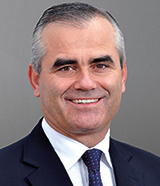
This reflected higher margins in its wealth business, including the Swiss part of it, and an 8% reduction in the Swiss universal bank’s cost base last year, testament to the work of the unit’s chief executive Thomas Gottstein.
Despite the challenges arising from negative rates, the Swiss universal bank has achieved growth in its adjusted pre-tax income for 12 consecutive quarters, in other words ever since the division’s creation three years ago.
A will to demonstrate commitment to business in Switzerland led Credit Suisse to expand its venture capital vehicle targeting Swiss startups and small and medium-sized businesses, to a total of SFr200 million ($206 million), during the period.
Its digital proposition also advanced with new online banking portals for both retail and corporate clients, and a relaunched mobile banking app. Credit Suisse also established fintech distribution partnerships, including one offering receivables-based financing alongside Tradeplus24.
Although rival UBS continues to offer intense competition – despite the exit of its former investment banking head Andrea Orcel – Credit Suisse is also Switzerland’s best investment bank. It retains an extraordinarily strong hold at the top of Dealogic’s league tables for equity and debt capital markets, and M&A. But it is really in the quality of the deals themselves that the business shines.
Examples of Credit Suisse’s M&A work during the period include advising ABB on the $11 billion sale of its Power Grids business to Hitachi and advising Liberty Global on the sale of its Swiss operation, UPC Switzerland, to Sunrise for $6.3 billion. In ECM, it was joint global coordinator on the SFr900 million rights issue of food company Aryzta, as well as the SFr1.2 billion IPO of SIG Combibloc in the paper and packaging sector and the SFr1.2 billion IPO of logistics company Ceva.
In DCM, it brought a variety of issuers into the Swiss franc market, from German carmakers to Canadian provinces, as well as a senior non-preferred issue by Lloyds Banking Group. Closer to home, it led an additional tier-1 bond for Vontobel, a corporate hybrid for Lafarge Holcim, and Givaudan’s debut offering in euros, as well as repeat offerings by firms including Glencore and Syngenta.
 |
United KingdomBest bank: Lloyds Banking Group
|
Despite the growing risks of Brexit, the UK’s biggest retail bank continued to see its profit and returns rise over the awards period. It is clear that investors still hold Lloyds Banking Group, the UK’s best bank, in higher esteem than its rivals.
Of the banks with big UK operations, its stock price rose more than any other over the 12 months of this awards period. This is not surprising, as the consensus among analysts is that Lloyds’ return on tangible equity will be above 14% for the next three years, while most of its peers struggle to reach 10%.
Chief executive António Horta-Osório announced a 24% increase in statutory profit after tax for 2018 to £4.4 billion, with underlying profit up 6% to £8.1 billion, allowing a return to shareholders of £4 billion. Operating costs were down, bringing the cost-to-income ratio down to 49.3%. Return on tangible equity rose to 11.7%, while a capital build of 210 basis points brought the common equity tier-1 ratio to 13.9% after dividends and share buybacks.
In the first quarter of 2019 both statutory and underlying profit were up, thanks to increased net income, lower operating costs and – although, given Brexit, it is uncertain how long this will continue – no deterioration in credit risk.
Lloyds is also the UK’s largest digital bank in terms of the number of users of its online channels. Horta-Osório sees its efficiency as vital to free up discretionary capital for digital investment, including retraining staff, and says the £3 billion earmarked for each of the next three years is equal to the combined annual venture capital investment in UK financial technology companies. The year also saw the bank establish a strategic partnership with UK-based fintech Thought Machine.
Demonstrating its commitment to UK business, the firm is also increasing its share of small and medium-sized business lending, with 19% of lending balances in 2018, up from 17% four years ago. Annual increases in net lending to SMEs have been even more encouraging recently, reaching £3 billion in 2018.
Finally, as part of new ambitions in wealth management, it announced a partnership with Schroders, combining Lloyds’ distribution with Schroders’ investment expertise and launched this summer as Schroders Personal Wealth.
In investment banking, the UK market has been hit worse than others in Europe, largely thanks to Brexit. The good news is that lower valuations and a cheaper currency make it an easier target for US private equity firms.
This year the UK’s best investment bank remains Barclays, led by head of UK investment banking, Alisdair Gayne. This is a firm that takes on the biggest and best in investment banking globally, making it a clear leader not just in the UK but across Europe. It has hit its cost targets, while revenues rose ahead even of US peers, boosting profits in a year when the industry has struggled.
Barclays’ UK business, in Europe’s biggest investment banking market, is the jewel in the crown of Barclays’ investment bank and it is here that its dominance is most clear, thanks in large part to the strength of its UK corporate bank.
Barclays maintains its leadership in UK debt capital markets and leveraged finance, from big M&A-related deals for names like Vodafone, to innovative smaller deals for issuers such as the University of Cambridge and the AA. Its numerous private placements included a £35 million deal for St Paul’s School, while social and green bond mandates included affordable homes provider MORhomes PLC.
It brought a series of bank and insurance capital trades to the market and was involved in large securitization trades to help financial institution clients manage legacy exposures.
In M&A, it was one of the top advisers in the UK – especially in terms of the number of deals – and in equity capital markets its global coordinator roles included a £140 million placing by Countrywide; a £331 million rights issue by Provident Financial; and secondary placings in Sabre on behalf of exiting investors BC Partners and Angus Ball.
Finally, Barclays can also point to the concrete steps it has taken to help its clients navigate the risks of Brexit. When new political risks unfolded, the firm rapidly organized conference calls pulling in staff from banking, markets and research – attracting some 850 client participants.