
UBS used the integration of Credit Suisse to deepen its European FX base, reinforcing its dominance in Swiss franc and Scandinavian currencies while proving its consistency as a liquidity provider through one of the region’s most volatile years.
UBS’s foreign-exchange business is anchored in its European franchise. With major trading hubs in London and Zurich, and an extensive distribution network across Paris, Frankfurt, Milan, Luxembourg, Geneva and Lugano, the bank has developed a model that combines local proximity with global reach. This structure has enabled it to serve clients ranging from multinational corporates and asset managers to pension funds, insurers and private clients, with both breadth and depth of product offering.
The acquisition of Credit Suisse in 2023 further strengthened UBS’s European position. The integration brought enhanced scale in Switzerland and Western Europe, particularly in corporate and wealth-management segments, and reinforced the bank’s market share in areas where it was already strong.
UBS now benefits from a broader domestic footprint, especially in Swiss franc markets and European corporate coverage, while expanding its geographical presence across the continent.
As Adrian Boehler, global head of macro sales at UBS, explains: “The integration has not changed our strategy – it has turbocharged it. It has reinforced what was already a strong footprint in Europe – particularly on the corporate and wealth-management side of the business – and has given us even deeper liquidity with which to engage with the rest of the franchise.”
UBS’s ability to provide liquidity consistently across market cycles has been a hallmark of its FX franchise in Europe. In 2024, markets were buffeted by tariff-related volatility, shifts in European interest-rate policy and currency dislocations. UBS maintained its role as a stable counterparty, ensuring continuity of pricing and execution when clients most needed it. This consistency is especially valued in Europe’s diverse markets, where exposures span G10 and frontier currencies, and clients range from highly sophisticated institutions to corporates with very specific hedging needs.
National strength
The bank’s offering spans spot, forwards, swaps, options and precious metals, with a particularly strong franchise in the Swiss franc and Scandinavian currencies. UBS has established itself as a leading provider of liquidity in SEK and NOK, with market shares exceeding 30% in spot trading, while also maintaining a dominant role in CHF.
Technology and data-driven services remain central to UBS’s approach. The UBS Neo platform provides clients with seamless access to FX products and analytics, while tools such as the FX Engine Room integrate real-time data with sales coverage. This allows the bank’s teams in Europe to tailor liquidity provision and execution strategies to individual client needs. Enhancements in automation and analytics have been designed not only to improve speed and resilience but also to make the client experience more transparent and personalised.
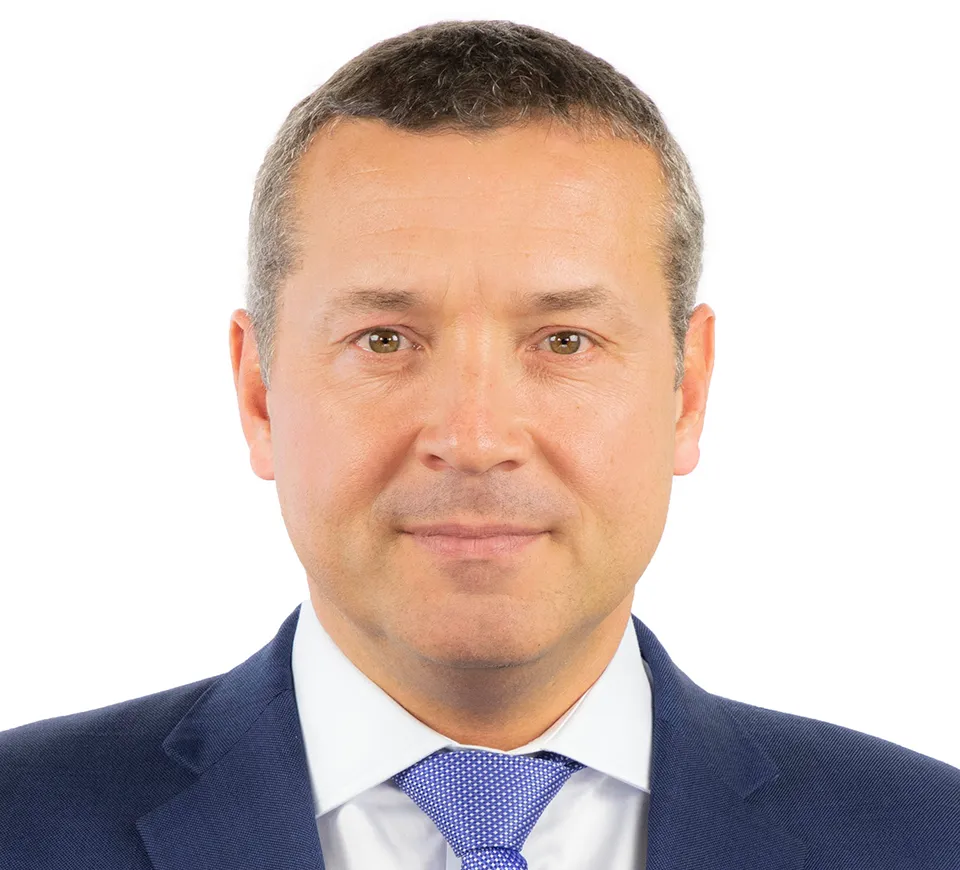
Leadership in foreign exchange isn’t about appearing when conditions are easy. It’s about showing up with the same tenacity when markets are at their most difficult
Adrian Boehler
Innovation in options and structured products has also played a role in reinforcing UBS’s European franchise. Through Neo, clients can access pre-trade analytics, real-time pricing and post-trade tools that streamline lifecycle management. These capabilities are increasingly important for European corporates managing complex exposures and for institutional clients looking for precision in hedging strategies. The bank’s continued investment in volatility modelling and algorithmic pricing has extended its ability to deliver efficient execution in liquid and less-liquid markets.
Joined-up thinking
Wealth-management clients have also benefitted from this institutional-grade infrastructure. As the world’s largest wealth manager, UBS has translated its FX expertise into solutions tailored for private clients in Europe, offering personalised hedging strategies alongside advisory services. This integration of FX into wealth management has become a competitive advantage, enabling UBS to serve clients across the spectrum with the same quality of execution and insight.
Research and content delivery complement the execution platform. UBS’s Knowledge Network and Live Desk bring real-time commentary, curated insights and direct perspectives from trading floors into the client workflow. In 2024, thousands of articles, webinars and updates were made available through Neo and other channels, strengthening the link between UBS’s global expertise and its European client base.
The recognition of UBS as Europe’s best FX bank in 2025 underscores the importance of scale, consistency and adaptability in the region’s competitive FX market.
Consistency has been a recurring theme for the bank. As Boehler highlights: “Leadership in foreign exchange isn’t about appearing when conditions are easy. It’s about showing up with the same tenacity when markets are at their most difficult. That consistency is what clients value most, and it has defined our performance over the past year.”