HSBC’s achievement in 2025 was not defined by a single product innovation or an exceptional performance in one market. What distinguished the bank was the breadth of its progress across transaction banking. From payments, liquidity management to trade finance, working capital and foreign exchange, HSBC invested in strengthening virtually every part of its franchise, across all type of clients it serves, from international mid-market to large corporates and institutional clients. Few banks can demonstrate that consistency of investment and execution across such a broad international business.
Much of this progress came as clients were confronting increasingly complex challenges. As tariffs and geopolitics disrupted supply chains, companies needed more than fast payments or cheap financing. They needed a bank that knew the places and people through which international trade actually happens. That has long been HSBC’s territory. “Where should I base my suppliers? Which market should I be investing in?” asks Vivek Ramachandran, HSBC’s head of global trade solutions, describing the questions clients brought to the bank. Those conversations were no longer confined to trade finance. They cut across payments, currency risk, working capital and corporate strategy.
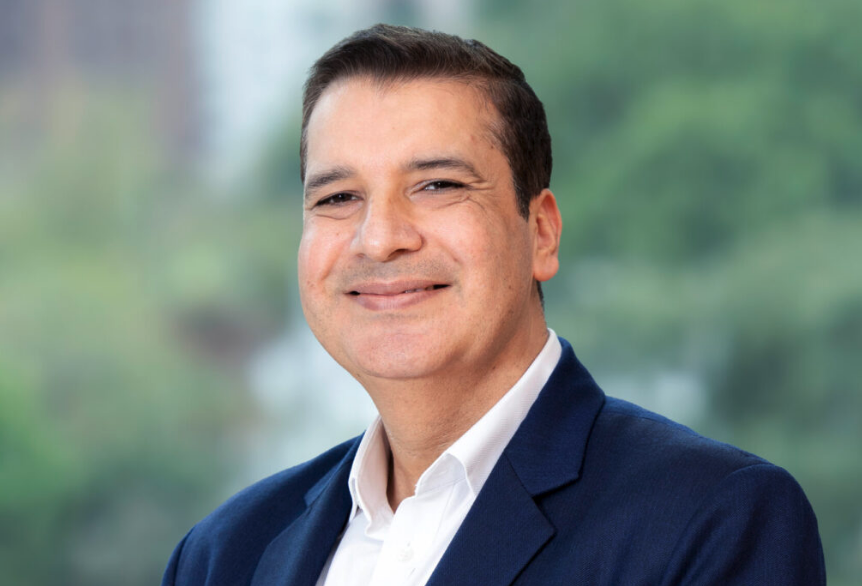
At HSBC, we aim to bring our CIB expertise together, including in trade, payments and FX , to solve client problems […] we provide an integrated response shaped around the outcome they’re trying to achieve.
Manish Kohli
At the same time, HSBC is already building the next generation of transaction banking. As Manish Kohli, HSBC’s head of global payments solutions, explains: “At HSBC, we’re shaping the future of money around the needs of our global clients. We believe banks will remain at the centre of digital money and payments, so we’re advancing our Tokenised Deposit Service (TDS) and connecting it to tokenised funds and other assets. The transition from fiat to digital money will be gradual. Our role is to bridge both worlds – helping clients navigate that transition, operate more effectively and be ready for what comes next.”
More than a footprint
A network map does not tell a treasurer who to call when a payment is blocked, a supplier needs credit or a new market comes with unfamiliar rules. The value of an international bank lies in who is there when the client needs an answer. Its middle-market franchise also means HSBC knows businesses sitting inside large corporate supply chains. “We know their suppliers. In many cases, we know their strategic partners,” Ramachandran says. When a multinational must reassess sourcing or extend financing to its network, those connections can help turn a decision into action.
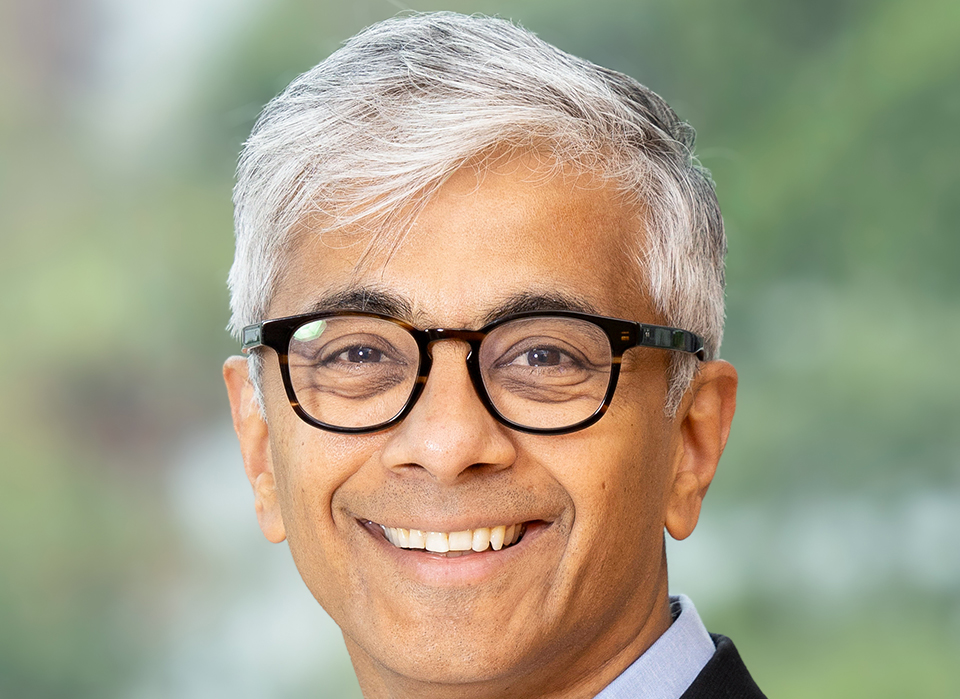
Every corporate we’ve talked to needs a partner they can trust to be there with them. Not just in words, but to also have the full range of capabilities to then back them up
Vivek Ramachandran
The scale of the business flowing through HSBC gives that argument weight. In 2025, the bank processed about $500 trillion in payments across 130 currencies and facilitated approximately $900 billion in trade. Global Payments Solutions’ deposits rose 6% year-on-year to $864 billion, while bank-wide wholesale transaction banking fees and other income increased 4% to $10.9 billion. The volumes are impressive; more important is what they reveal about HSBC’s place in its clients’ daily operations.
HSBC’s new corporate and institutional banking structure brings specialist expertise closer to clients, with a clear ambition: to make its international network more accessible, integrated and responsive to the needs of clients operating across borders. “At HSBC, we aim to bring our CIB expertise together, including in trade, payments and FX , to solve client problems. Our clients’ challenges don’t arrive neatly compartmentalised meaning we provide an integrated response shaped around the outcome they’re trying to achieve,” explains Kohli.
Keeping commerce moving
A group may have plenty of cash and still be short of it where it is needed. In 2025, volatile currencies, interest costs and geopolitical risks made that familiar treasury problem more acute.
Kohli says knowing where cash sat, in which currencies and with which counterparties, became a leading concern for CFOs and treasurers. HSBC expanded its next-generation liquidity management platform to 45 markets; it processes about $100 billion a day, according to the bank. But the value is not simply in seeing the cash, it is in the decisions organised around it.
For one European industrial group operating through entities with different functional currencies, HSBC’s Autohedge platform helped its UK treasury team coordinate forecasts, approvals and FX hedging. In this case, transformation meant fewer spreadsheets, clearer responsibilities and less time assembling information before acting.
The same principle shapes liquidity movement. HSBC’s on-demand concentration tools enable clients to sweep cash when required instead of following fixed schedules. Seven-day sweeps in the UAE and Egypt, alongside cross-currency concentration in Singapore and the UAE, address an old frustration: money that belongs to a group but cannot readily be used by it. Real-time payments, extended to 63 direct and reachable markets, complement that work. Visibility matters most when a treasurer can act on it.
As more large companies sell directly to consumers, collections are also becoming part of mainstream treasury rather than a separate e-commerce activity. HSBC expanded digital merchant services in Hong Kong, India and Singapore, with more than 9,000 clients using the service globally. For businesses, being able to accept payments is only part of the job. The proceeds still need reconciling and bringing into the company’s wider cash position.
Trade finance presents the same underlying problem on a different scale. Goods, financing, payments and documents have traditionally moved through separate systems, leaving businesses to bridge the gaps. HSBC TradePay links financing to supplier payments so that funds are available when needed. By the end of 2025, it had expanded to 28 markets, with eligible workflows taking less than a minute to process. In the US, HSBC introduced import-duty financing as tariffs put immediate pressure on working capital.
“Customers are evolving their business models and exploring new pathways for trade, investment and growth as a result of changing trade and investment flows,” adds Ramachandran. “As the world’s trade bank, the power of our network uniquely positions us to help customers respond to recent uncertainty by bringing financing, payments, markets and wealth services together across borders, helping them stay resilient, agile and ready to respond as conditions change.”
Beneath the products, HSBC is rebuilding the machinery that supports them. HSBC Trade Solutions, its next-generation platform, has been deployed across 25 markets, bringing letters of credit, guarantees, trade loans and supply chain finance onto common infrastructure. That work is far from finished.
Intelligence with a purpose
This is also where HSBC’s work on AI becomes more interesting than another promise of a chatbot. The bank is applying it in three ways: to help employees do routine work faster, to make client services more responsive, and to prepare for a world in which corporate software – rather than a person at a banking portal – initiates the next interaction.
Within payments, AI is helping teams handle service enquiries and routine work. HSBC has seen significant improvement in the service-query handling times. The bank is also using AI for cash-flow forecasting, FX prompts and smarter transaction routing.
In trade, HSBC’s proprietary Smart Checking tool uses AI to read and assess documentary credit information and identify exceptions requiring human judgement. Its development over the review period targeted a process that remained labour-intensive even when the underlying documents have been scanned. Launched in September 2026, it is now in operation in the UK, Hong Kong and the UAE. HSBC is also using digital tools to simplify the back-and-forth negotiation of guarantee wording. The objective is not to remove specialists but to give them more time for the discrepancies and decisions that genuinely need their expertise.
The bigger shift is in how clients may access the bank. The development of digital banking and client-connectivity platform HSBCnio was a bank-wide project during 2025, leading to its launch at Sibos in September 2026. HSBCnio brings transaction banking services into web and mobile channels, corporate systems and clients’ own AI tools. Through permission-controlled access using the Model Context Protocol, those tools can retrieve authorised account and transaction information. For treasury teams, the distinction could be fundamental. Instead of logging into another portal to find a balance or trace a payment, a treasurer could bring that information into the systems where cash decisions are already made.
No single future for money
AI is changing how clients interact with banks. Tokenisation raises a separate question: how should money itself move? HSBC took its tokenised deposit service into production across financial centres in 2025. Currently, the offering is available in five markets and across six currencies, with about $28 billion moving through it in the first quarter of 2026.
HSBC has deliberately avoided assuming one form of digital money will prevail, pursuing tokenised deposits alongside central-bank digital currency initiatives and stablecoin preparations. Its clients cannot afford to rebuild their treasuries every time a new technology emerges. “Digital currencies serve different use cases. The conversation is no longer about which token will ultimately prevail, but about recognising tokenised money as a diverse toolkit, with different instruments suited to different functions” Kohli explains. Its clients cannot afford to rebuild their treasuries every time a new technology emerges. “We want to sit in the driver’s seat and drive it forward,” he adds.
The bank behind the transaction
The most revealing measure of HSBC’s strength is not the trillions it processes. It is what those transactions represent: a company choosing where to invest, a supplier needing to be paid, a treasurer trying to keep control when the world changes faster than the systems on their desk. “Every corporate we’ve talked to needs a partner they can trust to be there with them,” Ramachandran says. “Not just in words, but to also have the full range of capabilities to then back them up.”
Scale alone would not merit this award. HSBC’s achievement is to make its local relationships, international knowledge and specialist businesses act more like one institution and to use technology to make that expertise easier to reach. The evidence is in more usable liquidity, connected financing and payments, and trade processes that are gradually becoming less dependent on paper.
HSBC’s strength lies in how it is approaching the next frontier of transaction banking: combining automation with the international knowledge, local relationships and specialist judgement that give each transaction context. HSBC can move a payment, but it can also help a client understand the market it is entering, the company at the other end of the transaction and the risks in between. Its ability to bring those capabilities together is what makes HSBC the world’s best transaction bank.