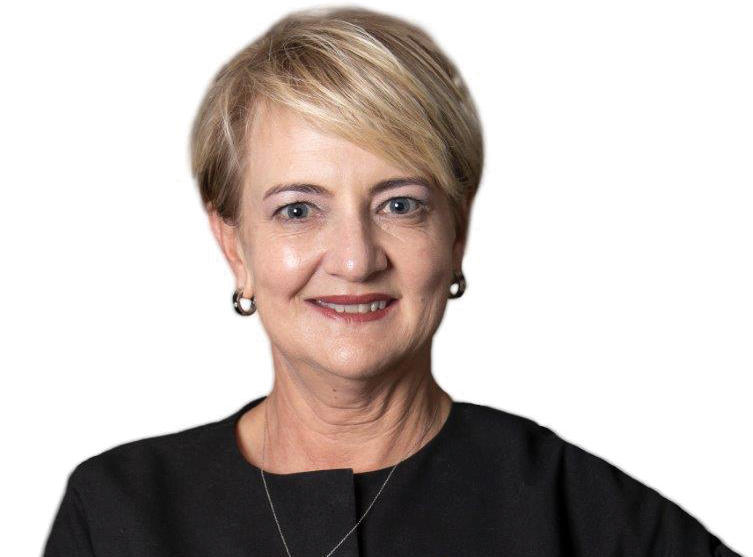

The improving diversity and inclusion performance of South Africa’s Nedbank is testimony that one should never let a crisis go to waste. Anél Bosman was appointed chief executive of Nedbank Corporate and Investment Bank (NCIB) in April 2020 – the first time a woman had been chosen to head an investment bank in South Africa. Her leadership through the Covid pandemic not only steered the bank through an extremely challenging situation but has seen it emerge as a more diverse institution, and one that better represents its clients.
The top tier of management in NCIB is today more inclusive. Around 44% of its leaders are people of colour, compared with 28% in 2019, while the proportion of women in these roles increased from 32% to 40%. Females of colour increased from 12% to 33% and women successors from 37% to 45%.
Shortlisted
- Akbank
- Banco Santander
Bosman has clearly changed the culture of Nedbank and provided an aspirational role model for women within the bank. In January 2022 Bosman was appointed chairperson of the Nedbank diversity, equity and inclusion (DEI) forum – a forum she herself created in 2020 in recognition of the importance of embedding greater gender and racial equality throughout the bank.
She says that the creation of the DEI initiative “led to renewed commitment to accelerate my own learning and enabled me to lead the transformation from the front.
“And I have learnt that this is not a perfect linear process. Neither is it ever done; it is a complex, lifelong journey of discovery, layers of awareness and personal growth.”
Bosman grasped the opportunity of the Covid crisis by establishing multidisciplinary virtual teams consisting of employees from all business units in the organization and across all levels to provide input to the business strategy. This was driven by her conviction that inclusive leadership that leverages diverse views from within its employee ranks would not only benefit the business during the pandemic but also set the bank up to emerge with a more sustainable workforce strategy.

As Bosman describes it, it was “an opportunity to reflect on a new style of leadership that embraces diversity at all levels and values inclusivity,” while also creating a platform to achieve the bank’s desired commercial goals.
Part of the DEI strategy was the launch, in 2022, of the NCIB Tabono Women’s Advancement Programme, which was designed to address the career-development challenges for women. The programme focuses on assisting women with core competencies to enable them to advance in the corporate environment and includes the provision of mentorship by senior leaders in NCIB, as well as practical support provided by external organizations. The 2022 class comprised 24 women, with more than 50 included in 2023.
Bosman says that the Tabono programme is also playing a role in embedding inclusivity for women in NCIB by focusing on identifying systemic barriers for women’s inclusion in the business. It also helps to create space for women and men to talk about issues relevant to women’s inclusion in the various aspects of the organization. This includes issues related to how top performers are chosen during NCIB’s annual top-achievers awards, how bursaries are allocated and how promotions are decided.
Our aim is to address issues around diversity, equity and inclusion to ensure that the organization contributes towards building a strong, equitable and inclusive South Africa
Anél Bosman
Bosman also reinforced these changes with progressive appointments for each member of the executive committee that report to her. The bank has established a live management tracker to monitor employee movements at a business unit level and to enhance human resources decision making, which has seen a particularly positive impact in middle-management levels.
The practical impact of these changes has been telling. Today, 59% of all NCIB development programmes are for women and 44% for women of colour, compared with 41% for women and 27% for women of colour in 2019, before Bosman’s appointment. In 2022, 69% of all promotions were of women and 64% women of colour.
Bosman’s ultimate ambition is to transform NCIB to ensure that it is representative of South African society, while creating an environment where each employee of NCIB can reach their full potential.
Bosman says that there is also a direct read-through from the bank’s internal DEI ambitions to its external strategies in the same area.
“Our aim is to address issues around diversity, equity and inclusion to ensure that the organization contributes towards building a strong, equitable and inclusive South Africa as set out in the NCIB vision,” she says.
“That’s my role – it’s to move all these parts every day, to understand how the business fits together and to make sure that the solutions we give to our clients and the way we interact with them leads to a better South Africa.”


