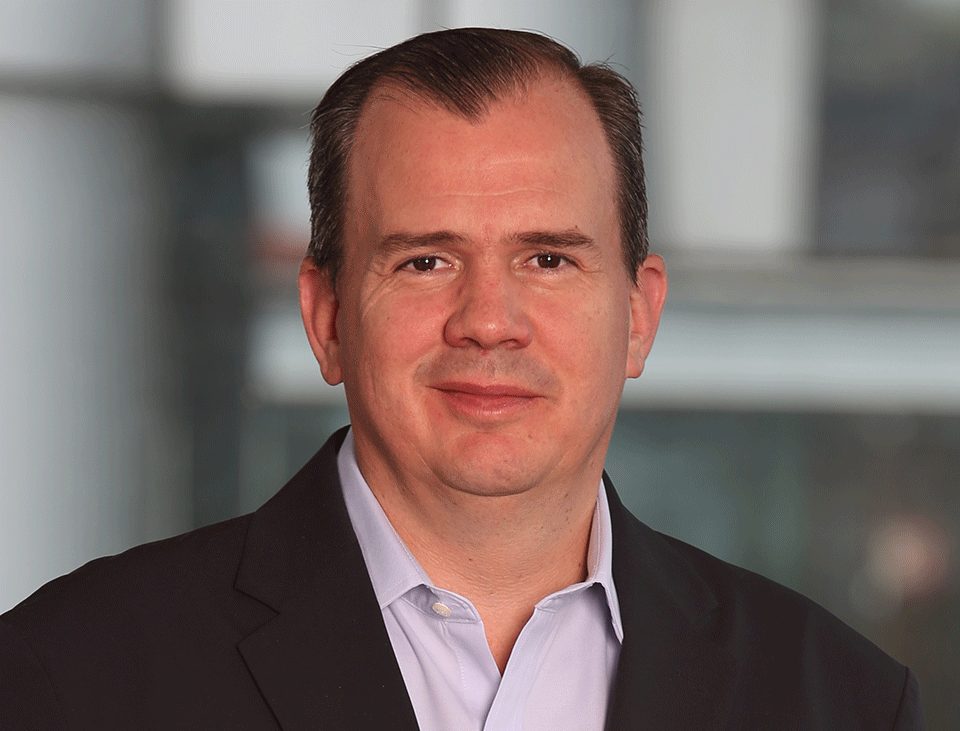
Ignazio Visco is a veteran of IMF meetings, but he has rarely been in such good spirits – and so relaxed – as he seemed in Marrakech this October. Before sitting down for one of his last interviews as governor of the Bank of Italy, Italy’s central bank, he warmly ushers Euromoney into the room and recounts one of his favourite jokes, about an economist’s technically correct but useless response to someone who is lost in a hot air balloon (“You’re in a hot air balloon”).
Times have not always been this easy for Visco. In previous IMF meetings, journalists’ questions were more focused on his oversight of Italy’s banking sector, not just monetary policy at the European Central Bank, whose governing council he sits on.
Today, with Italy’s banks appearing healthier than they have been for decades, he is leaving on a good note. Inflation is falling, and if it is high, Visco says that is not because of the ultra-loose monetary policy he previously supported.
Yet his track record over 12 years as governor remains in dispute. And there is still plenty to worry about in Italy and its banking system. A far-right government under prime minister Giorgia Meloni is turning its sights on the financial sector. High interest rates and the prospect of further quantitative tightening threaten fresh turmoil in the Italian sovereign bond market. Meanwhile, Europe’s banking union remains incomplete.
Visco, who is handing over to ECB executive board member Fabio Panetta at the end of October, became a figure of national and international controversy in the mid 2010s, when Italy’s festering non-performing loans (NPLs) – more than €340 billion at the peak – dominated the headlines.
Retail investors in four small regional banks suffered losses because of new European bail-in rules, contributing to the fall of centre-left prime minister Matteo Renzi and strengthening the hands of populists in the Five Star Movement and Northern League.
Renzi, who had previously supported Visco, started to vocally shift blame for the crisis onto the central bank governor, stoking popular anger about the bailouts and the central bank’s failure to prevent the crisis.

Visco’s ability to win another six-year term as governor in late 2017 seemed to rely on president Sergio Matterella’s reluctance to cause further upheaval, as campaigning got underway for an election that the populists ultimately won.
Six years later, Italy’s NPL stock has fallen by about 80%, while the average NPL ratio in Italy now stands in line with the rest of Europe at less than 3%.
But criticism of Visco’s handling of the NPL crisis persists, and not only among those who lost money or who might also be found culpable.
Part of the reason for the banking crisis was the transfer of powers over large banks to the supervisory arm of the European Central Bank in 2014. Although the ECB was at that time governed by Mario Draghi – Visco’s predecessor at the BoI – the new single supervisor swiftly ramped up pressure on banks to tackle their NPLs, triggering capital calls at large and small banks in Italy.
If you are further away in terms of influence from the banks you supervise, that allows you to be harder
Thorsten Beck, Florence School of Banking and Finance
For many, the question then became whether the BoI had previously been too easy on these lenders.
“There’s a small elite of people in top positions at a national level – political appointees, people with the same background, people going in and out of jobs – which has a tendency to lead to more forbearance,” says Thorsten Beck, director of the Florence School of Banking and Finance and professor of financial stability at the European University Institute. “If you are further away in terms of influence from the banks you supervise, that allows you to be harder.”
Visco vehemently denies that blame for the NPL mountain should be levelled at him and the BoI, whose supervisory function Panetta oversaw between 2012 and 2019.
“The increase in NPLs was mostly due to the recession we had during and after the sovereign debt crisis,” Visco says. “The sovereign debt crisis was very ill-managed at the European level. The sequence of decisions was wrong, the contagion could have been avoided, and the treatment of Greece may have been better thought out.”

That sovereign debt crisis, which reached a peak shortly after he took over from Draghi in 2011, led to a 30% fall in investment and a 25% fall in industrial production, Visco points out. There were inevitably serious consequences for banks’ balance sheets.
“My evaluation at that time was that the NPL issue was cyclical. It was contested. Some were saying: ‘It’s mostly because banks are badly supervised, and the governance is bad’. While there were some governance problems, I believe that this interpretation is wrong, and the fact that NPLs have been resolved is because of the actions of banks once the economy improved, responding to supervisor requests and regulation. But there was the ability to do that without consequences.”
Like many European financial officials, Visco indulges in a little self-congratulation about the apparent stability of eurozone banks compared with the turmoil in US regional banks earlier this year.
“The banking system in the euro area is very well-supervised,” he says. “Capital adequacy has increased dramatically.”
On NPLs, he feels vindicated: “In certain countries we had an increase in NPLs, which has been totally absorbed. In the case of Italy, this was done extremely well, notwithstanding doubts which were put forward after the sovereign debt crisis. I always thought that the increase in NPLs was related to cyclical conditions and that as soon as the cycle had improved and the market for secondary transactions on NPLs had become thicker, things could be solved. And they were.”
Visco brushes off the failure of the four regional lenders, noting they accounted for less than 1% of the system.
“Overall, the state of the system is sound in Italy, as it was in the past,” he says. “Italy has not received anything for banks from Europe and has extremely low amounts of public money in banks, contrary to other countries.”
Two Veneto banks, which the government bailed out to the tune of €5.2 billion in 2017 before selling to Intesa Sanpaolo, were “also relatively small”.
Banca Monte dei Paschi di Siena, which the government nationalised at a cost of €8.1 billion the same year, is “a special case”, yet even MPS accounts for “a small share of the system”, from Visco’s point of view.
“Obviously, there were governance problems in some banks. This said, the problem is that there was a presumption that the whole system was failing. That was totally wrong. Two or three of the largest banks in Italy are among the soundest in Europe.”
There was a presumption that the whole system was failing. That was totally wrong. Two or three of the largest banks in Italy are among the soundest in Europe
Ignazio Visco
Visco recalls the ugly situation that confronted him in 2011 at MPS, at the time the third biggest bank in Italy.
“When I became governor, I found governance and liquidity problems that were masking structural decisions,” he says. “I asked for a change in the governance, the CEO, and the president. The economy was worsening and there was a transition to a different supervisor. They needed capital, and they didn’t succeed in raising it. There were also mistakes in terms of waiting too long before having a European solution that allowed the government to recapitalise the bank.”
Despite UniCredit chief executive Andrea Orcel’s decision to back out of talks to buy MPS just before a 2021 deadline to privatize the bank, Visco remains convinced the Sienese lender will eventually be absorbed by another bank. The government is still supposed to sell the bank at some point, although the deadline is no longer clear, and MPS seems able to survive as a standalone institution, at least in the near term.
This is another dramatic improvement, in Visco’s telling: “Now they have cleaned the NPL books. They have reduced the bank’s size and the number of employees, because one of the main problems in banks is the cost of labour.”
Rules of the game
One prominent figure in Italian finance ready to defend Visco’s tenure is Pier Carlo Padoan, the person who oversaw the bailout of MPS and the Veneto banks as Italy’s finance minister between 2014 and 2018.
“He did a great job, and the country should be grateful to him,” Padoan says of Visco, when Euromoney meets him in Marrakech a few days after the Visco interview. “We lived through the crises together. It was a difficult time.”
He did a great job, and the country should be grateful to him
Pier Carlo Padoan [Italy’s former finance minister] Photo: MEF_gov

The two men clearly have a lot in common. They are the same age, both have academic backgrounds in economics, and they both previously served as chief economists of the OECD. They also share a love of fine wine, albeit apparently “in qualitative not quantitative terms”.
Padoan was a parliamentary representative for Siena between 2018 and late 2020. For the past two and a half years, however, he has acted as chairman of UniCredit, the more internationally active of the two biggest Italian banks. His arrival there in late 2020 triggered the departure of former chief executive Jean Pierre Mustier in what many feared at the time was a plan to get UniCredit to take over MPS. So far, those fears have proven ill-founded.
Padoan had many testing conversations with the BoI when he was finance minister, including with Panetta. But like Visco, he lays blame for Italy’s banking crisis on errors by European Union authorities rather than by Italy.
The European Commission ruled in 2015 that a €300 million rescue of Banca Tercas in 2014, using money from Italy’s InterBank Deposit Protection Fund, constituted an illegal use of state aid – a decision that made subsequent Italian bank rescues, including MPS, much harder.
In 2021, the EU’s highest court ruled that Italy was right and Brussels was wrong in the Tercas case. But the 2016 introduction of new bail-in rules under the EU’s Bank Resolution and Recovery Directive further complicated efforts to prop up ailing Italian banks.
“The rules of the game set at the European level meant that the possibility of dealing with the crisis was very difficult,” says Padoan, remembering his time as finance minister and work alongside Visco. “The rules changed, and that made the policy space very limited. During that period, we shared the same views. We were determined to avoid a major crisis in the Italian banking sector.”
We still do not have a FDIC-like European institution, and we should work on it
Ignazio Visco
It is a message Visco repeats, and after this year’s interventions by the Federal Deposit Insurance Corporation in the US, Visco urges Europe to get on with completing its banking union.
“The big question in Europe is still how to approach the resolution of banks in a crisis,” he says. “We were better equipped than other jurisdictions on regulation and supervision, but, with the making of the banking union, in situations of crises that, in our case, involved medium and small banks, it became difficult to agree on the instruments to use and we had to use legal but idiosyncratic ways to intervene. We still do not have a FDIC-like European institution, and we should work on it.”
Visco thinks northern European states should overcome their misgivings about pan-European deposit insurance. At the same time, the Italian government should stop blocking reform of the European Stability Mechanism (the EU bail-out fund deployed in Ireland, Cyprus and Spain) to enable its use a backstop for the Single Resolution Fund.
He insists: “The problem has also to do with this discussion on the use of the ESM as a backstop for bank resolution, and it has to do with my country having political doubts on the ESM. I would underline that a member state can always avoid using the ESM if they like to do so, but if the ESM can provide a backstop to bank resolution, that would be a big advance. We need common deposit insurance in the interests of everybody, as it is an important component of the broader European financial safety net.”
A European deposit insurance scheme is still a realistic prospect, in Visco’s view.
“I think we are going in that direction,” he says. “You need trust and an assessment that these instruments are not to be used for specific current necessities.”
Legislation
One reason why Italy’s NPL mountain won’t be repeated is the implementation of legislative changes under Renzi to speed up the process of realising collateral through the Italian courts.
“This problem has been reduced, which helped as it increased the value of NPLs in the market,” Visco says.
However, the recently unpredictable state financial-sector policymaking in Italy does much less to reassure other European states that the recourse to European funds for failing banks would be merely theoretical.
There are difficulties [in Italy], but all this implies also that there are opportunities to grow more
Ignazio Visco
As Visco acknowledges, the emergence of a secondary market in NPLs in Italy and elsewhere in southern Europe since the mid 2010s – which was largely thanks to the use of government guarantees over senior tranches of securitizations – is a big reason why the sector is now so much cleaner today. Yet new proposals before the Italian parliament could allow borrowers to buy back loans sold to private equity companies, at a set premium to the purchase price.
Visco is not in favour of this.
“I think we must be very careful,” he says. “The moral hazard is always there. If you allow buybacks, there might be less demand for NPL transactions in the secondary market.”
A further tightening of monetary policy, coupled with global financial stress, would hit Italy and its banks particularly hard, of course. Italian government bond yields spiked to their highest level in a decade earlier in October. Tax cuts and spending increases as part of a 2024 budget approved later in the month have not helped in this regard.
Set aside extraordinary profit, don’t tax it, Visco urges
Ignazio Visco is relatively understanding of the Italian government’s recent announcement of a bank tax, although he underlines the government did not consult him on it.
Indeed, the market reaction to the news was made worse by deputy prime minister Matteo Salvini, the leader of the Northern League, announcing the policy in the absence of prime minister Giorgia Meloni or finance minister Giancarlo Giorgetti, who had appeared to rule out such a tax only a few weeks earlier.
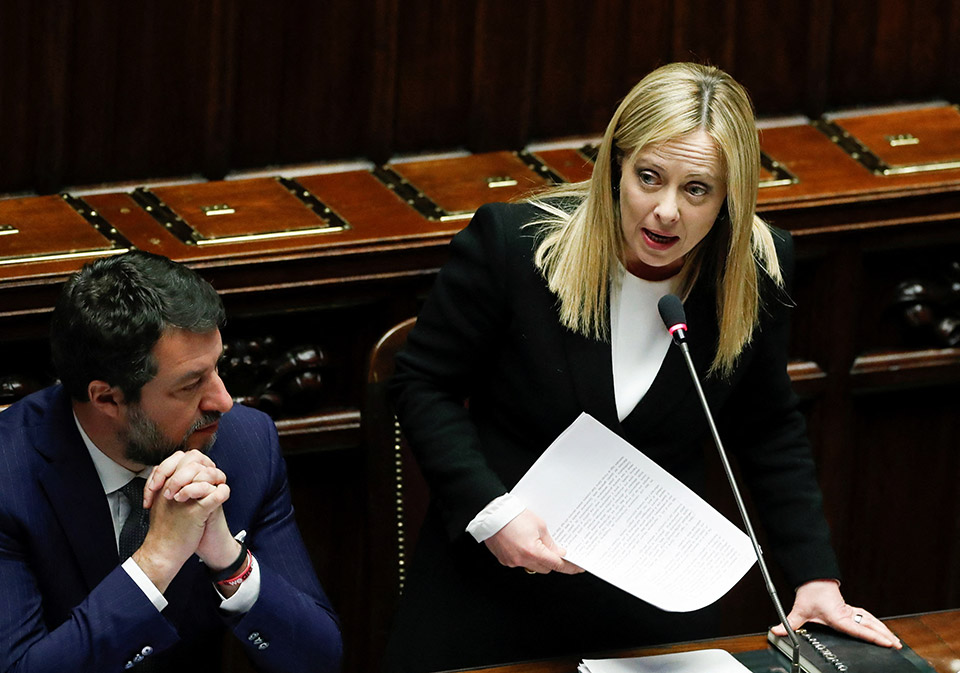
Visco is unconvinced that the tax is necessary. He believes the better thing would be to ask banks to set aside a portion of any extraordinary profit as capital, given the possibility for today’s windfall in net interest income to become tomorrow’s liquidity crunch.
After complaints about the tax from the ECB, that is precisely what the banks will have the option to do in Italy under a revised plan.
“The idea was to provide a signal from the government to banks which did not raise deposit rates on a par with loan rates when we started to raise official policy rates, but if rates on deposits don’t increase, savings in deposits will move towards other instruments and the funding cost of banks will increase,” says Visco. “This is a lagging response to monetary policy. In the lag, profits will be made. I said that if you have these profits, better to use them for reserves and provisions in case of bad times that may occur.”
NPLs
Euromoney then puts it to him that European banks are still trading at large discounts to book value, despite earning double-digit returns on equity, because of memories of the previous decade – above all, in Italy, about non-performing loans.
For bankers such as UniCredit chief executive Andrea Orcel, there seems little way of removing that discount other than waiting and proving that when the cycle does turn, the same thing won’t happen again.
I could shout myself hoarse, they won’t listen. Investors want to see how we fare
Andrea Orcel, UniCredit
“The general view of investors is that it will be tough,” Orcel told Euromoney in London in October, discussing the outlook for the sector. “I could shout myself hoarse, they won’t listen. They want to see how we fare. We need European banks to come out of this period in a way in which investors will realise it isn’t so bad.”
Visco’s response to this question is that, even though the economy is slowing, the banks won’t do too badly: “All our models project an increase in NPLs, but far from the levels they were after the sovereign debt crisis.”
Nevertheless, banks should be careful about paying out excess capital they’ve built up from high net interest margins via dividends and share buybacks.
“They start from relatively high capital ratios, but this doesn’t mean they shouldn’t be prudent,” he says. “There is a lot of uncertainty around international trade, geopolitics and the effects of restrictive monetary policies. All this combined may make the funding for banks more costly and worsen the quality of their assets. Prudence implies that if you have profits from this temporary situation, you think twice before distributing them.”
But inflation expectations are anchored, according to Visco. The ECB will reach its 2% target by the second half of 2025.
“Monetary policy operates with lags which are variable and long,” he underlines. “My impression is that where we are is where we should stay. Let’s observe the effects that monetary policy is having on the real economy: credit has been falling in the last few months. Money-supply dynamics is substantially negative. Interest rates are up. Loan rates are up. Demand for credit is falling, which has a counterpart in the real economy. There is no wage-price spiral.”
He warns: “The risk is doing too much. The risk is that the economy reacts more, and this has consequences on the financial side and on the overall price levels. We have to be data-dependent.”
Visco further advocates against trying to strengthen monetary-policy transmission either by accelerating the pace of balance-sheet reduction at the ECB after the last decade’s quantitative easing, or by increasing banks minimum reserve requirements – measures that could lead to more competition for bank deposits and incentivise banks to buy government bonds rather than lend.
“Some are questioning the balance sheets of central banks,” he says. “Others may think that if you raise the percentages on reserve requirements or reduce the rates on them, you can achieve something. That’s not my experience. If we have to reduce the balance sheet, it’s not because we are shifting to a new framework but because, perhaps we have an excess of assets, which we don’t need to have… If we start selling very much, the slope of the yield curve may increase to a level where we don’t want it to be, with effects on the economy.”
So far, concerns about a re-emergence of the sovereign-bank doom loop are merely simmering rather than boiling over.
Less than 10% of bank assets are invested in domestic sovereign debt in Italy, but this is still higher than before the eurozone crisis, and doom-loop fears could come back with a vengeance if the ECB is reckless.
“Smaller banks in Italy have government bonds and loans to small and medium-sized enterprises in their assets,” Visco explains. “Generally, if there are difficulties in the real economy, banks trust the state more, so they switch to investments in public bonds. Again, it’s a cyclical, not a structural, issue. So far, this has not created a problem, and I don’t think it should. It might create a lot of problems if you intervened in a sharp way and, therefore, I would suggest a gradual approach.”
The Italian government has the power to alleviate this destabilising dynamic, not least through measures to bring economic growth more in line with the relatively high levels achieved elsewhere in southern Europe recently. Visco argues that this can only be done through structural changes and by making use of EU funds, not by tax cuts and higher wages in the public sector.
“Boosting growth requires reform of the public administration, more competition in the services sector, and investments in infrastructure under the recovery and resilience plan,” he says. “The population is aging, and this has effects on the availability of the labour force. We have gaps in employment, in the case of women and young people, which are very significant with respect to the rest of Europe. So, there are difficulties, but all this implies also that there are opportunities to grow more.”