You have to feel for billionaire Bill Ackman. His special purpose acquisition company, Pershing Square Tontine Holdings (PSTH, or Tontine), which did a $4 billion IPO back in 2020, only has about six more weeks to find an acquisition target before it has to return all that cash to shareholders.
If it hasn’t signed a letter of intent with a target by July 24, then that is most likely what will happen.
If so, it will be a disappointing end to something that had promised to shake up the world of Spacs. And how it needed shaking up! For about 18 months, peaking in the first quarter of 2021 but really running until late last year, anyone and everyone was scrambling to trade off their own name and shove a deal out as fast as possible into an increasingly crowded market, with little care as to how it would trade or what it would buy.
“Do you know more people with a Spac or with Covid?” was the joke among bankers. How we all laughed.
And while all that was going on, Ackman was plodding away with his enormous and innovatively structured vehicle that would surely trump them all. Tontine had been the biggest Spac IPO ever – it remains about twice the size of the next biggest. And it was to be different.
Fairer, in that Ackman skipped many of the things that give Spac sponsors their outsized rewards and Spac critics their ammunition. More thoughtful, in that it would be fussier than most about what kind of target it would seek to merge with. More attractive, in that it would offer greater certainty of execution once a target had been found.
Who wouldn’t want all that? So far it hasn’t quite worked out. It could – Ackman still has six weeks – but there are reasons why things have been… difficult.
Destruction
One of those difficulties is regulation. Over the past 12 months or so, Spacs have been battered by a series of regulatory broadsides, from questioning the accounting treatment of warrants to clamping down on the most appealing aspect of all: a Spac merger target’s ability to market itself on the basis of how great its future performance will be – unlike a traditional IPO’s confinement to talking about the past (something that in normal times mostly restricts loss-making companies from going public).
But another is Tontine itself. Ackman has said he only wants to do a great deal. That sounds like a good thing.
We’ve seen lots of mediocre transactions
Bill Ackman
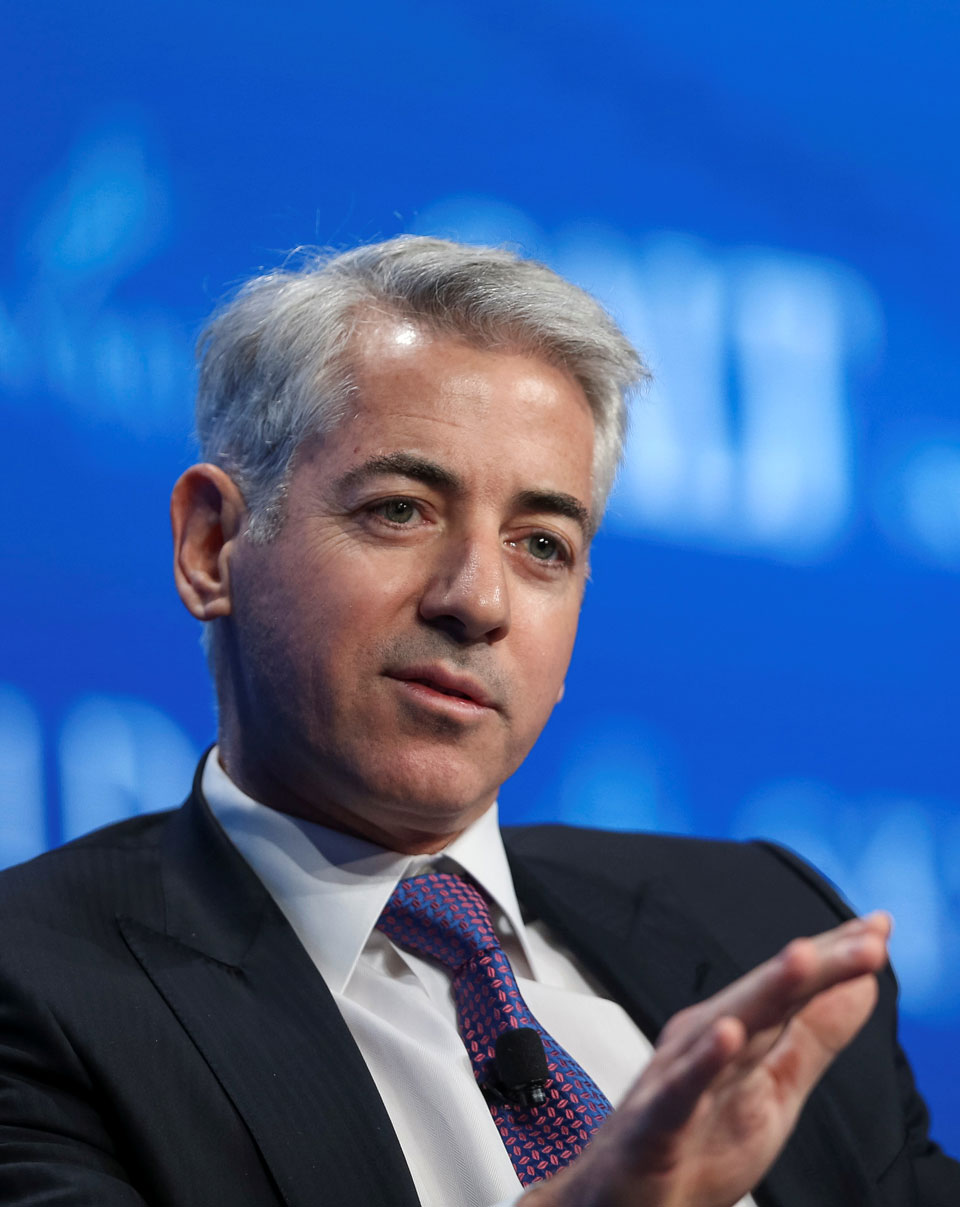
“We’ve seen lots of mediocre transactions,” he told his investors on an earnings call in late May.
We sure have: most Spac mergers have sold off heavily since completion, underperforming the wider market. Spacs have been quite the value destruction play.
Ackman certainly doesn’t want to be a part of that nonsense. His whole ethos was to build a quality Spac that would do a quality deal and would realign the balance of rewards between sponsors and shareholders.
And he thinks he got the Spac structure right – at least to the extent that he could under current rules.
He didn’t create the typical founder shares that would normally give Spac sponsors a 20% stake in the merged company for a nominal cost. The Tontine sponsors have warrants, for which they paid $65 million, which themselves have big restrictions for three years after any deal.
So far, so admirable, but he was also doing other things differently. Tontine wouldn’t necessarily buy whole companies, for example. This, from its IPO prospectus:
“We believe the price at which we can acquire a minority interest in a large, high-quality business is substantially lower than the price – which would generally include a substantial control premium – that would be required to acquire a controlling interest in the same company”.
To a Spac investor that had initially liked the sound of a sponsor that had real skin in the game – not the kind that stands to pocket a lottery-style jackpot if even the most dubious deal gets inked – this starts to look… complicated. How would that work in practice?
Not terribly easily, to judge from last year’s efforts when Ackman thought he found just the right target in Universal Music, owned by Vivendi.
The plan, announced in June 2021, was for Vivendi to spin off Universal through an Amsterdam listing, with Tontine spending about $4.1 billion to acquire a 10% stake in it.
Tontine shareholders wouldn’t have been diluted when it came to their investment in Universal, as Tontine sponsor and director warrants would have been kept back for a future additional Tontine acquisition or merger. And of course, Tontine didn’t have sponsor shares at all.
As for Tontine, the idea was for it to carry on existing after the Universal deal, hunting for a more conventional merger or majority stake acquisition with the $1.5 billion of cash it would have left over after the exercise of various forward purchase agreements. Another $1.4 billion would remain unexercised for the moment.
And then the real star of the show, the creation of an additional and entirely new kind of Spac, a special purpose acquisition rights company, or Sparc.
Instead of putting cash into a Spac, Tontine investors would be given warrants exercisable into Pershing Square Sparc at some even later date when Ackman had found something new for it to invest in. So, they would end up with three things: shares in Universal Music, shares in Tontine and warrants for the Sparc.
There is a lot going on there.
In July 2021, a few weeks after it was announced and after eight months of work, the Spac deal with Universal was scrapped and Ackman’s Pershing Square Holdings hedge fund bought the stake instead. Tontine was back hunting again.
Wait, what?
So, what happened? Tontine shareholders hadn’t appeared to like the whole plan, although with so many moving parts it is hard to know exactly which bit didn’t grab them.
The stock dropped from about $23 at the announcement of the deal to about $20.5 by the time the deal was pulled. It had traded as high as $30 at the height of Spac-mania in January 2021.
Regulators also had concerns: the US Securities and Exchange Commission wanted more clarity. It didn’t help that Spacs were becoming, as Ackman puts it, “a dirty word”.
That was mostly because of regulatory worries and some deals notably failing to perform as promised, but shortly after the Universal deal was scrapped Tontine was also the target of a lawsuit filed by a group of lawyers including former SEC commissioner Robert Jackson and Yale Law School professor John Morley – “opportunistic plaintiffs” Ackman calls them – that alleges it is operating illegally as an investment company.
At issue is the fact that like all Spacs, Tontine invests its IPO proceeds in US Treasuries and the like while it is waiting to do a deal.
Tontine is not the only Spac to have been targeted by the lawyers, and all will likely point to a similar defence – that the SEC has approved perhaps 1,000 Spacs in the last 10 years or so without considering them to be falling foul of the Investment Company Act of 1940.
In a letter dated August 19, 2021, Ackman broadly rubbished the lawsuit’s claims.
The minutiae of the Universal/Sparc arrangements might have ended up making a deal too ambitious to complete, but Tontine arguably already faced a big challenge of its own making. In trying so hard to get his Spac just right, Ackman might have created one that almost couldn’t ever buy anything.
He nearly said as much in his latest earnings call. He didn’t expect capital markets to be as hot as they would become after Tontine went public. That sounds like it should be a good thing, but not necessarily. Having raised so much money in its IPO, Tontine was always going to be looking for a sizeable asset – something like Airbnb, for example, which Ackman approached in 2020.
After turning him down, Airbnb priced a $3.5 billion IPO in December 2020 that valued the firm at $47 billion. It closed its first day on Nasdaq up 112%, suggesting the traditional route might have left at least some money on the table. It is not looking quite so hot now: it is still up 70% from its offer price, but it is down 20% from that day-one close.
Ackman’s point is that when you are chasing this type of company, your competition is very much the traditional IPO market in a way that it sort of isn’t for names that are much smaller or a lot sketchier.
For many of those, in fact, Spacs have been an alternative to doing another private funding round – which, for many critics, is kind of the problem with Spacs.
Anyway, in a hot IPO market, as Ackman told his investors, “we are not going to be competitive on price”. OK, but what about when it is worse than hot?
Here we go to the heart of what Spac supporters have often said is the point of the structure, to offer an alternative to traditional routes for when markets were not so good – or just not irrationally exuberant.
Here we go to the heart of what Spac supporters have often said is the point of the structure, to offer an alternative to traditional routes for when markets were not so good – or just not irrationally exuberant
And Ackman sounds like he agrees with that. “What I would say right now is we have the opposite of a hot IPO market,” he says. “It’s an ideal environment for us to have an entity like this one [Tontine] with the amount of capital it has.”
Ideal, yes, if you don’t mind catering to the desperate. But Ackman will be so very picky. “Again, we’re still looking for a very, very high-quality, super durable, long-term growth company.” But also, one that obviously is not already public. As investment screening goes, that’s pretty narrow. And “most of those companies have the flexibility to pick their moment when they want to go public”.
And now is perhaps not that moment.
Let’s sum up. The target has to be big so that a minority stake is still a pretty big size because Tontine has raised more money than anyone else ever did with a Spac; and it has to be very high quality because this is Bill Ackman and this is how he rolls; but it also has to have some kind of pressure to go public that means it can’t simply wait like a high-quality company might be expected to, and markets have to be not too hot so that Tontine can be competitive on price, and so “it’s going to be a company in a special situation where it’s important for them to get a transaction done with certainty in a short period of time”.
Ackman’s Spac might just be the capital markets equivalent of the job interview humblebrag: My biggest weakness? I sometimes work too hard.
Legacy
Even if Tontine gets wound up, Ackman is still pushing on with his Sparc idea. As soon as he gets regulatory approval, he intends to distribute 10-year warrants for Pershing Square Sparc Holdings to Tontine shareholders or to whoever was a Tontine shareholder when Tontine was wound up.
With his Sparc, Ackman thinks he might have cracked the real problems of the classic Spac structure – the fact that it ties up investors’ cash, creating opportunity costs for them, and the fact that the clock will always be ticking on an acquisition deadline. With the Sparc, holders of the warrants have the ability to opt in to a future acquisition, rather than the right to opt out of one in a traditional Spac.
Regulators might not have approved Ackman’s plan yet, but it is not impossible to see them tempted by it, not least because any resulting deal would effectively be an IPO rather than a de-Spac merger, and would presumably be held to the same disclosure rules as an IPO, so no marketing via pie-in-the-sky forecasts.
Maybe this is going to be the Tontine legacy for Ackman, a purer and potentially less controversial form of Spac, although also arguably a weird new form of invitation-only IPO.
It is hard to imagine a lot of these deals though. It might seem like there is no reason for an opt-in structure to necessarily result in less certainty of execution than an opt-out one.
If you don’t like the deal a Spac announces, you redeem your stock, and that money has to be found from another investor if it is needed.
If you don’t like the deal a Sparc announces, you don’t exercise your warrant and that money has to be found from another investor if it is needed.
But if you are a merger candidate, you might consider even a somewhat variable amount of cash in trust to give you more comfort than a Sparc founder telling you he has given a lot of people the right to tag along, but no they haven’t given him any money just yet. Or maybe that comfort level is largely similar if the Sparc founder is called Bill Ackman?
Or could there be underwriting of some kind? Looking at Ackman’s filings suggests not. He says one advantage of a free distribution of warrants to Tontine investors is that there is no need for an underwriter, thus saving the typical 7% IPO fee or 5.5% Spac IPO fee.
But that also implies he sees no need for an underwriter at a later stage either, when he is asking warrant holders to exercise to participate, otherwise all he is doing is deferring that cost.
If that seems like a risk, consider one final interest-inducing nugget of Ackman’s structure. Sparc warrant holders that opt to exercise their warrants and participate in the deal get – yes! – warrants in Sparc II. Exercise those and you will get warrants for Sparc III. And so on, presumably for ever. With each generation of warrants lasting 10 years, there’s no rush.
Ackman wants the subscription warrants to be listed. He says the New York Stock Exchange “loves” the structure, although a rule change would be needed to allow warrants to be listed that are exercisable into stock that does not yet exist.
That is because Sparc stock would only be created when the warrants are exercised to participate in a merger.
The bigger problem is that this year the SEC has embarked on a huge revision of Spac rules. Ackman doesn’t sound too hopeful that the regulator will be particularly interested in giving the green light to some other fancy scheme just now, so he’s planning to go over the counter instead. He told his investors that he would submit a new filing to elaborate on that.
If Tontine is wound up, it will be the biggest example of a Spac failing to complete a deal. But it will not be alone
If Tontine is wound up, it will be the biggest example of a Spac failing to complete a deal. But it will not be alone. The mighty cohort of 2021 deals will be reaching that same point soon enough. There are more than 700 Spacs that have listed in the US since the start of 2020, and which have not yet completed a deal.
That is potentially a lot of pain on the way for Spac sponsors. It is also not great for Spac IPO banks, who typically only get about a little more than a third of their underwriting fees at the time of the IPO and the rest only when a de-Spac deal is completed.
Those $186 billion of US Spac IPOs are sitting on about $6.4 billion of deferred IPO fees.
Ackman might consider himself well out of Spacs if he does have to wind up Tontine. He tied himself up in knots trying to fix the problems of Spacs by actually doing a Spac, when in fact Sparcs look a lot more like what he wanted to do all along.
Back in August 2021, he told investors that his greatest pleasure would be to “return your cash, preserve the value of our outstanding shareholder warrants, and give you a free option to invest in our next transaction in a better structured vehicle”.
What Ackman’s Spac experience has told him and anyone else he needs to convince is that he can get $4 billion from people just by telling them he will look for something to buy with it. Returning it tells them that he won’t blow it on something that doesn’t make sense.
If he can get his Sparc off the ground, those things will stand him in good stead.