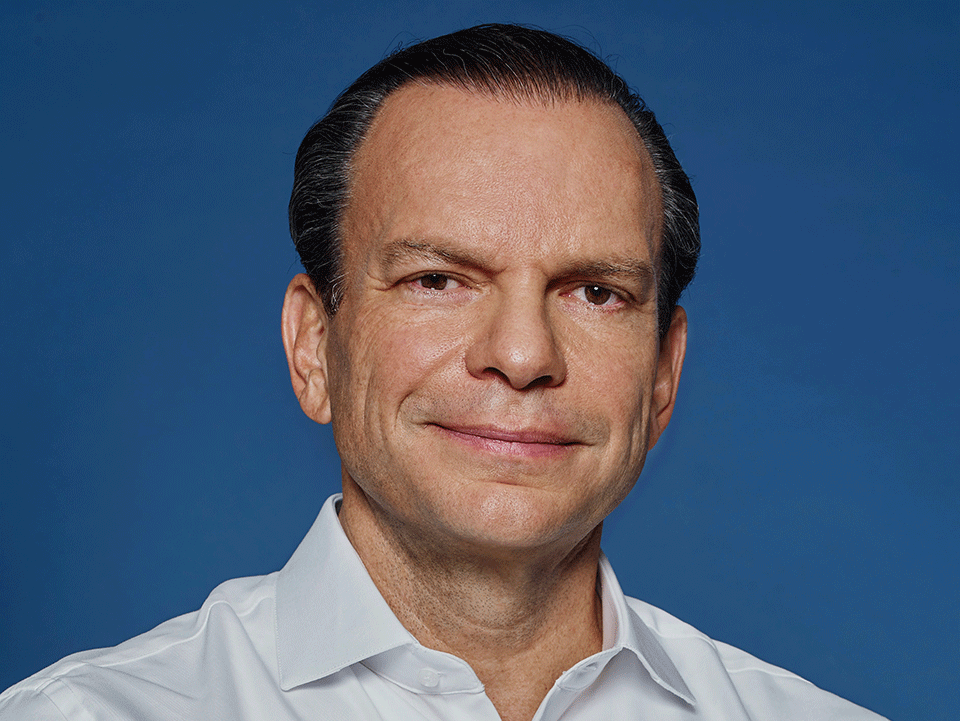

BNDES’s record profits in the first quarter of 2022 (up 32% over the first quarter of 2021 to R$12.9 billion) point to something transformational going on at the state-owned development bank. Led by president Gustavo Montezano since July 2019, BNDES also made R$34.1 billion ($6.68 billion) in 2021 – a record year and 65% above 2020.
However, this headline financial result hides the full picture of the real changes achieved so far by Montezano. This profitability is the consequence of a change in the bank’s strategy that will have much longer-lasting impact on the Brazilian economy than a short-term profit boost.
The bank has now exited speculative positions that it had built up in companies such as Petrobras, Vale, Klabin and JBS. Montezano describes such profits as simply “accounting gains”, adding that in the medium term he expects the bank’s financial returns to be more in line with the Brazilian financial system’s overnight interest rate – the CDI.
Now we’re not financing national champions, we’re financing national heroes
Gustavo Montezano
The sales, while important for the government (BNDES transferred around R$80 billion to the Brazilian treasury in 2021), are more important for a bank rediscovering its true developmental purpose. Montezano openly criticizes his predecessors’ decision to direct a great deal of funding at subsidized rates to ‘national champions’.
Today, BNDES offers a market-derived rate and uses its lower volume of disbursements to finance smaller companies that are fostering innovation.

“Now we’re not financing national champions, we’re financing national heroes,” he says, and adds that the policy has been popular in Brasilia.
Where the bank used to be happy to provide the majority of the capital for many individual projects, BNDES now works to bring private-sector money – both domestic and international – into building Brazil’s near-endless list of infrastructure needs.
The introduction of non-recourse financing has massively increased the appeal of the country at a stroke for international construction companies.
BNDES has pivoted to providing its expertise in analyzing project risk and constructing financial models that work for private investors rather than just providing finance.
It is a change that is proving to be as popular with the Brazilian government as it is with the private banks and promises to generate a good pipeline of projects that will drive Brazil’s GDP in the short, medium and long term.