
In January, CoinFund, founded in 2015 and one of the most prominent investors focused on blockchain technology, digital assets, decentralized finance and web 3.0, announced a new strategic adviser.
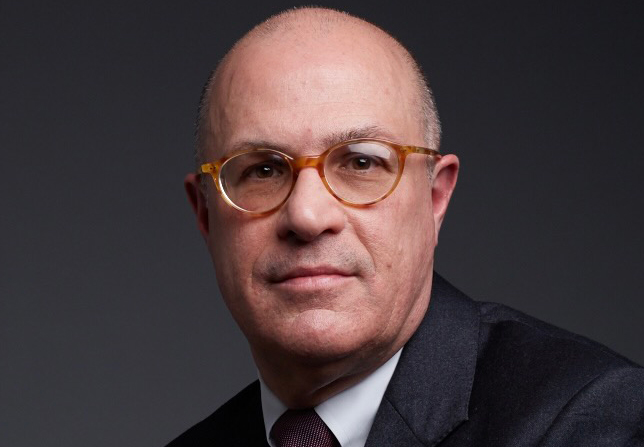
J Christopher Giancarlo, nominated a commissioner of the Commodity Futures Trading Commission (CFTC) in 2014 by president Barack Obama and then as its chairman in 2017 by president Donald Trump, will advise the venture capital firm on matters of policy.
The news comes as regulators around the world struggle to keep pace with the rapid growth of cryptocurrencies, non-fungible tokens (NFTs) and stablecoins, as well as with the increasing links between regulated financial firms with traditional investor customers and these new asset classes that first emerged on a separate, decentralized and regulatory-resistant market infrastructure.
Giancarlo’s term at the head of the CFTC will be remembered for the authorization of the first bitcoin futures in late 2017.
Giancarlo reflects on this pivotal moment now that Gary Gensler, chairman of the SEC, has finally responded to the relentless pressure to authorize cash-settled bitcoin exchange-traded funds, by instead approving ETFs based on bitcoin futures.
“I find some vindication in the SEC favouring a product based on the bitcoin futures market, which has been up and running for four years now,” Giancarlo tells Euromoney. “Back in 2017, I was taking calls from overseas regulators asking me not to approve bitcoin futures because that would legitimize bitcoin. But it is not for regulators to legitimize financial innovations. That is for the marketplace.”
Regulation
Many futures contracts are launched and then fade away because investors don’t use them. That could have happened with bitcoin futures. But the marketplace found a utility in them.
“As regulators, our job was to minimize as far as possible fraud and manipulation and ensure operators do a fair job,” Giancarlo says.
I find some vindication in the SEC favouring a product based on the bitcoin futures market which has been up and running for four years
J Christopher Giancarlo
Technology evolves fast and regulation is always a step behind. The CFTC was a first mover. But the road ahead is unclear.
“Regulators have long had a mandate around accurate and fulsome disclosure so that investors are not persuaded to part with their money under false pretences,” says Giancarlo.
The challenge is applying that in a new decentralized market structure.
Giancarlo asks: “What does fulsome disclosure mean for a decentralized autonomous organization? And is there a concept of two-way disclosure?”
He says: “There is a big generation gap here between older people used to disclosing information to banks and younger generations more used to dealing with digital platforms and who want more protection over their personal data. Regulators also need to go through that generational change.”
But for any investor, it is clear that even though regulators are moving at different speeds and with limited consistency, they will seek to impose themselves, for example applying securities regulation to digital and crypto assets and possibly bank-like regulation to issuers of stablecoins – the key intermediary instrument between traditional finance and decentralized finance.
Timo Lehes, co-founder of Swarm Markets, which operates a decentralized finance protocol under the purview of Germany’s BaFin, says: “The industry believes stablecoins will be regulated, but how this is implemented is crucial. Only allowing the central bank or certain Federal Deposit Insurance Corporation (FDIC)-authorized firms would see an entire rewrite of the stablecoin industry and a lot of algorithmic-based stablecoins could disappear from the landscape we know today.”
At the end of January, stories were spreading that Facebook is seeking to dispose of its assets in the Diem Foundation, ending its attempts to issue the stablecoin initially unveiled as Libra. David Marcus, the executive brought in after the first hostile reaction from regulators to make it a reality, left the company at the end of last year.
Futures
Two things are going to happen in 2022. More and more crypto-native firms will seek regulatory authorization because they have a better chance of making money if they can capture business from traditional investors. And more and more regulated banks and brokers will seek approval to deal in cryptos because their clients want exposure.
What were the best performing asset classes in 2021? The BlackRock return map shows that US equities delivered 27%, real-estate investment trusts delivered 32.5% and, amid surging demand and rising energy prices, commodities topped the charts and delivered 38.5%.
What BlackRock doesn’t map – presumably because it doesn’t have enough funds that make money from it – is bitcoin. It delivered 60.1%.
Of course, bitcoin sold off hard in January, along with government bonds and stock markets. But its ability to bounce back asks a difficult question of those charged with a fiduciary duty to manage their clients’ money.
As we go through the investment process, an appreciation of how regulation might apply to new businesses is an imperative part of that
Christopher Perkins, CoinFund

Christopher Perkins, president of CoinFund, was running the cleared derivatives business at Citi back in 2017. He recalls: “My phone was ringing off the hook with clients asking me for ways into bitcoin. When I inquired if this was for themselves personally or for their firms, back then it was for themselves. But today, even the most conservative asset managers want exposure to cryptos, and worry about the risk of not participating.”
Perkins went on to run futures, clearing and foreign exchange prime brokerage before leaving Citi in 2021.
Now, managing a portfolio of investments in companies operating in all manner of DeFi, NFTs, blockchain, crypto custody and trading, Perkins sees two ways that Giancarlo can help.
He says: “We don’t know the future. One hopes that every company will succeed, but how they interact with regulation may play a key role in deciding which do and which don’t. One separation between success and failure may be between those that embrace regulation and those that seek to avoid it and concentrate instead on less developed jurisdictions and niche products.”
Crypto-native firms will need to demonstrate robust governance and risk controls to regulators. That won’t be easy.
Perkins adds: “As we go through the investment process, an appreciation of how regulation might apply to new businesses is an imperative part of that. And another reason we have brought Chris [Giancarlo] onboard is to help our company founders navigate the regulatory complexities.”
Bank models
Banks, of course, know exactly how to operate at scale in complex, interconnected and highly regulated markets. That’s their entire business model. And they are muscling into crypto now. But that does not mean they will win in a market built to operate without intermediaries.
At the most prosaic level, their legacy technology is based on batch processing. Crypto markets are always on, 24 hours a day, seven days a week. And even amid the present sell-offs engulfing most financial markets, they are extraordinarily volatile.
Banks will need to invest heavily in new technology. They may face high capital charges for holding crypto assets on their balance sheets.
An obsession of bank regulators in 2022 will be operational resilience. Boards of directors will be required to attest to this in certain jurisdictions. Bank regulators will test dependence on third-party providers of essential services such as cloud hosting and their operational resilience in turn. They may even seek to regulate them.
Thinking as a venture capitalist, it’s possible to conceive of a decentralized financial market without regulators. But the total addressable market is likely to be much smaller than one with them.



