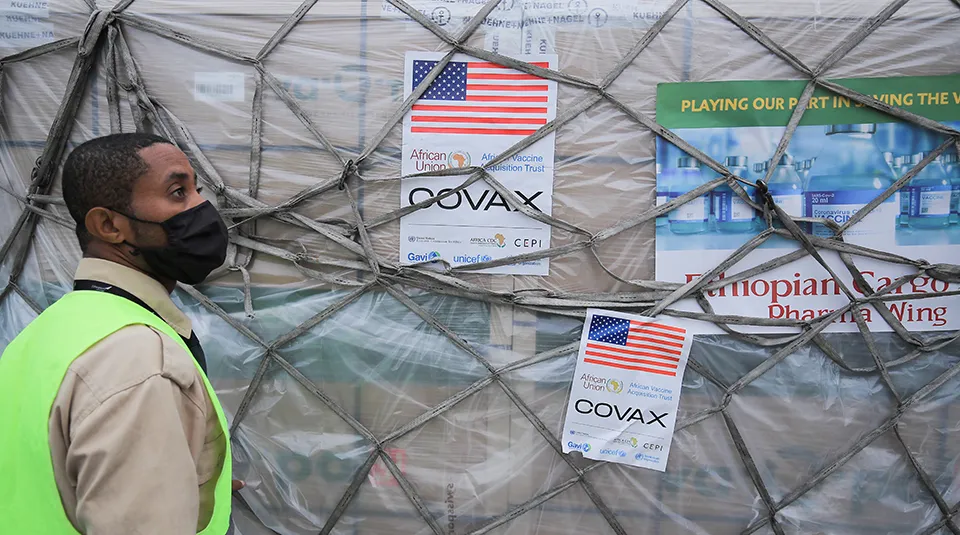
On November 2, 2020, vaccines alliance Gavi, a public-private health partnership based in Geneva, named Citi as financial adviser to the Covax Facility.
Launched that April, Covax, a collaboration of global governments, multilaterals and pharmaceutical firms, had a specific remit: to deliver 2 billion doses of pandemic vaccines to Covid-hit lower-income countries by the end of 2021.
With that deadline fast approaching, it’s a good time to ask a few salient questions. Notably: how successful has Covax been; what lessons were learned; and what role has Citi played in the financial strategy and keeping the project on track?
The plan
When Covax was launched, the world was reeling from the first wave of the coronavirus pandemic.
Vaccines seemed a long way off, but global authorities knew that they would arrive. And when that happened, the world would need an equitable system that ensured a reliable and steady flow of doses to poorer countries.
The facility’s main source of strength was its bargaining power. With backing from Unicef, the World Health Organization and 94 higher-income countries, it aimed to cast its net wide: to secure as many shots of as many approved vaccines as possible, then deliver them fast.
We didn’t walk in with a playbook
Jay Collins, Citi
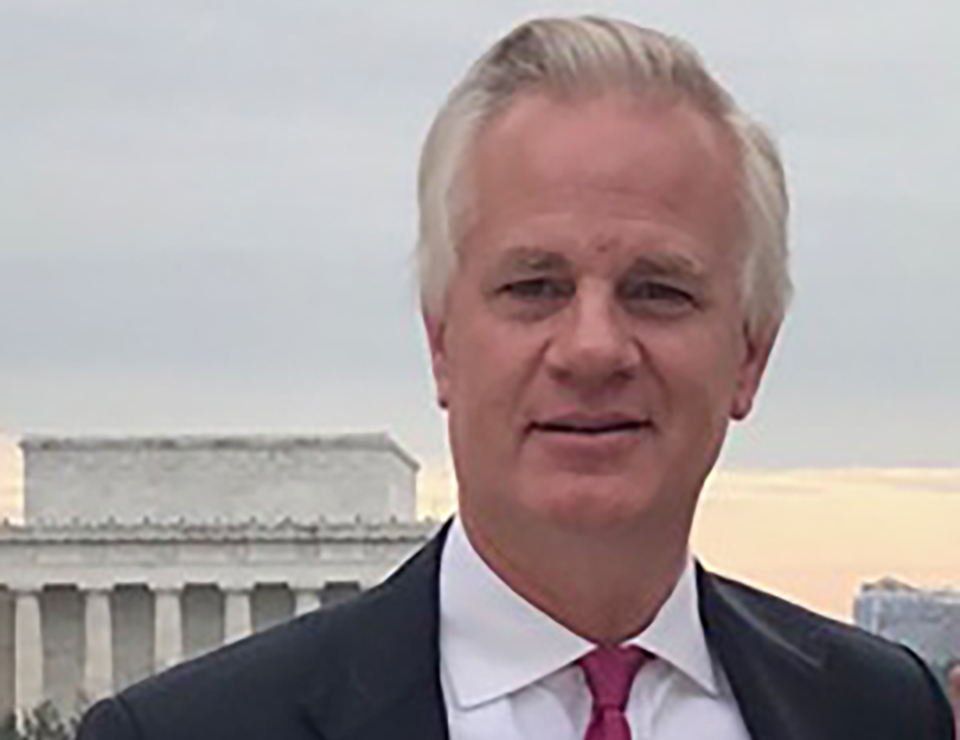
For Citi, the goal was to get to work and learn on the job.
“We didn’t walk in with a playbook,” says Jay Collins, vice chairman, banking, capital markets and advisory at Citi, and senior risk and financial adviser to Gavi. “The 27 of us who have worked with Gavi for the last 12 months walked in with just our experience, and unpacked complex risk and financial issues one by one as fast as we could.”
When asked why Citi wanted an account that, that while noble in intent, was surely a drain on resources and the likely source of any number of headaches, he pushed back.
“Actually, sorry, but that just isn’t how we thought about it at all,” he counters. “We weren’t and aren’t making money from this. This was [current CEO] Jane Fraser and Citi’s board saying: ‘Do whatever it takes to help with the global vaccine distribution process.’ In fact, I saved the message from Jane after our board meeting, saying just that. So, it was more about how Jane thought about leadership, empathy and Citi’s role in the world.”
It’s also a clear example of the positive role that banks have played throughout the pandemic.
Shot at helping
John Finnigan is a banking, capital markets and advisory managing director at Citi in New York. He heads a team that serves public-sector clients working across the development space, including NGOs and multilateral development banks.
Asked what compelled the bank to want to help Gavi, he replies: “We felt strongly about making a difference in terms of the equitable distribution of vaccines – our hearts were in it. And we saw it as a way to bring our financial and business expertise to bear. We felt it was our shot at helping the world.”
So, has Covax worked?
Yes and no. Even before the first vaccines were approved, wealthier nations moved fast to order in advance, and later to stockpile them.
By the end of October 2021, WHO reckons, richer countries had secured 16 times more doses than poorer ones. According to Our World in Data, as of November 10, just 4.2% of people in low-income countries had received at least one dose.
To compare like-for-like, 87.7% of citizens of the United Arab Emirates – a leader in vaccines distribution if not development – are fully dosed, against 1.44% in Tanzania.
As of November 2 2021, Covax had delivered 435 million pandemic vaccines to 144 countries. To hit its original 2 billion target, it would need to ship more than 25 million doses every day in the last two months of 2021. That seems unlikely.
But this does not constitute failure. On day one, organizers set out a bold target that offered hope – but which was probably always optimistic.
Unicef reckons that, by the end of October 2021, 155 doses had been delivered to higher-income nations for every 100 people. Compare that to an average of 9.3 vaccines per 100 people in poorer countries.
The ability to scale up was a game-changer for the Covax Facility
John Finnigan, Citi
But it’s worth noting that 7.1 of those doses, or 76.3% of all vaccines delivered to lower-income nation states, were shipped by Covax. Without the facility in place, the emerging world would surely be much worse off.
Citi has assisted this process by doing what global lenders do best: building complex global structures that adapt to an ever-changing reality and having the clout to get big names in global development, business, finance and policymaking to cluster around the same table.
Many of the foundations were already in place when Citi got involved. In Covax, notes Collins, Gavi had created a “risk-taking [and fair-minded] distribution organization, virtually from scratch”.
Notably, it brought powerful names in the private and public sectors together. In September 2020, 16 major pharmaceutical companies – including AstraZeneca and Pfizer – pledged to give Covax millions of doses at affordable prices.
“Building the public-private partnerships and complex collaborative and contractual arrangements across a global complex system of organizations the way Gavi and Covax did, in the middle of the crisis, was extraordinarily complicated,” notes Collins.
In August 2021, Citi joined forces with the US International Development Finance Corporation and professional services firm Marsh to create an innovative risk mitigation structure. Its aim: to make it easier for Gavi to pre-purchase vaccines in bulk and distribute them faster and more equitably.
This, notes Finnigan, “allowed Gavi to enter into advanced purchase agreements and firm order commitments at a faster pace and much larger size. The ability to scale up was a game-changer for the Covax Facility.”
Underwritten by six major insurers including Axa, Swiss Re and Tokio Marine, the structure offers Gavi and Covax protection against the risk of non-payment by 21 low-income or very low-income countries in Africa, Latin America, Asia and Europe.
Lessons to learn
Asked to point to the primary lesson from the pandemic, Collins fires back a reply: “Build the plane before you take off, not while you are flying it. The world knew for years we could have a pandemic like we just had.”
He adds: “If I look back at my 30-year career at the intersection of governments and finance, this has tested every bit of that experience.”
Covid is a peacetime challenge clad in military clothing. From the outset the response called for “extraordinary global systemic processes of complex coordination across governments, developmental institutions and the private sector”, notes Collins.
One of the surprising and positive outcomes of the pandemic was the ability to get the heads of global organizations – governments, banks, corporates – around the table, to solve big problems in the collective.
In a recent Euromoney podcast, the chief sustainability officer of Credit Suisse, Marisa Drew, explained why “unnatural actors” were knocking heads to figure out how to solve the growing global challenges of the day.
“Historically, people operated in their silos – this is the patch of government, the patch of NGOs, of finance, and never should those cross,” she says. Yet there is now recognition that each group has something specific and valuable to bring to the table. It is, she adds: “One of the new-new things in this whole sustainability space.”
We face greater self-inflicted peril than ever before. But we are also talking more, and that can be no bad thing.
Ongoing crisis
“We are still in the midst of an ongoing Covid crisis, and Covax’s mission is ongoing and nowhere near over,” says Citi’s Collins. “Many of the poorest countries continue to have very low vaccine penetration levels, and there continue to be both large supply and funding challenges, variant risks, and fundamental issues of justness.”
Covax needs to cut more deals with pharmaceutical companies and get its hands on and distribute more doses – that much is clear.
By March 18, according to the minutes of a Covax meeting, the facility had delivered 30 million doses to 51 poorer countries. That number rose to 100 million in May, 283 million in July, and 435 million by early November.
It’s impressive, and more will be delivered next year: Pfizer alone has pledged to deliver to Covax 1 billion doses of its vaccine in 2022.
But with new variants of the virus sure to emerge, and vaccination rates still worryingly low in most of Africa and parts of south and central Asia, there is still much to be done, as Collins admits.
“We have a lot to learn. We can always do better. In fact, looking at climate challenges, we simply must.”


