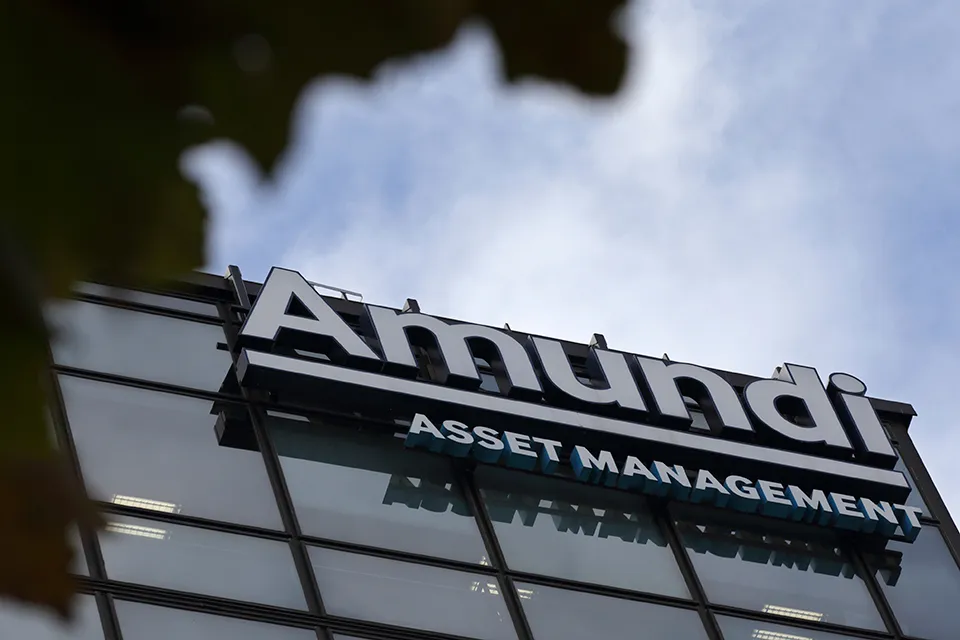
As Andrea Orcel seeks to make his mark on UniCredit – beyond his dealings with a certain Tuscan lender – rumour has it that the chief executive wants to renegotiate the agreement his predecessor struck with Amundi, Europe’s biggest asset manager.
The 2016 sale of UniCredit’s asset manager, Pioneer, to Amundi was the largest of a series of deals undertaken by the bank’s former chief executive, Jean Pierre Mustier. These were vital to clean up the bank’s balance sheet and bolster its capital, but they also came at the cost of revenue, especially in Italy – a country of vast private wealth.
Orcel’s renegotiation might not give UniCredit a bigger slice of the pie, but it could increase the overall pie
Meanwhile, the Pioneer deal was the biggest of the asset-management purchases Amundi made across Europe during the past decade, often from struggling banks. A 10-year commitment to distribute Amundi products through the bank’s network was part of the sale, improving the price – and therefore capital benefit – for UniCredit.
The optics were not, however, quite so good. Former Societe Generale banker Mustier sold Pioneer to a French firm that he had been instrumental in creating several years earlier through the merger of SocGen’s asset management business with that of Crédit Agricole. The latter, France’s biggest retail bank, remains Amundi’s majority owner.
Unfortunately for Mustier, as his tenure at UniCredit wore on, he became more attached to the bank than its home country. Unlike Orcel, he is French and does not speak Italian. He was vocally opposed to doing M&A, especially in Italy, when the government was desperately trying to sell Banca Monte dei Paschi di Siena.

These issues loomed large over Orcel’s appointment as Mustier’s replacement in early 2021. He is now potentially looking to renegotiate the Amundi deal.
That agreement is a complex affair when you get to the detail of it. It is easy to colour it with nationalism and could be tempting to renegotiate simply for the chance to look patriotic, but there are no guarantees that a new agreement will be more favourable than the old one.
When Euromoney speaks to a senior source close to Amundi, they claim that Mustier did the asset manager no favours and the contract is solid.
Amundi’s Italian business is more reliant on UniCredit than its French business is on SocGen. Intesa Sanpaolo has its own asset manager, and there is only one other big Italian bank to go to – UniCredit. This could give the Italian lender a better bargaining position. Moreover, questions have been raised around the potential Mifid II compliance of UniCredit’s commitments to Amundi on sales volumes.
But there is not necessarily a need for confrontation.
Both sides could benefit from committing to a closer and longer-term partnership, which would better incentivize Amundi to invest in tailoring its offering to integrate more closely with UniCredit from a technology standpoint. Orcel’s renegotiation of the partnership might not give UniCredit a bigger slice of the pie, but it could increase the overall pie.
Groups such as Crédit Agricole, Intesa Sanpaolo and CaixaBank have been doing better than banks such as Societe Generale, UniCredit and Bankia, which all sold or never had in-house insurance and asset management providers. But there remain many in the sector who insist that the future lies in pooling and outsourcing these products to bigger providers, not bringing them in-house.
UniCredit’s partners Amundi and Allianz are, of course, much bigger than Intesa’s in-house insurer and asset manager. More scale could mean a better value offering. If UniCredit can make those external products just as tailored and integrated with its network as Intesa’s in-house products are, it could have its cake and eat it.