
“Cash management is the new derivative,” Jean Pierre Mustier used to say, as chief executive of UniCredit.
When Euromoney put that view to a senior investment banker who, unlike Mustier, stayed on at Societe Generale after the global financial crisis, the retort was that his former boss was just saying that because he had swapped a Ferrari for a Fiat, by joining the Italian bank.
Nowadays, few would compare SocGen’s investment bank to a Ferrari. In the early to mid 2000s, when Mustier ran the business, it helped drive the group to a return on equity (ROE) in the 20s. But by the late 2010s, the corporate and investment bank was stuck in low single-digit ROEs. It lost money in 2020.
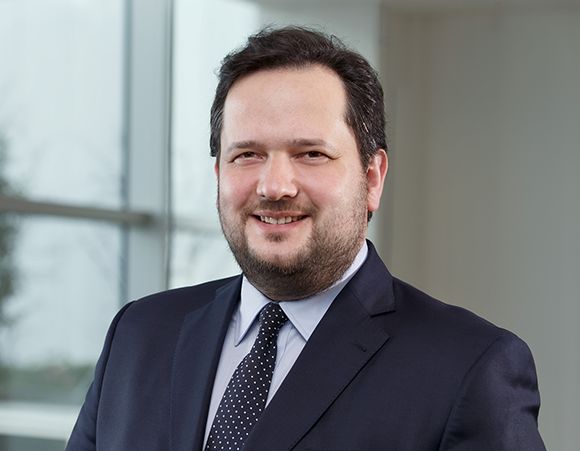
After taking over from Séverin Cabannes as head of global banking and investor solutions in early 2021, it is Slawomir Krupa’s job to get that division to an ROE of 10% by 2023.
Leading up to Covid, the division had grown more reliant on equity derivatives, especially after poor results in fixed income, currencies and commodities (FICC) in late 2018, which led to cuts. In 2020, compared with BNP Paribas, SocGen was more exposed to equity-derivatives losses sparked by cuts in corporate dividends. And it was less well-positioned for the subsequent bond-trading bonanza.
A bigger challenge will be to hold onto leadership in sustainable finance now that almost every other bank is seeking to do more in the area
Krupa, who previously oversaw SocGen’s activities in the Americas, is trying to convince investors that he can prevent a recurrence of these market losses – even if the resultant reduction in risk appetite has allowed BNP to brag about yet another opportunity to steal its rival’s market share.
Speaking to me recently in Paris, Krupa is clear that SocGen’s revenues have been too vulnerable to market shocks. The bank has already cut risk in equity derivatives since Covid, jettisoning multi-index and multi-asset class products, and shifting dividend-payment risk to the client.
But he wants cultural change that will mean the firm better understands its underlying exposures. He is trying to diversify revenues and risks, so structured products make up a smaller portion of revenue, even within equities. Fixed income will no longer bear the brunt of cuts. And SocGen will not be among the growing number of European banks ceding its cash-equities businesses to joint ventures.
Above all, rather than favouring markets, Krupa is bolstering global banking, advisory and transaction banking. He is gradually shifting capital allocation to these businesses, including clients in private equity and debt, partly with a view to further leveraging the bank’s project-finance expertise.
The truth is that SocGen’s investment bank has long found it hard to compete in the post-2008 regulatory environment. US banks, as well as bigger and more diversified European players, have the advantage. “The size of SocGen’s investment bank is too big for its market cap, and too small to compete against the US banks and BNP Paribas,” observes one financial institutions investment banker.
This predicament today is largely why SocGen is still trading at a discount to book value of about a half, compared with about a third at BNP. That is despite SocGen’s retail business in France being arguably better placed than that of BNP, notably on the digital front. SocGen further possesses a market-leading car-leasing business, ALD.
In 2021, like other banks, SocGen has enjoyed booming equities and fixed income revenues. Yet Krupa is pushing on with global market cuts of €450 million by 2023: a similar scale to the cuts then-deputy chief executive Cabannes implemented across his division three years earlier.
“I’m not willing to open the cost-and-risk box again just because we had a good run for a few quarters,” says Krupa.
In Krupa’s telling, the division will have more consistent returns. It will be more efficient and less risky, but not necessarily smaller. Cash management, true to Mustier’s words, will indeed form an important part of this rebalancing. It is investing €500 million in global transaction banking over the next five years, seeking mandates across Europe.
Sustainable finance
However, if there is a single purpose that Krupa’s division can get behind in the 2020s, it is sustainable finance. Project and infrastructure finance go back to the core of what SocGen has always done as a bank in a way that equity derivatives – except for its engineering component – never did.
Structured finance has consistently proven to be a positive contributor to the firm’s ROE, with a low cost of risk, according to Krupa. The bank is less exposed to aviation finance than rival Crédit Agricole, for example.
Beyond the need for infrastructure development in emerging markets – particularly in Africa, where SocGen is one of the few remaining international banks with a big presence – it is a top-tier renewable energy financier, according to loan rankings from IJGlobal.
SocGen has focused on sustainable finance for longer than many other large banks around the world, Krupa notes, and it has moved away from financing dirty energy earlier than many of them. It has reorientated its metals and mining business towards new industries, such as electric cars.
One challenge here is the finalization of the Basel reforms in Europe. SocGen is a big user of internal risk-weighting models in structured finance. Krupa says this could mean some marginal capital reallocation in structured finance, rather than business closures. But a bigger challenge will be to hold onto leadership in sustainable finance now that almost every other bank is seeking to do more in the area.
“Whenever there’s an opportunity, people run towards it, and then the space becomes overcrowded,” Krupa philosophises. Nevertheless, he thinks the business is a long way off from becoming commoditized. “You can’t become a reference bank in project finance and renewables overnight. It takes decades to develop that expertise.”


