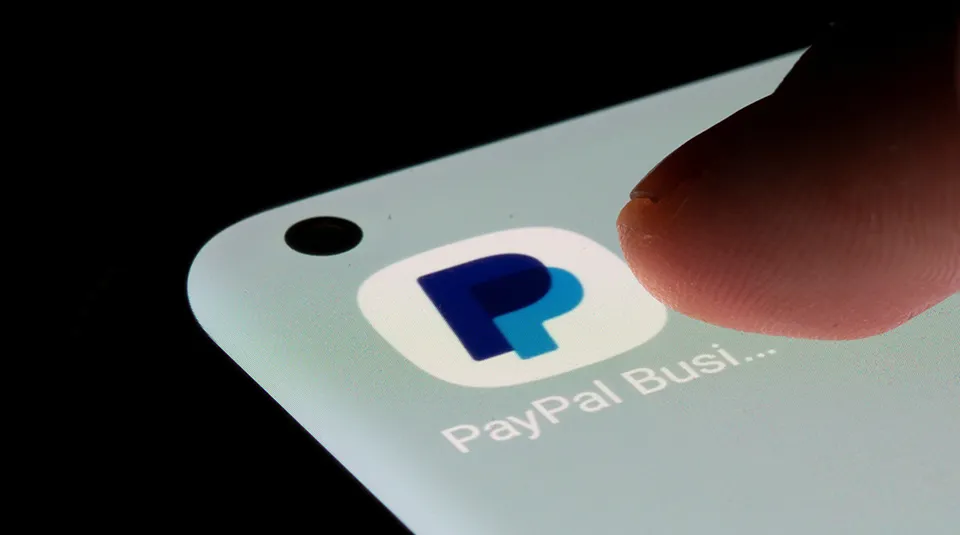
On August 23, PayPal announced that it will allow customers in the UK to buy, hold and sell Bitcoin, Ethereum, Litecoin and Bitcoin Cash in their PayPal accounts.
It marks the first expansion of PayPal’s cryptocurrency offering outside the US since its launch there in October 2020.
Customers can fund purchases using their bank account or debit card. If they choose to sell cryptocurrency, funds are expected to be available quickly to spend. There are no fees to hold cryptocurrency in a PayPal account, though there are transaction charges and currency conversion fees for buying and selling.
The pandemic has accelerated digital change and innovation across all aspects of our lives
Jose Fernandez da Ponte, PayPal
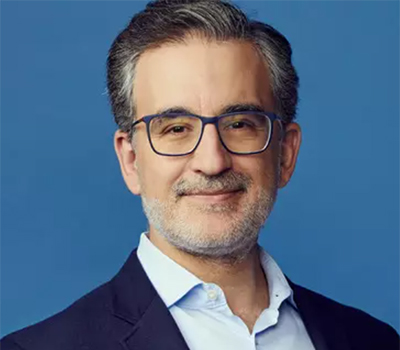
“The pandemic has accelerated digital change and innovation across all aspects of our lives – including the digitization of money and greater consumer adoption of digital financial services,” states Jose Fernandez da Ponte, vice-president and general manager, blockchain, crypto and digital currencies at PayPal.
As the news hit, the price of bitcoin edged above $50,000 for the first time since its crash in May, putting it up 69% for the year to date.
PayPal is taking a bet that cryptocurrency now has the potential to go mainstream. It has been exploring this through partnerships with licensed and regulated cryptocurrency platforms and with central banks around the world.
Its most important partnership is with Paxos Trust, the first company to secure a New York State Department of Financial Services Trust Charter for digital assets and the first crypto-native company to receive preliminary approval for a new national trust bank charter.
PayPal is an investor in Paxos, which also counts Credit Suisse, Instinet, Revolut and Societe Generale among its customers.
Is the leading crypto actually going to be used as a currency? And does this tell us that traditional finance is going to take over crypto and DeFi, or the other way around?
Gathering momentum
Euromoney seeks the views of Lex Sokolin, head economist and global fintech co-head at ConsenSys, the leading Ethereum software company, just because it’s such fun to knock these ideas around with him.
“With payment rails, multiple technologies intermediate different types of commerce simultaneously,” Sokolin points out. “Is cash outdated? Yes. Do people still use it? Also, yes.”
After cash, we had the card rails.
“Do people still use card networks? Yes,” Sokolin adds. “Are they the only way to pay? No. Apple Pay and Google Pay are very complex overlays above the card rails that took years of trial and error to develop. But they’re better than cards because you just use your thumb and finger. The payment rails proliferate. They all exist at once, and as human activity shifts onto new platforms, finance follows. Some amount of human activity is shifting to blockchain rails, and associated financial transactions will be intermediated by native payments, just as e-commerce payments on eBay were by PayPal.”
Sokolin believes that many fintechs have been pretending to build digital finance while just selling the same old financial products through smartphone apps, almost like Spotify being used to sell CDs instead of access to digital music files.
But what we’re starting to see now with DeFi is digital manufacturing of all kinds for finance.
“That is fundamentally dangerous to an industry that does not adapt,” Sokolin says. “Fintechs are realizing they are digital store fronts and should be selling digital products. And traditional finance firms will also want revenue from distributing new financial products.”
The challenge… is how does the old capital markets factory adapt to the new digital products
Lex Sokolin, ConsenSys
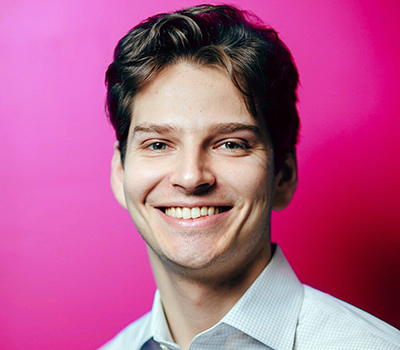
He suggests a direct comparison between DeFi and institutional capital markets. An asset manager or wealth manager distributing exchange-traded funds to end customers is itself a customer of the institutional capital markets desks that create the ETF. The capital markets desks are the factories making the products. DeFi is also manufacturing products with code and algorithms.
“The challenge in my mind is how does the old capital markets factory adapt to the new digital products,” says Sokolin.
He looks at traditional exchanges and decentralized exchanges.
“Central limit order books could not be processed on Ethereum,” says Sokolin. “In their place, automated market-making protocols are a compression of trading logic that has abstracted the trading technology and allowed protocols to pre-finance pairs of tokens for liquidity providers.
“Customers take some of their capital, lock it into trading pairs and capture trading fees using a pre-built price agreement mechanism. You are not negotiating. You are trading along a price curve. On the other side, investors come to the protocol to transact, which moves the price and volatility up and down, and they pay fees to the liquidity providers.”
Sokolin continues: “It seems obvious to me, especially now with massive scaling solutions like Polygon, that this is coming for the traditional finance technology stack.”
Yes, it can be difficult to counter the fact that you are no longer cool. But to those who live and breathe traditional finance it still sounds ludicrous to suggest that investors might soon rather trade with Uniswap than with Morgan Stanley or Goldman Sachs.
But Sokolin has another analogy. DeFi is like gaming. It is just now passing through its first phase, with technology reminiscent of the very first highly pixelated compressed files for Super Mario Brothers. Think of what followed with games in computer worlds that now capture people so completely.
The momentum of rapid technology development is increasing. Money is shifting too. Revolut has a higher market cap than Deutsche Bank. Banks are investing heavily in blockchain infrastructure, like JPMorgan into ConsenSys. Non-bank finance is moving even faster, including the biggest multi-asset alternatives managers investing in the private equity of the infrastructure builders and directly into cryptos themselves.
“Four years ago, it was ‘I might put 1% into bitcoin.’ This feels very different,” says Sokolin. “Every billionaire from Ray Dalio to Stephen Schwarzman is a crypto convert and tens of billions of dollars are flooding in that will reverberate over the next three to four years. Given what has been built over the last four years, think what might be built in the next four with all that capital and with all the fintechs moving into crypto. It is going mainstream.”
He concludes: “What most excites me is the systems upgrade shift for the financial industry. Blockchain can be what the financial world lives on.”