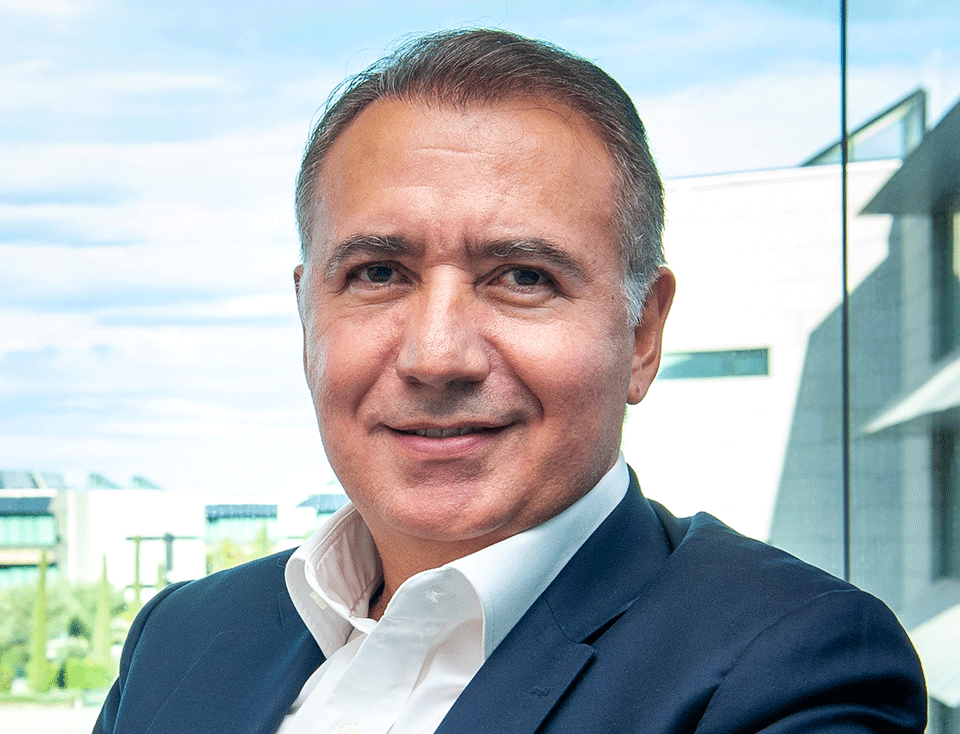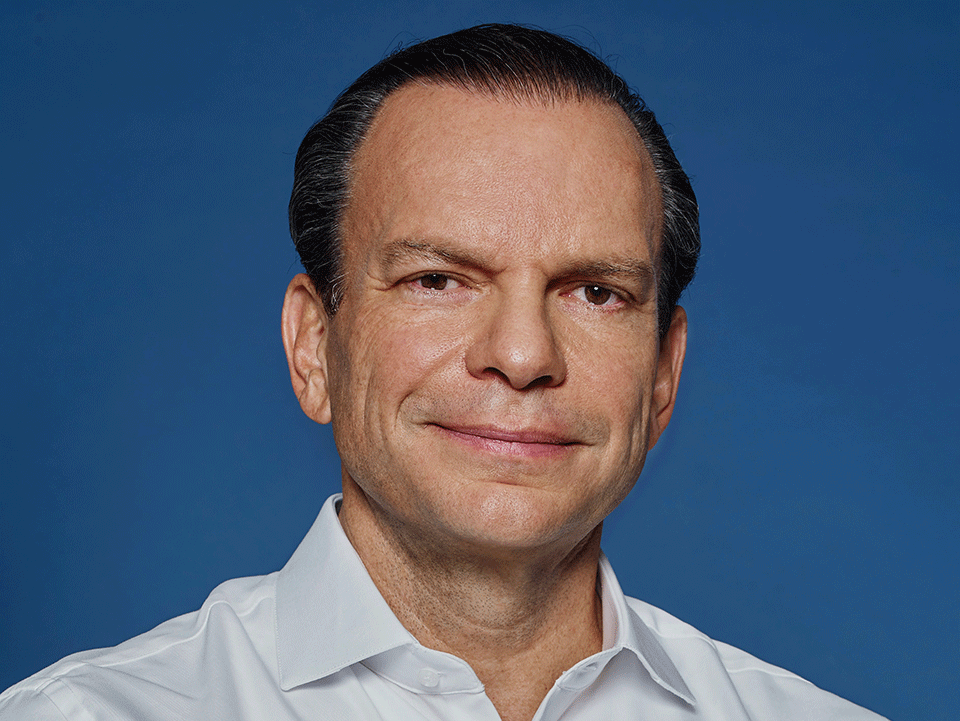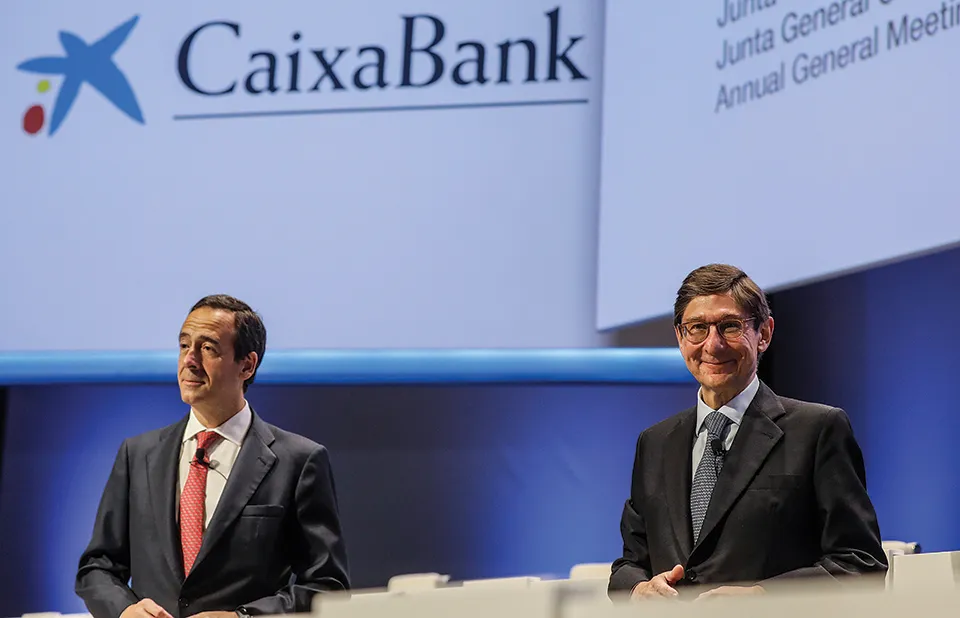

When Gonzalo Gortázar first met José Ignacio Goirigolzarri, the two of them could never have imagined that, many years later, they would lead a new Spanish national banking champion together. Back then, around the turn of the millennium, Gortázar was an M&A banker at Morgan Stanley and Goirigolzarri was his client, leading BBVA’s purchases of banks across Latin America – most notably Bancomer, now Mexico’s biggest bank.
This was a time when European banks enjoyed better valuations than their emerging market peers. Negative interest rates were just an academic concept. Even deposit and mortgage-focused savings banks seemed healthy.
A quarter of a century later, things are very different, but after this year’s merger of CaixaBank and Bankia, the two are working together once again. Goirigolzarri is the new group’s executive chairman – topping 10 years of work to turn around Bankia from its disaster-hit inception as an agglomeration of savings banks in 2010.
Gortázar is chief executive, having already spent 12 years at CaixaBank.
After the deal’s closure in March 2022, CaixaBank’s Spanish market share in loans and deposits will go from the mid or high teens to about 25%. “We were one of the largest Spanish banks. Now we’re the market leader, with a large margin between us and the next player,” Gortázar says.
The many other mergers CaixaBank inked under Gortázar’s watch in the 2010s, including numerous former savings banks, don’t come close to this one. “The other mergers we have done were important, but this one is transformational,” he states.
The other mergers we have done were important, but this one is transformational
Gonzalo Gortázar, CaixaBank Gonzalo Gortázar, CaixaBank
The traditional deposit gathering activity of eurozone banks, which dominate provision of credit to large companies and small and medium-sized enterprises, is heavily regulated and now loss-making, thanks to rates that will remain negative over the long term. Their core business is broken and that makes banks very unattractive for allocators of long-term capital.
The Caixa Bankia merger is about more than achieving scale. It is an attempt to transform the enlarged business, move beyond reliance on net interest income and build a national champion in bancassurance that might one day play a leading role in European consolidation.
CaixaBank has become a sort of mega savings bank: listed and with a 54% free float, yet containing the legacy of about 100 former savings banks across Spain, known as cajas in Castilian or caixas in Catalan. This is in stark contrast to Germany, where around 500 public-sector savings banks or Sparkasse still dominate retail and SME banking.
What does such a big market share in its home market mean for CaixaBank? Shares in both CaixaBank and Bankia soured when the news of the merger leaked in early September last year. It was obvious that dealing with banking unions on job cuts would be tough and investors rarely give any credit to suggestions of revenue synergies, which are core to this deal in the long term.
The shares have since risen to close to pre-pandemic levels, in line with the sector, as agreement was struck with the unions and the bank has pulled ahead of the initial target on cost savings.
Next stage
The question now is whether the next stage could be cross-border consolidation in Europe – potentially achieving continental dominance. On this point, Gortázar is guarded. “Three years from now we will have to see how things are evolving,” he says. “I don’t have a preconceived position.”
There is still much work to be done in digesting Bankia. This was Spain’s fourth-largest bank, with a balance sheet of more than €200 billion and about 7 million customers. The fact that the two firms’ businesses are similarly domestically-focused means that the overlap in staff and branches is immense. That’s largely why the merger can claim to be creating shareholder value, especially given the accelerating shift to digital channels since Covid.
Management and branches in the retail network have already been integrated and rebranded. In July, the bank reached an agreement with the trade unions for almost 6,500 redundancies. That’s 1,800 fewer job cuts than it had proposed at the start of negotiations on the post-merger restructuring. Even so, CaixaBank is now targeting €940 million in annual cost savings by 2023, having upgraded the target by €170 million in its second-quarter results announcement.
Luis Javier Blas, CaixaBank’s chief operating officer since January 2020, is preparing the firm for the all important shift onto CaixaBank’s IT platform – after which Bankia’s legacy platform will be decommissioned in mid-November.
“Our internal perception is that we are putting the two organizations together faster than we expected, while maintaining the flow of business and revenues,” says Gortázar.
We were very clear that the merger synergies were going to be bigger than the market expected
Jose Ignacio Goirigolzarri, CaixaBank

Meanwhile, if there’s any power struggle between Goirigolzarri and Gortázar, they don’t show it. Goirigolzarri has the title of executive chairman. The former CaixaBank chairman, Jordi Gual, returned to academia after the merger and has since been named non-executive chairman of VidaCaixa, the group’s insurance arm.
In practice Goirigolzarri has less sway than Spanish banks’ executive chairmen have previously enjoyed or, in the case of Banco Santander’s Ana Botín, still have. Goirigolzarri oversees the board secretariat, external communications, institutional relations and internal audit. Gortázar, officially the first executive, is responsible for everything else.
This new leadership structure reflects the fact that CaixaBank shareholders received 74% of the new entity, despite a 20% premium to Bankia’s unaffected price. It’s also a structure that shows a greater separation of powers than other banks in Spain, no doubt pleasing supervisors in Frankfurt.
Yet the deal did not just happen because of political expediency or empire building. More important was the necessity to cut costs and pool investments, such as the transition to cloud-based core banking. Furthermore, compared with other potential combinations, there was an absence of any better alternative to the commercial and institutional logic of putting these two banks together.
In early 2020 the potential for a new wave of problem loans was a major worry. As Fitch Ratings points out, despite its relatively high capital ratio, Bankia’s problem assets ratio of 6.1% in mid-2020, down from a peak of 16% in 2013, was still high by local and international standards.
However, those Euromoney speaks to both inside and outside the bank, say Bankia and CaixaBank’s profitability was the deal’s primary driver. The combined entity’s 5% non-performing asset ratio would be lower than the domestic sector’s 7%, S&P noted after the deal’s announcement. Moreover, after Covid, the relatively large share of retail mortgages rather than SMEs in Bankia’s loan book was a comfort, as the residential property market remained buoyant during Covid while small businesses in sectors like tourism struggled.
However, CaixaBank’s pre-merger return on equity lagged both the Spanish and eurozone average. And at Bankia, for all Goirigolzarri’s work in cutting costs, profitability was even worse. By late 2019, largely thanks to that high reliance on mortgages and despite Goirigolzarri’s efforts to grow in SMEs, Bankia stood alongside the likes of Commerzbank, Deutsche Bank and UniCredit as one of the listed European banks analysts expected to have the lowest returns on equity in the coming years.
Of course, higher profitability would bring a greater ability to afford a higher cost of risk through retained earnings. But as things stood last year, asset quality was neither bank’s weakest point, says Berenberg banks analyst Michael Christodoulou. “The defining factor was profitability,” he says. Bankia needed more revenues and CaixaBank needed lower costs. From that perspective, the two banks were complementary.”
Merger synergies
Profitability was also a key concern for the Spanish government, Bankia’s 61.8% owner. Even once a merger premium was included, it was hard for the government to divest when interest rate margin pressures had pushed Bankia’s valuation so low. Finance minister Nadia Calviño needed the benefit of synergies from a merger and subsequent share re-rating, as well as dividends, to recoup something slightly closer to the tens of billions of euros in taxpayers’ money that had been spent on bailing out Bankia in 2012.
“We were very clear that the merger synergies were going to be bigger than the market expected,” Goirigolzarri says, when asked whether Bankia’s board could have accepted a cash deal instead.
Once it was obvious that Bankia needed a merger – and with shares not cash – the list of potential partners effectively narrowed to one. BBVA, Banco Sabadell and Santander would have been far less comfortable about having the government in their capital base at all, let alone as the largest shareholder. CaixaBank was different because of the presence of Criteria, the investment holding company of the Caixa Foundation, which would still have twice as many shares as the government in the merged entity. Criteria now has two seats on CaixaBank’s board to the government’s one.
I don’t agree with what the market thinks is the cost of equity
Javier Pano, CaixaBank
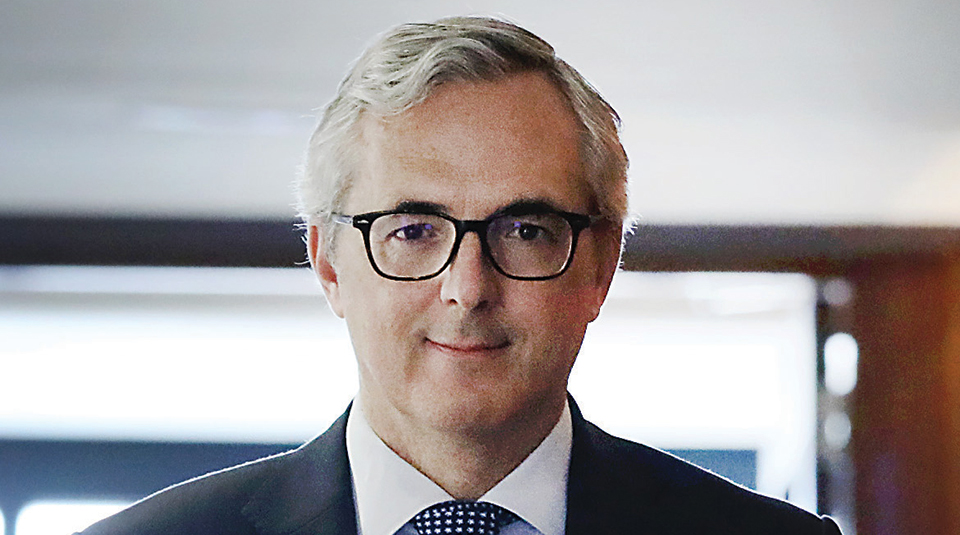
There was also a cultural component. Despite the group’s 2011 listing, CaixaBank’s foundation retains a role very similar to the one played before the Spanish banking crisis by regional savings banks, which ploughed profits into local social and cultural projects, sometimes in a political manner. The Caixa Foundation, overseen by former CaixaBank chairman Isidro Fainé, has a budget of hundreds of millions of euros every year. At BBVA, Santander and Sabadell, charitable initiatives are proportionally smaller and much less intrinsic to their institutional makeup.
Even considering the cost benefits of the merger, analysts still expect CaixaBank to earn below its cost of equity for the foreseeable future: about 8% in 2022 and 2023, according to Barclays.
“I don’t agree with what the market thinks is the cost of equity,” says chief financial officer Javier Pano, who is preparing to detail new medium-term targets early next year. “Government bond yields are negative or only slightly above zero and yields on other financial assets are at all-time lows. Despite all this, the market is still asking for a return on equity close to double digits. However, the reality is that the market is asking for this and if we want to improve our valuation we need to be as close to what the market is asking as possible.”
For historic reasons, CaixaBank stands out from other former savings banks due to its in-house product factories in insurance and asset management, including its ownership of VidaCaixa, by far Spain’s largest life insurer, with a book of about €100 billion. This has become even more of a differentiating factor as negative rates weigh down net interest margins. It’s CaixaBank’s greatest strength, in Goirigolzarri’s view, and the one that underpins the new entity’s viability, especially as Bankia did not enjoy the same business diversification.
“We believe that we can cross sell these products to the customer base of Bankia,” says Goirigolzarri. “This is not just a defensive merger, about cost reductions, it’s also a merger which presents us with growth potential.”
Growth opportunity
CaixaBank therefore expects €290 million of revenue synergies. Analysts are sceptical about that. Mergers, not just in banking, typically result in some loss of customers. More predictably, however, the deal could save €75 million simply from in-sourcing insurance products from Bankia’s joint venture with Mapfre, which it is renegotiating.
For Gortázar the addition of Bankia’s clients – above all in insurance at a time when negative interest rates are weighing down banking – is a growth opportunity that is not to be missed. Bankia’s clients only held about 22% of their funds in asset management and life insurance products, versus 41% at CaixaBank.
“There’s a very different starting position between us and Bankia in insurance,” says Gortázar. “We were conceived as a bank and an insurer since our inception in 1904. That has resulted in our branch network being very familiar with insurance products as a core part of our service. They must be fully able to discuss insurance with a client when they place a deposit or take out a mortgage. That’s very ingrained in the DNA. When you combine these two organizations, the possibility of extending this to Bankia’s clients is obvious to us.”
This combination of the country’s largest retail bank with a top-tier local insurer, as well as in-house asset management, is something that mirrors the position of Intesa Sanpaolo in Italy. To that extent, it’s something of an embarrassment that its profitability and valuation has been markedly lower than its Italian peer.
Part of the reason may be the higher level of accumulated wealth in northern Italy than in Spain. Life insurance is more akin to a savings product in continental Europe than it is in the UK. Nevertheless, higher economic growth rates in Spain than Italy, coupled with a shift towards financial assets after the bursting of the Spanish developer bubble, could mean the gap between the two market opportunities narrows.
Bankia needed more revenues and CaixaBank needed lower costs. From that perspective, the two banks were complementary
Michael Christodoulou, Berenberg
Wealth and asset management are other areas in which CaixaBank hopes to grow, both because of the impact of negative rates on its deposit business and because of the cross-selling opportunity with Bankia’s clients. CaixaBank already manages 35% of discretionary mutual fund portfolios in Spain, about €32 billion. There’s demand among younger retirees for capital-protected growth products, for example. At the higher end of the market, the bank sees itself as a first mover in independent wealth advisory.
Meanwhile, Goirigolzarri and Gortázar both see scope to take advantage of the bank’s newfound bulk by growing in corporate and investment banking – clients with €500 million or more in revenues – where it’s previously lagged well behind BBVA and Santander. Gortázar has pushed for growth in this area since he became chief executive in 2014. The bank has turned representative offices in Frankfurt, London and Paris into subsidiaries, and opened more offices outside Europe.
This will accelerate, partly thanks to growing funding in euros – €163 billion of liquidity and a liquidity coverage ratio of 333%. “We’re extremely liquid because we’ve been extremely successful in building a very sticky customer deposit base,” Gortázar says.
The bank is by no means suggesting it will differentiate itself in areas like cross-border advisory outside Spain. Gortázar is at pains to say that the bank is in no rush to radically alter the institution’s character in a way that would leave it exposed to a switch in the cycle. “It’s a cautious and gradual expansion, especially from the credit side. Our expansion is focused on investment grade names and not on structured products,” he says.
“We’re looking at real clients and real clients to who we are not just going to be lending but providing other services, transaction services, because some of them also have significant Spanish operations. The good thing is that Europe is a very large market for us. We can be gradual and still make a difference.”
Next level
Gortázar compares the opportunity to private banking, which CaixaBank has built up both organically and through the 2014 acquisition of Barclays Bank SAU to the extent that CaixaBank can now boast one of the top two positions in Spain.
“The merger gives us much greater critical mass, not just in terms of balance sheet but also people. We have a lot of people coming from Bankia in corporate and investment banking. Rather than thinking that we need to then downsize and have people leave, we’re saying here are the people – great professionals – that are going to allow us to take it to the next level. Then, obviously, we are going to be selectively hiring as we go to foreign markets to reinforce our presence.”
By comparison, the scope to realize economies of scale in retail outside Iberia is further away.
“Theoretically we have the same regulation and supervision,” Goirigolzarri says. “But in practice, each country has its own system. For example, anti-money laundering regulation is different in Italy, Portugal and France. Before real European consolidation we need to see changes that make regulation and supervision more homogenous.”
Things are slightly different in Portugal, which is very close to Spain in terms of its geography, language and recent history, both having joined the European Economic Community in 1986. CaixaBank’s presence there is therefore equivalent to the presence of BNP Paribas and ING in Belgium or Irish banks’ expansion in the UK. Moving beyond the Pyrenees would be a bigger leap.
Four years after CaixaBank completed a takeover of BPI, the cost-to-income ratio at Portugal’s fifth-largest bank has fallen from around 70% to close to 55%, partly thanks to sharing functions like CaixaBank’s insurance and asset management product factories. This does not mean that an acquisition to bulk up in Portugal, most obviously through the purchase of Millennium bcp or Novo Banco, is necessarily the next step.
“BPI has great benefits of scale thanks to belonging to CaixaBank,” Gortázar says. “I do not think that the fact that we have a 25% market share in Spain and a 12% market share in Portugal means that we need to move to the same levels in Portugal. Hopefully over time we will continue to gain market share organically in Portugal. But the bank can be quite profitable operating at lower scale because it is part of CaixaBank.”
Nevertheless, credit analysts still worry about CaixaBank’s lack of geographic diversification. There are also longstanding questions in the sector about whether a single European country will ever be big enough to generate the sort of economies of scale that national banks enjoy in the US.
“At some point in time we will say: ‘Well look, we have a quarter of the market in one of the largest eurozone countries and we have a very promising presence in Portugal, do we want to say we should do something else?’” Gortázar acknowledges.
What is certain is that if CaixaBank ever did look beyond Iberia, it would more likely do so in Europe than elsewhere – as its move to Portugal rather than its peers’ expansion in Latin America suggests. “It’s natural to think of Europe as the first port of call,” says Gortázar. “We have a great advantage in Europe. There’s a common currency and a common supervisor. We would like to have a closer banking union, but Europe is our market. We live in a European union and even if it is slow, things move in one direction.”
How rates and the state brought Bankia into CaixaBank
When José Ignacio Goirigolzarri joined Bankia as its executive chairman in 2012, it was an institution in name only. Its staff were disorientated and demoralized. The IT platforms from its 2010 creation from Caja Madrid and six smaller savings banks were still disconnected. Clients, many holding worthless preference shares after a prior recapitalization, were so angry they had taken to the streets in protest.
In mid 2020, by contrast, Bankia had by far the highest capital ratio among the major Spanish banks: 13.3% versus 11.8% at CaixaBank, according to Moody’s. “We generated a tremendous amount of capital and we increased our market share in an important way in consumer loans, mutual funds and SMEs,” says Goirigolzarri. “The morale of our people had a tremendous change.”
A €19 billion bailout from the Spanish government in 2012 was vital in stabilizing Bankia. But the almost existential challenge posed to the eurozone banking sector by the introduction of negative eurozone rates in 2014 was especially damaging for the institution. As an amalgamation of former savings banks, it was especially reliant on mortgages, which in Spain are generally rate trackers. Its portfolio of zero-yielding bonds issued by the Spanish bad bank, SAREB, was another constraint, according to Fitch.
After three years Goirigolzarri came to realize that negative interest rates would not disappear in a few years, as bankers had hoped when the European Central Bank introduced the policy. This, for Bankia, was even more important in terms of the impetus towards a merger than the change in the competitive landscape brought about by fintech or the general shift in consumer habits towards digital channels.
The last straw
The last straw came after a central banking forum at Sintra in Portugal in summer 2019, when the ECB’s belief in negative rates became clearer still. “We started to think that a merger was a clear option for us,” Goirigolzarri remembers. With the ECB then cutting the policy rate by another 10 basis points to -0.5% in September, European bank shares fell by about a quarter in 2019, with shares in Bankia down about 35%.
Bank shares fell even further when Covid arrived. The pandemic made negative rates look even more entrenched. It raised the prospect of higher costs of risk and brought greater scope to take out costs from the branch network as digitalization accelerated. According to investment bankers, Covid-19 made the path forward particularly clear in this case, as it removed the theoretical possibility of a merger involving Banco Sabadell, seen as the most likely alternative for either bank, because its relatively large share of SME loans now looked especially risky.
Despite rising talk about bank M&A across southern Europe, news of the deal came as a surprise to almost all of those not directly involved when it first leaked in early September. CaixaBank only appointed its adviser, Morgan Stanley, in August.
Bankia had been taking general advice from Rothschild for several years. The idea that it might seek to create value for the taxpayer through a merger was already relatively well accepted in Madrid, which may have helped reduce the political noise around it, including that around the Catalan issue.
But in a sense this merger was always inevitable, in a way that may never be true for future international acquisitions by CaixaBank. Chief executive Gonzalo Gortázar had imagined a similar deal before he moved to Barcelona: a merger between Spain’s two biggest savings banks, la Caixa and Caja Madrid, as they were before he joined the Catalan group in 2009. As head of European financial institutions at Morgan Stanley, based in London and Madrid, Gortazar’s job was to advise on such deals.
Merger dreams
Gortázar is not the only one to have considered it. According to a senior source outside the bank, Isidro Fainé – CaixaBank’s former chairman and now head of the Caixa foundation that remains its biggest shareholder – had “always dreamed” of creating a national champion by merging with his rival in Madrid. Another agrees that if Fainé had his way, meetings between him and Rodrigo Rato, Bankia’s short-lived first chairman, might have resulted in a merger 10 years ago.
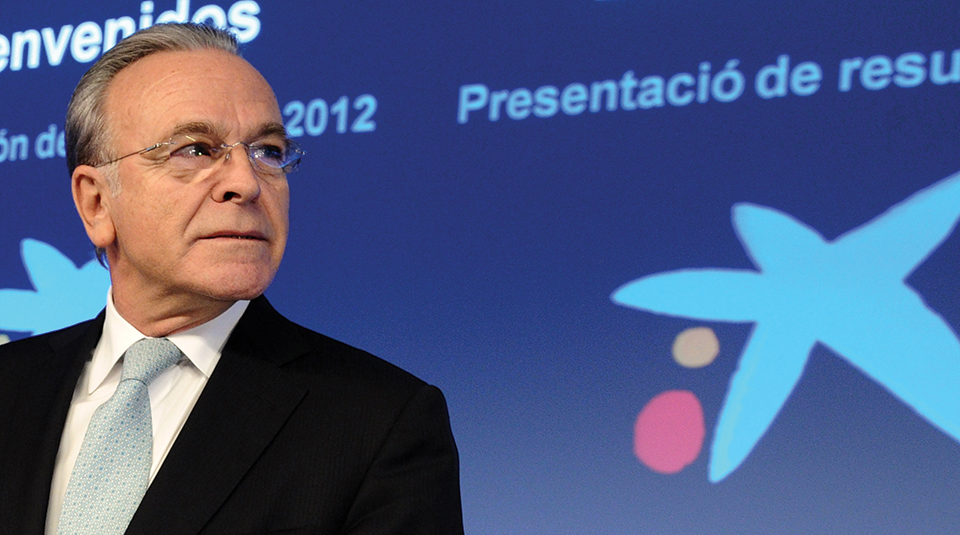
Fainé, who is almost 80 years old, is no longer involved in the bank’s management. He left CaixaBank’s board in 2016 after the bank’s separation from Criteria, the investment holding company of the Caixa Foundation. Nevertheless, he was involved in the negotiations that lead to the agreement between the two banks’ boards last September. Aside from representing CaixaBank’s reference shareholder, holding 40% of its stock, he is the longstanding chair of the Spanish savings banks’ association, a trade body whose biggest members were CaixaBank and Bankia.
As Bankia’s 2012 bailout had left it 61.8% state-owned, the deal was therefore to a large extent between Fainé and the centre-left minister of the economy, Nadia Calviño. It is a commonly held theory in Spanish financial circles that the deal may have won the approval of Pedro Sanchez, the centre-left Spanish prime minister, because it would make it harder for his coalition partner, far-left party Podemos, to push for Bankia to become a socially-orientated state bank. That’s because the government’s share, after the merger, would fall to a minority, 16.1%, compared with Criteria’s 30%.
Goirigolzarri, acting as a go-between, helped gain the pre-agreement of these two big shareholders before seeking board approval.
Ensuring Bankia’s private-sector orientation, meanwhile, had long been Goirigolzarri’s principal concern. In 2009 the Basque-born banker secured an extraordinarily large pension from BBVA of €3 million a year, while Francisco Gonzalez stayed on as BBVA’s executive chairman, despite being 10 years older. Goirigolzarri earned less than a third of that at Bankia. When state bailout fund FROB called him back from retirement, however, he insisted that the state and the fund should not be represented.
“When I accepted the chairmanship of Bankia, I had one requirement: no political interference and the clearest way to do that was that all the board members, except three executives, would be independent. That’s how we ran Bankia.”
This approach made Goirigolzarri something of a bugbear for Podemos, especially given the earlier publicity around his pension deal, clinched at a time when banks were collapsing around the world. Early moves to cut Bankia’s branches and staff by a third again made him few friends on the left. In the Spanish financial sector, by contrast, his reputation is closer to heroic. For Fainé, Goirigolzarri is “the best banker in Spain,” according to a source who knows them both.
[…]
‘We like branches’
The chance to cut costs, especially by closing previously competing branches, is a core part of the rationale behind CaixaBank’s merger with Bankia. Its post-merger restructuring agreement with trade unions in July included a plan to integrate about 1,500 branches.
But for chief executive Gonzalo Gortázar, branches are both a prime facet of CaixaBank’s competitive advantage over online-only challenger banks and an essential part of its social role.
“We still feel this business is going to be a combination of digital and physical,” he says. “We like branches. I will be clear about that. But we like branches not focused on helping clients to do transactions that they can otherwise do on a more comfortable basis through their mobile, rather than branches that provide higher value-add services to clients.”
To an extent Covid has simply made CaixaBank’s approach in the previous decade even more relevant. Branches, in other words, are there for advice on big financial decisions rather than transactions. There will be fewer of them.
Investment in mobile banking and high-tech ATM functionality – such as facial recognition – is eliminating the need for human tellers. On the other hand, it is deploying around 32,000 certified financial advisers in the network.
After the merger, in cities, the strategy is therefore to save more money by closing duplicate branches and increasing the distance between branches. Rural communities, meanwhile, will be even more reliant on CaixaBank now it has a larger share of the market. It is the only bank physically present in 360 towns. CaixaBank has recommitted to a prior pledge not to pull out of towns in that situation, something Gortázar insists it can more easily do because it is bigger. “We are going to have this coexistence for a while of clients who are completely digital and clients who are completely physical and who would have a real problem if the traditional branch were to disappear,” Gortázar says.
“If you’re a small bank, it’s very difficult to stay in certain places where the business is not very profitable. If you have larger scale, you can lower your cost and still maintain your presence, doing some good to society by keeping these services and still have a reasonable profitability associated with it.”