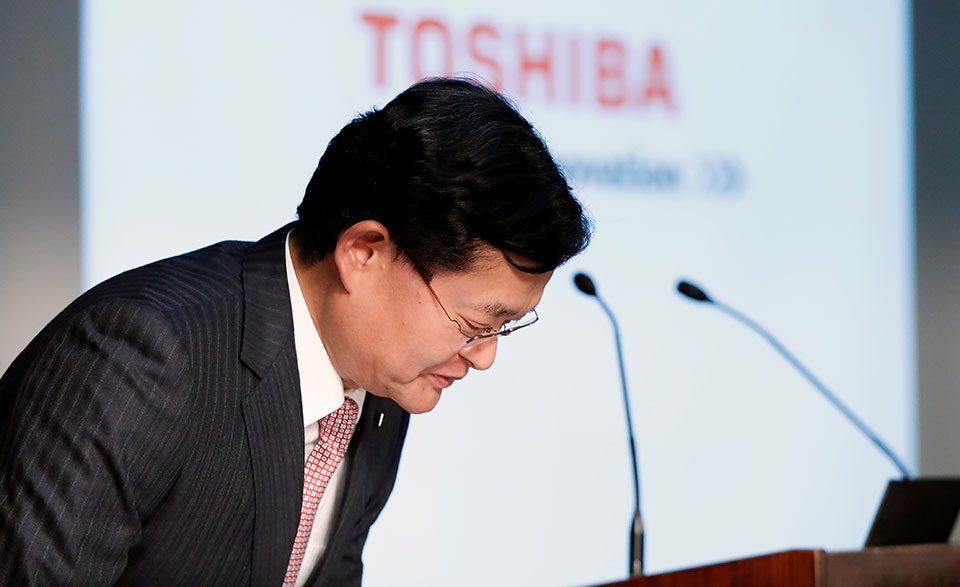
Toshiba shareholders voted on Thursday to go ahead with an independent investigation into claims that some investors were pressured on how to vote at least year’s annual general meeting (AGM).
As Euromoney reported in January, the case was considered a bellwether for corporate governance and shareholder activism in Japan.
Several shareholders, including the endowment fund of Harvard University, were allegedly pressured to follow management recommendations at the AGM, including on the reappointment of the CEO and other board members.
Harvard abstained as a result, potentially changing the general meeting’s outcome.
It is a terrible look for Toshiba
Consequently, Toshiba’s biggest shareholder Effissimo Capital Management called an emergency general meeting seeking an independent review of what happened.
Thursday’s successful vote was only the fourth time a shareholder motion had won approval in Japan, and by far the most significant, given the scale of Toshiba’s business, brand and history.
Some of Toshiba’s recent management decisions already seemed out of step with a new mood in Japan towards shareholder value, better governance and the divestment of non-core assets.
The day saw a second vote, on a proposal brought by Farallon Capital Management seeking clarity on Toshiba’s capital policy. It did not pass, but the sight of Toshiba’s two biggest shareholders lining up against it – partly because of the treatment of another, Harvard – was unprecedented.
Among the names believed to have voted in favour of the investigation are Calpers and Norges Bank Investment Management. It is a terrible look for Toshiba.
Shift in power
So now what? The investigation might find nothing wrong, but even if it does, the events on Thursday were still important. They gave the clearest signal to date that the balance of power in Japanese corporate life has shifted towards the shareholder.
This won’t be the last time activist investors – or just plain disgruntled shareholders – take issue with the behaviour of management in Japan, and management would be wise to head that off before it gets as far as the Toshiba proposals have.
The answer for Japanese enterprises and the banks that advise them is a focus on shareholder value, which means both good dialogue with investors and management decisions that make sense for all parties.
In the meantime, it remains to be seen if Toshiba chief executive Nobuaki Kurumatani can survive this embarrassing insurrection.


