
Michael Klein, a former head of corporate and investment banking at Citi, has more recently made a name for himself as a sponsor of special purpose acquisition companies (Spacs) carrying the name Churchill.
His first acquisition in 2019 of business information company Clarivate Analytics has provided a 300% return on IPO capital, with subsequent deals for healthcare business MultiPlan in July 2020 and for education technology company Skillsoft in October producing 25% returns.
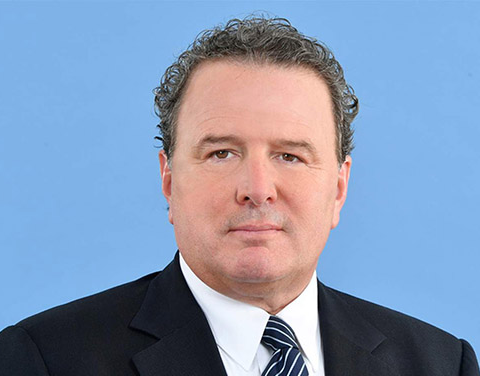
On Monday, Klein announced his fourth and biggest transaction to date, confirming that his NYSE-listed Churchill Capital IV (CCIV) will acquire electric vehicle maker Lucid in a deal valued at $11.75 billion.
Lucid is led by chief executive and chief technology officer Peter Rawlinson, previously vice-president of engineering at Tesla and chief engineer for its breakthrough Model S.
The pitch for Lucid is a simple one. This is a company whose listed stock you will be able to buy at a fraction of the valuation of Tesla, but which claims to have second-mover advantage and better technology. It can produce luxury cars with better batteries that can drive further and faster on a single charge.
The investor presentation for the merger was mainly taken up with adverts for its debut marque, the Lucid Air, which is being sold on a concept of post-luxury: less look at my flash motor; more consider the understated elegance of my commitment to the environment.
Investors appear to hate the deal.
The CCIV share price stood at $62.91 on the morning of announcement. The next day it was down to $33.78. That’s a 46% fall.
Is this a defining moment for Spacs?

A bigger story than the fall in CCIV’s share price on news of the Lucid deal was its run up on the rumour. Having hovered at around $10 since the IPO in July 2020, CCIV shares suddenly took off in January on talk that the Silicon Valley-headquartered car-maker might reverse into it.
There are two possible explanations for the subsequent fall.
Holders of CCIV stock will end up owning just 16% of Lucid, with its existing private shareholders retaining 73.5% and anchor investors in a $2.5 billion Pipe deal owning 10.4%.
The Pipe deal values the company at $24 billion. Maybe that now looks too rich to funds invested in CCIV.
Lucid’s leaders may tell a great story about mass industrialization of electric vehicles in presentation packs featuring images of its showrooms in Beverly Hill and West Palm Beach. But this will be a pre-revenue, not just a pre-profit company listed on the NYSE. It has yet to sell a single car.
Profit is not scheduled until 2025.
The timing was also unfortunate. Tesla’s share price, having risen from $330 at the start of September 2020 to $880 in January, began to slide in February, falling sharply from $780 on Friday to $652 on Tuesday as investors rotated out of tech stocks on inflation fears.
The NYSE had questions in January about the rise in CCIV shares prompted by the Lucid rumours. These drew the non-committal response that an acquisition company tends to be looking at possible combinations.
The SEC needs to get its act together on Spacs.



