
In the face of concerted and coordinated criticism, the Mexican government has pulled its proposed currency bill from Congress. But it may not be for long.
The decision, which came on December 15, saw the peso restart its climb against the dollar as investors reacted to the halt of an alarmingly bad piece of legislation.
However, despite the postponement of its debate, the bill remains on the official agenda for 2021.
If passed, the bill would infringe on the central bank’s independence, as well as damage the stability of the financial system. Little wonder, then, that the opposition has been so vehement.
Investors should remain cautious – we have been here before. This isn’t the first time the administration of Andrés Manuel López Obrador (Amlo) has proposed policy so wrong-headed and unpopular that everyone thought he would have to beat a retreat, only for that consensus to be proved wrong.
Victory in this particular battle shouldn’t be taken as winning the war
It is not so long ago that the accepted opinion was that Amlo would be forced to drop his plans to abandon Mexico City’s new airport terminal.
After all, the project was estimated to be 50% complete already, while $6 billion of bonds had already been issued to finance construction. Meanwhile, existing infrastructure was bumping up against capacity issues.
Amlo stuck to his guns and the terminal was scrapped.
This time, however, it is possibly more worrying, because the new currency bill crosses a red line for the administration: it enters the world of financial regulation.
And so, while president of the central bank Alejandro Díaz de León lobbied congress in a virtual session and the Mexican Association of Banks managed to get the debate that was scheduled for December 15 postponed, victory in this particular battle shouldn’t be taken as winning the war.
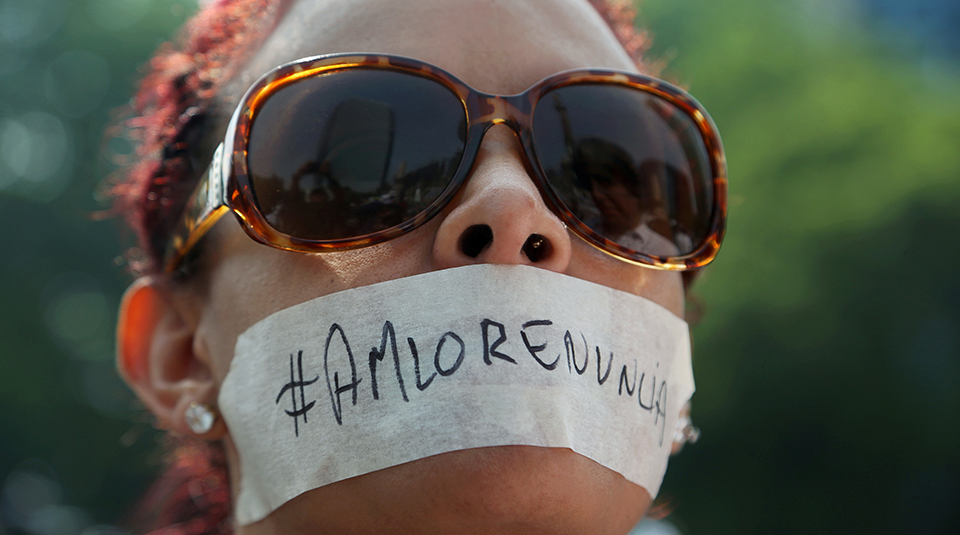
Cash crisis
To clarify, it is worth sketching why opposition to the currency bill has been so strong.
The bill – already passed in the Senate – would force the central bank to buy paper foreign currency (almost entirely dollars) from domestic banks. The idea is to help legal suppliers of paper currency to the economy (such as remittances and tourism) have an official buyer of their physical currency.
The senator who introduced the bill (Ricardo Monreal, leader of the Morena party that was founded by the president) argued that anti-money laundering rules restrict the amount of US cash banks can buy and so force individuals to sell their notes at a discount to other parties.
However – as its critics point out – it would create demand from those whose illicit activities generate foreign cash that they struggle to convert into domestic currency.
As the central bank, Banxico, stated in a technical note to Congress, only 1% of remittances are physical (actually 0.7% between January and September 2020), with the vast majority in 2020 coming digitally.
History tells us that the danger hasn’t passed
Banxico also pointed out that this law could lead to sanctions from international financial authorities that would likely see it as a rolling back of anti-money-laundering efforts introduced throughout the global financial system recently.
The chief executives of Mexico’s largest banks, including Banorte’s Marcos Martinez, BBVA Mexico’s Eduardo Osuna, Hector Grisi of Santander Mexico and HSBC Mexico’s Jorge Arce, also warned publicly that the legislation would weaken the central bank’s independence and harm the reputation of the country’s financial system.
The US Treasury also got involved, warning that the legislation “would have the effect of making cooperation between our countries more difficult”.
After all, the biggest beneficiaries of this law would be Mexico’s cartels, helping – as it would – the laundering of their revenues.
Own goal
For a country struggling under the power of the cartels – the fact that the Mexican army was forced to release the son of notorious drug lord El Chapo at the personal behest of Amlo in October 2019 is a powerful statement about the relative power of the state – the bill would have been an own-goal.
As Citi points out in an acerbic note, the negative impact wouldn’t have just been domestic.
“There was a narrative among foreign investors that even if domestic institutional deterioration was taking place, it didn’t matter as long as a few pillars remained untouched: Banxico, the Afores [Mexico’s retirement fund administrators], the financial system and free trade.”
That the senate fast-tracked legislation that clearly departed from this international comfort zone is a warning sign.
The rally of the peso is understandable, but recent history tells us that the danger hasn’t passed: not from this bill or from other legislation that swats aside widespread criticism from Banxico and the rest of the financial system.
It is also a reminder that political risk from Amlo’s particular brand of populism remains.
He has continued to confound international markets by shunning a fiscal response to the pandemic’s economic pain. Mexico’s response has made it an outlier across the region, emerging markets more broadly and even against the policy yardstick of developed market economies.
But he is still able to antagonise the financial markets . And worse, the bill was endorsed by senators of all the big parties, including former cabinet members of president Enrique Peña Nieto’s government.
That makes it hard not to agree with Citi’s conclusion: “[The reform] raises a significant yellow flag in the deterioration of the country, even if the reform is not ratified.”


