Receiving a $3 billion penalty for one of the biggest mis-selling scandals in history could hardly be described as a good start to the year for any bank – or a good beginning for a new chief executive. But Wells Fargo’s settlement with the US Department of Justice (DoJ) in early 2020 will hopefully be the peak of the litigation and customer remediation costs it has suffered for setting up millions of fake accounts (among other consumer abuses) in the first decade and a half of the 21st century.
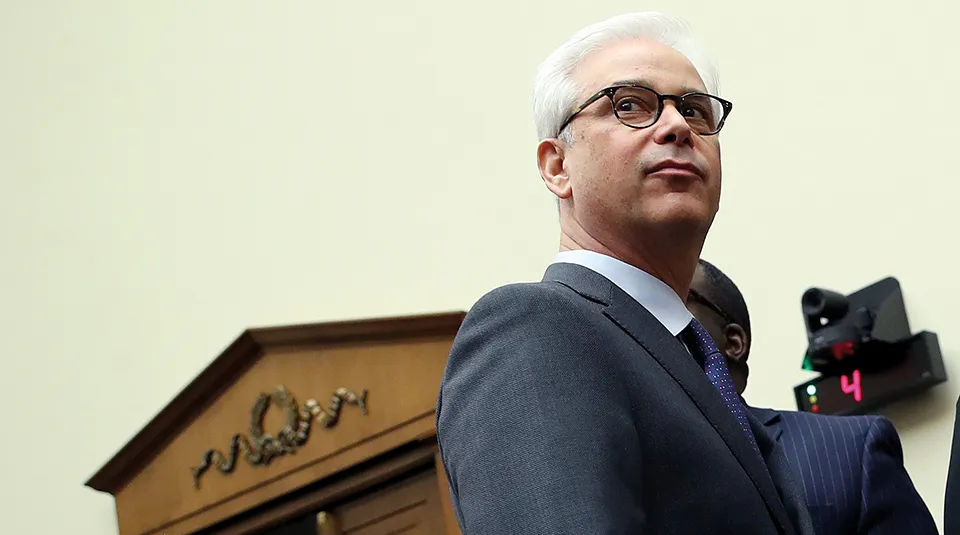
Under Charles Scharf, who joined as chief executive in October 2019, the resolution of these matters at the DoJ could be a chance to move on and rebuild the firm’s reputation.
Formerly chief executive of Bank of New York Mellon, Scharf has set about overhauling the bank’s senior management. He began in late 2019 with the appointment of chief operating officer, Scott Powell – someone with ample experience of managing regulatory obstacles as ex-chief executive of Santander Holdings USA.
Scharf continued in 2020 with the chief financial officer, Mike Santomassimo, who was his CFO at BNY Mellon.
Other newcomers in 2020 included risk officers Kevin Reen and Bill Juliano, formerly of JPMorgan and Santander, respectively. There is also a new consumer lending chief executive, Mike Weinbach, and a new wealth and investment management chief executive, Barry Sommers, both ex-JPMorgan.
The clear-out even reached Betsy Duke – chairman since 2018 – who resigned ahead of a key House financial services committee hearing in March. Former Bank of America chief financial officer Charles Noski replaced her.
The new guard
Almost all of the new guard, like Scharf, are based in New York rather than San Francisco, where most of the bank’s leadership previously sat. Clearly, there’s little nostalgia for the old ways in which Wells Fargo was run.
Scharf’s predecessor Tim Sloan resigned in March 2019, after struggling to convince regulators that the bank had changed – partly because he was a senior Wells executive under John Stumpf, the chief executive during most of the time the abuses happened.
In 2020, the Office of the Comptroller of the Currency and then the Securities and Exchange Commission issued fines and other penalties against Wells Fargo’s former management, including Stumpf, although not Sloan.
Scharf knows he needs to do more than gather former colleagues from other banks around him. His team has spent much of 2020 going through the firm’s complex business to work out where to squeeze out more cost savings and where the future will lie, as the old cross-selling business model is so thoroughly discredited.
Even before Scharf arrived, the bank had begun to sell and close some small and marginal businesses. By the end of 2020, there were rumours of bigger sales, including the private-label card portfolio and the asset management division, which has over $600 billion under management.
Scharf has also put an emphasis on fintech, drawing on his time as chief executive of Visa between 2012 and 2016.
After a net loss of $2.4 billion in the second quarter, Wells was the only large US bank to cut its dividend
However, the aftermath of Covid-19 will make his strategy’s chances of success far less certain. The pandemic has pushed down interest rates and caused a steep decline in consumer borrowing.
The relative lack of trading revenue has also made it harder for Wells Fargo to bear the pain of loan loss writedowns as a result of the pandemic.
After a net loss of $2.4 billion in the second quarter, Wells was the only large US bank to cut its dividend. Profit rebounded to $2 billion in the third quarter, but the share price still suffered more than peer banks.
A relatively small recovery in November meant the stock was still down more than 50% in 2020, giving it a discount to book value of about 30%, according to research from Citi. Its US peers were typically trading just above par.
These days Wells Fargo cannot even count on its long-standing cornerstone investor, Berkshire Hathaway. Warren Buffett’s investment vehicle cut stakes across the banking sector in 2020, and this bank bore the brunt of it.
Berkshire Hathaway’s stake in Wells Fargo had fallen to 3% by the autumn, down from 8.4% at the beginning of 2020.
Regulatory burdens
For all banks, making long-term plans in a year of such uncertainty has been almost impossible. In Wells Fargo’s case it has been even more difficult due to the US presidential election and, more specifically, how the result might affect the special regulatory burdens under which it has been operating.
The US Federal Reserve prohibited Wells Fargo from growing its $1.9 trillion balance sheet in 2018 in light of control and governance concerns arising from the fake accounts scandal. It temporarily lifted this asset cap in April to allow the bank to take part in Washington’s programmes to support small business lending, including the Paycheck Protection Program.
If the asset cap is removed in 2021 it will be a big boost for the bank.
Sloan’s lobbying to get rid of the cap only served to irritate politicians and Federal Reserve officials. One bit of good news for Scharf, then, is president-elect Joe Biden’s nomination of Janet Yellen as treasury secretary.
Yellen was hardly generous to Wells as Fed chair – the asset cap came from her. However, one much-discussed alternative for treasury secretary was Elizabeth Warren, the left-leaning Democrat who led the public shaming of Stumpf, while leader of the Senate banking committee.