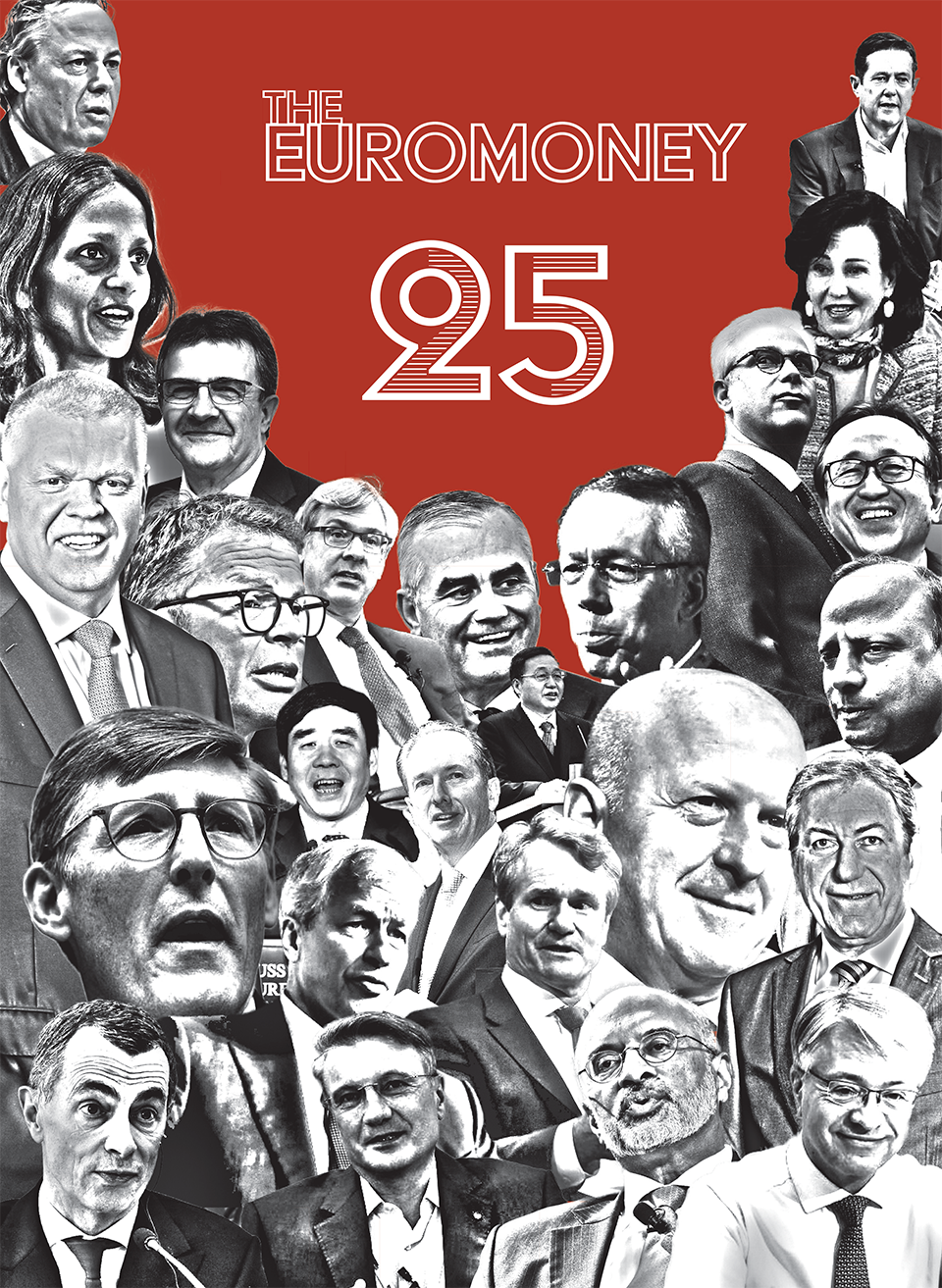
It was a tough first 18 months in charge for Chen Siqing, who was appointed party secretary and chairman of Industrial and Commercial Bank of China in April 2019. In that time, the head of China’s largest bank has had to deal with an intransigent US president, a trade war between the two superpowers and a global pandemic.
Despite all that, ICBC looks to be in pretty good shape.
In its 2020 interim report, the bank did a neat job of summarizing the struggles it faced in the early months of this year, when Covid struck and the country reeled. In it, a bank rarely given to expressing emotion, described the pandemic as “complicated” and “severe”.
Its description of Covid as a “major battle and test” drew comparisons with the raised-fist salute the government rolled out on posters around the nation when Sars, another born-in-China pandemic, struck in 2002.
ICBC said its main aim was to fulfil its “responsibility as a major bank” and to work hard to maintain the “steady development” of a wobbling economy.
Capital was deployed in the early months of the year – a lot of it and fast.
New domestic renminbi-denominated loans in the first six months totalled Rmb1.1 trillion ($166 billion), 40% more than it disbursed in the same period the year before.
The bank bought Rmb467 billion in local government bonds in the first six months and was lead underwriter on another Rmb911 billion worth of municipal debt – more than any other local bank.
In total, Rmb1.2 trillion in financing was deployed to restart an economy that contracted 6.8% year on year in the first three months.
‘Chunrun action’
At the heart of the plan to combat Covid was ‘Chunrun action’, a state-mandated financial package unveiled in March to bolster both large and small firms and keep supply chains running smoothly.
ICBC focused on helping seven sectors, including transport and logistics, foreign trade, manufacturing, energy and telecommunications – the backbone of China’s economy.
Understandably, this weighed on its finances. For the first time in years, distressed loans are back on the agenda.
At the start of the millennium, before Beijing sucked trillions of yuan of bad debt out of the system and then pushed China’s banks to sell shares in Hong Kong and Shanghai, they were awash with toxic, soured loans.
The phase of accelerating money and credit growth is over, so long as the economy’s growth recovery is on track
Nomura research note
In 2001, ICBC’s stated non-performing loan ratio was 25.1%. At the end of 2019, after 14 straight quarters of declining NPLs, that number was down to just 1.43%.
It was a source of great pride to the bank, although analysts argue that it reinforces the view that China’s largest lender by assets and market capitalization had forgotten that, in the right measure, risk can be healthy and helpful.
Now, NPLs are on the rise again, hitting 1.5% at the end of June 2020 and 1.55% at the end of September. How much higher they go depends on many factors. If global growth remains weak well into 2021, ICBC may have to step in to support state exporters.
Then there is the vexing issue of consumption growth, which has lagged the wider economy, coming in at negative 1% in the third quarter.
ICBC’s figures in 2020 are worse than would be expected in a ‘normal’ year – but not by much. Profit in the nine months to the end of September was Rmb230.2 billion, down 8.9% compared with the same time a year ago. Net interest income rose 2.2% over the period, to Rmb462.8 billion.
Mojo
By the time the bank issued its third-quarter figures in October, posting a 1.6% year-on-year rise in net interest income and a 4.3% fall in profits, a sense of normality had begun to return.
With the West still suffering economically, and wobbly with political instability, China has regained a good measure of its mojo. In the third quarter, economic output expanded by 4.9% year on year, according to the National Bureau of Statistics.
Imports grew 13.2% on an annualized basis in September, with exports up 9.9%. The IMF tips GDP to grow by 1.9% in 2020 – making it the only large economy to do so – and by 8.2% in 2021.
The effects of the pandemic are visible. ICBC set aside impairment losses on assets of Rmb125.5 billion in the first half of the year, a rise of 26.5% over the previous year. Its tier-1 capital adequacy ratio was 13.72% at the end of June, against 14.27% at the end of 2019.
But, overall, the bank looks in healthy shape.
In an October 30 research note, Nomura tipped loan growth to gradually stabilize in the new year, noting: “We believe the phase of accelerating money and credit growth is over, so long as the economy’s growth recovery is on track.”
Earnings pressure will continue until the end of the year, then ease too, it added.
Although 2020 was a test for ICBC, just as it was for China, neither were found wanting.