
Next year, another new digital bank is to launch in the UK.
It has whistled through regulatory clearance in just 18 months since founding, receiving in October an authorization with restrictions (AWR) banking licence from the Bank of England’s Prudential Regulation Authority (PRA) and the Financial Conduct Authority (FCA).
It has already raised more than £20 million through seed capital and then a series-A funding round.
Monument, named after the tower that commemorates the great fire of London, is set to serve the customer segment that all the large UK banks used to tell Euromoney was their best hope for profits: those mass-affluent individuals whose needs range across savings, investments, insurance and various categories of lending.
We would rather do low-volume, high-value business
Mintoo Bhandari, Monument
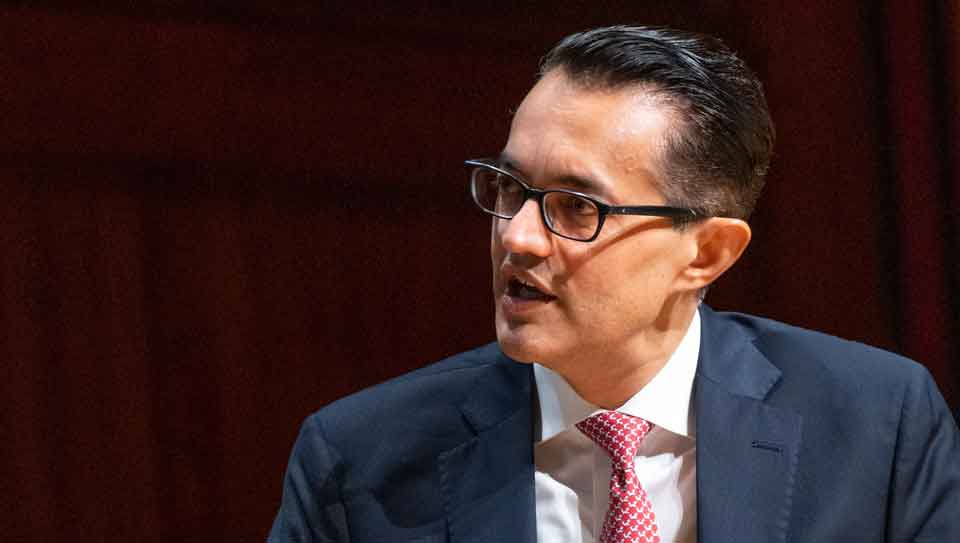
“We see between 3.5 million and maybe as many as 4.5 million customers in the UK with between £250,000 and £5 million in wealth,” Mintoo Bhandari, founder and chief executive, tells Euromoney. “But this segment of the market is now being vacated. The cost-to-income ratio does not work for high-street banks to deliver the service levels the mass-affluent customers expect and need.
“And this has been exacerbated by the regulatory changes that have pushed deposits generated by current and savings accounts into ring-fenced banks.”
Bhandari, who has experienced this himself as a customer of a couple of those legacy providers, says premier banking customers now face a choice: “They can stick with the ring-fenced bank and receive very little in the way of premium service or support and only highly standardized products, or, if they have it, they can pony up significantly more money and go into the private banking divisions, which is now the only way to have a relationship manager and customized products.
“But the level of service mass-affluent customers have come to expect and deserve now far outstrips what banks can charge for it and the cost of delivering it.
“It is only because of our technology that we can deliver the level of desired service cost-effectively.”
Target customers
Monument will target mainly professionals that are time-poor and growing their wealth: lawyers, accountants, doctors.
It will start with two main products: lending, with a particular focus on buy-to-let property loans; and savings, offering a premium to the near-0% paid by high-street banks on savings accounts.
This will be a fully fledged bank, extending credit on its own balance sheet while targeting a blended margin on loans of around 300 basis points. It will pay for deposits and eschew the wholesale funding and securitization markets.
Non-bank lenders can still access these. In late October, UK mortgage lender Enra Specialist Finance priced its first residential mortgage-backed securities (RMBS) deal, backed by a £267.8 million portfolio of buy-to-let and second-charge mortgages.
We have planned and executed a great transaction in challenging market conditions
Emily Gestetner, Enra

Emily Gestetner, chief financial officer of Enra, says: “In a matter of weeks, we have planned and executed a great transaction in challenging market conditions, given the backdrop of the pandemic and Brexit.”
Enra intends to come to market every year as a programmatic issuer. But those markets can slam shut and their unreliability has bedevilled non-bank lenders. Monument will not take that risk.
Bhandari, who previously worked as a senior partner at Apollo Global Management, seeks to distinguish his new venture’s approach from those of the many new digital banks targeting retail customers and SMEs.
“A lot of challenger banks are deploying technology to go after high-velocity transactional flows, but chasing high volumes of low-value business requires them to win millions of customers before they make a profit. We would rather do low-volume, high-value business. That ensures that we can be highly profitable and that we can deliver great service to our clients.”
He expands on the business plan: “One of the first investments many professional people make as they grow their wealth is into buy-to-let property. If we were to target a £3 billion loan book over the course of five years, and the average loan is approximately £1 million in value, we only need to make 3,000 of them to hit that mark. We are likely to only need to make 300 loans to cross into break-even, and we are quite confident of getting to £1 billion efficiently. This reflects a combination of a highly profitable segment which is also relatively easily scalable.”
A third of these customers may come through referrals from the experienced management team’s own networks, leaving them to acquire two-thirds through intermediated channels.
This does not sound wildly ambitious.
Aiming high
But in one regard, the bank is aiming high.
“We feel we can be profitable in our second year after launch,” Bhandari says. “We have the capital to start with loans, before growing deposits, which will be more of a drag on earnings. We think we can make a market-leading return on equity quite quickly: in the high-teen percentage points quite soon, and in the low 20s over time and on a steady-state basis.”
Euromoney accedes to the invitation to tour the bank’s app.
The first screen shows a customer their total wealth, with a split for their savings and borrowings and then various options to talk to individuals at the bank, showing the faces of up to three people, leading with the one the customer has dealt with most recently.
There are options to email, chat, message, talk by phone or to co-browse, whereby banker and customer can share a screen, looking, for example, at a loan application and talking through it.
We aim to get to a decision in principle on whether or not to lend up to £2 million within eight minutes
Wasim Khouri, Monument
Property loans can be complex, depending on the type of property, whether a customer is applying as an individual, with their partner, perhaps through a company vehicle.
Bhandari says: “Providing bridging loans is a rather ad-hoc business, with very few well-organized lenders. It can take weeks just to get an appointment, and yet time is often of the essence when buying property as an investment. We can help customers through that journey, even if it requires more interactions with our staff.
“The app will enable a smooth and transparent process, going all the way down to choosing lawyers to do the conveyancing and paying their fees with Apple Pay.”
Wasim Khouri, chief strategy officer, picks up the story: “There’s a lot of external data that can come into the underwriting decision both on a property and on an individual borrower, which enables us to deliver bespoke lending digitally. We also marry modern technology with highly skilled human support – our relationship managers can assist at any point in the lending journey.
“To deliver our service, we aim to get to a decision in principle on whether or not to lend up to £2 million within eight minutes.”
Management
Monument has put together an impressive management team and board.
Its chairman is Niall Booker who spent 30 years at HSBC and stepped in to be chief executive of The Co-operative Bank after its crisis in 2013.
Chief operating officer Steve Britain founded HSBC Premier in the UK and headed its cards, savings and investment business. Sir John Andrew Likierman, former dean of the London Business School and previously head of the Government Accountancy Service, is a director and chairs the audit committee.
“We produced all our regulatory documentation, for example around client approval, ourselves rather than outsourcing,” says Bhandari. “We have run a very granular fund raising, partly because if we had a small number of controlling institutional shareholders, that might have delayed the regulatory approval process. I think regulators see our board and believe we will be well-governed and that the management team will abide by and implement best practices.”