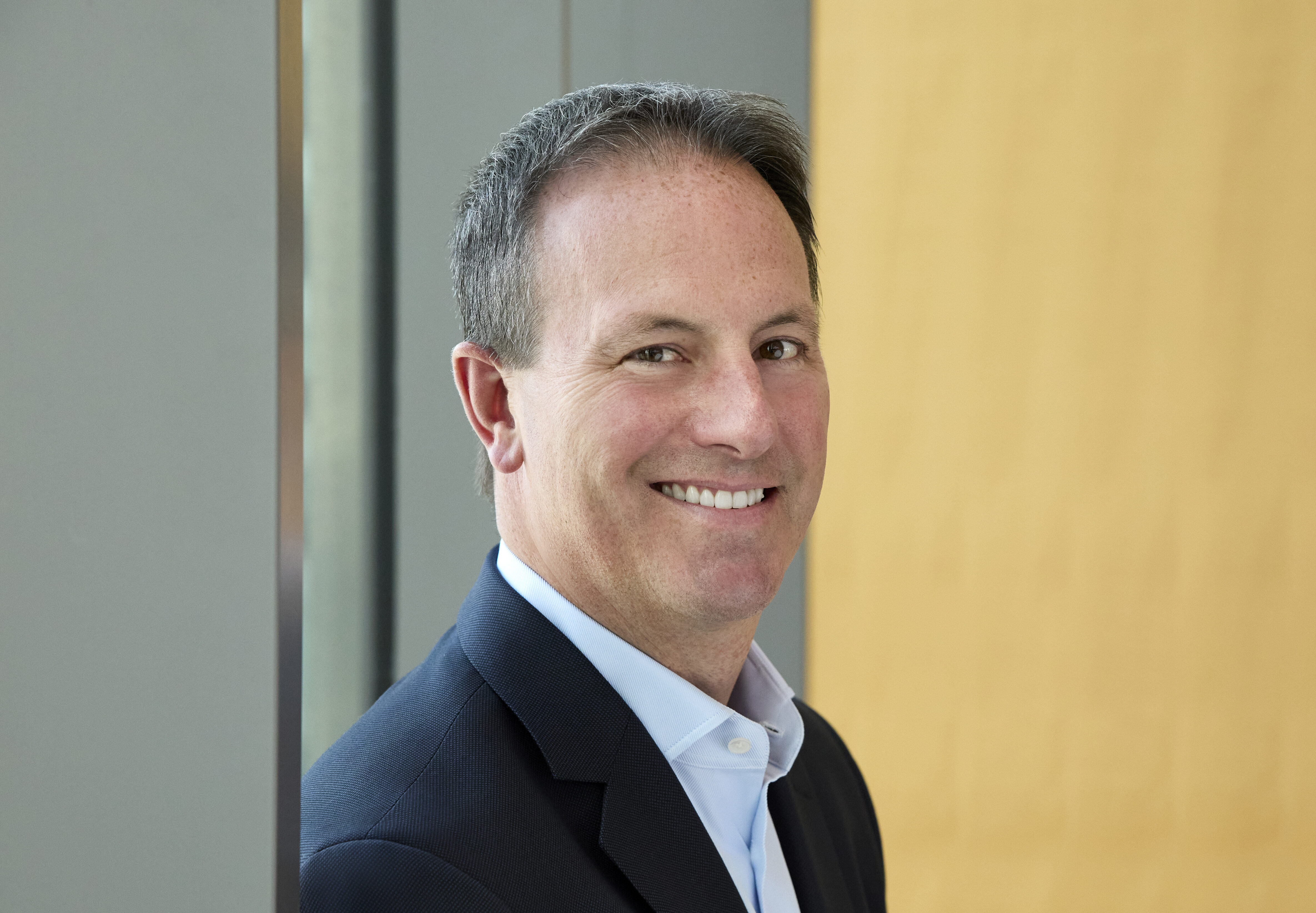
Even on Skype, Euromoney can see Fabrizio Campelli’s face light up.
“Ah, relevance,” he says, savouring the word. “It’s a good place to start.”
He’s underplaying it. For a firm like Deutsche Bank, where Campelli is chief transformation officer, it’s more than just a good place to start.
The concept of relevance is at the core of how chief executive Christian Sewing has been pitching the project he embarked on in 2019, a project that aims to overhaul what had become a lumbering and bloated institution that no longer knew what it stood for.
“Being relevant means competing in the segments and geographies where we can win, and to shed the rest,” says Campelli. “It is a compete-to-win strategy. We need a client set that can see us as a top-five supplier. That is the relevance we are seeking.
“If we try to compete but not for one of the top-five spots, we will lose focus.”
Deutsche knows all about losing itself along the way. Since the financial crisis, it has been grappling with the legacy of its previous obsession with being a leading global investment banking and markets player, a strategy that lacked the essential property of coordination.
The firm operated as a series of fiefdoms, none more so than the trading operation, which gradually lost its connection with the core client base.
Since Sewing started to articulate his vision for the bank back in the spring of 2018, it has been focused on its role in Germany in particular – and Europe in general – and on being central to real-economy corporate clients.
Over the course of a little more than a year, until Sewing’s public presentation of the restructuring of the bank in July 2019, that vision had already been coalescing around three messages.
The first was a compete-to-win strategy, meaning that the bank would no longer waste resources on businesses where it had no hope of being a leading provider for its clients – and which it could shed without risking the remainder of the franchise.
The second was that Deutsche’s future should not involve a merger with Commerzbank. The third was that there would be no going back yet again to shareholders for the money to achieve it.
“Relevance became a useful north star to help us define who we want to work with,” says Campelli. “When we identify a business in which we could not compete, the strategy was not to maintain optionality, as we might have done in the past, but to have the boldness to exit it.”
There have been plenty of examples of that. Cash equities, equity derivatives and prime brokerage are all effectively gone. The rates business in the US and Europe, Middle East and Africa has been reshaped.
The exit from equities has played out as expected, says Campelli: “The transfer of our prime business to BNP Paribas is well on track and the unwinding of the portfolio is well on track.”
‘Negative halo’
The big question when the bank unveiled its plans was whether even perfectly rational decisions to reduce or exit in some areas would hurt others to the extent of making the strategy unviable – an impact often dubbed the “negative halo”.
Campelli feels able to dismiss that now.
“I think we have seen quite the opposite,” he says. “Corporate clients recognized that in FIC [fixed income and currencies], in origination and in advisory, our product base was strong enough, so the adversity we feared did not materialize.”
And it’s also true that Deutsche’s equity capital markets franchise, which was roundly judged to be doomed when the bank announced it would withdraw from the secondary business, seems to be on the rise.
The strategy was not just a strategy of exiting. Behind it there were actions that were positive
Fabrizio Campelli
Deutsche’s ECM revenues had been falling for some time, but in the first two quarters of 2020 it clocked up nearly as much as in the whole of 2019. The second quarter was its best for years.
And other businesses have also not faltered as much as might have been feared. In DCM, the $1 billion of revenues the bank posted for the first half of 2020 is its best result for years.
In the 12 months to the end of June, revenues rose by 39% compared with the previous period, more than any other firm. FIC also rose, although by less than many peers.
Campelli thinks that part of the reason why the areas that the bank is still active in have held up is because the new approach was not solely negative.
“The strategy was not just a strategy of exiting,” he says. “Behind it there were actions that were positive. There was a clear commitment to a certain type of client, the ones where we can compete.
“By reducing the scope and breadth of our offering, we could focus more deeply on what we could do with those clients.”
The bank has increased its activity with its top 150 investment banking clients in the last 12 months, Campelli says.
Obsessive execution
The second factor he points to is a renewed focus on execution.
“I have been at Deutsche Bank for 16 years, and I have never seen the bank be so systematic about its strategy,” he says. “The mindset is one of obsessive execution.”
Within FIC there has been investment in expertise in flow credit and FX, for example. And while revenues are important, for the moment there is still plenty of focus on reducing structural costs. Across the bank, expenses have fallen for 10 quarters.
“That has never happened in my 16 years, and probably didn’t happen for the 10 years before that either,” says Campelli.
In 2019, Deutsche hit its target for €21.5 billion of adjusted costs and is on track to meet its €19.5 billion target for 2020. Through its capital release unit, it has cut risk-weighted assets by €28 billion, about 40%, and leverage by €164 billion, about 60% – both ahead of plan.
The investment bank has held up in spite of the cuts, but many analysts have pointed out that in some areas, like fixed income trading, Deutsche failed to capitalize on the rise in wallet during the turbulence of the Covid-19 crisis.
It is already a different bank, and that’s the thing that encourages me so much
Fabrizio Campelli
Plenty of peers with much bigger FIC businesses – particularly in the US – saw rises of more than 60% in the second quarter alone.
Campelli is not much bothered by that, as the principle behind the entire restructuring is to end up with a bank that is less reliant on volatile earnings streams.
For Deutsche , the real action is going on elsewhere.
“When you look at the things we did over the second quarter, for instance, the big decisions were all outside the investment bank,” he says.
It certainly has been busy of late. Deutsche merged its German legal entities, it brought together the international private bank and its wealth management business, it reorganized asset management, it migrated from outdated IT systems, it merged the Deutsche Bank and Postbank commercial banks, and it put in place a strategic partnership with Google aimed at building a new cloud-based platform that will enable them to jointly develop sophisticated technology solutions for the bank’s clients.
It’s clear that the bank has resisted the distractions in market conditions that might have grabbed all its attention in the past.
“When you have two buoyant quarters in some markets businesses, the temptation to revert to the old model is huge,” says Campelli. “But while it’s exciting to have a bit of oxygen, you have to keep your eye on the long-term goal.”
Deutsche might well be looking less like a top-tier investment bank, but that is no longer a priority.
Strategic horizon
“For a long time we were more obsessed with peers than with clients, but it comes down to what metric do we want to use?” says Campelli. “The reason we believe we are more competitive now is that the depth of engagement with clients is higher, but we are less focused now on league tables.”
Deutsche no longer has a target to be a top-five corporate finance franchise, for instance.
“To do that you need to be present in too many things, many of which would be loss-leading,” notes Campelli. “That obsession has abated.”
The bank has never had a board-level transformation officer like Campelli. It doesn’t just signal the importance of the work but also gives him an independence to operate that he thinks has made a difference.
It also affords him a longer-term strategic horizon that he says is part of the evidence of how Deutsche Bank is changing.
“This is very different to the days when we mostly lived in the present and mainly had an awareness for the opportunities in the current markets,” he says. “This is a bank that must change, but it is already a different bank, and that’s the thing that encourages me so much for the future.”
On the path that Deutsche has set out, it is succeeding so far – and it is this progress that Euromoney is recognizing with this award.
Campelli realizes, however, that the bank is far from being able to declare mission accomplished. After all, this is a plan designed to run through to the end of 2022.
How will he know when it has worked?
“If in two years’ time I can say that my role is redundant, that’s when we will know.”