 |
AlbaniaBest bank: OTP Albania |
Albania’s leading banks once again turned in a respectable set of results last year but were unable to compete on either growth or profitability with a newcomer to the market. OTP Albania, the winner of the award for Albania’s best bank, has been part of the Hungarian OTP group since March 2019.
|
|
Formerly a subsidiary of Societe Generale, the lender was number five by total assets and number four by loans at the time of the takeover.
In its first year under new ownership, however, it has clearly signalled its intent to become a big player in the market, taking advantage of high levels of liquidity to pursue aggressive lending expansion. In 2019 the bank increased its share of the loan market by 52 basis points to 10%, which in turn helped to boost return on equity to a market-beating 19% and reduce non-performing loans to 5.7% of the total.
|
|
|
Bledar Shella, |

Following the completion of an eight-month project to align with its new parent group, OTP Albania’s management – led by long-standing chief executive Bledar Shella – has also embarked on a comprehensive overhaul of the bank’s digital platforms as well as an upgrade of its core banking system.
There is still work to be done to challenge established market leaders Banka Kombetare Tregtare and Raiffeisen Bank Albania, and it remains to be seen how OTP Albania’s newer loan portfolios will fare during the Covid-19 crisis. For the moment, however, the bank’s new owners deserve credit for their commitment to revitalizing their new subsidiary and shaking up the Albanian banking market.
 |
ArmeniaBest bank: Ardshinbank |
Ardshinbank is Armenia’s best bank by virtue of its balanced growth, excellent profitability and innovative approach to funding.
The Armenian number three last year expanded its loan portfolio by 2.3% on the back of particularly strong growth in consumer lending and commercial lending, which increased by 46% and 37% year on year respectively.
Mortgages also proved a fertile area for the bank, with lending in the segment up 24% on 2018. This helped to boost net profit to Dram9.9 billion ($20.4 million) last year, equating to a return on equity of 13.8%.
Profitability was given a further fillip this year by Ardshinbank’s return to the Eurobond markets in January with a $300 million five-year deal that allowed the lender to almost halve its borrowing costs. Ardshinbank remains the only Armenian bank and private company to have issued bonds in international capital markets. At the same time, the lender also continued to expand its local funding base, with deposits rising by 7.6% in 2019.
A weakening of asset quality last year was cause for some concern, but Ardshinbank’s ability to reduce its NPL ratio by 0.4 percentage points to 5.7% against a volatile market backdrop in the first quarter of 2020 is an encouraging sign in the Covid era.
 |
BelarusBest bank: Alfa-Bank Belarus |
State-owned banks continue to dominate the Belarusian banking sector but struggle to compete with the subsidiaries of big privately owned foreign groups on both profitability and innovation. The largest of the latter, Raiffeisen subsidiary Priorbank, posted another set of excellent results in 2019 and continues to set the pace in terms of return on equity.
The award for Belarus’ best bank, however, goes to smaller rival Alfa-Bank Belarus in recognition of its outstanding growth and commitment to digital transformation. The lender – which is owned by Luxembourg-based ABH Holdings, part of Mikhail Fridman’s Alfa-Group – last year increased its market share in corporate and retail lending by 0.8 and 0.6 percentage points respectively.
The number of active retail clients increased by 33.3% over the same period, while, by the end of March, Alfa-Bank was number three in the small and medium-sized enterprise segment in Belarus with 35,500 active customers.
The lender boasts 40 branches in 16 cities in Belarus, but the recent rapid expansion of its franchise has been based on its technological capabilities and a mobile-first strategy.
Recent innovations include digital account opening for entrepreneurs and the ability to issue trade finance guarantees based on remote channel applications. The Alfa Open API platform has already attracted a clutch of fintech partners since its launch last year.
Despite substantial investment in technology, Alfa-Bank Belarus continues to deliver strong results. Return on equity last year increased by 2.3 percentage points to 16.4% on the back of a 31.6% rise in net income.
Asset quality has also remained robust, with non-performing loans accounting for just 2.1% of total outstanding loans at the end of December.
 |
Bosnia and HerzegovinaBest bank: UniCredit Bank Mostar |
Banking in Bosnia remains a two-horse race at the top of the market, with the subsidiaries of UniCredit and Raiffeisen accounting for just under 40% of total sector assets.
|
|
|
Amina Mahmutovic, |

Both scored highly on innovation in the awards period, but this year it is UniCredit Bank Mostar that wins the award as Bosnia & Herzegovina’s best bank by virtue of its superior profitability and impressive digital banking penetration.
A prudent approach to growth saw the Bosnian market leader, whose chief executive is Amina Mahmutovic, expand its loan portfolio by 5.1% in 2019, slightly below the sector average. By contrast, deposits were up by nearly 13.8% in the same period, well ahead of the 9.6% achieved by the wider market.
Nevertheless, the Italian subsidiary posted a record net profit of KM101 million ($58.2 million) for the year, up 3.9% on 2018, equating to a return on equity of 12.3%. Capital adequacy remained high at 18%, while ongoing efforts on bad debt workouts reduced the NPL ratio to 6.1% by the end of December.
Meanwhile further progress on digitalization, including the introduction of contactless payment by phone, drove a substantial increase in usage of remote banking channels. By the end of 2019, nearly 40% of retail clients were using UniCredit Bank Mostar’s mobile banking platform, while overall take-up of mobile services had increased by more than 300% in the preceding 24 months.
 |
BulgariaBest bank: UniCredit Bulbank |
Robust growth, consistent profitability and impressive progress on digitalization make UniCredit Bulbank a worthy winner of this year’s award for Bulgaria’s best bank.
Despite recent consolidation in the sector, including the acquisition of United Bulgarian Bank by KBC and the addition of SG Expressbank to OTP’s Bulgarian operations, UniCredit Bulbank managed last year to increase its market dominance across all key segments.
|
|
|
Teodora Petkova, |
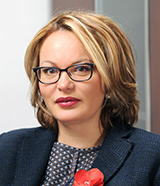
By the end of December, the Italian subsidiary – led by chief executive Teodora Petkova – accounted for 18.4% of total sector loans and 19.2% of deposits, up 26 basis points and 54bp respectively from a year earlier. Return on equity came in well above the sector average at 14.9%, while a cost-to-income ratio of 33.2% was also among the best in class.
This was achieved despite substantial investment in innovation, including the ongoing upgrade of UniCredit Bulbank’s core banking system. A focus on mobile banking saw the launch of more than 20 new features in the bank’s app, including fully digital overdraft sales, e-PIN card activation, savings plan and direct investments visualization, electronic document signature, fast balance check and Apple Pay.
UniCredit Bulbank was also the first to introduce fully digital onboarding via mobile for new clients to the Bulgarian market.
Going into the Covid crisis the bank also boasted strong fundamentals. At the end of December, NPLs had been reduced to 4.5% of the total – from 6% a year earlier – while a common equity tier-1 ratio of 19.3% provided a comfortable capital cushion.
 |
CroatiaBest bank: Privredna Banka Zagreb
|
Another round of large corporate defaults and continuing legal uncertainty over legacy Swiss franc mortgage portfolios made for a difficult operating backdrop for Croatia’s leading banks again last year. Nevertheless, Privredna Banka Zagreb (PBZ), Croatia’s best bank, impressed the judges with a combination of sustainable growth and stable profitability.
The number two player was outpaced on portfolio expansion by smaller rivals OTP and Raiffeisen, both of which pursued aggressive growth in retail and consumer lending in 2019, but PBZ still managed to boost total loans outstanding by 3.5%.
This contributed to a respectable return on average equity of 9.8%, while a company-wide cost management initiative resulted in a cost-to-income ratio of 42.2%.
Growth on the asset side of the balance sheet was balanced by a 4.5% increase in customer deposits, while a proactive approach to risk management and collection cut the bank’s NPL ratio by 1.2 percentage points to 5.6%.
PBZ also confirmed a reputation for innovation during the awards period, expanding its range of digital services for retail and SME customers and becoming the first bank in Croatia to offer Apple Pay.
A subsidiary of Intesa Sanpaolo, PBZ acts as a centre of excellence for several areas of banking within the Italian group’s international network.
It has also become a regional banking hub since taking over majority ownership of Intesa Sanpaolo banks in Bosnia & Herzegovina and Slovenia.
InterCapital Securities takes the award as Croatia’s best investment bank again this year by virtue of its impressive advisory franchise, leading markets business and growing regional coverage.
Headquartered in Zagreb, the firm is the largest broker of equities and bonds on the local stock exchange and last year become the leading equity broker on the Ljubljana Stock Exchange. Other markets covered by InterCapital include Romania, Serbia, Bosnia and Bulgaria.
The firm is also the advisory partner of choice for leading corporates in its home market. Notable mandates during the awards period included advising leading Croatian food producer and retailer Cakovecki Mlinovi on strategic development, helping developer Romana to raise financing for a hotel resort on the Dalmatian coast and securing pre-IPO financing for wood producer Florian Group.
InterCapital also continued long-term share buyback programmes for Adris Grupa and Hrvatski Telekom.
 |
Czech RepublicBest bank: Ceskoslovenska Obchodni Banka |
The choice of Ceskoslovenska Obchodni Banka (CSOB) as the Czech Republic’s best bank for a third year in succession reflects the KBC subsidiary’s clear lead on financial metrics and excellent record of innovation.
The market leader once again easily outpaced its closest rivals on profitability last year, posting a return on equity of 20.7%. A 25% increase in net profit to Kc19.7 billion ($840 million) was partly due to one-offs relating to M&A and a legacy legal dispute.
|
|
|
John Hollows, |

At the same time, net interest income and net fee and commission income also increased, by 23% and 6% respectively, while a 7% increase in operating expenses was modest in light of rising wage pressure in the Czech market and a hike in sectoral taxes.
Overall lending growth of 5% was well balanced across segments, while a 3% increase in deposits kept the loan-to-deposit ratio down to 79.1%.
This success was built on CSOB’s continuing investment in technology and growth under the leadership of chief executive John Hollows. Notable advances in this area during the awards period include the launch of instant payments, the expansion of products available fully online and the introduction of a new in-branch video consultation service, as well as the integration of Apple Pay, Google Pay and Garmin Pay into the bank’s mobile offering.
CSOB also broke new ground with the establishment of a joint venture with e-commerce credit provider Mall Group.
In the more traditional banking sphere, CSOB last year consolidated its position as the leading provider of financial solutions for housing purposes in the Czech market with the purchase of the remaining 45% stake in the country’s largest building society, Ceskomoravska Stavebni Sporitelna.
Meanwhile a record low NPL ratio of 2.2% at the end of December and a common equity tier-1 ratio of 19.2% gave the bank room for manoeuvre on credit provision and a comfortable capital cushion going into the Covid crisis.
 |
EstoniaBest bank: LHV Bank |
Strong profitability, stellar growth and outstanding innovation make LHV Bank a worthy winner of this year’s award for Estonia’s best bank.
The locally owned and listed digital challenger is rapidly catching up with the Scandinavian lenders that have dominated the Estonian market for more than a decade, moving up last year into third place – behind the local subsidiaries of Swedbank and SEB – in terms of everyday banking and deposits.
The bank expanded its deposit base by 87% in 2019, giving it a market share of more than 10%, while loan growth was almost equally impressive at 84% following the acquisition of the portfolios of two shuttered lenders, Versobank and Danske Estonia.
Last year also saw LHV Bank’s client base jump by 26%, thanks in large part to the extension of its ATM network (including through a partnership with other Estonian banks) and a clutch of upgrades to its mobile banking platform. These upgrades include the expansion of products and services available on the mobile app to include account opening for new retail clients, securities investments, loan applications and Apple Pay.
This rapid growth translated into another year of excellent results for LHV Bank in 2019, including a 20% increase in net profit to €22.1 million, despite a 26% rise in operating expenses due to investments in growth and technology.
Return on equity dipped slightly following a series of capital raises, which took the bank’s capital adequacy ratio to 17.6%, but nevertheless was ahead of rivals at 14%.
 |
GeorgiaBest bank: Bank of Georgia |
Georgia’s two largest banks, which together have an almost 80% market share, took advantage of their local market dominance and robust GDP growth of 5.2% to record another year of outstanding results in 2019.
Market leader TBC Bank again broke new ground with investments in domestic ecosystems and regional expansion. Bank of Georgia, however, had the edge on most key metrics, including profitability and growth, earning the number two player this year’s award for best bank.
|
|
|
Archil Gachechiladze, |
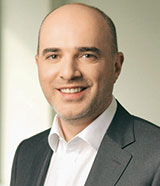
In 2019, the London-listed lender recorded a return on average equity of 25.4%, up 250 basis points on the previous year, on the back of a 32% increase in net profit to GeL500 million ($163 million). Net loans increased 27% to GeL11.9 billion, while deposits were up 23.9% to GeL10.1 billion.
These excellent results reflect the implementation of a new strategy by Bank of Georgia in June 2019. Under the leadership of new chief executive Archil Gachechiladze, who took over the top job at the start of last year, the lender has embarked on an overhaul of both its digital banking offering and its branch network as part of a broader drive to increase competitiveness and customer satisfaction.
A move away from unsecured consumer lending into secured mortgage and small and medium-sized enterprise lending also improved Bank of Georgia’s risk metrics last year, with cost of risk declining by 70bp to 0.9% and NPLs falling to just 2.1% of total loans outstanding.
How Georgia’s banks will fare during the Covid crisis remains to be seen. Like its larger rival, Bank of Georgia posted a net loss in the first quarter of 2020 due to mandatory loan payment holidays for retail clients and increases in provisioning. A decline in the lender’s overall capital ratio to 15.3% by the end of March, however, should still provide a sufficient buffer against further economic disruption over the coming months.
 |
HungaryBest bank: OTP Bank |
Another year of strong growth and solid financial results earn OTP Bank the award as Hungary’s best bank.
The market leader posted a 6% increase in net profit to Ft191 billion ($617 million) in 2019. Net fees and commissions rose by 19% while net interest was up 6%, largely due to robust lending growth. This was boosted by various government initiatives, including the subsidized baby loan scheme introduced in July and the Housing Subsidy Scheme for Families programme, in both of which OTP Bank has played a leading role.
The bank’s own loan products also continued to gain traction, however. Disbursements of new cash loans were up 26% on the previous year, increasing OTP Bank’s market share in the segment by 0.8 percentage points to nearly 40%, while the performing mortgage loan portfolio expanded by 7%.
Loan quality trends also remained favourable. NPLs fell by 1.4 percentage points to 3.2% in the 12 months to the end of December following the sale and write-off of Ft16 billion of problem loans.
The bank’s capital position was also enhanced by the issuance in June 2019 of a €500 million tier-2 Eurobond, which broke new ground as the first issue by a bank in central and eastern Europe to be eligible under the European Union’s minimum requirement for own funds and eligible liabilities regulations.
 |
KazakhstanBest bank: Halyk Bank |
Record returns, robust fundamentals and ambitious regional expansion confirmed Halyk Bank’s position as Kazakhstan’s best bank in the current awards period.
The market leader notched its best-ever bottom line result in 2019, with net income rising 31.6% to KT335 billion ($829 million) – equating to a return on average equity of 28.8% – on the back of higher margins, increases in transactional banking volumes and steady loan portfolio expansion.
Lending growth was driven by the SME and retail segments, where outstanding loan volumes increased by 9.4% and 7.8% respectively last year.
Over the same period, the proportion of loans issued in foreign currency fell from 32.8% to 28.5%, reducing the bank’s exposure to exchange rate fluctuations. This was also mitigated by high dollarization on the liability side of the balance sheet, with foreign currency accounting for more than half of both retail and corporate deposits.
Overall, Halyk Bank’s deposit base contracted slightly during 2019, but a loan-to-deposit ratio of 55.5% at the end of the period provided ample room for manoeuvre. Meanwhile a 1.6 percentage point decline in the NPL ratio to 6.9% by the start of this year and an increase in its common equity tier-1 ratio to 21.3% spoke to the strength of Halyk Bank’s fundamentals.
On the innovation side, notable achievements last year included the creation of a new digital division, the development of ecosystems for corporate and retail customers, and the launch of online loans through Halyk Bank’s Homebank.kz application.
The lender also broke new ground in July when its subsidiary, Tenge Bank, began operations in Uzbekistan.
 |
KosovoBest bank: NLB Banka |
A rising tide of strong economic growth once again lifted all ships in the Kosovan banking market last year, with all the main players recording double-digit growth and impressive returns.
Market leader Raiffeisen Bank again led the field in terms of innovation, while smaller local rival BPB Bank made further inroads into the micro and SME segments. On profitability, however, the clear winner was NLB Banka, Kosovo’s best bank this year.
The Slovenian subsidiary, which ranks second in the market by total assets, saw net profit jump by 31.8% to €19.5 million in 2019, equating to a return on equity of 25.1%. A cost-to-income ratio of 31.9% was the lowest in NLB Group’s six-country network.
Growth was also strong, with loans to corporates and households rising by 9.8% and 10.4%, balanced by increases in deposits of 24.1% and 11.5% respectively.
An NPL ratio of 2% at the end of December was the lowest among Kosovo’s leading banks, while a capital adequacy ratio of 16.4% – up 1.8 percentage points from a year earlier – provided a comfortable cushion against market volatility.
Other achievements last year included the launch of NLB Pay, Kosovo’s first digital wallet mobile phone application.
 |
KyrgyzstanBest bank: DemirBank |
DemirBank’s combination of buoyant growth, robust returns and commitment to innovation make the Turkish-owned lender a worthy winner of the best bank award again this year.
A strategic focus on retail lending by the Kyrgyz market leader boosted the total volume of loans to the segment by 42% last year. This was partly achieved through cross-selling, but DemirBank’s retail customer base also expanded by 17%, helped by a 13.1% rise in salary project schemes.
Overall, the number of corporate and SME customers increased by 21% year on year.
Other notable achievements included a 21% increase in the volume of money transfers, thanks in part to the introduction of Swift payments and salary transfers through the bank’s corporate internet platform.
DemirBank also saw strong demand for its new Mastercard product, with nearly 20,000 cards issued in 2019. This contributed to an 8.8% increase in net fee and commission income, while net interest income rose by 4%.
The bank’s bottom line was hit, however, by a jump in personnel expenses and impairment losses, resulting in a 13.9% drop in net profit to Som412 million ($5.5 million). Return on equity also fell by seven percentage points to 16.4%, but this was partly due to a 23.9% increase in tier-1 capital and still put DemirBank well ahead of local rivals.
Asset quality remained excellent, with NPLs accounting for just 1.4% of total loans outstanding at the end of December.
 |
LatviaBest bank: SEB Banka |
Compliance concerns continued to dog the Latvian banking sector during the awards period, with market leader Swedbank and smaller local rival Citadele both receiving fines (although of a different order of magnitude) from the local regulator for money laundering failures.
Meanwhile new number two player Luminor, created by the merger of the local subsidiaries of DNB and Nordea, remained in the throes of restructuring.
By contrast, SEB Banka, the winner of the award for Latvia’s best bank, remained a model of stable growth, healthy profitability and digital innovation. In 2019 the Swedish subsidiary expanded its customer base by 8%, while outstanding loans rose by 2%.
Lending growth was particularly robust in the retail segment, where SEB Banka grew its portfolio by 3.9%, well above the market average of 2.7%.
This was more than balanced, however, by increases in corporate and retail deposits of 22% and close to 10% respectively, which in turn reduced the loan-to-deposit ratio by 12 percentage points to 98% by the end of December.
Nevertheless, net interest income rose by 7% last year, contributing to a 1.6% increase in net profit to €49.6 million, which was retained to fund business growth and development. A capital adequacy ratio of 18% provided a comfortable cushion; while the liquidity coverage ratio was also well above the regulatory requirement, at 151.2% at year end.
SEB Banka also maintained a track record of technological progress last year, introducing a range of new products and services including the ability to connect to other bank accounts, a new payment authorization solution, a chatbot and a mobile wallet for Android.
 |
LithuaniaBest bank: SEB Bankas |
Excellent profitability, prudent risk management and market-leading innovation earn SEB Bankas the title of Lithuania’s best bank again this year.
Ranked number two in the market by total assets, the Swedish subsidiary increased net profit by 11% last year to €117 million, which in turn boosted return on equity to a sector-beating 15.8%. This was achieved despite a decline of 16% in new lending – the overall portfolio remained flat – and a 12% increase in deposits.
Costs also remained flat despite continued investment in technology and innovation. Last year saw the completion of a restructuring of SEB Bankas’s 27-strong branch network, as well as the introduction instant payments in euros and the launch of a facility allowing clients to link their accounts with those of other banks digitally – a first for Lithuania. This was followed in February this year by the launch of a new IT system for the bank.
 |
MoldovaBest bank: Mobiasbanca |
With the leaders in the Moldovan banking market still adjusting to their emergence from central bank supervision, the field was again left open for smaller players. The pick of these, and the winner of this year’s award for best bank, is OTP subsidiary Mobiasbanca.
The number four lender has also recently changed hands, being acquired by the Hungarian group in July 2019, but has so far maintained the reputation for prudent management and ambitious growth that it earned under previous owner Societe Generale.
Last year saw Mobiasbanca’s loan portfolio expand by 16%, largely due to a 28% jump in consumer loans and a 44% increase in mortgages. Return on equity was below 2018 levels but respectable by local standards at 14.3%.
Meanwhile an overhaul of Mobiasbanca’s product range saw the introduction of a clutch of new products and services for retail clients and SMEs, including dedicated credit products for the agricultural sector and an auto leasing facility, while technological advances included the launch of a contactless debit Mastercard and upgrades to SMS banking.
 |
MontenegroBest bank: Crnogorska Komercijalna Banka |
The choice of Crnogorska Komercijalna Banka (CKB) as the winner of this year’s best bank award recognizes the turnaround achieved by the lender over the last five years.
|
|
|
Pál Kovács, |

Part of the OTP Group, CKB suffered a sharp decline in asset quality in the wake of the financial and eurozone crises. NPLs ballooned to 42.7% of total loans by the end of 2015, resulting in two years of losses due to increased provisioning.
In early 2017, OTP veteran Pál Kovács was drafted in as chief executive to oversee the bank’s recovery. By the end of the following year, a programme of sales and workouts of bad debts had slashed the NPL ratio to 17.8% and CKB was back in the black, allowing the bank’s management to shift the focus away from restructuring and towards innovation.
Last year saw the launch of a series of new products and services, including Montenegro’s first caller ID system, a clutch of digital microsites, QR code payments and Apple Pay.
CKB’s market position was also enhanced by the purchase in July 2019 of Podgoricka Banka, the Montenegrin number three player, from Societe Generale. The combined entity posted a return on equity of 11.9% last year, 4.6 percentage points up on 2018, while NPLs fell to just 5.3% of the total loan book.
 |
North MacedoniaBest bank: NLB Banka Skopje |
The resolution of North Macedonia’s long-standing dispute with Greece over the country’s name in February last year gave a welcome fillip to an already improving economy. GDP growth topped 3% in 2019 on the back of buoyant business and consumer confidence, which in turn provided a fertile operating backdrop for North Macedonia’s banks.
At the same time, stiff competition in the sector – particularly in the burgeoning retail segment – added to the pressure on margins imposed by falling interest rates. Nevertheless, this year’s best bank, NLB Banka Skopje, managed to balance strong growth with healthy returns.
The Slovenian subsidiary, which ranks third in North Macedonia by total assets with a market share of 16%, expanded its loan book by 7% last year on the back of a surge in housing loans issuance. Combined with robust revenues from card operations, payment services and the sale of insurance products, this contributed to a net profit of €32.9 million.
While slightly down on last year, when the bank’s bottom line was flattered by the sale of a pension subsidiary, this still equated to a healthy return on equity of 16.2%.
An overall capital adequacy ratio of 16.4% at the end of December provided a solid foundation for NLB Banka Skopje’s expansion, while a 0.9 percentage point reduction in the NPL ratio to 4.2% during the year was also a positive signal.
 |
PolandBest bank: ING Bank Slaski
|
Intense competition among the leading players kept Poland’s banks at the forefront of digital innovation last year but margin pressure, rising levies and adverse legal rulings on Swiss franc mortgages and consumer loans took a toll on profitability.
Of the top five players, the only one to achieve a return on equity of more than 10% was ING Bank Slaski, which once again wins the award for Poland’s best bank by virtue of its superior profitability, robust business model and technological prowess.
Under the leadership of president Brunon Bartkiewicz, the Dutch subsidiary boosted net profit by 9% in 2019 to a Zl1.7 billion ($418 million), equating to a return on equity of 11.6%. This record result was based on an impressive jump in both client numbers and lending volumes.
|
|
|
Brunon Bartkiewicz, |

Last year ING Bank Slaski added 13,000 corporates and 474,000 retail customers to its client base, taking the total to 4.5 million by the end of December, an 8% increase from a year earlier. That in turn helped boost the bank’s loan portfolio by 13.3%, more than double the sector figure of 5.2%.
Corporate loans outstanding increased by 7.4%, while the retail portfolio expanded by 21.3%, partly driven by mortgage sales.
By the year end, ING Bank Slaski’s share of the retail and corporate loan markets in Poland had reached record highs of 7.2% and 11.5% respectively. At the same time, deposits increased by 11.1%, taking the loan-to-deposit ratio to 90.7% by the end of December.
Meanwhile, asset quality remained robust, with stage-three loans accounting for just 3% of the total at the year end, well below the sector average of 5.9%.
ING Bank Slaski also continued to set the pace on digital banking last year, becoming the first bank in Poland to allow customers to add accounts from other banks, as well as introducing a slew of new products and services for retail, SME and corporate customers.
The bank’s financial and technological strength was recognized by equity investors during the market sell-off at the start of the Covid crisis. ING Bank Slaski’s share price declined just 20% in the 12 months to the end of March, easily outperforming its closest competitors in the Polish banking market.
Weak volumes in Polish debt and equity capital markets put the spotlight on M&A in the 12 months to the end of March. This played to the strengths of Trigon, the winner of this year’s award for Poland’s best investment bank.
The Warsaw-based boutique, which last year celebrated its 30th anniversary, again deployed its advisory expertise to assist companies from Poland and beyond on local and cross-border transactions.
Notable buy-side mandates included advising leading telecoms and media group Cyfrowy Polsat on the purchase of a 21.9% stake in software producer Asseco Group, helping European private equity firm Vitruvian Partners acquire US-based Azul Systems and advising Denmark’s Flügger Group on its strategic purchase of Polish paints producer Unicell.
Despite the shortage of deal flow, Trigon also made its mark in the equity capital markets as the adviser of choice for firms in Poland’s rapidly developing video games segment. The firm acted as bookrunner on the IPO of gaming developer BoomBit in May 2019, as well as advising on secondary public offerings for two other companies in the sector. Meanwhile Trigon’s fledging debt capital markets division won bookrunner mandates on a series of local corporate bonds for Cyfrowy Polsat.
 |
RomaniaBest bank: Banca Transilvania |
A new tax on bank assets and limits on retail lending took some of the shine off the Romanian banking market last year and mitigated the positive impact of GDP growth of 4.1%. Two of the leading players – Erste subsidiary BCR and Raiffeisen Bank – were also hit by legal judgements against their local building society arms.
Nevertheless, growth and profitability remained robust across the sector thanks to rising interest rates, tight labour market conditions and expansionary fiscal policy ahead of elections last autumn.
Picking a winner in a market with so many strong performers was difficult, but Banca Transilvania’s solid fundamentals, consistent profitability and balanced growth earn it the title of Romania’s best bank.
The market leader, which is still headquartered in the Transilvanian capital Cluj-Napoca, boosted its bottom line result by 32.9% last year to L1.6 billion ($375 million), equating to a return on equity of 20.3%. Overall lending growth of 6% was below the sector average, but an 11% increase in the SME loan portfolio confirmed Banca Transilvania’s commitment to supporting its core client base and contributed to a 7.8% rise in net interest income.
Micro and mid-sized corporates were also the main drivers of a 14.6% increase in the number of active clients in 2019. Meanwhile a focus on cross-selling and a 44% rise in card transactions helped boost net fee and commission income by 4.8%; and continued investment in technology was reflected in a 40% increase in take-up of mobile banking.
Asset quality also improved as a result of substantial bad debt write-offs, with the NPL ratio falling to 2.8% by the end of December, while overall capital adequacy remained healthy at 21.3%.
 |
RussiaBest bank: Raiffeisenbank
|
Falling interest rates and curbs on retail lending failed to put a dampener on the Russian banking sector last year, with most of the bigger players recording strong growth and impressive profitability.
State-owned firm Sberbank and digital challenger Tinkoff Bank continued to set a blistering pace in technological innovation, while the likes of Alfa-Bank took advantage of a surge in demand for mortgages.
The pick of the locally owned players was Sovcombank, which confirmed its status as the rising star of Russian banking with another year of outstanding growth and robust returns.
|
|
|
Sergey Monin, |

However, this year’s best bank award goes to Raiffeisenbank in recognition of its superior profitability, sector-beating asset quality and targeted investment in technology. Under the leadership of chief executive Sergey Monin, the Austrian subsidiary, which ranks ninth in the Russian market by total assets, posted a pre-tax return on equity of 30% in 2019 on the back of a 9.4% jump in net interest income.
This was achieved despite a doubling of investment in digital services as part of Raiffeisenbank’s move towards a remote service model.
Following a pullback from Russia’s far east in the wake of the 2014 crisis, the bank’s physical network was reduced to 44 cities. However, individual, small and micro business clients in a further 100 cities can now access Raiffeisenbank’s services via remote channels.
The bank’s digital offering was further enhanced last year with the addition of a wide range of retail banking products to its online platform, including insurance and mortgage loan refinancing, as well as the introduction of a digital signature function to its mobile app.
These initiatives helped drive a 60% increase in the number of transactions completed via internet and mobile banking last year, as well as an 80% increase in active users of the Raiffeisen Online app.
This expansion has been built on solid fundamentals. At the end of December, Raiffeisenbank’s NPL ratio stood at just 1.4% – 0.5 percentage points lower than a year earlier – while a fully loaded common equity tier-1 ratio of 23.7% provided an ample capital cushion ahead of the Covid downturn.
Capital markets deal flow returned cautiously to Russia last year as the shadow of sanctions against individual business owners faded and emerging market investors regained confidence. Eurobond issuance more than doubled to €17.5 billion in the 12 months to the end of March, according to Dealogic, while equity capital markets also saw a pick-up in activity, albeit from a very low base.
In M&A, deal numbers were up but, despite a few landmark deals, total announced transaction volume dipped by 17.6% to $31.9 billion.
As usual, state-owned banks topped the league tables in DCM and M&A, although Goldman Sachs beat VTB Capital to the top spot in ECM. Of the international banks, Citi was the standout name in M&A, advising on landmark deals including Rostelecom’s acquisition of Tele2 and Severgroup’s $3 billion purchase of retailer Lenta.
Across the board, however, the best performer was JPMorgan, this year’s best investment bank. The US house easily outclassed its global rivals on DCM, acting on 24 transactions for a total allocated volume of $3.2 billion, more than double the tally of closest rival Citi.
As well as a trio of subordinated issues for Russian banks, including a market debut from Sovcombank, notable mandates included Russian Railways’ inaugural green Eurobond, the first in the format from a Russian issuer. JPMorgan was also the prime mover in the rail operator’s follow-up in Swiss francs, which was priced against an extremely challenging backdrop in early March.
On the ECM side, the firm scored five of the 13 Russian mandates available in the awards period, including block trades for LSR, PIK Group and Polyus as well as Yandex’s $1.25 billion return to the convertible bond market in late February.
Meanwhile a thinner year in M&A in terms of transaction numbers was mitigated by a leading sell-side advisory role on the Severgroup-Lenta deal.
 |
SerbiaBest bank: Banca Intesa Beograd |
A backdrop of buoyant economic growth, falling unemployment and rising consumer confidence gave Serbia’s banks a welcome boost last year.
Strong demand for credit from both retail and corporate customers boosted overall lending by more than 9%, while continued efforts on bad debt sales and workouts bought the sector NPL ratio below 5% by the end of December.
The market also remained a focus for M&A in the awards period. OTP also added another string to its Serbian bow with the completion in September of the acquisition of Societe Generale’s subsidiary, less than two years after the Hungarian group’s acquisition of Vojvodjanska Banka. Then in February, NLB Group agreed to buy number four player Komercijalna Banka from the Serbian government.
At the top of the sector, however, the story was one of stability. Market leader Banca Intesa Beograd turned in a strong financial performance backed by robust investment in technology, earning the Italian subsidiary the award for best bank.
A return on equity of 11.9% was 0.7 percentage points up on last year, boosted by an 11% expansion of the retail lending portfolio and record growth in housing loans. This was more than balanced by a 16.6% increase in the deposit base, driven by a 27% jump in corporate deposits.
NPLs meanwhile fell to 3.3% of the total by the end of December, 2.4 percentage points lower than a year earlier.
Last year also saw the completion of an upgrade of Banca Intesa Beograd’s core banking system, while a focus on e-commerce saw transactions in the segment double and total turnover rise by more than 80% year on year.
 |
SlovakiaBest bank: Tatra Banka |
Best-in-class profitability and a commitment to cutting-edge innovation make Tatra Banka a worthy winner of this year’s award for Slovakia’s best bank.
The Raiffeisen subsidiary, which specializes in corporate and premium banking, was the only leading player to post an increase in net interest income in 2019, thanks to an 8.7% expansion of overall lending.
This in turn contributed to a sector-beating pre-tax return on equity of 15.9%, up 1.1 percentage points from 2018. A loan-to-deposit ratio of 91.6% at end-December, however, left scope for further expansion, while an NPL ratio of 2% spoke to a prudent approach to risk management.
Tatra Banka’s brand has been built on technological sophistication and the pace of progress was maintained in the awards period. In July 2019, the bank became the first in Slovakia to make express business loans of up to €70,000 available to SMEs through digital channels, while the following month saw the launch of the country’s first chatbot, Adam.
Other landmarks included a comprehensive upgrade of Tatra Bank’s mobile banking app, including end-to-end insurance sales, as well as the introduction of Apple Pay and Google Pay.
Tatra Banka also broke new ground with the launch of My Doctor, a dedicated healthcare service for cardholders.
 |
SloveniaBest bank: NLB |
Slovenia’s banking sector remained in flux last year, with number two player Nova KBM – owned by private equity firm Apollo Global Management – buying closest rival Abanka from the state privatization agency in June and OTP completing the acquisition of SKB from Societe Generale in December.
|
|
|
Blaz Brodnjak, |

Meanwhile at the head of the market, NLB – under the leadership of chief executive Blaz Brodnjak – leveraged its dominant position and newfound freedom from state control to post another year of robust results, earning the London-listed lender the title of Slovenia’s best bank.
While NLB boasts successful subsidiaries in five countries in southeastern Europe, its home market remains by far the largest contributor to the group’s bottom line, accounting for 91% of net profit in 2019.
Within Slovenia, the main driver of growth and profitability was retail banking. Net interest income from the segment jumped by 10.2% last year on the back of a 14.9% expansion in the consumer loan portfolio while strong take-up of mutual funds and bancassurance products drove a 11.9% rise in net fee and commission income.
This more than offset a slight decline in income from corporates due to a drop in net interest income and a rise in provisioning. The strength of NLB’s franchise in the segment was demonstrated however by a 5.1% increase in net lending, while a 28.4% fall in the stock of corporate NPLs spoke to an ongoing commitment to cleaning the balance sheet.
Meanwhile, an expansion of the deposit base by 16% for corporates and 11% for retail customers provided a solid platform for future growth.
 |
TurkeyBest bank: Akbank |
Once again there was little to choose between Turkey’s leading private-sector lenders in the 12 months to the end of March. Isbank had the edge on profitability, with a return on average equity of 11.4% versus Akbank’s 10.9%, and was neck and neck with its closest rival on asset quality and innovation.
|
|
|
Hakan Binbasgil, |

At a time of market turmoil, however, Akbank’s superior efficiency and stronger capitalization earn the smaller lender this year’s award for best bank. Akbank’s overall capital ratio of 19.7% at the end of December was 1.8 percentage points higher than that of Isbank, while three months later the lenders’ tier-1 ratios stood at 16% and 14.4% respectively.
Meanwhile a focus on investment in technology by chief executive Hakan Binbasgil continued to pay dividends for Akbank, which posted a best-in-class cost-to-income ratio of 32.9% for 2019, well below Isbank’s 38.8%.
Notable achievements in innovation in the awards period included the launch in June by Akbank’s fully owned e-money subsidiary Aköde of an app targeting younger Turkish customers, as well as the opening of a $250 million Data and Living Centre.
The lender also launched an upgrade of its mobile app in September that is designed to improve ease of use and accessibility and introduced new personalized communication and sales areas backed by advanced analytical models.
Furthermore work continued last year on renewing Akbank’s ATM network to enhance coordination with mobile banking, as well as continuing the branch transformation programme initiated in 2018.
 |
UkraineBest bank: Raiffeisen Bank Aval |
Outstanding profitability, balanced growth and best-in-class asset quality once again earn Raiffeisen Bank Aval the award as Ukraine’s best bank.
While net profit of Hrn4.8 billion ($180 billion) was 7.7% below the record level posted in 2018, it nonetheless equated to a return on equity of 49.4% last year, comfortably ahead of the Austrian subsidiary’s smaller private-sector rivals.
Raiffeisen Bank Aval was also one of only two of Ukraine’s top 10 lenders – along with Crédit Agricole’s local subsidiary – to boast an NPL ratio in single digits at the end of December.
Lending growth was modest, reflecting a prudent approach to risk management, but partnerships with the European Bank for Reconstruction and Development and other multilateral actors helped the bank to provide credit to Ukraine’s SMEs and the wider agricultural sector.
SMEs also benefited from upgrades to Raiffeisen Bank Aval’s service model last year, including the launch of a range of new cash settlement service packages, while corporate customers were offered a new premium business package and Ukraine’s first business concierge service.
Technological innovation remained a priority, with advances in the robotization of functions including financial monitoring and account opening, as well as the installation of nearly 800 new ATMs with touchscreen and contactless functionality.