|
|
|
View the Euromoney 25 |

Since the financial crisis, UBS has been the oft-cited poster child for how to turn a business around and create a sustainable franchise in modern banking. But in 2016 the Swiss bank arguably became a victim of its own success – its performance was safe, steady, still at the head of the industry by many metrics. But UBS became, dare we say it, a little boring.
As chief executive Sergio Ermotti has pointed out to Euromoney, there is something rather positive about being considered boring in modern finance. It speaks to stability and the benefits of balance and diversification. But 2016 was still a disappointing year for UBS, hampered by the downturn in Asian markets and the importance of US markets where, wealth management aside, it is not so relevant.
On the flipside, the markets were much more to UBS’s liking in 2017, and all of a sudden, its performance became rather interesting and, dare we say it, exciting again.
“International clients became more positive again, we saw growth in transaction revenues, better trading performance and a big rebound in our CCS [Corporate Client Solutions] business,” says Kirt Gardner, chief financial officer of UBS.
The first quarter was positive, with pre-tax profits up 42% even though Ermotti and Gardner continued to strike a cautious note on outlook.
|
|
|
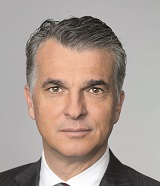
Sergio Ermotti, |
In the second quarter of 2017, profits still grew by 14%, but that performance was somewhat overlooked due to a surprise rebound in Credit Suisse’s earnings. But by the third quarter, the trend of positive growth was fully established: 39% growth in year-on-year profits, which put the first nine months of 2017 some 32% ahead of 2016. Returns on tangible equity were 10.2%, and 13.3% excluding deferred tax assets.
The fully applied common equity tier-1 capital ratio was a fortress-like 13.7%. Revenues were up 3% and operating expenses down 1%, showing the business was on track to continue to deliver positive operating leverage.
Four things stand out in this positive picture.
The first is that while UBS remains very much a Swiss bank at heart, much of its performance now clearly depends on Asia, both in investment banking and capital markets and in wealth management. In 2015, a strong year for Asia, UBS thrived; in 2016, a weaker year for the region, UBS stalled. In the first nine months of 2017, UBS increased its profits from all Asian business by 37% – slightly ahead of the group’s performance.
A particular bright spot in Asia was the growth in equity derivatives and structured products, a business that benefits both the investment bank and the wealth management division. UBS remains the biggest private bank in Asia.
The second is the share price, which is a problem. At a price-to-book value of around 1.2 times, UBS is no longer ahead of its peers. The share price is up barely SFr1 at SFr18 ($18.16) since the start of the year – although Ermotti and his colleagues see that as a price they pay for the first-mover advantage and re-rating of their stock during the bank’s recovery. But it is up around 15% since a low point in September, on the back of those strong third-quarter earnings.
The third is the US wealth management business. UBS is taking a chance on a new approach to paying and recruiting financial advisers in the US.
“We’ve invested in transitioning the Wealth Americas business,” says Gardner. “Traditionally in the US, wealth managers have relied on recruitment for growth. A financial adviser would bring their clients to a new bank for around 300% of the one-year revenues they produced. The value of that transaction was booked as a loan, counts as capital and was accrued over seven to 10 years. We have taken the decision to adjust the financial adviser compensation model, focusing on the retention of the most productive financial advisers.”
Lower recruiting meant new assets were down $2.3 billion in the third quarter and costs were up substantially due to the retention policy. Nonetheless, pre-tax profits for the first nine months of the year in Wealth Americas were up 19%, against an industry average of 16%. And Gardner is confident that next year the new strategy will yield positive operating leverage for what remains the only substantial non-US wealth business in the region.
The final issue is the position of Ermotti himself. Rumours were swiftly denied in 2017 that he would quit UBS to enter Swiss politics. He made a rare public misstep in criticizing regulators’ attitudes towards senior bankers’ compensation. He still seems to enjoy the job and was proud in the summer to tell people he had become the longest-serving UBS chief executive in history.
A stable management team lost a star performer in Juerg Zeltner at the end of the year. His position as head of the wealth business was taken by Martin Blessing, a former CEO of Commerzbank and most recently head of UBS’s Swiss bank: that puts Blessing firmly in the frame as Ermotti’s eventual successor.
The encouraging performance during 2017 will likely see Ermotti want to continue for some time yet. But by the same token, he will want to depart while still remembered as the man who left at the top, having led the great UBS turnaround.