Awards for Excellence 2017
|
|

The pace of digital development across CEE’s banking sectors over the past decade has varied widely. Some markets remain mired in cumbersome post-Communist processes and paperwork, while others are at the forefront of global innovation.
Tatra Banka, the winner of this year’s best bank for digital award, falls firmly in the latter category. Even in Slovakia, one of the most technologically advanced markets in the region, the Raiffeisen subsidiary stands out by virtue of its long-standing commitment to digital banking and outstanding track record of product innovation.
This is no accident. According to CEO Michal Liday, Tatra Banka took the decision 10 years ago to become a digital leader, partly as a way of differentiating itself in the competitive Slovak banking market. Other drivers include a fervent belief in digital – and particularly mobile – as the future of banking and the nature of the bank’s affluent client base.
|
|
|
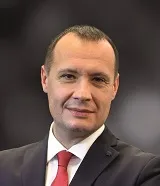
Michal Liday, |
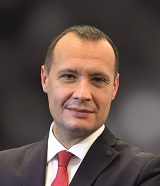
“Our customers were far more digitally savvy than the average for the Slovak market,” says Liday. “Automated transactions were approaching 90%, which was closer to the Scandinavian standards than the central European ones.”
Today, Tatra Banka has one of the most advanced digital platforms in Europe and continues to maintain a dizzying pace of innovation. Last year saw yet more functionality added to its mobile app, including ATM withdrawal by smartphone, the ability to view account information by placing a payment card next to a smartphone and tools allowing users to automatically categorize expenses and set spending limits, as well as an advisory and information application for Microsoft’s virtual reality headset HoloLens.
Also new for 2016 was MobilePay, an app allowing mobile payments for multiple cards. By the end of the year, 37% of Tatra Banka’s customers were making payments via smartphone. Mobile payment functionality was also added to TatraPay, the bank’s desktop e-commerce platform.
Meanwhile, a drive to boost the use of digital platforms for sales saw 40% of pre-approved loans in campaigns provided via online and mobile banking last year. Overall, 98% of transactions at Tatra Banka are currently made electronically.
In the past, the Raiffeisen group has been relatively slow to capitalize on Tatra Banka’s digital sophistication. That is now changing. The bank’s card and reader authentication tool has recently been adopted by Raiffeisen Romania, while the group’s Czech subsidiary has borrowed its digital signature technology.
Further knowledge transfers are on the way, according to Liday. “Tatra Banka’s continuous innovation has created a solid base for testing new concepts that, due to their open architecture and technical possibilities, will be developed and shared with other members of the group,” he says.
Tatra Banka’s next task will be to meet the challenge from fintech, something it is well-placed to do. The bank has already established partnerships with fintechs, such as mobile payments provider Viamo, and is heavily involved in promoting initiatives such as the Slovak Startup Awards, Crowdberry and the Tatra Banka Foundation.
Also in the works are plans for a fintech lab, which Liday describes as “a space for collaboration promoting out-of-the-box thinking”. The lab will host courses, workshops and mentoring with experts in areas such as human-centric design, artificial intelligence and virtual assistants/chatbots.